The AI Revolution and the Future of Work: Jobs Most and Least Likely to Be Replaced
Facts 01/01/2026 20:49
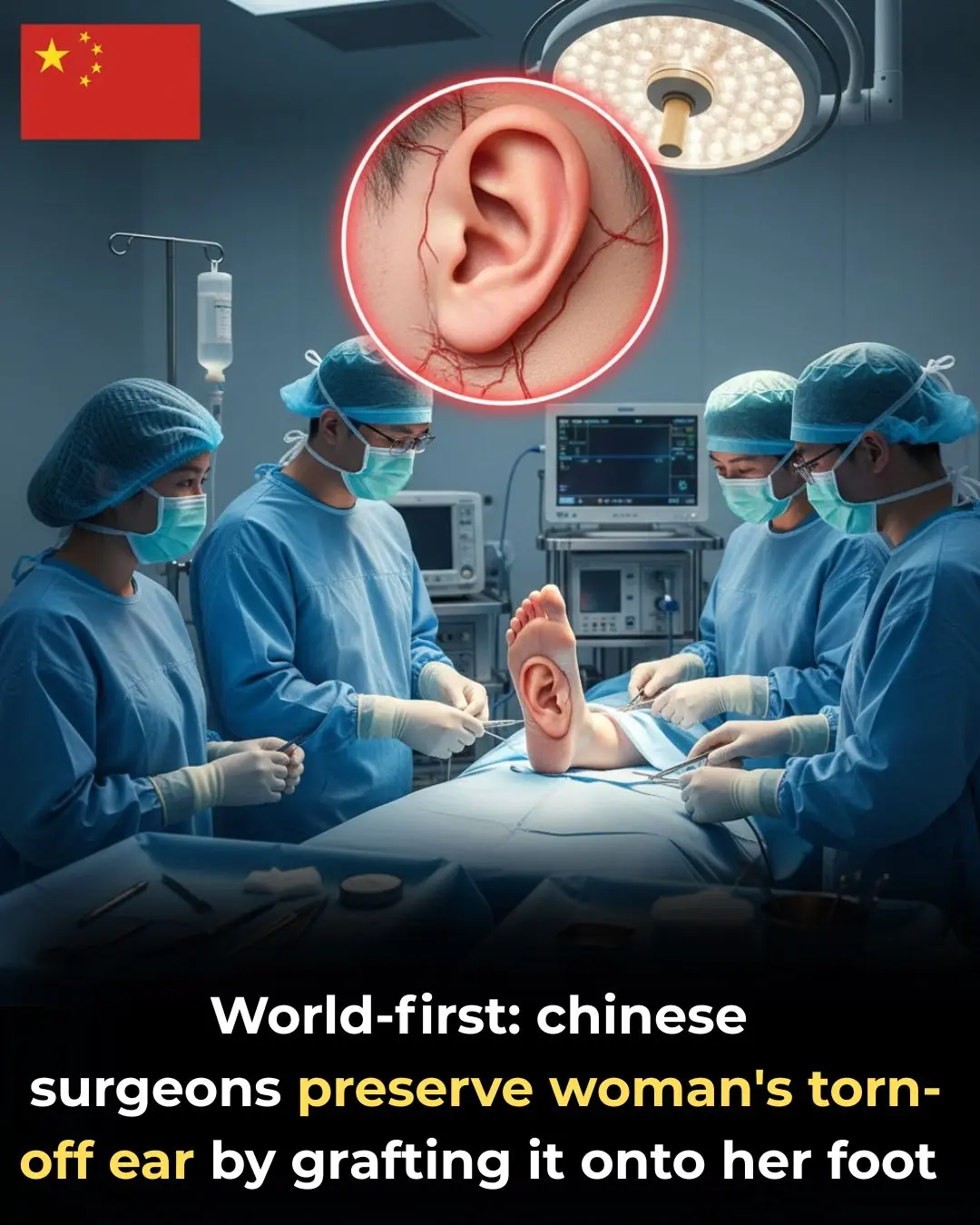
Surgeons in China have achieved a remarkable medical milestone after successfully preserving and later reconstructing a woman’s ear following a traumatic accident. In an unconventional but highly effective procedure, doctors temporarily grafted the severed ear onto the patient’s foot to keep the tissue alive while her head injuries healed.
After the accident, the woman’s ear had been completely detached, and the blood vessels in the head and neck area were too severely damaged to allow for immediate reattachment. To prevent the delicate tissue from dying, surgeons made the strategic decision to graft the ear onto the patient’s foot, an area with reliable blood flow that could sustain the tissue during recovery.
By attaching the ear to the foot, doctors were able to restore circulation and oxygen delivery through healthy blood vessels, allowing the cartilage and skin to remain viable. Medical experts explain that without this temporary solution, the ear tissue would likely have suffered irreversible damage, making later reconstruction extremely difficult or even impossible.
The complex procedure was carried out at Shandong Provincial Hospital, a leading medical center known for its expertise in microsurgery and reconstructive techniques. Surgeons used advanced microscopic tools to connect blood vessels thinner than a millimeter, a level of precision commonly required in limb reattachment and facial reconstruction surgeries. Such operations demand exceptional skill, as even minor errors can lead to tissue failure.
Specialists note that while the approach may appear unusual, temporary grafting to alternative body sites—such as the foot or forearm—is a recognized strategy in extreme trauma cases. These locations are chosen because they provide stable circulation and allow surgeons time to repair damaged vessels at the original injury site. Once conditions are favorable, the tissue can be safely reattached to its intended location.
Medical professionals have praised the case as a powerful example of innovative surgical planning and adaptability. It demonstrates how creative problem-solving, combined with advanced microsurgical techniques, can overcome severe physical trauma and significantly improve patient outcomes.
The success of this operation may have broader implications for reconstructive medicine worldwide. Experts believe it could influence future treatment protocols for patients suffering from severe tissue loss due to accidents, industrial injuries, or natural disasters. As trauma cases become increasingly complex, such techniques offer renewed hope for preserving both function and appearance in patients facing life-altering injuries.
British Association of Plastic, Reconstructive and Aesthetic Surgeons (BAPRAS). Microsurgery and Tissue Reattachment Techniques.
The Lancet. Advances in Reconstructive Microsurgery, review article.
National Institutes of Health (NIH). Principles of Replantation and Temporary Tissue Grafting.
World Health Organization (WHO). Emergency Trauma Care and Surgical Innovation.
Mayo Clinic. Reconstructive Surgery After Traumatic Injury.