A Shocking Case of 300 Kidney Stones Highlights the Importance of Hydration
Facts 02/12/2025 11:44
In a major advancement for global healthcare, a Chinese surgical team has successfully carried out a live transcontinental robotic surgery, with the lead surgeon operating from Rome while the patient remained in Beijing. This pioneering procedure involved a radical prostatectomy performed entirely through remote robotic control, marking one of the first fully documented telesurgeries completed across two continents.
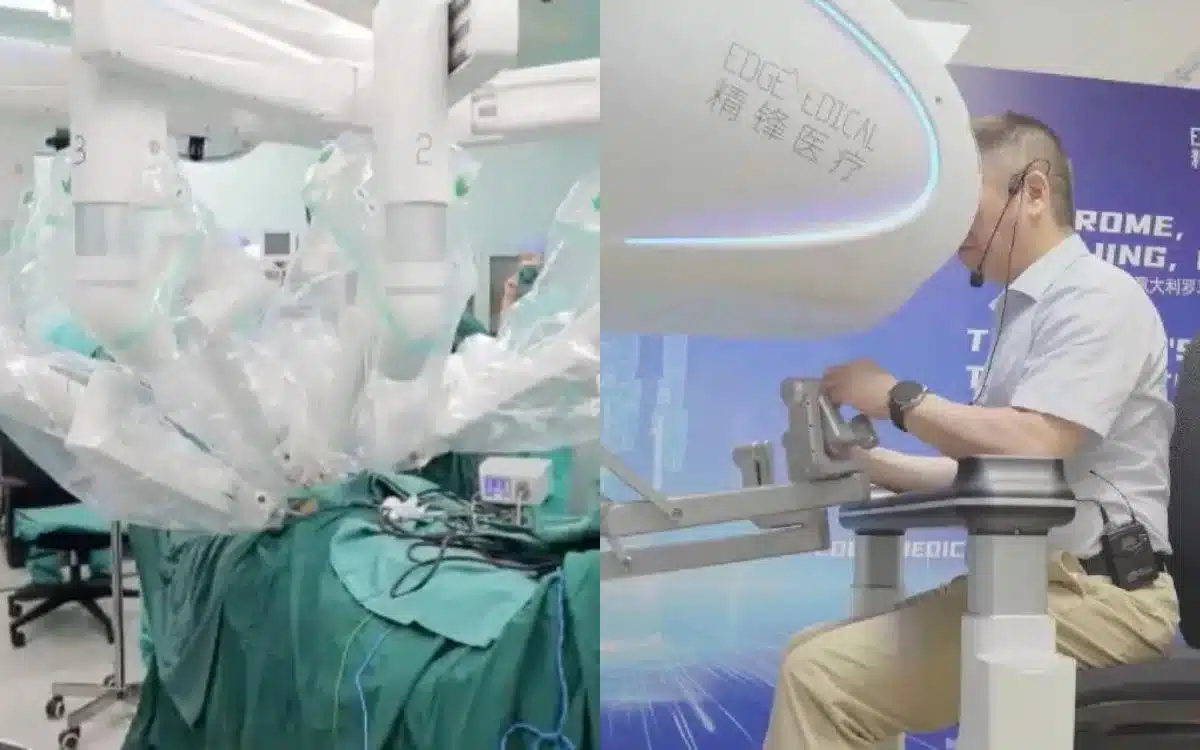
The operation used a combination of advanced 5G technology and high-speed fiber-optic networks, enabling ultra-low latency communication between the control console in Italy and the surgical robot in China. According to reports from South China Morning Post (SCMP) and China Daily, the delay between surgeon commands and robotic response was kept at approximately 135 milliseconds, which is low enough to maintain precision during complex surgical movements.
(Ref: SCMP, China Daily)
This stable, high-bandwidth connection allowed the surgeon to manipulate robotic instruments in real time, just as if they were standing in the operating room. A support team in Beijing supervised the patient locally to ensure safety throughout the procedure, following international telesurgery protocols.
Medical experts view this event as a historic milestone in telemedicine and surgical robotics. It demonstrates that distance is no longer the main barrier preventing patients from accessing specialized procedures. With reliable networks and advanced robotic systems, surgeons can now assist or operate across thousands of kilometers.
Sources such as CGTN and SCMP highlight that this achievement could dramatically improve healthcare access for:
Remote or rural communities
Regions lacking specialized surgeons
Islands or geographically isolated locations
Conflict-affected or disaster-hit areas where medical experts cannot be physically present
This model of surgery could also support international medical collaborations, training programs, and emergency response operations.
The Rome-to-Beijing surgery is widely recognized as a technical and medical breakthrough, showing how telemedicine may evolve in the next decade. As connectivity technologies become more widespread and reliable, long-distance robotic surgery could transition from a rare demonstration into a standard option for global healthcare systems.
Authorities from The Ocean Cleanup Foundation, The Lancet Digital Health, and World Health Organization (WHO) have previously emphasized the importance of digital health innovation for bridging medical inequality. Telesurgery directly aligns with these long-term global health strategies.
This successful transcontinental robotic operation marks a turning point for medical science. For the first time, a surgeon thousands of kilometers away could safely perform a complex, life-saving procedure, proving that geography no longer has to limit access to expert care. As technology continues to progress, fully remote surgeries may soon become a powerful tool in providing equal, high-quality healthcare worldwide.