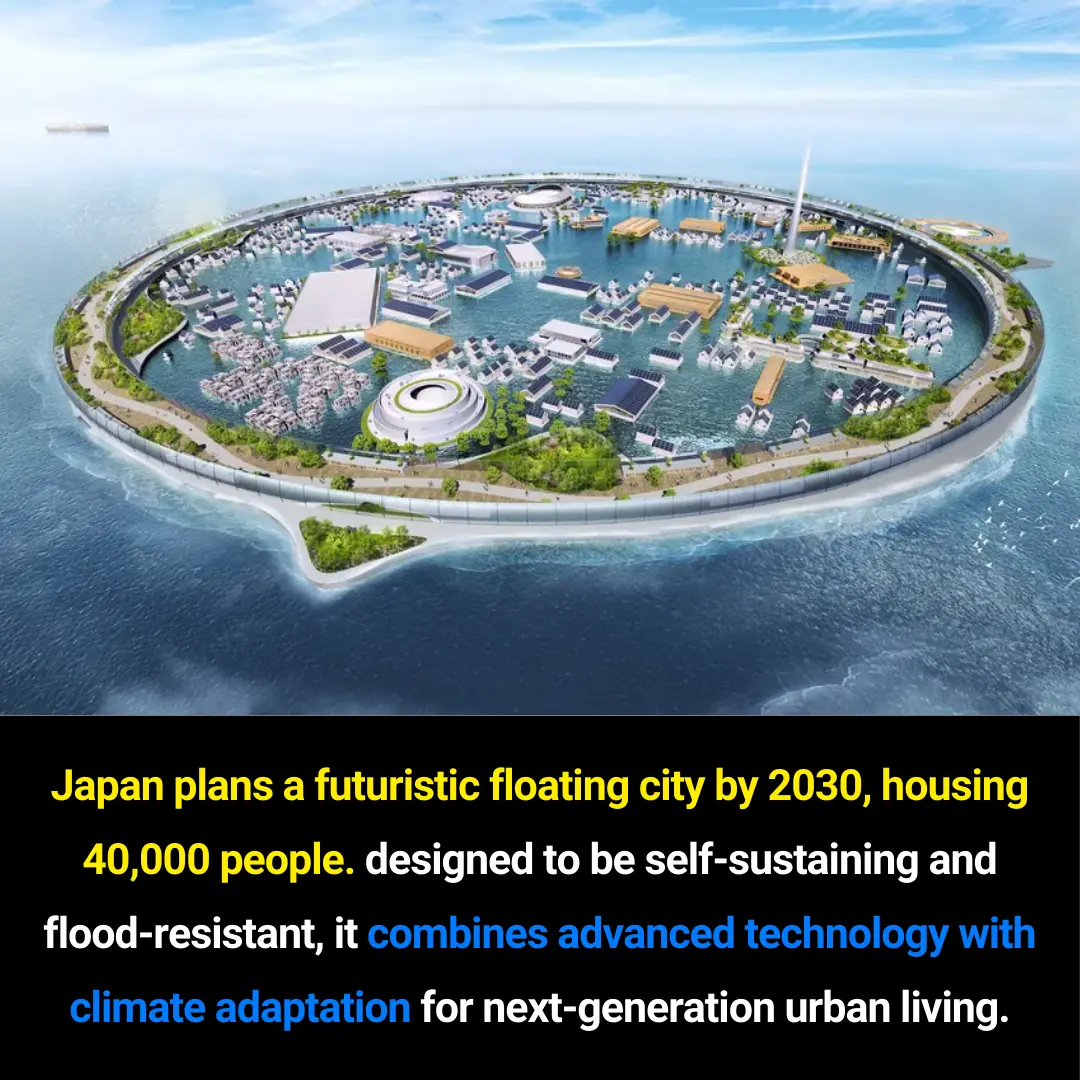
Japan’s Visionary Floating City: A Sustainable Urban Model for 2030 and Beyond
Facts 02/12/2025 17:54
In the 1980s, the former state of East Germany experienced a serious coffee shortage. Struggling to secure enough of the beloved beverage for its population, the government turned to an ambitious solution: a large-scale investment in coffee cultivation in Vietnam. Their plan was simple but bold — establish a reliable overseas coffee supply chain to meet domestic demand.
Yet, history intervened in unexpected ways. As the first generation of Vietnamese coffee plants was growing, the political world around them shifted dramatically. Before East Germans could ever enjoy coffee from those plantations, the country itself ceased to exist. The 1990 reunification of Germany abruptly ended the original mission. But by that point, the coffee plants were already rooted, and Vietnamese farmers were gaining experience. Rather than abandoning the effort, Vietnam chose to build upon it — expanding cultivation, refining processing techniques, and steadily scaling up production over the following decades.
Today, that gamble has paid off. 🇻🇳 Vietnam has become the world’s second-largest coffee producer, surpassed only by Brazil. According to statistics from the International Coffee Organization (ICO) and trade data from the United States Department of Agriculture (USDA), Vietnam produces millions of metric tons of coffee annually — a dramatic rise from its modest beginnings during the Cold War era. What began as a geopolitical solution to a temporary shortage has grown into an industry reshaping the global coffee market.
Vietnam’s rise reflects not just economic ambition, but also persistence, adaptation, and the power of unintended consequences. The country has developed deep expertise in cultivating robusta and arabica beans, building infrastructure, and winning global demand — transforming a relic of Cold War strategy into a pillar of the global commodity supply chain.
In retrospect, the 1980s initiative by East Germany can be seen as more than just a short-term fix. Though the original objective faded with the fall of the Berlin Wall, its legacy lives on in coffee farms across Southeast Asia. It stands as a powerful example of how choices made under one set of assumptions can yield entirely different — and far more consequential — outcomes. The story of Vietnamese coffee is a testament to how global history, shifting politics, and local initiative can combine to produce something far beyond what anyone could have imagined.