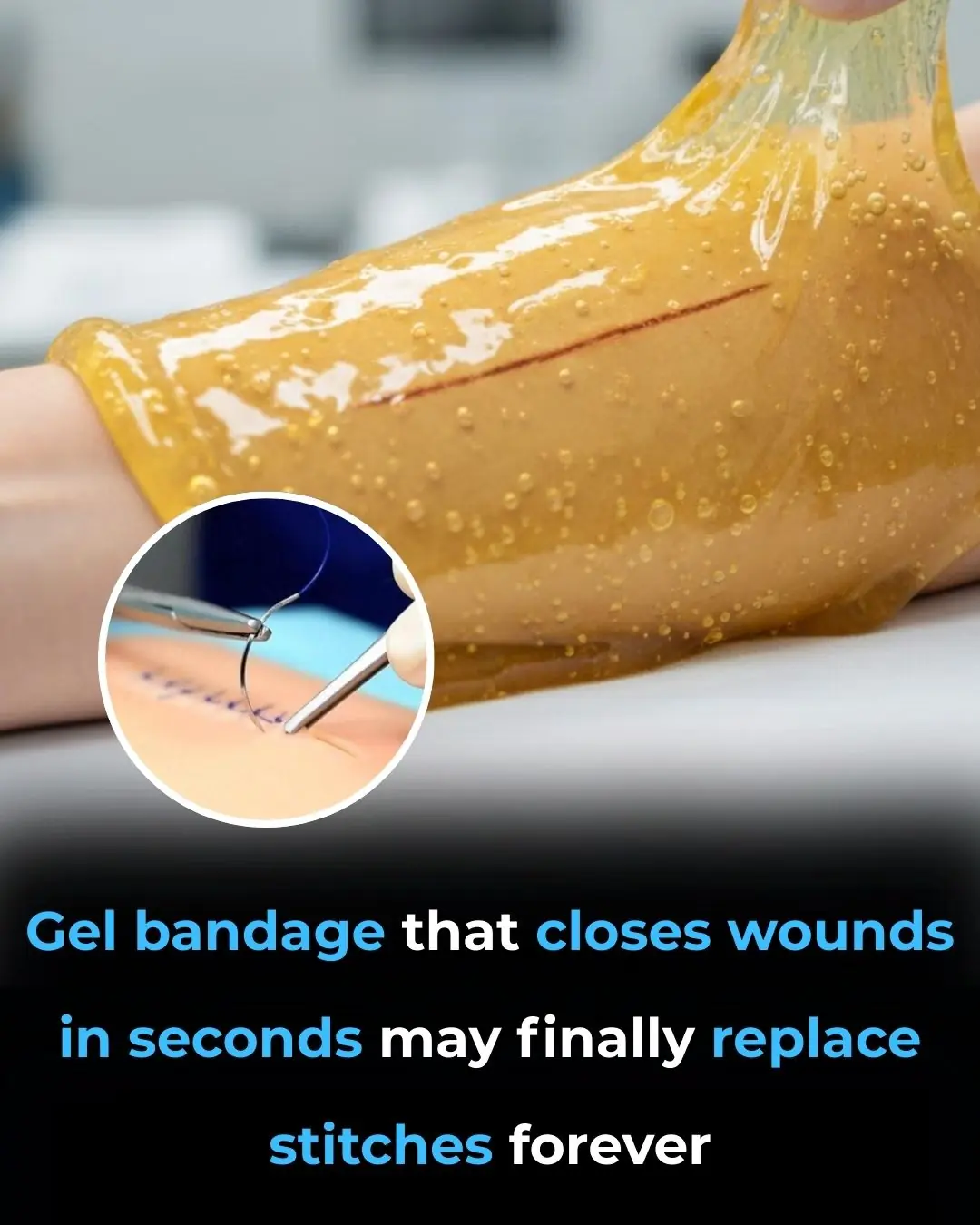
Scientists have recently developed a revolutionary gel bandage capable of healing wounds within seconds, a medical innovation that may soon render traditional stitches obsolete. This cutting-edge gel is designed to instantly seal a wide range of injuries, including cuts, burns, and surgical incisions, mimicking the body’s own tissue while promoting rapid healing and reducing the risk of infection.
The gel, developed by a team of bioengineers, contains a combination of specialized proteins and synthetic polymers that respond directly to the body’s natural chemistry. Upon application, the gel forms a flexible, transparent layer that adheres tightly to the skin and the underlying tissues. Within moments, it effectively closes the wound, creating a protective barrier that accelerates cellular regeneration. The gel’s ability to rapidly seal wounds is a critical step forward in enhancing the healing process.
One of the most significant aspects of this discovery is the balance it strikes between strength, speed, and safety. Unlike traditional stitches or staples, which can cause scarring, discomfort, and require removal, the gel integrates seamlessly with the body’s tissue. As healing progresses, it naturally dissolves, leaving no trace behind. Early trials have shown that deep cuts can be sealed within seconds, and the wound heals completely within days, without showing any signs of infection or inflammation.
The potential applications of this innovation extend far beyond traditional first aid. This smart gel could revolutionize emergency medicine and surgery by providing a faster, more efficient method for treating injuries. For example, paramedics could use it to quickly treat injuries on-site, or surgeons could perform complex procedures without the need for sutures. In remote areas or war zones where access to medical facilities is limited, the gel could significantly improve survival rates by providing an effective means of wound care.
This breakthrough underscores the growing importance of material science in the future of medicine. The development of such advanced wound-care technology represents a major leap forward, suggesting that a single application of this gel may soon replace one of the oldest medical practices in history. Wound care could become faster, cleaner, and virtually painless, with fewer complications and better outcomes.
As research and trials continue, this smart gel bandage is poised to redefine how medical professionals and emergency responders treat wounds. In the near future, it may become an essential tool in medical kits, helping to save lives and improve healing times for patients around the world. Experts from institutions like the National Institutes of Health (NIH) and Harvard Medical School have lauded this development, emphasizing the significant impact it could have on improving patient care, especially in challenging or resource-limited environments.
By integrating advanced material science into healthcare, this innovation not only enhances the quality of medical care but also demonstrates the potential for technological advancements to address some of the most pressing issues in global health.
Sources:
-
National Institutes of Health (NIH) - https://www.nih.gov
-
Harvard Medical School - https://www.hms.harvard.edu