My girlfriend said, "You're not my dad. I don't need to tell you where I'm going." I replied, "Fair enough." Then I stopped asking and stopped caring. She noticed when I didn't come home.
For context, I'm Jake, 29M. My girlfriend Alyssa is 27F. We've been together just over 3 years and living together for one. This wasn't the first time she'd gone out without saying where, who with, or when she'd be back. But it was the first time she said it like that. Sharp, dismissive, almost daring me to argue.
I'd asked a simple question. Not "Who are you texting?" Not "Why are you always out late?" Just "Hey, what's the plan tonight?" That's when she hit me with the line. So I paused. And instead of explaining myself, instead of defending the fact that couples usually communicate basic stuff, I just said, "Fair enough."
She froze for half a second. I don't think she expected that. Alyssa thrives on pushback, on debates, on me trying to prove I'm reasonable while she plays offended. But I didn't give her that. She left 10 seconds later without another word.
And that's where the shift happened quietly internally. Because when the door shut, I realized something. I was exhausted. Exhausted from checking in, from pretending not to notice patterns, from caring more about where she was than she did about how I felt. So I stopped asking.
The next night she went out. I didn't ask. The weekend after that, same thing. Midweek "I'll be back later" texts. I just replied "Okay" and went back to what I was doing. At first she seemed relieved, lighter, smug even, like she'd finally trained me. But then small things started changing.
She lingered in the doorway before leaving, waiting for a question that never came. She'd send vague updates about being out with people that I didn't follow up on. Once she even said, "You don't want to know where I am?" Like it was a joke. I just shrugged.
The real crack, though, the one that made her notice something was wrong, came the night I didn't come home. And that's where this actually starts.
The night I didn't come home wasn't planned. That's important. It was a Thursday. I got off work late, grabbed a beer with a coworker, then another. My phone stayed face down on the bar. No buzzing. No "when are you coming home?" No passive-aggressive check-ins. For the first time in a long while, it felt quiet. Peaceful.
I didn't text Alyssa. Not to be petty. I just didn't feel the need to explain myself. At 6:12 a.m. my phone lit up. Three missed calls. Eight texts. "Where are you?" "Are you serious?" "Hello?" "So you're just not coming home now?" "This isn't funny, Jake." "Answer me."
I stared at the screen, strangely calm. When I got back to the apartment around 8, Alyssa was already dressed, arms crossed, pacing like she'd rehearsed the confrontation. Her eyes snapped up the second I walked in. "Where the hell were you?"
I set my keys down. Took my jacket off. Normal movements. No rush. "I stayed out." "With who?" she snapped. "Where?" I looked at her for a second and said evenly, "I'm not your dad. I don't need to tell you where I was."
The silence that followed was loud. Her mouth actually fell open. "Excuse me?" "You said that to me," I replied. "I figured the rule went both ways." She laughed, but it wasn't real. "That's different." "How?" "Because I'm not the one disappearing all night without saying anything."
I didn't raise my voice. That seemed to piss her off more. "You've been doing that for months," I said. "I just stopped asking." Her face changed then. Not anger. Not yet. Confusion, like she was suddenly unsure of the script. "You're being dramatic," she said. "You're doing this to prove a point." "No," I said. "I'm doing this because I meant what I said. Fair enough."
That's when she realized something she wasn't ready for yet. I wasn't upset. I wasn't jealous. And I definitely wasn't chasing. She stormed out late for work without another word. But before she left, she threw out one last line over her shoulder. "We need to talk about what's going on with you."
I watched the door close and thought, "Yeah, we do. But not for the reason she thinks."
That evening Alyssa came home earlier than usual. I knew because I heard her keys hesitate at the door before unlocking it. Like she was bracing herself. She didn't greet me. Just dropped her bag harder than necessary and said, "So what is this?" Like she'd walked into a hostage negotiation.
I was on the couch, laptop open, half watching something I didn't care about. I muted it. Didn't move. "What is what?" I asked. "This attitude. You've been weird for weeks. Distant. Quiet. And now you're pulling this disappearing act." I almost laughed at that. Now she noticed distance.
"I'm not pulling anything," I said. "I'm just matching energy." She rolled her eyes. "God, don't do that. That's such a cop-out phrase." "Is it?" I shrugged. "Because it feels accurate." She paced the living room, arms crossed, voice climbing. "You don't ask where I'm going anymore. You don't check in. You barely text. That's not normal."
There it was. Not concerned. Not missing me. Control. "You told me you didn't need to tell me where you were going," I said. "So I stopped asking. I respected that." "That doesn't mean you stopped caring." I looked at her then. Really looked. Her jaw was tight. Her phone was already in her hand, thumb hovering like an escape hatch.
"I never said I stopped caring," I said slowly. "I said I stopped asking." She scoffed. "That's the same thing." "No," I replied. "One is curiosity. The other is obligation. You made it clear you didn't want the obligation." She opened her mouth, closed it, then switched tactics. "You're punishing me."
"I'm not punishing you," I said. "I'm adapting." That word set her off. "So what? Now we're just roommates?" she snapped. "We do whatever we want and don't explain anything." I held her gaze. "That's kind of how you've been acting." The room went quiet again. She didn't like when I didn't rise to her tone. Didn't defend myself. Didn't reassure her.
Finally she said softer, "You didn't come home last night." "No," I said. "I didn't sleep," she added, like it was supposed to move me. I waited a beat. "You didn't text until morning." Her eyes narrowed. "I shouldn't have to." I nodded. "Exactly."
She stared at me, realization flickering behind the irritation. This wasn't a fight she could win by being louder. And for the first time since we'd been together, I saw something new on her face. Uncertainty. Because the rules she'd set were suddenly being enforced. Just not in her favor.
The next few days were strange in a quiet, unsettling way. Alyssa didn't explode. She didn't apologize either. Instead she hovered. Suddenly she was home more. Sitting closer on the couch. Asking questions that sounded casual but weren't. "What are you up to tonight?" "Who were you texting just now?" "Are you going out after work?"
I answered honestly but briefly. "Not sure yet." "Just a friend, maybe." Each non-answer landed harder than any argument ever had. By Sunday she snapped. We were in the kitchen, me making coffee, her leaning against the counter scrolling her phone. She sighed dramatically, then louder. "Okay I can't do this," she said. "Do what?" I asked, still focused on the mug. "This weird cold thing. You're acting like you don't even care if I'm here."
That made me pause. I turned and said, "Why would you think that?" "Because you don't react anymore," she said, voice sharp. "You don't get annoyed. You don't ask questions. You don't even seem jealous." There it was. The real issue. "I didn't know jealousy was a requirement," I said. "It is when you're in a relationship," she fired back. "It means you care."
"No," I replied. "It means you're afraid of losing something." She folded her arms. "And you're not afraid of losing me." I thought about it longer than she expected. "I don't know," I said finally. "Not like I used to." Her face tightened. "Wow. So you're just done?"
I didn't say that. "But you're not fighting," she said. "You're not trying to fix anything." "I tried," I said calmly. "For a long time. I asked questions. I checked in. You shut that down." "That was different," she insisted. "I just didn't want to feel controlled." "And I didn't want to feel dismissed," I said. "So I adjusted."
She stared at me like I'd betrayed some unspoken agreement. "You're supposed to want to know," she said quietly. I met her eyes. "You're supposed to want to tell me." That hit her harder than anything else so far. She turned away, suddenly busy with nothing, blinking too fast.
When she spoke again her voice was colder. "So what now?" I took a sip of coffee. "Now we see what this actually is." "When I stopped chasing," she laughed, but it cracked at the edges. "You think you're winning or something?" "No," I said. "I think I'm finally being honest."
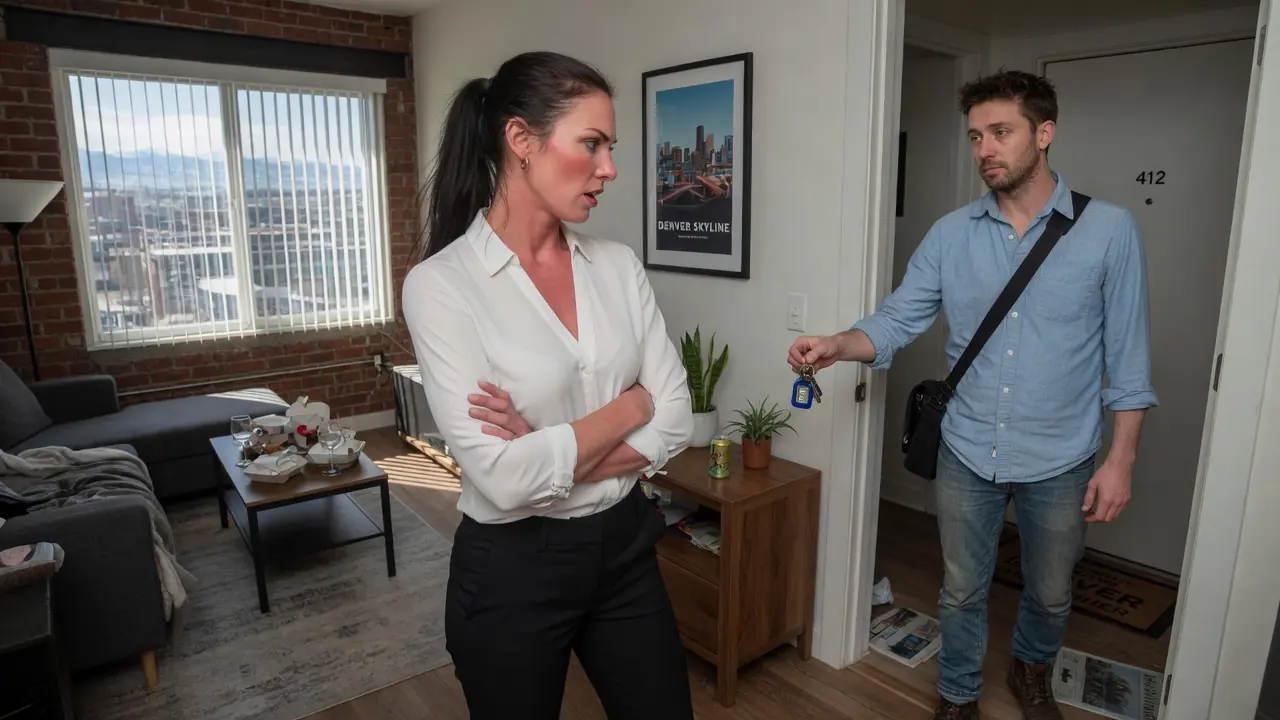
That night she didn't go out. She stayed home. And for the first time I could tell it wasn't because she wanted to be with me. It was because she didn't want to lose control.
After that conversation Alyssa started doing this thing where she'd announce her plans again, but only halfway. "I might go out later," she'd say, watching my face from the corner of her eye. "Okay," I'd reply. No follow-up. No "with who?" No "what time will you be back?" Just "okay." That word drove her insane.
One night she stood in the doorway in a tight black jacket she used to save for going out with friends I'd never met. She adjusted her hair twice, checked her reflection in the mirror, then sighed loudly. "You're really not going to ask anything?" I looked up from my phone. "Do you want me to?" She hesitated. That pause told me everything.
"Well no," she said defensively. "I just think it's weird you don't care." I nodded. "If you say so." She didn't leave right away. Just stood there, keys in hand, clearly expecting something. Concern. Curiosity. Jealousy. Irritation. Anything. I gave her nothing.
When she finally left she slammed the door harder than necessary. She came home at 1:47 a.m. I know the exact time because she announced it. "I'm home," she said loudly, flipping on the hallway light. I didn't move. Didn't respond. She walked into the bedroom. "Seriously? You're asleep?" I cracked one eye open. "Yeah."
She stood there for a moment, then snapped. "Wow you really don't give a fuck anymore." That sentence used to scare me. Used to make my stomach drop, make me scramble to prove she was wrong. This time it just felt observational. "I care," I said quietly. "I just don't chase." She scoffed. "You're acting like you're above this." "I'm acting like I'm tired," I replied. That shut her up.
The next morning she was overly nice. Made coffee. Asked about my day. Even touched my arm in that deliberate way she used when she wanted reassurance without asking for it. It didn't work. Because somewhere between her telling me I wasn't her dad and me sleeping peacefully while she waited for a reaction, something fundamental had changed. I wasn't angry anymore. And that scared her more than any fight ever had.
Because anger meant engagement. Silence meant detachment. And detachment meant she was no longer in control of how much I cared. She just hadn't fully realized yet how far gone I already was.
About a week later Alyssa tried something new. She stopped pretending. No hovering. No fake sweetness. Just cold efficiency. Late nights. Short answers. Phone always face down again. It was like she'd decided, "Fine. If you're not chasing, I'll remind you what you're losing." Only I didn't take the bait.
Instead I noticed how quiet the apartment felt without the tension. How much space there was in my head when I wasn't monitoring her moods or wondering where she was. One night she came home around midnight and tossed her bag onto the chair. "I'm going to stay at Jenna's this weekend," she said, already walking past me. "Okay," I replied.
She stopped dead. "That's it?" I looked up. "Do you want it to be more than that?" Her lips pressed together. "You seriously don't care." I thought about correcting her. About explaining the difference between caring and clinging. But I didn't. "Have a good weekend," I said instead.
She stared at me like I'd just failed some invisible test. Then she laughed, sharp and bitter. "You're being so fake calm right now." "I'm not fake," I said. "I'm just not anxious." That word again. It landed. She left the next morning without saying goodbye.
Friday night I went out with friends. Nothing wild. Pizza, drinks, laughs I'd hadn't realized I'd been missing. I didn't check my phone. Didn't post anything. Didn't think about how it might look. Saturday afternoon I got a text. Alyssa: "Are you home?" I didn't answer right away. An hour later: "Jake." Then: "We need to talk."
When she finally came back Sunday night she looked different. Tired. Unsettled. Like she'd expected something to fall apart and it hadn't. She dropped her bag and said, "You didn't ask how my weekend was." I met her eyes. "How was it?" She hesitated. That hesitation said more than any story could have. "Fine," she said. I nodded. "Good."
She waited for more questions. For interest. For jealousy. None came. That's when she realized the truth she'd been avoiding. I wasn't playing a game. I wasn't trying to teach her a lesson. I was already halfway gone. And she hadn't even noticed when I left.
The first time Alyssa cried about it wasn't during a fight. It was random. Tuesday night. I was making dinner, something simple, and she was sitting at the counter scrolling through her phone like usual. Out of nowhere she said, "Do you even want to be here anymore?"
I didn't answer right away. Not because I was being dramatic, but because I wanted to be honest. "I want peace," I said finally. "However that looks." Her eyes filled immediately. That caught me off guard. "So you're just going to give up?" she asked, voice breaking. "After everything?"
I turned the stove down. "I didn't give up. I burned out." She shook her head. "You're acting like I did something horrible." "I'm acting like I stopped ignoring how I feel," I replied. She slid off the stool and stood in front of me. "I didn't cheat. I didn't lie. I just wanted space." "And I gave it to you," I said. "All of it."
She wiped at her face angrily. "Not like this." That sentence stuck with me. Not no. Just not like this. She didn't want boundaries. She wanted distance on her terms, with the comfort of knowing I'd still be right there when she came back.
She stepped closer. "You don't look at me the same." I nodded. "Because I'm not the same." That's when she said it. Quiet. Almost scared. "Are you going to leave me?" The old version of me would have rushed in with reassurance. Would have said "Of course not." Would have promised to try harder.
Instead I said the only honest thing left. "I don't know." She backed away like I'd slapped her. That night she tried to start a fight. Picked at little things. Accused me of being cold, selfish, manipulative. I didn't bite. Eventually she yelled, "Say something."
So I did. "I stopped asking where you were going because every time I did, you made me feel small. Now you're scared because I don't need to know." She went silent. Not angry silent. Afraid silent. Because for the first time she understood the shift wasn't temporary. I wasn't withholding attention to get leverage. I was detaching because I no longer felt safe needing her.
And once that happens, there's no way back to the version of someone who begged to be included.
After I said "I don't know," the apartment changed. Not in some dramatic way. No slammed doors. No screaming matches. Just this low, constant tension. Like we were both aware something fragile was cracked and neither of us wanted to touch it too hard.
Alyssa started watching me. Not subtly either. She'd look up from her phone when I walked into a room. Ask questions she already knew the answers to. "What time are you off tomorrow?" "Are you working late?" "You seeing anyone after work?" I answered honestly. Calmly. Every time. And every time her shoulders relaxed just a little when the answer didn't threaten her.
That's when it clicked for me. She didn't miss me. She missed predictability.
One night she cooked dinner. Like actually cooked. Something we used to do together but hadn't in months. She poured wine. Lit a candle. Sat across from me and said, "I feel like we've been disconnected." I almost smiled at the understatement. "I feel that too," I said.
Her eyes searched my face. "So how do we fix it?" There it was. The assumption that fixing meant me stepping back into the role I'd quietly vacated. I set my fork down. "What does fixing look like to you?"
She hesitated. "I don't know. You being more present." "I am present," I replied. "I'm just not performing anymore." She frowned. "What does that mean?" "It means I'm not pretending I'm okay with things that hurt me," I said. "And I'm not chasing closeness from someone who treats it like a burden."
Her jaw tightened. "You are rewriting everything." "No," I said. "I'm finally reading it clearly." She pushed her chair back. "So what? I'm the bad guy now?" I shook my head. "I don't need a villain. I just need honesty."
That's when she said the thing that sealed it for me. "You used to try harder." I nodded slowly. "Yeah. And you used to care when I did." Silence stretched between us.
Later that night, lying in bed with space between us that felt intentional, I realized something terrifyingly simple. Even if she changed tomorrow, started communicating, started caring, started choosing us, I wasn't sure I could feel relief. Because relief requires hope. And somewhere along the way I'd stopped hoping. I was just accepting.
And acceptance, once it settles in, doesn't beg for miracles.
The last real conversation we had didn't feel like a breakup talk. It felt like an exit interview. We were sitting at opposite ends of the couch. TV off. Phones ignored. Alyssa kept fidgeting with the sleeve of her hoodie, twisting it around her thumb. "So are we okay?" she asked.
I didn't answer right away. Not because I wanted drama, but because I didn't want to lie. "I think we're honest," I said. "I don't know if we're okay." She exhaled sharply. "You've changed." "I had to," I replied. "The version of me you liked was slowly disappearing anyway."
She looked at me then. Really looked. "You're not fighting for this." I nodded. "Because I already did." Her voice cracked. "I didn't think you'd actually stop caring." That sentence landed heavier than she meant it to. "I didn't stop caring," I said quietly. "I stopped sacrificing myself to prove it."
She shook her head, frustrated, tears spilling now. "You're acting like I pushed you away on purpose." "I think you just didn't notice you were doing it," I said. She went silent again, then asked the question she'd been circling for weeks. "Do you still want me?"
I felt the answer settle before I spoke. "I want peace," I said. "And I don't know if we want the same version of that." She stared at the floor. "So what does that mean?" "It means I'm not scared of you leaving anymore," I replied. "And that probably tells us everything."
She didn't argue. Didn't insult me. Didn't accuse me of being cold. She just nodded slowly, like someone accepting bad news they'd already sensed was coming. Later that night she slept on the couch. I didn't stop her.
And lying alone in our bed, I realized something strange. I wasn't heartbroken. I was clear. Because when someone tells you they don't owe you basic communication, and you finally believe them, you stop building your life around their absence. You start building it without them.
We broke up on a Wednesday morning. No yelling. No tears. No dramatic walk-out. She was packing a bag for a few days, and we both knew what that really meant. "I just need time," she said, zipping it halfway like she might change her mind. I nodded. "Take all of it."
She paused. "You're really okay with this?" I thought about it. About the months of second-guessing myself. About shrinking my questions. About learning to swallow discomfort so she wouldn't feel pressured. "I'm okay with honesty," I said. "This is the first time we've had it."
She looked at me then the way she used to. Like she was trying to remember why she chose me in the first place. "I didn't think you'd ever stop trying," she said quietly. "I didn't think I'd ever have to," I replied.
That was it. She left the keys on the counter. Didn't slam the door. Didn't look back. And when the door closed, I waited for the wave of regret everyone talks about. It didn't come.
What came instead was relief. Not happiness. Not excitement. Just a deep, steady quiet where anxiety used to live. Later that night, alone in the apartment, I realized the moment our relationship actually ended wasn't the breakup. It was when she said, "You're not my dad. I don't need to tell you where I'm going." And I finally believed her.
Because when someone tells you they don't want to be considered, heard, or checked in on, and you stop doing those things, they don't miss the care. They miss the power. I stopped asking. I stopped chasing. I stopped caring in the way that hurt me. And when she noticed, it was already too late.