Never store your cooked rice without knowing this
Leftover rice might seem harmless — a quick, easy meal waiting in the fridge for the next day. But food safety experts warn that storing it the wrong way could turn a simple side dish into a serious health hazard. The culprit is a little-known but surprisingly common condition nicknamed “fried rice syndrome.”
Many families cook in large batches, then refrigerate what’s left for later. While this may seem efficient, rice is uniquely prone to bacterial contamination if not handled properly. The main threat comes from Bacillus cereus, a bacteria that thrives in cooked rice under certain conditions.
Why Cooked Rice Can Become Dangerous
When rice is cooked, any Bacillus cereus spores present in the raw grains can survive the cooking process. If the rice is left sitting at room temperature for more than an hour, these spores can multiply rapidly, producing toxins that are resistant to heat. This means even reheating might not destroy them.
Food poisoning from contaminated rice can appear quickly — sometimes within just an hour after eating. Symptoms include nausea, stomach cramps, fever, vomiting, and acute diarrhea. In severe cases, dehydration and electrolyte imbalance can occur, posing greater risks for children, older adults, and those with weakened immune systems.
What makes the problem worse is that most people never suspect rice as the source of their illness, often blaming other foods instead.
Even Refrigeration Has Risks
While refrigeration slows bacterial growth, it doesn’t stop it entirely. If rice is cooled and stored improperly, bacteria may still spread — just at a slower pace. This is why how you store leftover rice is just as important as where you store it.
The Safest Way to Store Cooked Rice
Food safety specialists recommend the following steps to reduce bacterial growth and keep your rice safe to eat:
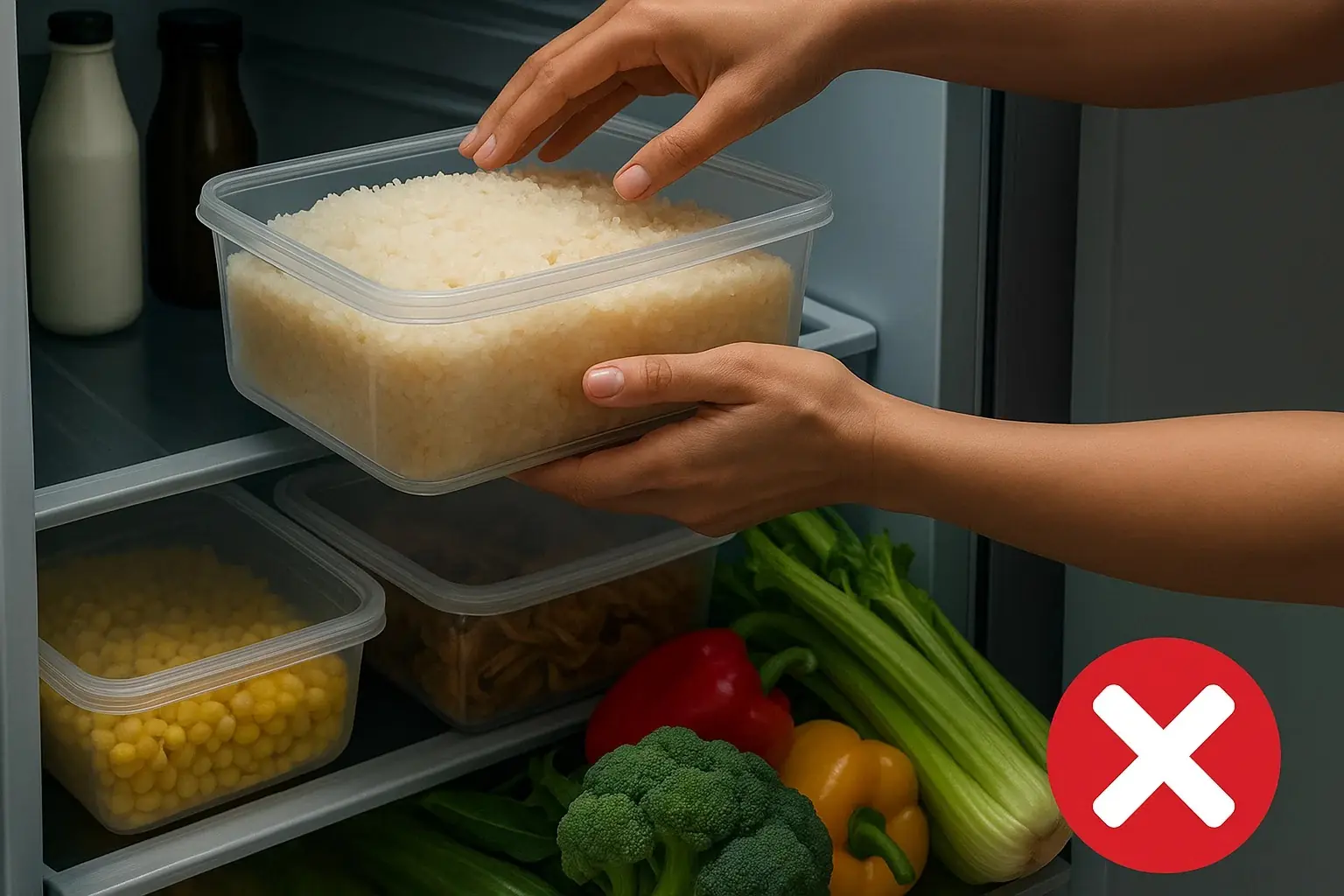
- Cool It Quickly – Do not leave rice sitting in the pot after cooking. Instead, spread it out on a clean tray or shallow dish so it cools faster.
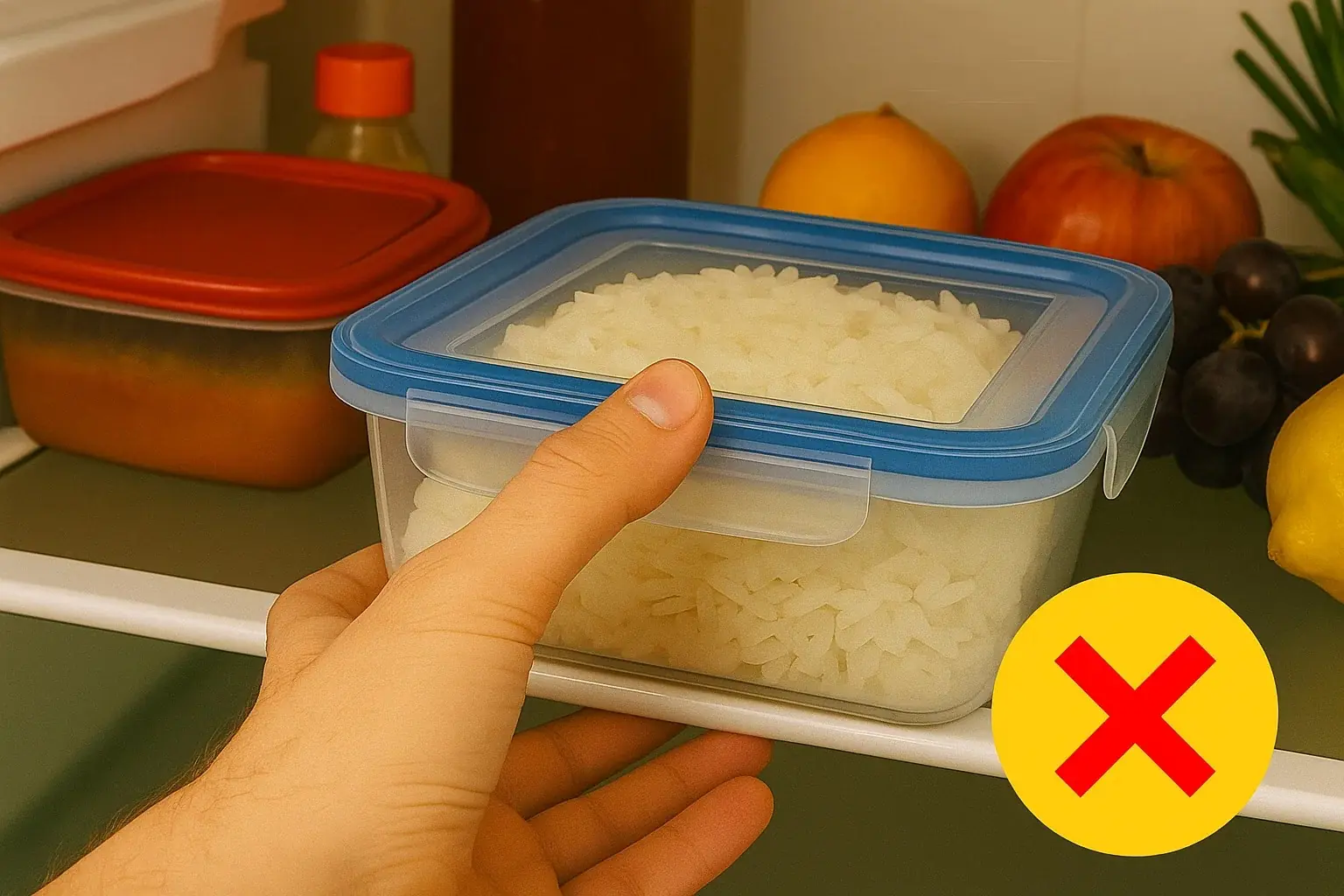
- Use Shallow, Airtight Containers – Transfer cooled rice into a shallow, sealed container to prevent moisture buildup and bacterial contamination.
- Refrigerate Within One Hour – Place the container in the fridge as soon as possible — ideally within 60 minutes of cooking.
- Eat Within 24–48 Hours – The sooner you consume leftover rice, the safer it is.
- Freeze for Longer Storage – When frozen, cooked rice can last up to six months without significant quality loss.
Reheating Rules You Shouldn’t Ignore
When reheating leftover rice, ensure it reaches an internal temperature of 165°F (74°C) before serving. This helps destroy most bacteria that may have grown during storage. However, keep in mind that some bacterial toxins are heat-resistant, so safe storage is still the first line of defense.
Important: Never reheat rice more than once. Each reheating cycle increases the risk of bacterial contamination and toxin production.
Final Takeaway
Rice might be a simple staple, but improper storage can turn it into a surprising source of foodborne illness. By cooling it quickly, storing it in airtight containers, and following strict reheating guidelines, you can enjoy your leftovers safely — without worrying about fried rice syndrome.
Sometimes, the smallest kitchen habits make the biggest difference in keeping your family healthy.
News in the same category


12 Health Hacks Doctors Rarely Share: Secrets for Optimal Health and Well-being

A Parade Moment That Became Global Joy

Nick Vujicic: Living Proof That the Human Spirit Knows No Limits

You’re Made of Stardust – Literally! 🌌🚀

Sea Levels Are Rising Faster Than At Any Time In 4,000 Years 🌍

Your Dog Might Actually Love You More Than Food

Deep Freeze Set to Slam the Eastern U.S. This December

Nike Co-Founder Phil Knight Makes Historic $2 Billion Donation to Cancer Research

Dutch Engineers Tackle the Pacific’s Plastic Crisis with 600-Meter Ocean Vacuum

How to Take a Loop of the Entire U.S. by Train

The Quiet Rise of Everyday Health-Tracking Technology

The Hidden Toll of People-Pleasing: How Emotional Suppression Can Trigger Autoimmune Disorders

The Pudu: The World’s Tiniest Deer and Its Role in South America's Forest Ecosystems

Deep Water Cycle: Scientists Discover Hidden Ocean Beneath Earth's Surface

Mexico City’s Sweeping Bullfighting Ban Marks Major Shift in Cultural and Animal-Welfare Policy

Los Angeles County Erases $180 Million in Medical Debt for 39,000 Residents

The 2025 Atlantic Hurricane Season Intensifies: A Heightened Risk for Major Storms

Europe Faces Unprecedented Heatwave: Rising Temperatures Strain People, Infrastructure, and Agriculture

Revolutionary Light-Based Cancer Treatment Offers New Hope with High Success Rate
News Post

CCF Tea to Burn Belly Fat

DIY Lip Balm with Vaseline and Beetroot: A Natural, Moisturizing Solution for Soft, Pink Lips

Coffee Gel For Eye Wrinkles

Coffee For Instant Skin Brightening

Japanese 4 Steps Glow Secret

30 minutes treatment for dark lips

How to Make a DIY Aloe Vera Night Cream for Glowing Skin

Rice Water Toner To Get Skin That Shines Like Diamond

Salon like Keratin Treatment at Home

Experts reveal the top 7 Shampoos to tackle hair loss effectively

10 Surprising Beauty Hacks You Never Thought You Could Do With Baby Powder

DIY Night Serum For Radiant Skin

Top 8 Foods to Clean and Restore Your Liver Naturally

The Ancient Secret Seed That Revolutionized Wellness: Unlocking the Power of Hibiscus and Cloves

Garlic Remedy for Removing Moles and Skin Tags Naturally: What Works and What to Know

Fibromyalgia: The Hidden Energy Crisis Behind Your Pain, Fatigue, and Sleepless Nights

The Hidden Oil That Sparks Her Desire and Rekindles Your Marriage

Unlock the Ancient Secret of Peach Tree Resin: 15 Life-Changing Benefits You’ll Wish You Knew Sooner

Aloe Vera & Cinnamon: The Traditional Duo That Naturally Supports Your Health, Vitality, and Vision