The Second Life of Lions — Finding Freedom After Rescue.
Life stories 02/12/2025 23:06
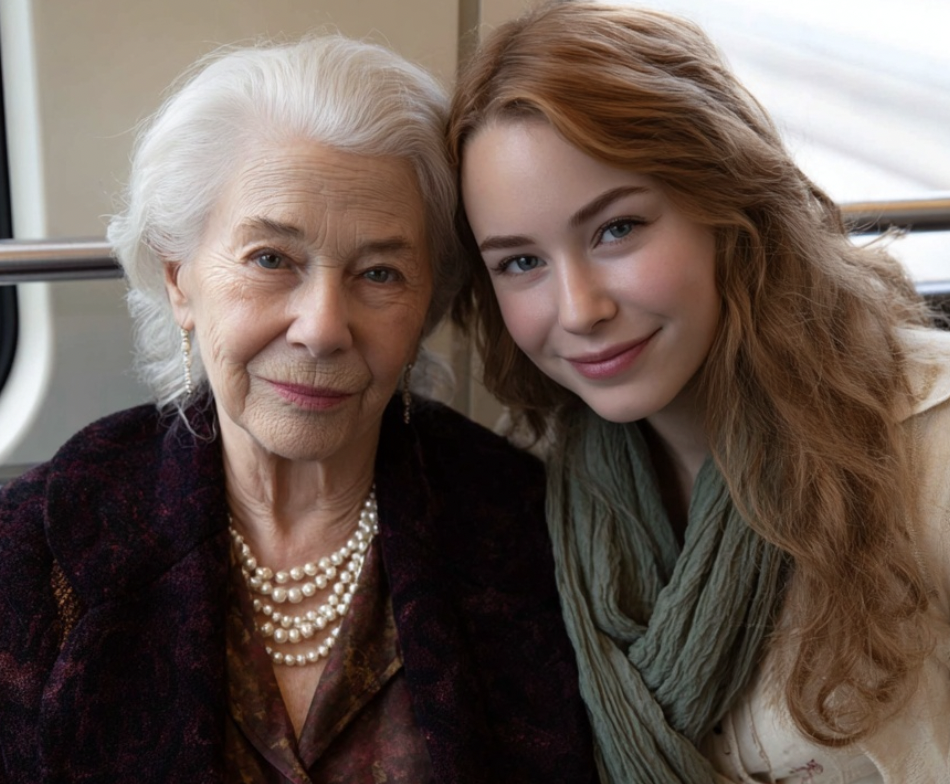
The road home stretched out like an old film reel stuck in a projector—slowly, with crackling sounds, with the feeling that every kilometer demanded something new from her: trembling fingers, pain in her chest, tears she did not allow herself to shed. Svetlana was rushing along UDO Street—a street that led to the past, to what once was a home but now seemed alien, foreign, like a strange name. Her windbreaker was worn, with a frayed sleeve that she nervously fiddled with as if trying to reclaim something lost. Seven years. Seven long, hard years behind bars—as if time had stopped, frozen within the gray walls of the prison, while the world outside continued moving, changing streets, faces, laws, souls. And she remained there—in the past, in pain, in the ashes of one mistake, one moment that destroyed everything.
The bus was stuffy. The air thickened with the smell of strangers’ sweat, cheap soap, and fatigue that had soaked into clothes like a shadow. People sat, buried in their phones, their thoughts, their troubles. But when Svetlana entered—the silence. Not loud, not conscious. Simply—a pause. Eyes slid over her: tall, thin, with piercing gray eyes like carved from ice, and a tattoo on her wrist—dark as memory. She felt those looks like needles. Familiar. Long ago. Since the first time she put on the prison uniform.
And then—a stop. The doors hissed open. And in came an old woman, small, bent, with a cane, as if time itself leaned on her. No one in the bus stirred. No one stood up. As if she was invisible, like a ghost from the past. But Svetlana stood up. Without hesitation. Without words. She just rose as if someone inside whispered: “You must.”
“Please, sit down, Grandma,” she said, her voice trembling but firm.
“Thank you, dear…” the woman smiled weakly, leaning on her hand, trembling but warm. And at that moment, when her cool, dry fingers touched Svetlana’s wrist, the old woman shuddered. Like an electric shock. Like a flash of light in a dark room.
She froze. Her gaze—sharp as a razor—fixed on Svetlana’s face. For a long time. Too long. And suddenly—a whisper, barely audible but shattering the silence like thunder:
“Svetochka?.. Sveta Morozova?”
Svetlana froze. The word “Svetochka” was like a nail driven into her heart. Like a memory she had feared. Like a voice from childhood, from the days when she was just a girl, not a woman with a sentence. She hadn’t heard that name in so many years… And now—it sounded here, in this stuffy bus, from the lips of a woman she thought was dead.
“Grandma Zoya?..” she whispered, her voice trembling like ice in spring.
The very same Zoya Ivanovna. The neighbor from the fifth floor. The one who picked her up in the stairwell when her mother, drunk and helpless, shouted at the wall, and her father disappeared like smoke. The one who fed her pancakes with jam, warmed her with tea, stroked her head when Svetlana cried from pain and humiliation. The one who said: “You are not alone, my girl. I am here.”
“You’re alive… You came back…” Grandma Zoya whispered, tears streaming down her cheeks like spring rain on glass.
Svetlana sank to the bus floor, right at her feet. People finally moved. Some looked away. Some lowered their eyes. Some—felt guilt. Some—shame. And Svetlana sat there feeling something inside, long frozen, beginning to thaw.
“Forgive me, Grandma Zoya…” she whispered. “I didn’t come when you were in the hospital. And then… I went to prison. And no one knew. No one waited.”
“Shhh,” the old woman interrupted, covering her hand with hers. “You came back. That means not all is lost. Nothing is ever lost while there is breath.”
And for the first time in seven years, Svetlana felt—they had been waiting for her. They loved her. They remembered her. And maybe forgiveness was not far away. Maybe it was already here—in this trembling voice, in these wrinkled palms, in this simple, like bread, word: “dear.”
The apartment on the fourth floor—the home that wasn’t
Grandma Zoya’s apartment was small, old, but so warm it felt like the walls breathed. The scent of dried apple compote, medicine, mothballs, and old books hugged like a childhood embrace. Svetlana took off her jacket, carefully placed her shoes in a neat line. A habit from prison. There, everything had to be in order. Otherwise—chaos. And chaos was pain.
Over a cup of tea, in silence, Grandma Zoya quietly asked:
“You went because of your mother then, right? Lyudka told me… How you stood up for her, and then—a blow. One. But fatal.”
Svetlana nodded. Lowered her eyes. Could not speak. Memory was like a knife.
“She died two years ago,” Svetlana whispered. “She never found out I went to prison. Not once did she come. And then… I stopped waiting. At first, I was angry. Then just… nothing.”
“And now?”
“Now… I’m scared. What to do? Who am I?” She looked out the window. Children ran on the playground, laughing, shouting. And she seemed to stand behind the glass—nearby, but not with them. Not one of them.
Grandma approached and placed a hand on her shoulder.
“You are a person. My person. And you still have everything ahead. Even if it seems like there is nothing left.”
A few days later—the first steps
Svetlana got a job as a cleaner at a school. The work was hard but honest. Grandma Zoya gave her her late husband’s old jacket—patched but warm like her heart. In the evenings, they sat over tea, watched old films, remained silent. But that silence was not empty—it was full of understanding, like a cup brimming with warmth.
At work, people sneered. Especially the director—a woman with a face carved from marble and a voice like a prosecutor’s. But one day, she saw how Svetlana darned a torn curtain, nailed a baseboard, fixed a broken door.
“Would you like to transfer to the technical staff?” she asked, and for the first time respect sounded in her voice. “With seniority, benefits, everything.”
Svetlana couldn’t believe it. She looked at her like at a miracle.
One evening—a letter of fate
“Svetochka,” Grandma Zoya called from the kitchen. “I read in the paper… there’s a program ‘Second Chance.’ For people like you. A psychologist, help with documents, even studies. I’ll sign you up, okay?”
Svetlana nodded. Her throat tightened. Then she hugged Grandma tightly. Like in childhood. As if afraid to lose her again.
A month later, she was already attending a rehabilitation center. They didn’t ask why she was in prison. They asked: “What do you want now?”
“I want to learn sewing. For real,” she said at the meeting. “In prison, I sewed everything—from masks to coats. But now I want it to be my business. My life.”
Psychologist Marina smiled:
“We’ll apply to the technical school. Free of charge. You’re no longer Svetlana with a sentence. You’re a student.”
A new life—stitches that mend the soul
In sewing classes, she sat among girls 15 years younger. At first shy. Then, in half an hour, she sewed a cosmetic bag. Neat, even, beautiful.
“You have the hands of a master,” said the teacher.
And something ignited inside her. As if she felt for the first time that she could be good. Real.
“You’re glowing, Sveta,” said Grandma Zoya. “You must live. Not be afraid to live.”
He—who never asked “why”
Konstantin. Tall, with glasses, a beard like a kind storyteller. Came after class:
“Did you sew that red blouse in the hall?”
“Yes.”
“Wonderful. We’re opening a studio—a social project. Looking for masters. Want to try?”
She looked at him. For a long time. Then nodded.
The finale? No. The beginning.
By spring, she was already working in a cozy atelier at the corner of Lenin and Parkovaya. Sewing. Smiling. Hosting masterclasses for women who were afraid to start. Like she once was.
And Grandma Zoya… passed away in autumn. In her sleep. With a smile. In the closet—a box. Newspapers, letters, drawings. And a note:
“I always believed in you. With love, your Grandma Zoya.”
Svetlana cried. But those were tears of gratitude.
Two years later—her own atelier. “Second Thread.” The name came by itself. Because with that “second thread,” it all began.
An overlocker on the table. A photo of Grandma Zoya on the wall. Her eyes—soft, strict. Reminding: you are not alone.
Konstantin didn’t leave. He never asked “what did you do,” but “what do you want today?”
One day, he placed a ring on the table:
“What if we start over? Completely?”
She didn’t answer. Just reached out her hand—with a scar where the tattoo used to be. Now—an embroidery. Beautiful. Like a new life.
The girl in the lilac dress
At the opening of a new branch—a girl. Ten years old. In an old jacket. With hope in her eyes:
“Can you sew me a dress? I’ve never had my own.”
Svetlana crouched down:
“You will. Both the dress and you—your own. Everyone has a beginning. Even if everything was different before.”
The last scene
Late at night. Snow. Silence. An old song playing from the speaker.
Svetlana stands by the window. Sees her reflection. A woman. Calm. Strong. Light in her eyes.
She is not “former.” Not “freed.” Not “one who made a mistake.”
She is Svetlana. The one who gave up her seat on the bus. And whose life took a different path.
If someone asked: “Do you believe in miracles?”
She would smile:
“Yes.”
But sometimes a miracle is simply someone’s warm hand on your wrist.