The Gut-Heart Connection: How Your Gut Microbiome Affects Your Heart Health
Facts 09/12/2025 00:01

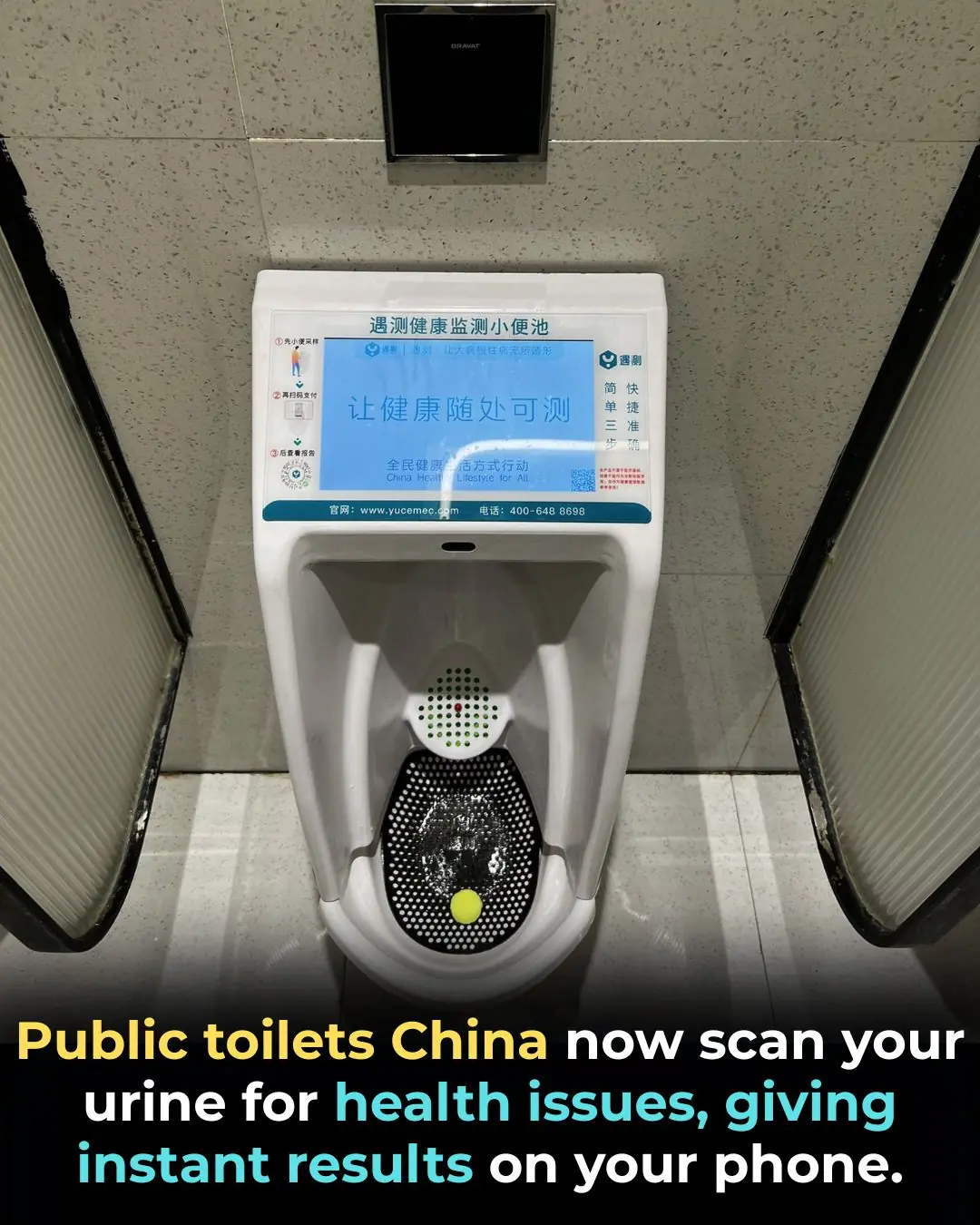
What if the earliest warning signs of deadly cancer weren’t hidden deep inside your body, but were quietly leaving it every single day — literally flushed away?
It sounds almost unbelievable, yet scientists are discovering that our urine carries a wealth of clues about our health, including silent signals from some of the deadliest cancers.
For years, detecting pancreatic and prostate cancers early has been like chasing whispers in a storm — difficult, imprecise, and too often, far too late. Pancreatic cancer is a master of disguise, advancing quietly until treatment options are limited. Prostate cancer, while far more common and often treatable, has still led countless men through a maze of false alarms and invasive tests triggered by unreliable screening.
Now, researchers have unveiled a breakthrough: a urine-based cancer test that uses cutting-edge sensors and artificial intelligence to detect disease with remarkable accuracy — sometimes before a single symptom appears. And the process? As simple as a strip, a drop, and a few minutes.
We already know that catching cancer early saves lives. But for pancreatic and prostate cancers, the diagnostic window is often slammed shut before anyone even realizes it’s there.
Pancreatic cancer is particularly elusive. Nestled deep in the abdomen, hidden behind other organs, tumors can grow silently for months or years. If symptoms appear, they’re usually vague: mild nausea, back pain, appetite loss, or subtle yellowing of the skin and eyes. By the time more obvious signs show up, the cancer has often spread, leaving surgery or curative treatment off the table. The result is grim — only about 12% of patients survive five years past diagnosis. Even more troubling, incidence rates are climbing, especially among younger Black women, with diagnoses increasing by over 2% annually in women under 55.
Prostate cancer poses a different challenge. It often grows so slowly that many men live with it without knowing — and without harm. The PSA (prostate-specific antigen) test, the standard screening tool, is far from perfect. PSA levels can rise for reasons unrelated to cancer, producing false positives and leading to unnecessary biopsies, anxiety, and even overtreatment of harmless tumors. The backlash has led some men to skip screening altogether.
Behind these individual cases lies a systemic problem: modern healthcare is still largely reactive, not preventive. Most diagnostic tools are expensive, require specialized facilities, or demand invasive procedures — creating barriers for millions, especially in rural or underserved communities.

Unlike blood, which requires careful collection and tends to maintain a narrow chemical balance, urine is easy to collect, noninvasive, and rich with diagnostic data. Researchers call it a “biofluid goldmine” — a constantly updated health report that reflects what the body is processing and excreting in real time.
When cancer develops, it disrupts normal cell function, producing byproducts and molecular “fingerprints” that differ from healthy cells. These unique markers — proteins, metabolites, microRNAs — can be detected in urine, if we have the right tools.
Until recently, identifying these subtle patterns was costly and slow, relying on complex lab equipment like mass spectrometry. But with advances in nanotechnology and optical sensing, the faintest molecular vibrations can now be amplified into clear, measurable signals.

Scientists at the Korea Institute of Materials Science developed a test using a method called Surface-Enhanced Raman Scattering (SERS). Imagine molecules giving off tiny “sound waves” of vibration. SERS amplifies these vibrations using nanostructured metal surfaces — in this case, gold grown into microscopic, coral-like formations on a paper strip. These structures act like molecular antennas, concentrating even the faintest cancer-related signals in urine.
A single drop of urine on the strip produces a rich molecular fingerprint. The data is then analyzed by deep learning algorithms — powerful AI models like recurrent neural networks (RNNs) and convolutional neural networks (CNNs) — trained to distinguish healthy patterns from those of pancreatic and prostate cancers.
In clinical trials with 19 pancreatic cancer patients, 39 prostate cancer patients, and 60 healthy volunteers, the test achieved up to 99% accuracy. A related microRNA-based version for early pancreatic cancer reached 97% sensitivity, far exceeding the performance of traditional markers like CA19-9.
The test kit includes both the paper strip and a portable handheld reader — no lab equipment, dyes, or chemicals required.
Meanwhile, global research teams are expanding the concept. One large-scale study analyzing nearly 2,000 urine samples identified protein biomarkers that not only detect prostate cancer but also assess its severity — something PSA tests cannot reliably do.

Picture this: checking for some of the deadliest cancers could be as simple as brushing your teeth. No appointments. No needles. No waiting for symptoms to emerge. Just a quick at-home test with near-instant results.
That vision is moving rapidly toward reality. The Korean team has already built a prototype, and lead researcher Dr. Ho Sang Jung envisions pharmacy-ready kits available worldwide.
For people in rural or underserved areas, this could be transformative. Instead of relying on expensive scans or specialist visits, anyone could screen themselves regularly — catching disease early, when it’s most treatable.
The potential savings in both lives and resources are immense: fewer unnecessary prostate biopsies, faster interventions for pancreatic cancer, and dramatically reduced treatment costs by shifting from late-stage care to early prevention.

This innovation is part of a growing shift toward personalized, at-home health monitoring. AI-powered apps can already detect skin cancer from smartphone photos, wearable devices can track heart rhythms, and voice-analysis tools are being tested to detect early signs of neurological diseases.
In this future, the bathroom, not the hospital, may be the first line of defense. A countertop device could scan your urine, analyze your breath, and check your skin — all before you leave for work.
But technology alone isn’t enough. These tools must be affordable, accessible, and accompanied by public education campaigns to encourage routine use. The real revolution comes when early detection becomes as normal — and as habitual — as brushing your teeth.
The most powerful part of this breakthrough isn’t just its accuracy or simplicity — it’s the shift in mindset it represents: from waiting for illness to acting before it takes hold.
A single drop of urine might soon reveal what’s wrong long before your body feels it. The only question is whether we’re ready to listen.
In the words of Dr. Domenech Asbun, a pancreatic and liver surgeon at Miami Cancer Institute, this is “a step forward in diagnosing hidden cancers before it’s too late.” And for diseases like pancreatic cancer, where timing is everything, those extra months or even weeks can be the difference between life and loss.
If the future of healthcare is about empowerment, prevention, and personal responsibility, then innovations like this aren’t just medical breakthroughs — they’re lifelines. And they’re reminding us that sometimes, the answers we’ve been searching for have been right there all along, quietly passing through our hands.