How Cats Use Smell and Earth’s Magnetic Field to Navigate Home Over Long Distances
Facts 02/12/2025 18:04
For years, many people have heard about the HPV vaccine yet still felt uncertain: Does it really prevent cervical cancer? Is it safe? Does it actually make a difference in the long run? These questions are understandable, especially when so much vaccine information online is emotional, confusing, or simply incorrect.
But today, a growing body of high-quality scientific research is giving much clearer answers. New evidence—stronger and more comprehensive than anything available before—reveals that the HPV vaccine is not just theoretically protective, but is already preventing cervical cancer in real populations, especially among younger generations.
If you are trying to make an informed decision for yourself or your child, what scientists are now documenting could make that choice far more straightforward.
Two major scientific efforts have combined decades of results into the clearest picture yet: the HPV vaccine prevents cervical cancer.
Researchers analyzed data from:
60 clinical trials involving more than 150,000 participants
225 real-world population studies including over 132 million people worldwide
When comparing vaccinated individuals with those who were never vaccinated, the same pattern appeared again and again:
Girls vaccinated at or before age 16 were about 80% less likely to develop cervical cancer (Cochrane Review, 2025).
Significant reductions were observed in high-grade cervical lesions—the exact abnormalities most likely to develop into cancer if left untreated.
Rates of anogenital warts, also caused by certain HPV types, dropped sharply in both men and women.
Vaccines such as Cervarix, Gardasil, and Gardasil 9 showed excellent protection against the HPV strains responsible for the majority of cervical cancer cases (World Health Organization).
Real-world national health registry data tell the same story. Countries that introduced the HPV vaccine early—such as the UK, Sweden, Australia, and Denmark—are now reporting dramatic declines in cervical cancer among young women who grew up with the vaccine (The Lancet).
In short:
This is no longer theory. This is real-world cancer prevention happening today.
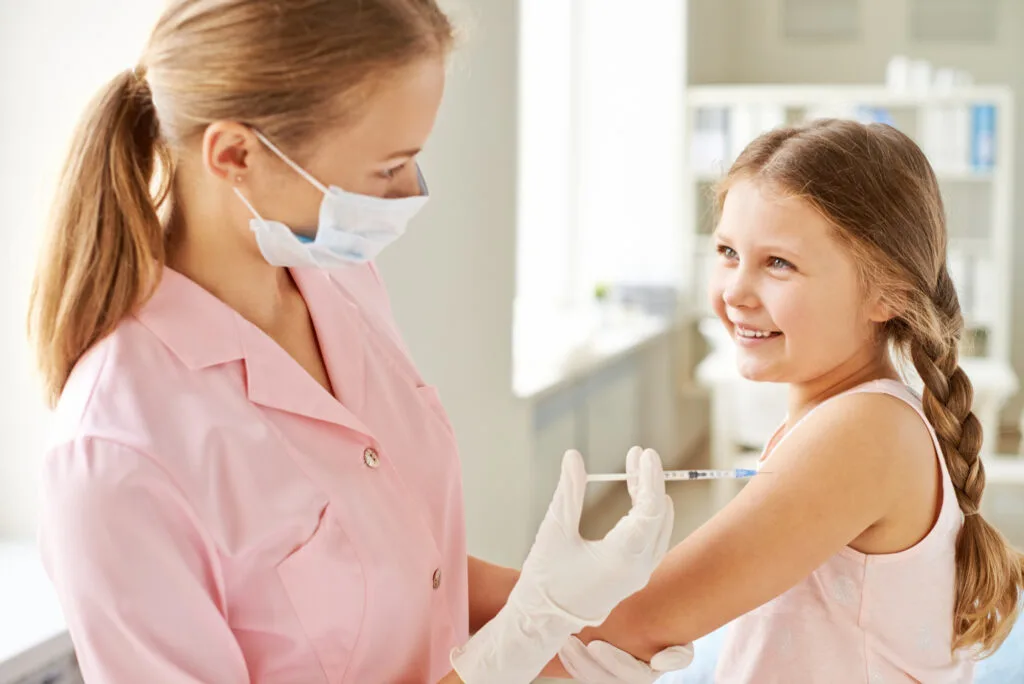
One of the most important findings from recent research is that age at vaccination strongly influences effectiveness.
HPV is typically transmitted through intimate skin-to-skin contact, often soon after someone becomes sexually active. Because of this, the vaccine works best before exposure to HPV.
This is why many countries vaccinate students around ages 12–13, when:
The immune system responds most effectively.
Most young people have not yet encountered HPV.
Across studies, girls vaccinated at or before age 16 saw the largest drop—around 80%—in cervical cancer risk compared with unvaccinated individuals (Cochrane Collaboration, 2025). Those vaccinated later still benefited, but the protection was noticeably reduced.
It is also important to remember that HPV is not just a women’s health issue. High-risk HPV types can cause cancers of:
the anus
the penis
the vulva and vagina
the oropharynx (throat and tonsils)
For this reason, many countries, including the U.S., UK, Canada, and Australia, now vaccinate both boys and girls (CDC; Public Health England). Higher vaccination rates across all genders reduce the amount of virus circulating in the community, protecting everyone through herd protection.
HPV-related cancers often take 10–30 years to develop. By preventing infection early, the vaccine interrupts the disease process long before dangerous cell changes begin.
Early vaccination is therefore not only effective—it is crucial.

Safety concerns are among the most common reasons people hesitate to get vaccinated. The newly reviewed evidence provides an exceptionally clear safety profile.
Across:
60 clinical trials
150,000+ participants
The HPV vaccines were consistently shown to be safe and well tolerated. The most common side effects were mild:
soreness or redness at the injection site
mild fever
fatigue or brief discomfort
These effects faded quickly and occurred at rates similar to other routine vaccines (CDC; Mayo Clinic).
Most importantly, serious side effects were extremely rare—and occurred at similar rates in vaccinated and unvaccinated groups, meaning the vaccine did not increase the risk of serious health problems.
The much larger real-world review of 132 million people confirmed this even more strongly. Researchers specifically investigated online claims of chronic illness or long-term complications. When these claims were compared with actual medical records, no evidence supported a link between the HPV vaccine and serious long-term harm (World Health Organization; European Medicines Agency).
In simple terms:
The HPV vaccine has an exceptionally strong safety record.

The implications are significant.
Countries that introduced HPV vaccination early and reached high coverage are already seeing:
fewer cervical cancer cases in young women
fewer high-grade cervical abnormalities
less need for biopsies and surgical treatments
reduced emotional and financial burden on families
And these benefits extend beyond cervical cancer. Over the coming decades, experts expect reductions in HPV-related cancers of the throat, anus, vulva, vagina, and penis (National Cancer Institute).
Although these cancers develop more slowly, rising vaccination rates today will shape healthier populations for the next generation.
The HPV vaccine is not simply a medical recommendation; it is becoming one of the most powerful cancer prevention tools ever developed.

The conclusion from all this research—clinical and real-world—is clear:
Girls vaccinated at or before age 16 have about an 80% lower risk of cervical cancer. That is a remarkable level of protection for something completed in a routine clinic visit.
At the same time:
The vaccine’s safety is supported by massive, long-term datasets.
Serious adverse events are not linked to the vaccine.
Benefits extend to both women and men.
Parents: Talk with your child’s doctor about vaccination between ages 9–14.
Teens and young adults: If you missed the vaccine earlier, you may still benefit up to age 26 (and in some cases up to age 45).
Anyone with a cervix: Continue routine cervical screening, even if vaccinated—screening and vaccination work best together.
You can't control every risk in life. But choosing HPV vaccination and regular screening provides a clear, effective way to reduce the risk of cervical cancer for yourself and the people you love.
Cochrane Collaboration. Effects of Human Papillomavirus (HPV) Vaccination Programmes on Community Rates of HPV-Related Disease and Harms from Vaccination (2025).
Centers for Disease Control and Prevention (CDC).
World Health Organization (WHO).
European Medicines Agency (EMA).
The Lancet.
National Cancer Institute (NCI).
(Primary reference you provided: Cochrane Database of Systematic Reviews, 2025, CD015363)
If you’d like, I can also:
✅ rewrite this in a more formal scientific tone,
✅ convert it into a shorter news-style article,
or
✅ create an infographic-ready summary.