The missing teenager was Joseph Patrick "Joey" Martin, a 15-year-old student from the Kerhonkson and Samsonville area of Ulster County, New York. The transcript repeatedly renders the community as "Kongen," but contemporary missing-person material and later court records identify the case with Kerhonkson, Samsonville Road, and the Town of Rochester in Ulster County.
The two friends at the center of the case were Daniel L. Malak and Alexander Barsky. Their surnames are frequently mistranscribed in the source as "Malik" and "Barski." A 2014 New York appellate decision states that Martin, Malak, and Barsky were each 15 years old on March 25, 1996.
The plan that night was not merely to meet vaguely somewhere in the woods. Court records establish that the boys arranged to meet near the intersection of Schwabie Turnpike and Samsonville Road and then go to a makeshift cabin in the woods where they intended to drink beer, smoke marijuana, and watch Comet Hyakutake. Martin's brother overheard a three-way telephone conversation in which the meeting was arranged.
The transcript includes several details drawn from television reconstructions and later interviews that are not all established in the published court record. For example, the story that Barsky returned from Brooklyn in a yellow taxi and discarded Martin's bones in multiple trash cans is more specific than the appellate decision. The court record confirms that Barsky returned to the site in the winter of 2002, collected remains in black plastic bags, and disposed of them after returning to New York City, but it does not establish every transportation and disposal detail repeated in dramatized accounts.
The motive also requires careful wording. At Malak's trial, Barsky testified that Martin had stolen money and marijuana from him during the months before the killing. Barsky and Malak then formed a plan to lure Martin to the cabin and attack him. It is therefore safer to describe the motive as retaliation over alleged thefts rather than to state as an uncontested fact that Martin stole one particular stash only days before his death.
Barsky was initially charged with second-degree murder, but in August 2008 he waived indictment and pleaded guilty to first-degree manslaughter. He received a sentence of 3 1/3 to 10 years. Malak went to trial, was convicted of second-degree murder in 2010, and received 15 years to life, consecutive to the sentence he was already serving for the unrelated 1997 murder of George Allison. The New York Appellate Division affirmed Malak's conviction in 2014.
A Fifteen-Year-Old Disappears
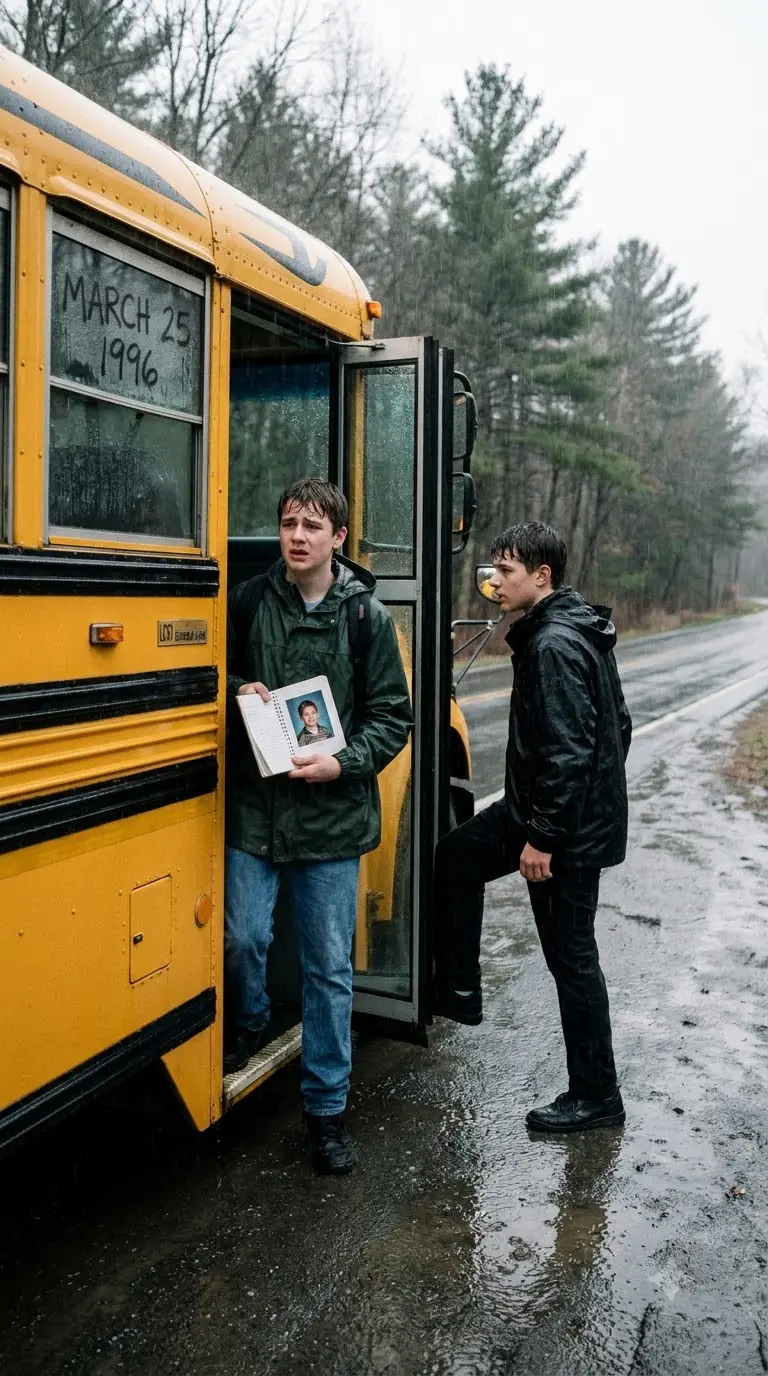
On the night of March 25, 1996, people across the northeastern United States were looking toward the sky for Comet Hyakutake. In rural Ulster County, 15-year-old Joey Martin had plans of his own. He intended to meet two longtime friends, Daniel Malak and Alexander Barsky, and spend part of the night at a rough cabin the boys had built in the woods.
Joey lived along Samsonville Road and attended Rondout Valley High School. He was known as an athletic teenager and participated in track, and his family later described him as the kind of boy whose routines were familiar even when he occasionally pushed the rules. On this Monday night, he planned to leave after the household had settled down and meet his friends a short distance away.
According to the later court record, Joey, Malak, and Barsky participated in a three-way telephone call that evening. Joey's brother overheard the conversation. The three agreed to meet near Schwabie Turnpike and Samsonville Road for beer, marijuana, and comet watching.
Sometime after 10:00 p.m., Joey climbed out of his bedroom window and left home. He was supposed to return. Instead, that was the last night his family saw him alive.
The Story His Friends Told
The next morning, Joey did not appear where his family expected him. He had not slept in his bed, and he did not get on the school bus. His absence quickly moved from being an irritation or teenage mystery to something much more frightening.
His family began calling people who might know where he was. Malak and Barsky provided what appeared to be the same simple explanation: Joey had planned to meet them, but he never arrived. They claimed they waited and eventually went home without him.
That account became one of the foundations of the early investigation. If Joey never reached the meeting point, then whatever happened to him could have occurred somewhere between his home and Schwabie Turnpike. Investigators searched the route and the surrounding woods while considering possibilities ranging from an accident to a voluntary disappearance.
The idea that Joey might have run away initially seemed plausible to investigators because he had previously stayed out late or away from home. But his family did not believe the circumstances fit a deliberate departure. He had left possessions and money behind, and there was no clear preparation for a long absence.
Searching the Road and the Woods
The area around Samsonville Road was heavily wooded and dark at night. Searchers covered trails, roadside areas, and stretches of forest between Joey's house and the location where he was supposed to meet his friends. The lack of a clear witness to his movements after leaving home made every possibility difficult to eliminate.
At one stage, investigators examined broken automobile glass found in the area. The possibility that a vehicle had struck Joey and that a driver had concealed what happened could not immediately be dismissed. Hair associated with the glass was sent for analysis, but it proved to be animal hair rather than evidence connected to Joey.
The search expanded. Family members, friends, police, and community volunteers looked through the woods without finding a body, clothing, or another definitive clue. The absence of physical evidence left detectives dependent on statements from people who had seen Joey before he disappeared.
Among the most important of those statements were the accounts given by Malak and Barsky. Both boys acknowledged that they had arranged to meet Joey. Both insisted he had never arrived.
Suspicion Falls on the Family
As the investigation continued, detectives looked closely at Joey's family circumstances. His biological father had died years earlier, and his mother, Cathaleen Martin-Lightstone, had remarried Lance Lightstone. Like many blended families, the household had experienced tension, and Joey was reportedly protective of his mother.
Because family members and people close to a missing child are routinely examined, Lance came under scrutiny. Investigators questioned his work schedule and his location on the night Joey disappeared. The source transcript portrays this phase as a period of intense suspicion, particularly because Lance had returned home earlier in the week than his normal work routine suggested.
That theory eventually weakened when investigators found evidence placing Lance in New York City around the critical period. Later accounts describe a telephone call from his Manhattan apartment near the time Joey left home. Whatever discomfort had existed between Joey and his stepfather, investigators no longer had a factual basis to place Lance at the scene of Joey's disappearance.
For the family, the experience added another layer of pain. They were already searching for a missing child while also confronting the possibility that suspicion could turn toward the people closest to him.
A Cabin in the Woods
The boys' makeshift cabin should eventually become one of the most important locations in the case, but in 1996 it produced no obvious answer. It had been built in the woods near Malak's residence and served as a neighborhood hangout. The later appellate record described it as a ramshackle structure made with materials including stockade fencing, sheet metal, metal pipes, and a blue tarp.
Investigators knew the boys had used the area before. Beer bottles and signs of teenage gatherings were not surprising there. What police did not know was that the cabin was not merely the place Malak and Barsky had intended to visit after waiting in vain for Joey.
Years later, Barsky would admit that Joey had arrived exactly as planned.
The three boys had met near the intersection and walked through the woods together. The statement that Joey never showed up was a lie designed to move the investigation away from the one place where the truth could have been found.
Other Leads Go Nowhere
With no body and no confession, investigators pursued other possibilities. The transcript describes attention turning toward an older teenager who sometimes supplied alcohol to younger boys and who left the area around the time Joey disappeared. Police examined whether Joey could have traveled with him or whether the older youth could have harmed him.
Those theories did not produce evidence tying that person to Joey's disappearance. Hair or other material examined from a vehicle did not establish that Joey had been inside. The lead faded like several others before it.
Another tip involved teenagers allegedly boasting at a party about retaliating against Joey over drugs. The story was detailed enough to warrant attention, and investigators searched wooded areas again. Nothing supported the dramatic account, and it ultimately proved unreliable.
As months became years, the case accumulated tips without producing an answer. Each new possibility briefly reopened hope for the family, only to collapse under investigation.
A Family Keeps Joey's Name Alive
Cathaleen and Lance continued appealing publicly for information. Joey's photograph appeared in missing-person material, and his family participated in vigils and media coverage designed to keep the case from disappearing with time.
The community also continued to remember him. On anniversaries of his disappearance, relatives and classmates gathered, hoping publicity might reach someone who had remained silent. Age-progressed images attempted to show what Joey could look like if he were still alive.
For the family, the uncertainty was its own form of punishment. Without remains or a reliable witness, they could not know whether Joey had died soon after leaving home or whether there was still some remote possibility that he was alive elsewhere.
Meanwhile, the two boys who knew exactly what had happened continued living with the secret.
Daniel Malak Commits Another Murder
On August 5, 1997, a little more than a year after Joey disappeared, Daniel Malak became involved in another killing. Sixty-two-year-old George Allison was shot outside his Samsonville-area weekend home, and his vehicle was stolen.
Malak was arrested after the stolen vehicle was located. He later pleaded guilty to second-degree murder and received a sentence of 20 years to life. The crime permanently changed how investigators and the community viewed the teenager who had been one of the last people expected to meet Joey Martin.
Police again questioned whether Malak's capacity for serious violence could have relevance to Joey's unresolved disappearance. Still, suspicion was not evidence. Malak maintained the old story that Joey had failed to appear that night in 1996.
The Martin investigation remained open, but there was still no proof that could transform community rumor into a criminal case.
A Cold Case Gets New Eyes
In 2007, New York State Police Investigator Peter Cirigliano began reviewing the old file. More than eleven years had passed since Joey vanished. By then, the case consisted of boxes of reports, old witness statements, failed leads, and the accumulated frustration of investigators who had come before him.
Cirigliano returned to the basic timeline. He reviewed what Joey's brother had said and compared it with the statements Malak and Barsky had given soon after the disappearance. Rather than beginning with a new theory, he reconsidered the words that had shaped the investigation from the beginning.
Television accounts of the case emphasize two phrases that caught his attention. Barsky had described going home and "immediately" going to bed, while another statement used wording similar to "we all" when describing movements that supposedly involved only two boys. Those phrases were not proof of murder, and they would not by themselves support an arrest, but they helped persuade the cold-case investigator that the old interviews deserved to be repeated.
Malak was already in prison. Barsky, however, was living in Brooklyn and could be questioned again outside the framework of the original teenage interviews.
The 2008 Interview
In May 2008, investigators brought Alexander Barsky in for questioning. At first, he repeated the story he had maintained since 1996: Joey never arrived, and he knew nothing about what happened afterward.
Investigators continued the interview and asked Barsky to submit to a polygraph examination. The test did not produce a result investigators regarded as consistent with his story. A polygraph is not proof of guilt, and the later criminal case did not depend on the test itself. Its importance was that the questioning continued until Barsky began revealing details he had concealed for twelve years.
The published appellate decision records the turning point more plainly than the dramatized versions. Barsky eventually admitted what had happened and led investigators back to the cabin and the place where Joey's remains had been concealed.
For the first time since March 1996, police were no longer investigating a missing-person mystery. They were investigating the killing of Joseph Martin.
What Happened at the Cabin
According to Barsky's testimony, he and Malak had developed a plan to lure Joey to the cabin and attack him. Barsky said Joey had stolen money and marijuana from him during the months before March 25, and the grievance became the stated motive for the planned confrontation.
The boys obtained beer and marijuana earlier that day with help from an 18-year-old acquaintance, Christopher Brown. Later that night, Joey climbed out of his bedroom window and met Barsky and Malak near the agreed intersection. The three walked through the woods and reached the cabin at about 11:00 p.m.
They drank beer and smoked marijuana. At one point, as Joey knelt near the ground to shield a marijuana pipe from the wind, Malak stood behind him with a steel pipe approximately two feet long.
Barsky testified that Malak struck Joey in the head with great force. After Joey fell, Malak struck him again and then handed the pipe to Barsky. Barsky admitted striking Joey's legs twice before returning the pipe to Malak, who delivered additional blows to Joey's upper body.
The Cover-Up Begins
After the attack, Barsky and Malak placed Joey in a wheelbarrow and moved him roughly 50 to 100 yards from the cabin. According to Barsky, Malak then told him he would take care of the rest.
The two later walked to a nearby quarry, drank more beer, and discussed what they would say. Before separating, they agreed on the story that would survive for more than a decade: if anyone asked, Joey had never shown up.
The next morning, they encountered the consequences of that lie almost immediately. Joey's family was looking for him, and the boys were questioned about the planned meeting. They repeated the false account to Joey's brother and later to police.
Within days, both gave written statements acknowledging the comet-watching plan while denying that Joey ever reached them. The investigation therefore searched the route to the meeting place without knowing the victim had already reached the cabin.
The Hidden Remains
Barsky later returned to the cabin area several months after Joey's disappearance. He found Joey's skeletal remains beneath an overhanging rock near where he had last seen him.
Years passed. In the winter of 2002, Barsky went back again. According to his later testimony, he removed the remains he could find, placed the bones in black plastic bags, and disposed of them after returning to New York City.
The published court opinion also records a September 2002 conversation between Barsky and Malak. Malak suggested that Barsky return to the site, locate everything, and remove the remains. Barsky responded in a way indicating that the matter had already been handled.
That episode mattered later because it was evidence not simply of an old teenage lie, but of continuing efforts to prevent Joey's remains from being discovered.
Evidence Still Survived
When Barsky finally led investigators to the site in 2008, most of Joey's remains were gone. But the effort to erase the crime had not been complete.
Investigators found a comforter rolled beneath the rock and recovered a tooth fragment along with numerous small bone fragments. Forensic examination established that the bone material was human and came from someone approximately 14 to 16 years old.
The tooth yielded mitochondrial DNA. Investigators compared the profile with a sample from Joey's mother. The profiles matched the maternal line, and the forensic examiner testified that the profile would be expected outside that family line in only a small percentage of the Caucasian population.
A forensic anthropologist also identified a fracture to part of the lower jaw and testified that a lateral blow was the most likely mechanism. The physical evidence did not reconstruct every moment of the killing, but it independently supported crucial parts of Barsky's account.
Alexander Barsky Pleads Guilty
Barsky was charged in May 2008 with second-degree murder. The case against him eventually ended in a plea rather than a murder trial.
In August 2008, he waived indictment and pleaded guilty to first-degree manslaughter. He received a sentence of 3 1/3 to 10 years in state prison.
His cooperation became central to the prosecution of Daniel Malak. But prosecutors could not simply present Barsky's accusation and expect a conviction. Under New York law, accomplice testimony requires corroboration connecting the defendant to the offense.
Investigators and prosecutors therefore had to build a case showing that Barsky's account was supported by evidence independent of his own responsibility for Joey's death.
Building the Case Against Daniel Malak
The prosecution had several pieces of corroborating evidence. Christopher Brown testified that he had helped Barsky and Malak obtain beer and marijuana on the afternoon of March 25, 1996. He also helped transport the beer toward the cabin and remembered that Malak had invited him to join the gathering later.
Joey's brother testified about overhearing the three-way call in which Joey, Malak, and Barsky arranged the meeting. Malak's own 1996 written statement confirmed that a meeting had been planned near Schwabie Turnpike and Samsonville Road, even though he falsely claimed Joey never arrived.
The cabin and concealment site also matched Barsky's descriptions. Most importantly, the tooth and bone fragments recovered from the location provided physical corroboration that Joey had died where Barsky said the aftermath of the attack had unfolded.
Prosecutors additionally presented evidence related to Malak's later statements about removing the remains. The case no longer depended on one former friend accusing another. It combined accomplice testimony, old statements, witness testimony, geography, and forensic evidence.
The Murder Trial
Daniel Malak pleaded not guilty and went to trial in Ulster County Court. His defense attacked Barsky's credibility, emphasizing that Barsky had participated in the crime, had lied for years, had a criminal history, and had received a reduced charge and sentence in exchange for cooperation.
Those were significant credibility issues, but the jury also heard the independent evidence supporting parts of Barsky's story. The appellate court later noted that questions about Barsky's motives and reliability had been fully explored in cross-examination and were ultimately for the jury to decide.
In September 2010, the jury convicted Malak of second-degree murder. On November 19, 2010, he was sentenced to 15 years to life.
The new sentence was ordered to run consecutively to the sentence he was already serving for George Allison's murder. Historical New York correctional information listed an aggregate minimum term of 35 years, reflecting the two murder sentences.
The Conviction Is Upheld
Malak appealed, arguing among other things that there was insufficient corroboration of Barsky's accomplice testimony and that the verdict was against the weight of the evidence.
On May 8, 2014, the New York Appellate Division, Third Department rejected those arguments and affirmed the conviction. The court described the evidence linking Malak to Joey's death as more than sufficient to satisfy New York's accomplice-corroboration requirement.
The opinion became one of the clearest public records of what happened on March 25, 1996. It documented the planned meeting, the cabin, the attack, the wheelbarrow, the concealment of the body, Barsky's later removal of the remains, and the forensic evidence recovered more than a decade later.
For a case that had spent twelve years defined by uncertainty, the legal record finally replaced rumor with findings tested in court.
The Cost of Twelve Years of Silence
For Joey's family, solving the case did not mean getting everything back. Most of his remains had been removed years earlier. The answer they had waited for also revealed that people they knew had been capable of standing beside them while hiding the truth.
Malak and Barsky had spent years denying that Joey ever reached the meeting point. The lie redirected the original investigation away from the cabin and allowed the crime to remain concealed while the Martin family searched, held vigils, spoke to reporters, and wondered whether Joey might still be alive.
Barsky eventually gave investigators the information that solved the case, but only after twelve years had passed and after he had already returned to the site to remove much of the physical evidence. Malak continued to deny responsibility and was convicted only after a jury heard the accumulated evidence.
The case also shows why cold-case reviews can matter. The decisive development was not a newly discovered eyewitness appearing out of nowhere. It began when an investigator reopened old statements, questioned assumptions that had hardened with time, and brought a surviving witness back into an interview room.
Conclusion
Joseph Patrick Martin left his home on March 25, 1996, expecting to spend the night with two boys he considered friends and watch Comet Hyakutake pass across the sky. For twelve years, those friends maintained that Joey never arrived.
That story shaped the original search. Police looked along roads, through woods, at family members, at possible accidents, and at unrelated suspects. Joey's family kept his face in public, attended vigils, and lived without knowing whether he was dead or alive.
The truth finally emerged in 2008 when investigators reinterviewed Alexander Barsky. His confession led police back to a cabin in the woods and to the rock where Joey's remains had once been hidden. A tooth and bone fragments still survived, and forensic testing supported the account he gave.
Barsky admitted his own role and pleaded guilty to first-degree manslaughter. Daniel Malak went to trial and was convicted of second-degree murder. In 2014, New York's Appellate Division affirmed that conviction, concluding that substantial independent evidence corroborated Barsky's testimony.
The mystery did not end because the forest suddenly gave up its secret. It ended because a story told by two teenagers in 1996 was examined again years later, and one of them finally stopped repeating the lie.
Joey Martin never saw the comet with his friends that night. But twelve years later, the case that had begun as a disappearance was finally recognized for what it had been from the beginning: the planned killing of a 15-year-old boy by people he trusted.