"A suspicious creep driving something this expensive. Give me 500 cash and we're done."
"Officer, I gave you my license and registration. Tell me exactly what law I broke."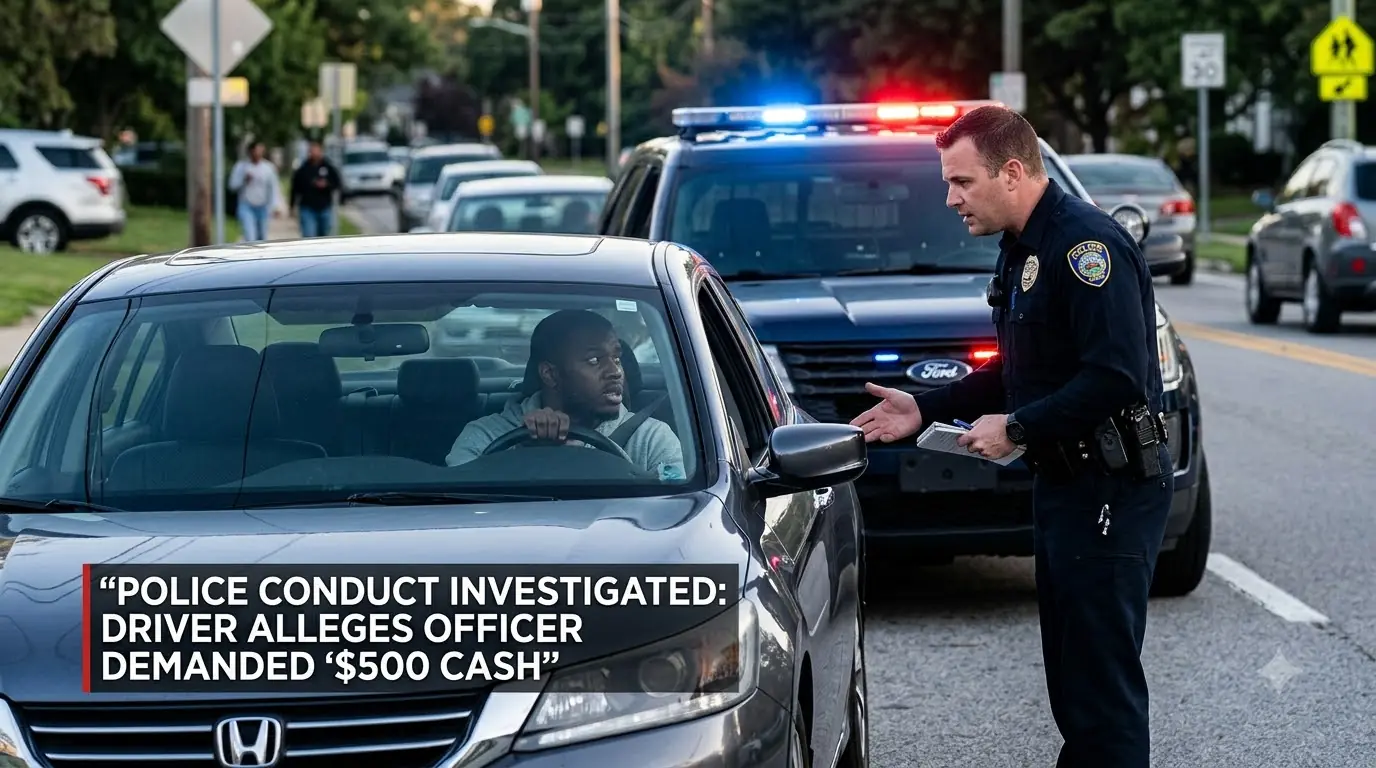
"Don't get smart with me. I can search your vehicle, tow it, and bury you in citations before breakfast."
"I'm not giving you $500, and I'm not consenting to any search."
"Keep pushing me and once those cuffs go on, $500 will feel like a bargain."
"Officer Reigns, you should think very carefully about what you do next."
Reigns switched off his body camera and reached for Marcus' door handle with a smug smile. Marcus stayed calm, hands visible, refusing to give him the reaction he wanted. Reigns acted like the badge gave him complete control. He had no idea the Black man he was threatening was Captain Marcus Ellison, his new commanding officer.
The dashboard clock glowed 5:47 a.m. as Marcus Ellison guided his black SUV through the empty streets of Westbridge. Dawn was still an hour away. The city slept under a blanket of streetlights and silence. Marcus had driven this route twice before: once during his interview process, once when he signed his contract. Today was different. Today he wasn't a visitor. He was Captain Marcus Ellison. And in 3 hours, he would address his new command staff for the first time.
23 years in law enforcement had taught him to arrive early: learn the building, walk the halls, meet the night shift before they went home. A good commander understood his department from the ground up, not just from behind a desk.
The SUV's leather seats still smelled new. Marcus had bought the vehicle specifically for this assignment—something professional, but not flashy; the kind of car a police captain should drive: conservative, but reliable. It represented the fresh start Westbridge had promised him.
He reached for his coffee cup and took a careful sip. The liquid was still hot, perfect temperature for the long day ahead. Marcus had prepared extensively for this morning. His welcome speech was rehearsed. His first-week priorities were outlined. His department-issued audio recorder sat ready on the passenger seat, waiting to capture notes and observations during the drive.
The radio played quietly: local news, weather forecast, traffic updates for a city that wouldn't wake up for two more hours. Marcus barely listened. His mind focused on the challenges ahead.
Westbridge Police Department had a reputation for resistance to change. The previous captain had retired under pressure. Morale was reportedly low. Several officers had complained about new oversight requirements from the city council. Marcus understood the dynamics; he'd seen similar situations before: veteran officers protecting old ways of doing things, supervisors who preferred minimal accountability, politicians demanding reforms without understanding police work. The trick was finding balance—maintaining discipline while earning respect.
Flashing red and blue lights suddenly exploded in his rearview mirror. Marcus glanced at his speedometer: 32 mph in a 35 zone. He checked his position in the lane—perfectly centered. His turn signals worked. His registration was current. His inspection was valid. The patrol car stayed close behind him, emergency lights painting the empty street in urgent colors.
Marcus pulled to the curb and stopped. He placed both hands on the steering wheel where they could be seen. Standard procedure. Even off-duty commanders followed protocol during traffic stops.
Heavy footsteps approached the driver's side. A flashlight beam swept across the SUV's interior, lingering on the expensive dashboard and leather seats. The beam moved to Marcus's face, staying there longer than necessary.
"License and registration," a voice demanded through the window.
Marcus moved slowly and deliberately. He retrieved his wallet from his jacket pocket, removed his license, and reached across to the glove compartment for the registration. Every movement was careful and visible.
"Here you go, officer," Marcus said, extending the documents through the lowered window.
The flashlight beam hit the license. Officer D. Reigns, according to the nameplate Marcus could now see: 12-year veteran based on the service pins, stocky build, aggressive posture—the kind of cop who used his physical presence to intimidate.
"You were drifting across the lane back there," Reigns said, studying the license. "Swerving a little bit. You've been drinking tonight."
Marcus kept his voice calm and professional. "No, sir, I haven't been drinking. Can you tell me exactly where you observed this lane violation?"
Reigns ignored the question. His flashlight swept the SUV's interior again, more thoroughly this time. "Nice vehicle. Real nice. What do you do for work, Mr. Ellison?"
"I work in law enforcement."
"Yeah? What department?"
Marcus paused. This was his chance to end the encounter immediately: show his credentials, identify himself as the new captain, walk away from whatever this was becoming. But something felt wrong. Reigns's questions were leading somewhere specific: the extended flashlight search, the focus on the expensive SUV, the failure to explain the supposed lane violation. Marcus decided to wait, to see where this went.
"I work for a police department," he said simply.
Reigns handed back the license and registration, but he didn't step away from the window. Instead, he moved closer. His radio crackled with routine patrol traffic, but he didn't respond.
"Tell you what I'm thinking," Reigns said, his voice dropping lower. "I'm thinking this expensive ride, this time of morning... you're probably heading somewhere important. Probably don't want to be late."
Marcus felt his pulse quicken. This wasn't heading toward a warning or even a ticket. This was heading toward something else entirely.
"I'm thinking," Reigns continued, "a vehicle search is going to take a long time. Impound paperwork takes even longer. Could be hours before you get where you're going."
Reigns reached up and tapped his body camera. The red recording light went dark.
"Battery's acting up," he said with a thin smile. "Damn things been giving me trouble all week."
Marcus watched Reigns lean closer to the window—close enough that his voice wouldn't carry beyond the SUV's interior, close enough for a private conversation.
"But maybe we can work something out," Reigns said. "$500 cash and all these problems disappear. No search, no impound, no tickets. Just a friendly warning about staying in your lane."
Marcus reached slowly for the audio recorder on his passenger seat. His movements were hidden by the steering wheel and the darkness inside the SUV. He pressed the record button.
"I'm sorry," Marcus said clearly. "Could you repeat that amount?"
Reigns's smile widened. He'd done this before, many times. His confidence showed in every word.