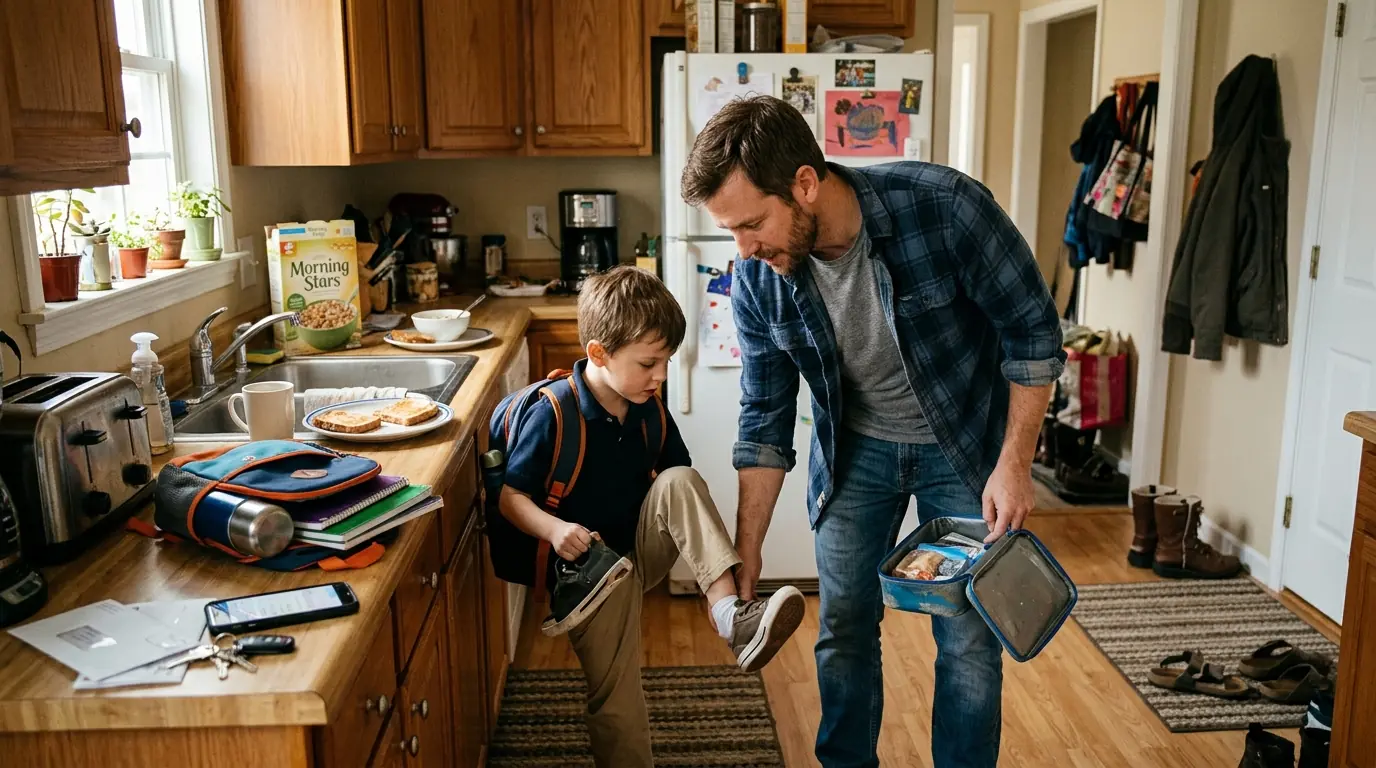
He did not need a perfect morning routine. He needed one that still worked when someone overslept, the cereal ran out, or a missing shoe brought the entire house to a stop.
Editor’s note: The father in this article is a composite character created to illustrate practical habits that may help single parents manage busy mornings.
For years, mornings felt like the hardest part of Daniel’s day.
As a single dad, he was responsible for waking his son, preparing breakfast, finding school supplies, packing lunches, answering work messages and getting everyone out of the house on time. There was no second adult available to handle the forgotten permission slip while he searched for a clean pair of socks.
By 8 a.m., he often felt as though he had already completed a full day of work.
Things did not improve because he discovered a perfect productivity system. They improved because he gradually removed small sources of stress from his morning.
These seven habits made the biggest difference.
1. He Prepared a “Launch Area” the Night Before
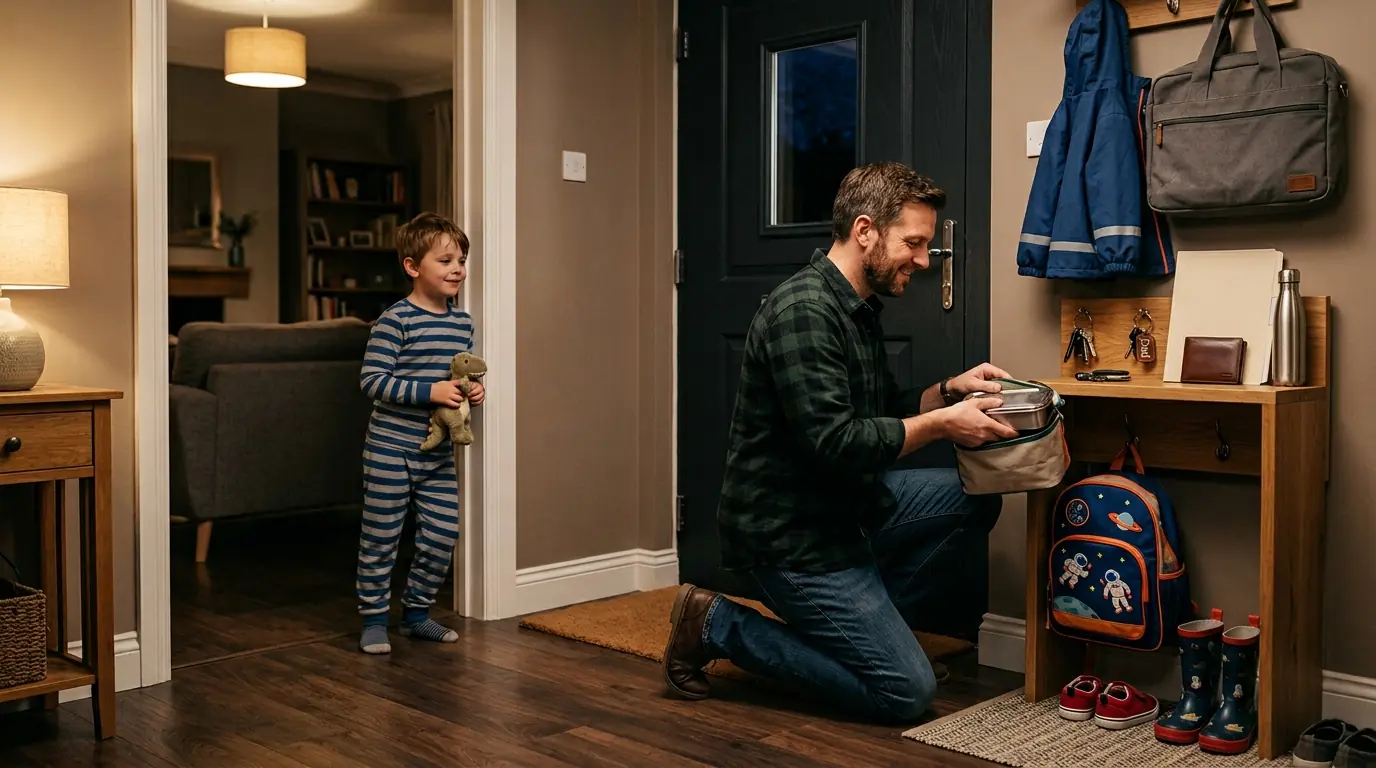
Daniel used to place backpacks, shoes, jackets and work documents wherever there happened to be space.
That meant every morning began with the same questions:
“Where is my backpack?”
“Have you seen my other shoe?”
“Did you sign the school form?”
Eventually, he created one small launch area beside the front door. Everything needed for the next day went there before bedtime:
-
School backpack
-
Work bag
-
Shoes and jackets
-
Keys and wallet
-
Forms that needed to be returned
-
Sports equipment or activity supplies
The American Academy of Pediatrics recommends putting as many things as possible in order the night before to help weekday mornings run more smoothly. Predictable routines can also help children know what to expect and make daily responsibilities easier for parents to manage.
Daniel still occasionally forgot something. The difference was that he no longer had to search the entire house for five different things every morning.
2. He Started Protecting His Sleep
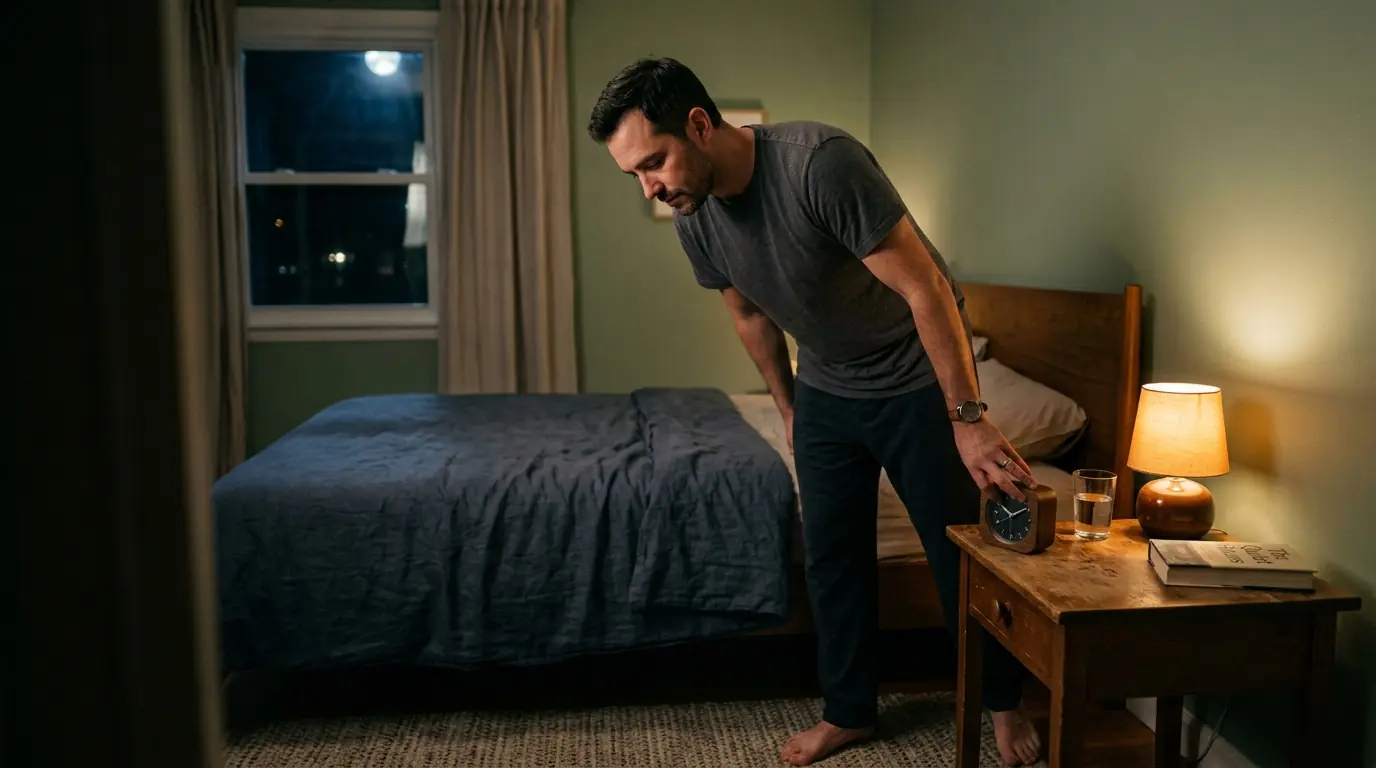
At first, Daniel believed that becoming more organized meant waking up extremely early.
He tried setting his alarm for 5 a.m. so he could exercise, clean the kitchen, answer emails and prepare breakfast before his son woke up. The routine lasted less than a week because he was going to bed too late and becoming increasingly exhausted.
He eventually chose a more realistic goal: waking up about 20 minutes before his son while maintaining a consistent bedtime.
Most adults need at least seven hours of sleep, and the CDC recommends keeping regular sleep and wake times whenever possible. Adequate sleep also supports attention, mood, memory and the ability to handle daily responsibilities.
Those 20 quiet minutes were enough for Daniel to get dressed, drink something and think about the day before the house became busy.
He stopped trying to win the morning by sacrificing the previous night.
3. He Got Light and Movement Early in the Day

Daniel did not have time for an hour-long workout every morning. He did, however, have time to walk outside for five or ten minutes.
Sometimes he walked around the block alone. On less rushed mornings, his son joined him on the way to school or the bus stop.
Natural light earlier in the day helps support the body’s sleep-wake rhythm. Physical activity can also provide immediate benefits, including reduced feelings of anxiety and improved sleep quality. Even small amounts of movement count, especially for someone who is just getting started.
For Daniel, the walk was not about burning calories or meeting an impressive fitness goal.
It simply helped him feel awake before the day began demanding his attention.
4. He Stopped Checking His Phone Immediately
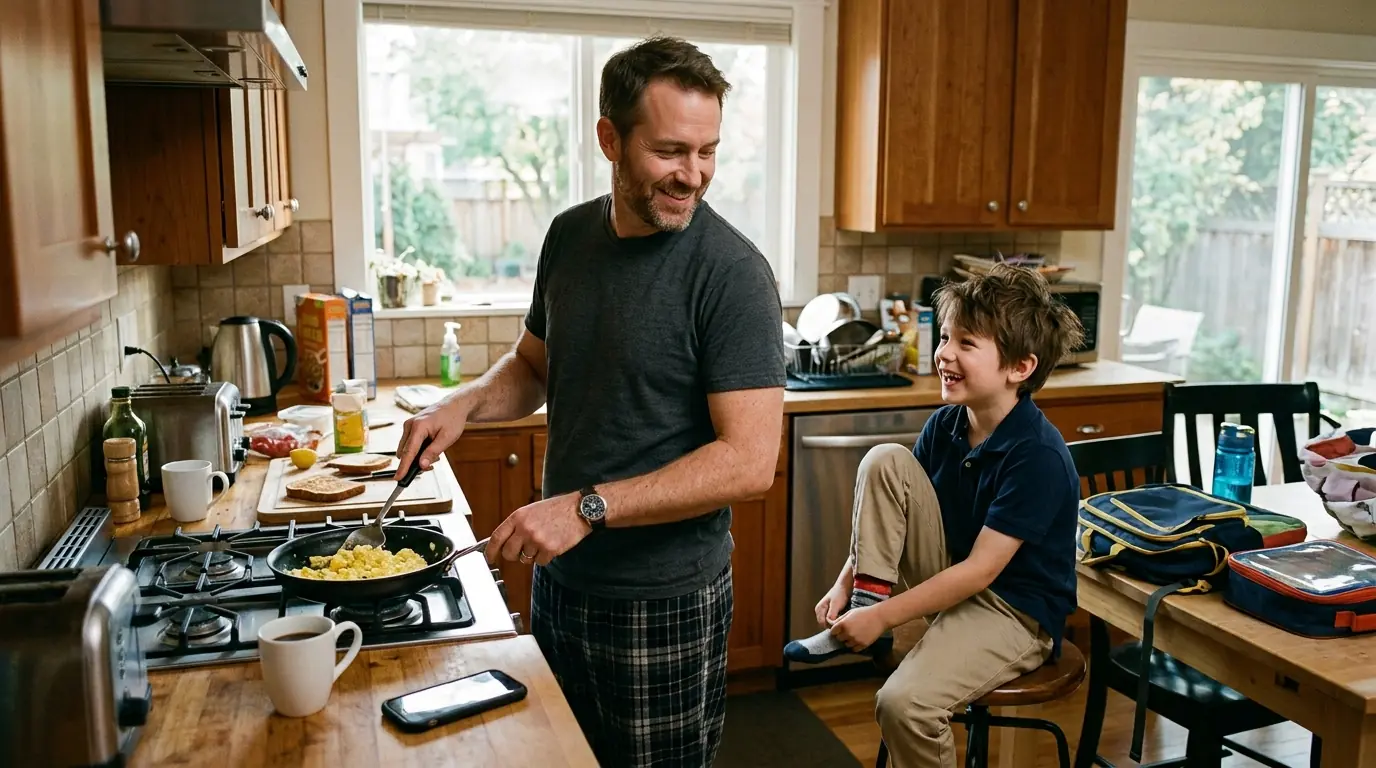
Daniel’s alarm and phone were once the same thing.
That made it easy to silence the alarm and immediately begin checking work emails, social media notifications and news headlines. Within minutes, his mind was full of problems that did not need to be solved at 6:30 in the morning.
He created a simple personal rule:
No email or social media until he was dressed and breakfast was underway.
There were exceptions, especially when he was expecting an important message. But on ordinary mornings, the delay gave him time to focus on what was actually happening inside his home.
The phone did not disappear from his life. It simply stopped being the first voice he heard every day.
5. He Created a Three-Breakfast Rotation

Daniel used to decide what to serve for breakfast while standing in front of an open refrigerator.
Some mornings, that decision felt strangely overwhelming.
He simplified the process by choosing three easy breakfasts that his son already liked:
-
Oatmeal with fruit
-
Eggs with whole-grain toast
-
Plain yogurt with fruit and cereal
He kept the necessary ingredients on his regular grocery list and rotated between the three options. On particularly busy days, he used a simple backup meal that could be prepared or carried quickly.
The CDC encourages parents to help children eat a healthy breakfast and recommends offering foods such as fruits, vegetables, whole grains and suitable sources of protein.
The goal was not to create a picture-perfect breakfast every morning.
The goal was to remove one unnecessary decision while still giving his son something satisfying to eat.
6. He Used a Checklist His Son Could Follow
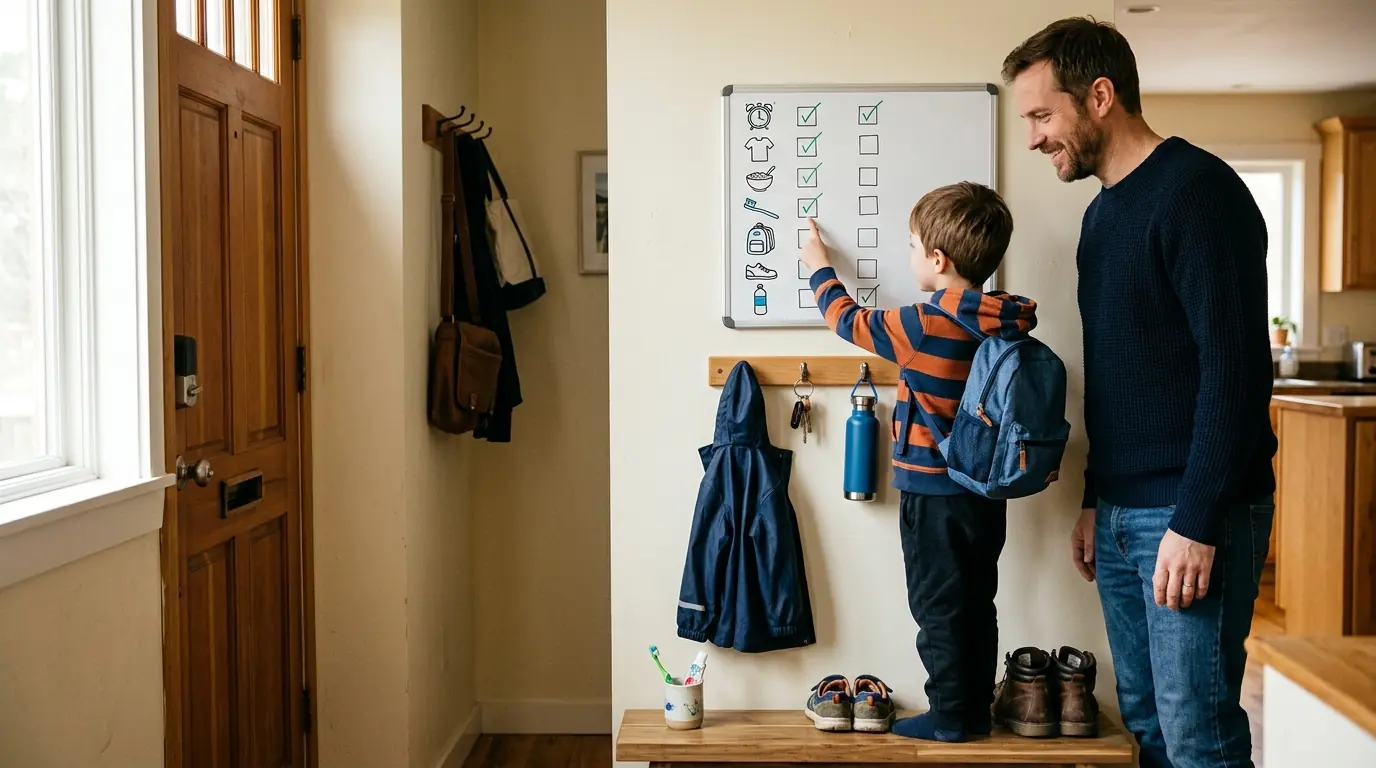
Daniel noticed that he repeated the same instructions every morning:
“Brush your teeth.”
“Pack your water bottle.”
“Put on your shoes.”
“Did you brush your teeth?”
Instead of relying on constant reminders, he made a short checklist and placed it where his son could see it.
The list contained only the essential steps:
-
Get dressed
-
Eat breakfast
-
Brush teeth
-
Pack water bottle
-
Check backpack
-
Put on shoes
For younger children, a checklist can use pictures instead of words. Older children may prefer a list on a whiteboard or near the front door.
The CDC notes that schedules and family routines can create helpful structure and take some of the surprise out of daily transitions. Routines do not eliminate the need for parental guidance, but they can make expectations clearer.
Daniel still had to give reminders. He simply did not have to manage every step from memory.
More importantly, his son began taking greater responsibility for getting himself ready.
7. He Protected One Small Moment of Connection
The most important change was also the simplest.
Daniel stopped treating the entire morning as a race toward the front door.
Before they separated for school and work, he created one small ritual with his son. Sometimes it was a hug. Sometimes it was a silly question in the car. On difficult mornings, it was simply:
“Are you okay today?”
It took less than two minutes.
The American Academy of Pediatrics encourages single parents to set aside regular time to talk with their children and emphasizes that predictable, nurturing relationships help children feel secure. Even brief routines—such as eating together, talking or sharing a consistent goodbye—can create a sense of stability and connection.
Daniel realized that getting his son to school on time mattered.
But the way his son felt when he arrived mattered too.
The Routine Still Wasn’t Perfect

Some mornings continued to fall apart.
There were spilled drinks, forgotten homework assignments, traffic delays and days when neither father nor son was in a good mood. The habits did not remove real-life problems.
They gave the family a basic structure to return to after something went wrong.
That may be the most useful lesson for any overwhelmed parent: a morning routine does not need to control every minute. It only needs to reduce enough friction that the family can keep moving.
For Daniel, easier mornings did not begin with greater discipline.
They began when he stopped asking, “How can I do more before 8 a.m.?”
Instead, he started asking:
“What can I make simpler?”