“Back off. You cannot come any closer. Stay away from this entrance. You are not allowed here.”
The words rang sharply through the cold evening air outside Le Marais Bistro, one of the most expensive restaurants in downtown Chicago. The hostess near the front door stood stiffly with folded arms, glaring at the elderly man standing a few feet from the entrance. Snowmelt dripped from the edge of the awning. Cars rolled by slowly on the wet street. People in designer coats entered the restaurant without even looking at what was happening.
“Sir, you cannot stay here. Please move away from the entrance.”
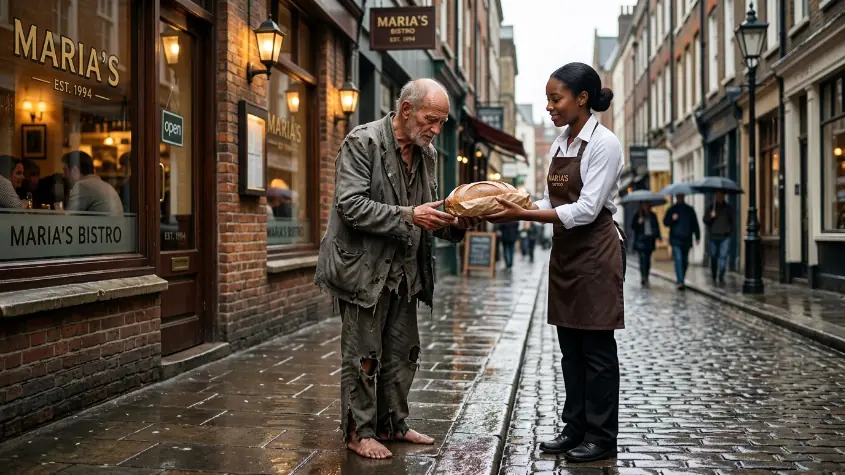
The old man did not argue. He stood quietly in a faded brown coat with torn cuffs and worn boots darkened by slush. His beard was white and uneven, his face lined with age and hardship. He carried no bag, no sign, no cup for coins. He simply stood there, shivering in the bitter wind.
Inside the restaurant, warm yellow light spilled through the glass. Laughter, clinking glasses, and soft piano music drifted into the street. The contrast was cruel.
“He thinks he can just hang out here? Move along now.”
That voice belonged to Martin Hale, the floor manager. Tall, slick-haired, expensive suit, polished shoes, and the kind of smile that only appeared when wealthy customers were watching. He stepped out the door, annoyed that the sight of the old man might ruin the image of his perfect entrance.
“Sir, please move on,” Martin said louder. “We have guests arriving.”
The old man lowered his eyes and took one slow step backward.
From inside, a young waitress carrying a tray had stopped near the window. Her name tag read Eva. She was twenty-six, dark hair tied back neatly, plain black uniform, tired eyes that belonged to someone who worked too many hours for too little pay. She had watched the whole exchange.
Eva knew hunger. She knew shame. She knew what it meant to be judged before speaking. Her father had lost his factory job years earlier. Her mother cleaned offices overnight. Eva had left college to support them. Kindness had often been the only thing that kept her family standing.
She set down her tray and hurried outside.
“Sir, please wait.”
Martin turned sharply.
“Eva, get back inside.”
But she ignored him. She reached into her apron pocket, pulled out the small bread roll she had saved from her own staff meal, then ran back inside and returned with a wrapped sandwich from the kitchen.
“Take this,” she said softly, placing it in the old man’s trembling hands. “You must be hungry.”
The old man looked stunned. His eyes, pale and sharp beneath heavy brows, lifted to hers.
“Thank you,” he said quietly. “I truly appreciate your kindness.”
Eva smiled.
“It’s not much.”
“To someone hungry,” he replied, “it is everything.”
Martin stormed forward, face red with anger.
“Are you out of your mind?” he hissed. “You cannot feed people at the entrance. Customers are watching.”