A Common Refrigerator Mistake That Can Spread Bacteria and Make Your Whole Family Sick

When it comes to food storage, placing items in the right position inside the refrigerator is extremely important. Even though food is kept cold, improper organization can quietly spread harmful bacteria and contaminate other foods, increasing the risk of food poisoning.
According to kitchen and food safety experts in the UK, even small mistakes in refrigerator organization can lead to the growth and spread of dangerous bacteria such as E. coli, Salmonella, and Campylobacter—all of which are common causes of foodborne illness.
The Hidden Danger: Storing Raw Meat on Upper Shelves
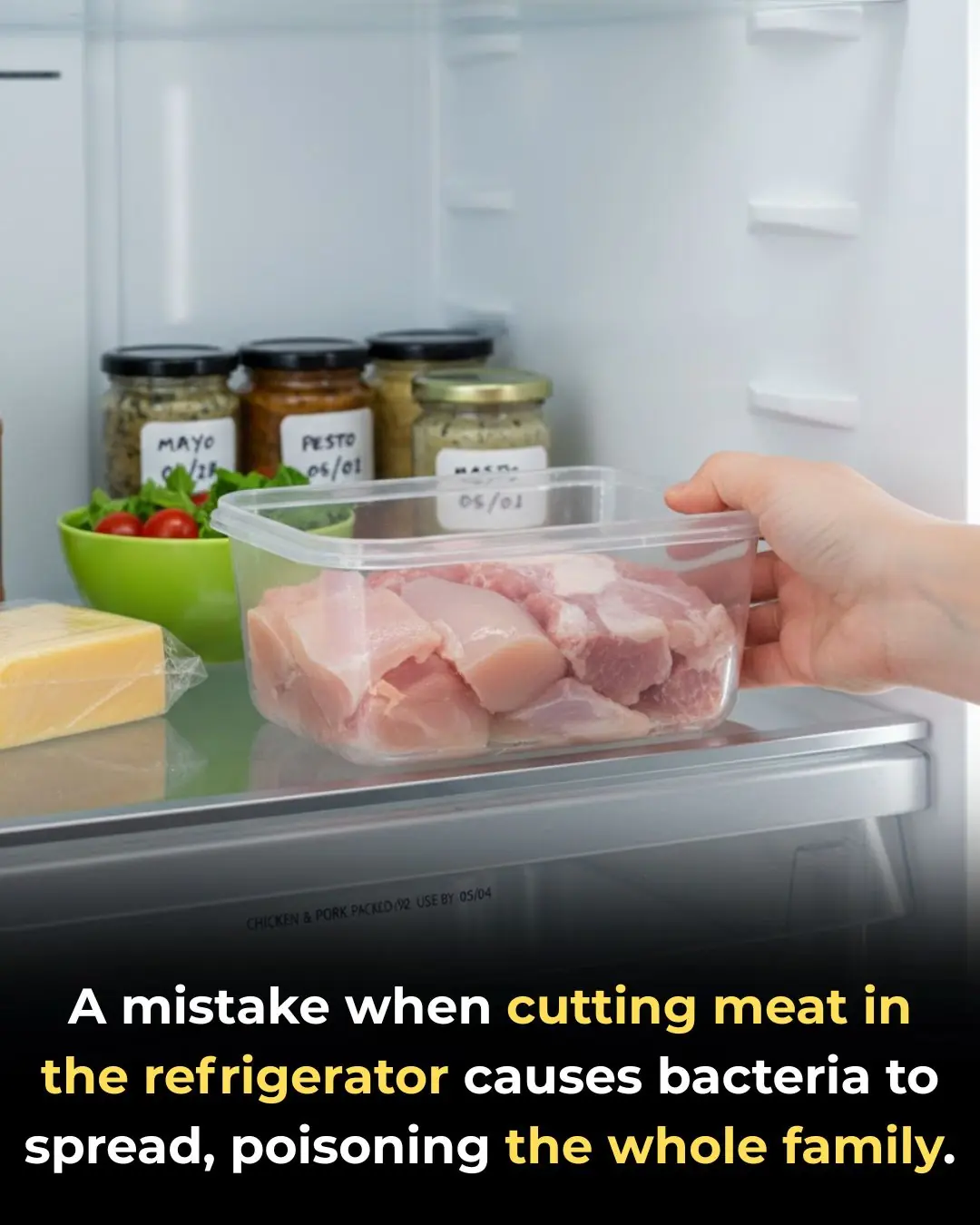
One of the most common and dangerous mistakes is storing raw meat on the upper shelves of the refrigerator. Even when tightly wrapped, raw meat can release small amounts of liquid. These juices may drip onto foods stored below, contaminating ready-to-eat items such as fruits, vegetables, or cooked leftovers.
Recent research has also shown that the outside packaging of raw meat can carry harmful bacteria, posing an additional risk during handling.
What Research Shows
A large study conducted by the UK Health Protection Agency and published in the Journal of Food Protection examined 3,662 samples of pre-packaged raw meat to assess bacterial contamination on the outer packaging—the part people commonly touch when storing or removing food.
The results revealed:
-
Salmonella was found on some samples
-
Campylobacter was detected on over 1% of packages, particularly from chicken and poultry
-
E. coli traces were present on around 4% of packaging
These findings highlight how easily bacteria can spread in the kitchen if proper food storage practices are not followed.
How to Store Raw Meat Safely in the Refrigerator
To reduce the risk of cross-contamination and protect your health, experts recommend the following steps:
-
Always store raw meat on the bottom shelf of the refrigerator
-
Place meat in a sealed container or leak-proof tray to prevent juices from dripping
-
Store ready-to-eat foods and cooked leftovers on higher shelves
This simple arrangement significantly reduces the risk of bacteria spreading to other foods.
Additional Food Safety Tips
-
Clean your refrigerator regularly, wiping up spills immediately with warm soapy water or a food-safe disinfectant
-
Perform a thorough fridge clean every few weeks
-
Keep the refrigerator temperature below 5°C (41°F) to slow bacterial growth
-
Use separate cleaning cloths for raw food areas and cooked food areas, both in the fridge and in the kitchen
-
Avoid overcrowding the refrigerator, as poor air circulation can create warm spots where bacteria multiply more quickly
-
After handling raw meat and storing groceries, wash your hands thoroughly
Final Thoughts
By following these simple kitchen hygiene practices, you can safely store raw meat, prevent cross-contamination, and protect your family from foodborne illness. Proper refrigerator organization is a small habit that makes a big difference for your health.

News in the same category


Shoulder Pain from Sleeping: Causes, Solutions and More

Top Signs Your Body is Toxic and What to Do About It

How Water Fasting Can Regenerate the Immune System, Slow Aging, Reduce Heart Attack Risk and More

Colon Cleansing With Kefir and Flaxseed Meal

CRISPR-Edited Islet Cell Transplantation: A New Therapeutic Horizon for Type 1 Diabetes

Reversing Alzheimer’s Disease by Restoring Brain Energy Metabolism: Implications of a 2025 Breakthrough Study

Fermented Royal Jelly and Enhancement of Human Mucosal Immunity

Coenzyme Q10 Supplementation and Survival in Chronic Heart Failure: Evidence from the Q-SYMBIO Trial

Vitamin C Status, Fat Oxidation, and Fatigue: Evidence from a Human Metabolic Study

Household Clutter as a Chronic Stressor for Women: Psychological and Physiological Evidence

Why Your Cough Gets Worse at Night — and What to Do About It

What Vitamin Deficiency Causes Dry Lips?

A man's liver was riddled with holes like a honeycomb due to regularly eating one type of fish: Doctors advise eating as little as possible of these four types of fish because they contain carcinogens

Seven Common Habits Linked to Cancer After the Age of 40

Five Highly Toxic Meats That Should Be Avoided

Vinegar Consumption and Reduced Risk of Calcium Oxalate Kidney Stones: Evidence from a Pilot Human Study

11 Health Warnings Your Fingernails May Be Sending

Bloated Stomach: 8 Common Reasons and How to Treat Them (Evidence Based)
News Post

Missy Elliott Becomes First Female Rapper With Six Straight Platinum Albums: ‘So Grateful'

Boxer Anthony Joshua hurt in fatal two-vehicle crash

How daily showers after 65 can do more harm than good

When you reach 60, the best way to live a healthy and long life isn't through excessive exercise, but through these four habits

My nana taught me this hack to get rid of puffy eyes in 2 mins with 0 work. Here’s how it works

Shoulder Pain from Sleeping: Causes, Solutions and More

Top Signs Your Body is Toxic and What to Do About It

How Water Fasting Can Regenerate the Immune System, Slow Aging, Reduce Heart Attack Risk and More

Ja Rule Says He's 'Very Happy and Excited' to Become a Grandfather, Adds It's a 'Blessing' (Exclusive)

Colon Cleansing With Kefir and Flaxseed Meal

David Spade says he spent 25 years trying to get Eddie Murphy to stop hating him: 'He was a hero'

Beyoncé Is Now A Billionaire

Former Fibrebond CEO Shares $240 Million in Bonuses After $1.7 Billion Sale

Texas’ top prosecutor gives his explanation after 34 dead bodies pulled from same Houston bayous sparking serial killer fears

CRISPR-Edited Islet Cell Transplantation: A New Therapeutic Horizon for Type 1 Diabetes

Reversing Alzheimer’s Disease by Restoring Brain Energy Metabolism: Implications of a 2025 Breakthrough Study

Fermented Royal Jelly and Enhancement of Human Mucosal Immunity

Coenzyme Q10 Supplementation and Survival in Chronic Heart Failure: Evidence from the Q-SYMBIO Trial