For nearly a year, Daniel Carter had visited the same grave every Sunday afternoon.
He always came alone.
The cemetery sat on the edge of town, behind an old iron gate that groaned whenever the wind pushed through it. In spring, wildflowers grew between the stones. In summer, the grass turned thick and green. In autumn, dry leaves gathered at the base of the headstones. But no matter the season, Daniel always stood before the same name.
Ethan Carter.
His son.
The boy he had believed was gone.
Daniel was a wealthy man, the kind of man whose name appeared on buildings, contracts, and newspaper headlines. He lived in a large house with glass walls, polished floors, and rooms so quiet they sometimes seemed untouched by life. People called him powerful. Successful. Untouchable.
But none of that mattered when he stood in front of Ethan’s grave.
There, he was only a father with empty hands.
Ethan had been six years old when Daniel received the call from his sister, Sarah. Daniel had been overseas for business, trapped inside a glass office in another country, when she told him Ethan had become very sick very quickly. By the time Daniel returned home, everything had already been arranged.
Sarah and her husband, Victor, told him it was better that he did not see Ethan at the end.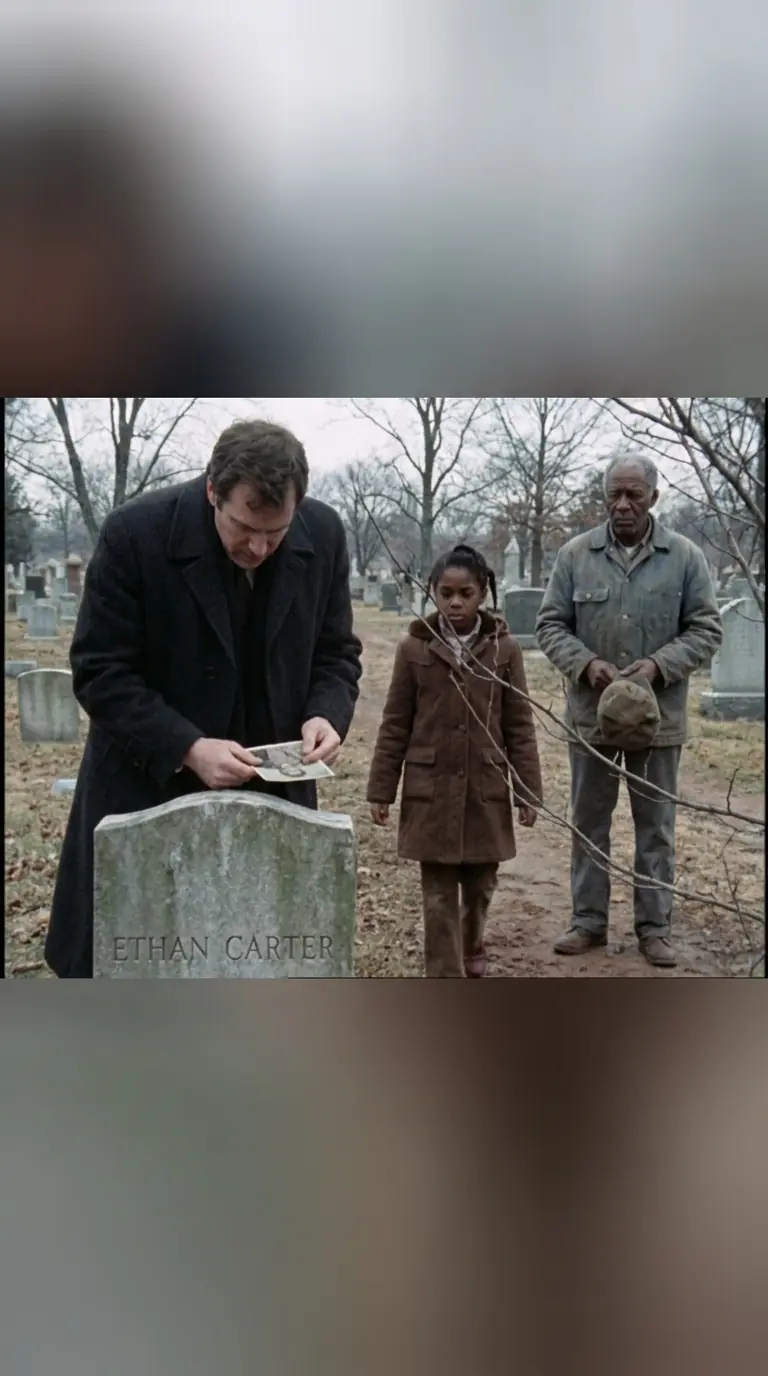
They said the funeral had to happen fast.
They said the casket had to remain closed.
Daniel had been too broken to question them.
He trusted family.
That was his mistake.
For months afterward, he lived like a man moving underwater. He went to work. He signed papers. He sat through meetings. He answered questions. But every evening, he returned to a house that no longer had the sound of Ethan running through the hallway, no small voice asking for one more bedtime story, no red toy boat sitting on the living room rug.
The red boat hurt most.
Daniel had bought it for Ethan on a rainy afternoon. Ethan had carried it everywhere for weeks, pretending it could sail across carpets, bedsheets, and kitchen tiles. After Ethan was declared gone, Daniel left the boy’s room exactly as it had been. The boat-shaped bed. The books on the shelf. The drawing taped near the window.
He could not bear to change a thing.
So every Sunday, he came to the cemetery and talked to the stone.
He told Ethan about the weather. About work. About how quiet the house was. Sometimes he apologized for being away too much. Sometimes he simply stood there without speaking at all.
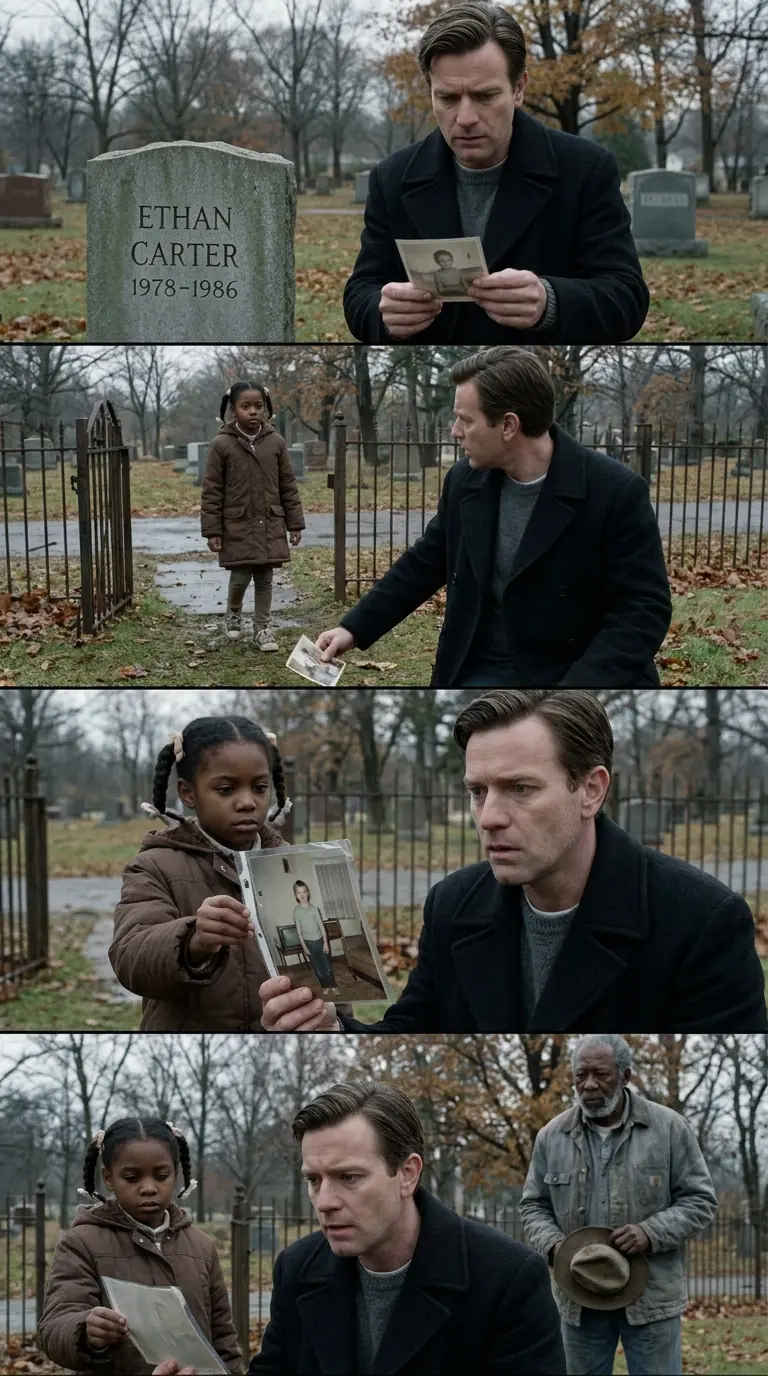
On one cool afternoon, Daniel was holding an old photograph of Ethan sitting on his shoulders when a small voice behind him said, “Your son is still alive.”
Daniel turned so sharply the photograph slipped from his fingers.
A little girl stood a few steps away. She was maybe nine years old, with a school bag hanging from one shoulder and serious eyes that made her look older than she was.
“What did you just say?” Daniel asked.
“Your son,” she repeated. “He’s still alive.”
Daniel’s face tightened. “That is not something to joke about.”
“I’m not joking.”
He pointed at the headstone, his voice low. “Do you see that name? Ethan Carter. That is my boy.”
The girl looked at the stone, then back at him. “My granddaddy says names on stones don’t always mean the person is really there.”
Daniel stared at her.
“What is your name?”
“Annie,” she said. “My granddaddy takes care of this cemetery. I come here after school sometimes.”
Before Daniel could answer, Annie bent down and picked up the photograph he had dropped. She studied it for a moment, then her eyes widened.
“This is him,” she whispered.
Daniel stepped forward. “Give me that.”
Annie handed him the picture, then reached into her coat pocket and pulled out another photograph. It was slightly bent and protected inside a small plastic sleeve.
“My mama told me to bring this if I saw you again,” she said.
Daniel took it.
The picture showed a small living room with worn furniture and a thin boy standing on a rug, holding a grilled cheese sandwich. His hair was longer. His face was thinner. But Daniel knew that face.
His breath stopped.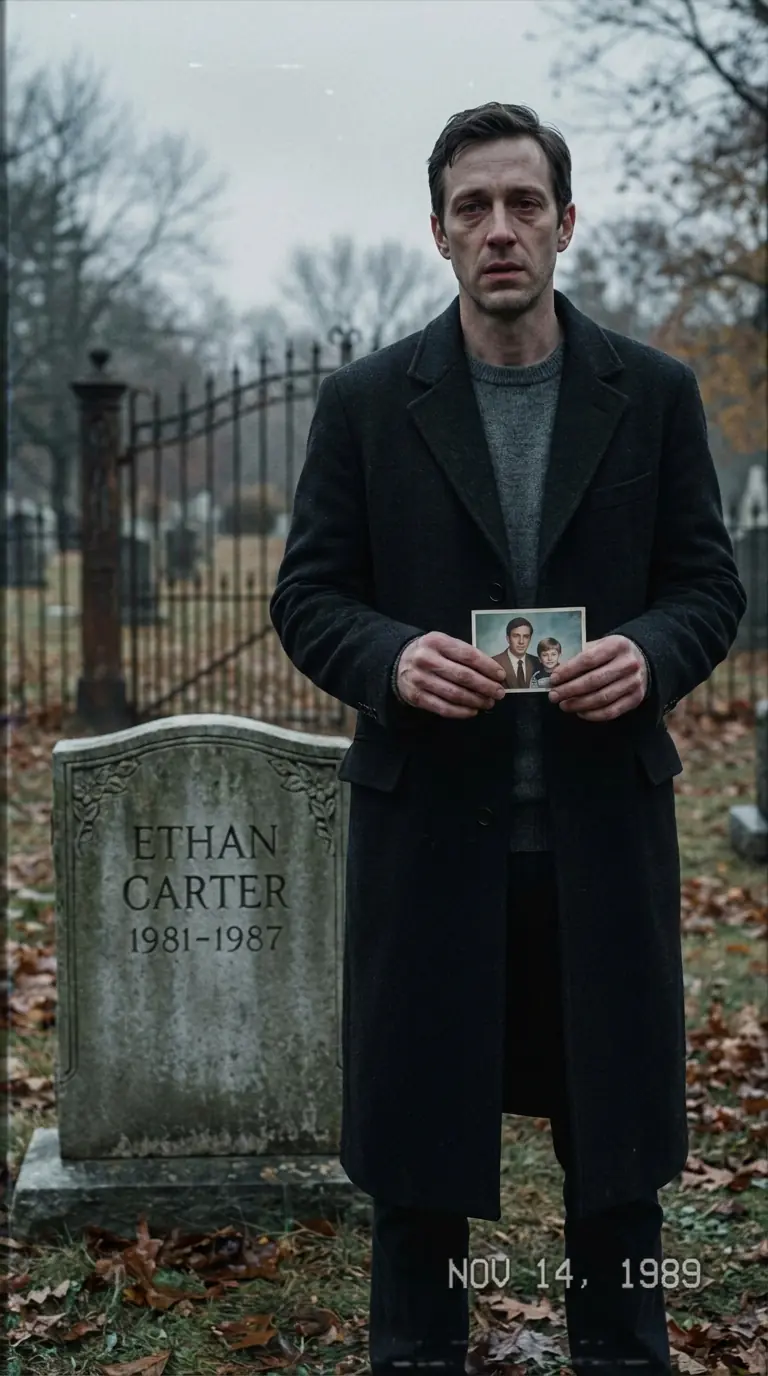
It was Ethan.
“That was taken in our house,” Annie said softly. “He’s been living with us almost a year.”
Daniel’s hand began to shake.
“That is impossible.”
An older man’s voice came from behind them. “No, Mr. Carter. It is not.”
Daniel turned.
An elderly man walked toward them slowly, holding a work hat in his hands. His face was lined from years in the sun, and his eyes carried the calm of someone who had seen enough sorrow to recognize it in others.
“My name is George,” he said. “I care for this cemetery. Annie is my granddaughter.”
Daniel could barely speak. “What is happening?”
George looked at the headstone.
“Your son is not buried here.”
Daniel felt the world tilt.
George continued gently. “Your brother-in-law came here with the casket. Said it was private. Paid in cash. Told me not to open anything. I have done this work for more than thirty years, Mr. Carter. I know when something feels wrong.”
Daniel looked back at the stone.
For almost a year, he had been speaking to a place that held no son.
Only a lie.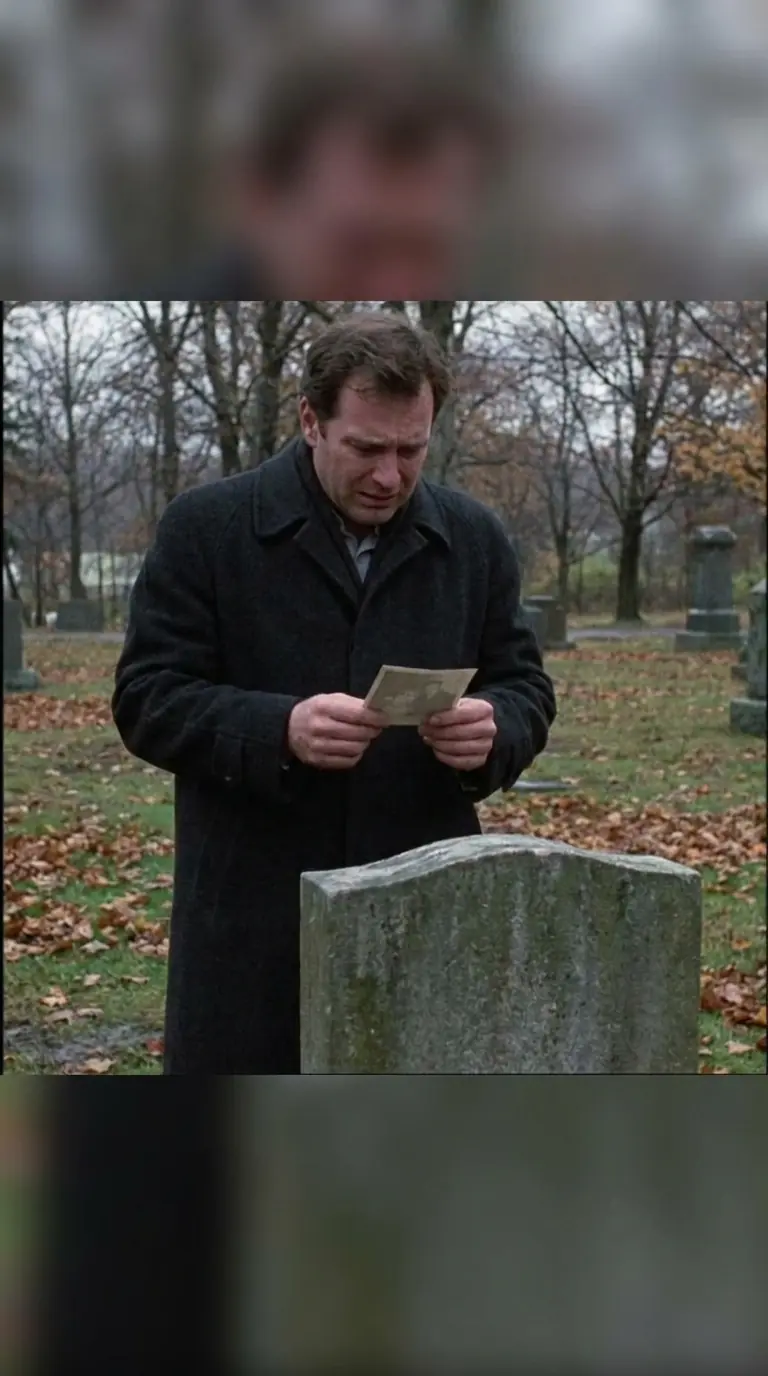
George told him that Annie’s mother, Lillian, had found Ethan behind a grocery store the previous winter. The boy had been weak, frightened, and convinced his father did not want him anymore. Lillian brought him home, fed him, cared for him, and slowly helped him trust people again.
“He said his name was Ethan Carter,” Annie added. “And he said his daddy’s name was Daniel.”
Daniel closed his eyes.
His son had been alive.
His son had been waiting.
His son had believed he was unwanted.
When Daniel opened his eyes again, his voice was quiet but steady.
“Take me to him.”
Annie nodded. “Yes, sir.”
They walked through the old town together. Annie told him everything as they went. She told him how Ethan had been found behind the grocery store, how he had been afraid of going back to a place with white walls and locked doors, how he kept saying his father was busy but would come someday.
Daniel listened, each word cutting deeper than the last.
“Why did you tell me today?” he asked.
Annie looked down at the sidewalk. “Last week, I heard him crying. He said, ‘I think my dad forgot me.’”
Daniel stopped walking.
“I did not forget him,” he whispered. “I was lied to.”
Annie looked up at him. “Then you should tell him that yourself.”
They soon reached a small blue house with peeling paint and a crooked porch. It was modest, nothing like Daniel’s home. A tricycle sat in the yard. Laundry moved gently on a line in the back. From inside came the smell of onions, butter, and something warm cooking on the stove.
Daniel stood before the door, suddenly afraid.
Annie noticed.
“When you see him,” she said, “he might not run to you.”
Daniel swallowed. “Why not?”
“Because he thinks you did not come for him. When kids think that for a long time, they build a wall in their heart.”
Daniel nodded slowly.
“I deserve that,” he said. “But I am still going to knock.”
Inside, Lillian Miller stood in the kitchen, drying her hands on a towel. She was a tired woman in her thirties, but her eyes were clear and protective.
When Annie introduced Daniel, Lillian went still.
“I wondered when this day would come,” she said.
Daniel’s voice trembled. “Where is he?”
“In the back room doing homework,” Lillian replied. Then she lifted one hand. “But listen to me first. Do not walk in there like a rich man fixing a problem. Walk in like a father who came to see his son.”
Daniel nodded.
Lillian led him down a narrow hallway.
At a small desk by the window sat Ethan.
He was writing spelling words carefully on lined paper. His feet did not touch the floor. A pencil rested between his fingers. When he looked up, Daniel felt the air leave his lungs.
The eyes were the same.
The mouth.
The small scar hidden in one eyebrow.
His boy.
Ethan stared at him, not crying, not smiling, only trying to understand.
Daniel did not rush forward. He remembered Lillian’s warning. He stood in the doorway and spoke softly.
“Hey, buddy.”
Ethan’s eyes changed.
That word.
Daniel had called him buddy since he was old enough to walk.
For a long moment, neither moved.
Then Daniel said the only thing that mattered.
“I did not know where you were. I thought I had lost you. If I had known, I would have come the first day. Not a year later. The first day.”
Ethan’s lower lip trembled.
“You didn’t leave me?”
Daniel shook his head.
“No. I did not leave you. I was lied to, and I am so sorry it took me this long to find you.”
Ethan stepped closer, slowly, as if afraid the man before him might vanish. He reached out and gripped the sleeve of Daniel’s coat.
Daniel placed his hand gently over his son’s small hand.
“I am here now,” he whispered. “And I am not going anywhere.”
That night, Daniel did not sleep.
He sat in his large silent house with the photograph Annie had given him on the desk, beside Ethan’s old red toy boat. By sunrise, he had called Michael Grant, a retired investigator and one of the few men Daniel trusted.
Together, they began searching for the truth.
The first records came from the hospital. They did not match. A doctor’s name appeared on forms he could not have signed. The timeline was wrong. Then came the funeral documents. The payment had been made in cash by Victor. The burial paperwork had been rushed. The records from the children’s home showed that Ethan had been sent there under false guardianship information.
The reason listed was simple.
Father unable to care for child.
Daniel read the line until his vision blurred.
“They did not only erase him,” he said to Michael. “They erased me too.”
Michael’s expression hardened. “This is no longer a family matter. This is a case.”
Daniel confronted Sarah and Victor that afternoon.
He did not shout. He did not threaten. He simply stood in their living room and told them what he knew.
Sarah cried first. Victor denied it first. Then the truth broke open.
They had wanted control of Ethan’s inheritance and Daniel’s company shares. They believed Daniel was too distracted by work to notice the details. They had planned the deception carefully, thinking Ethan would remain hidden until the documents were changed.
But Ethan had run.
And a poor family had saved him.
Daniel looked at Sarah, the sister he had trusted.
“You told a child his father did not want him.”
Sarah covered her face.
Daniel turned toward the door.
“I came here as your brother,” he said. “I am leaving as Ethan’s father.”
The legal process moved quickly after that. Documents were collected. Records were reviewed. People who had accepted money to look away were questioned. Daniel gave his statement with Ethan’s red boat sitting on his desk at home, a reminder of what he was fighting for.
The story became public, but Daniel refused to let reporters turn Ethan into a headline.
“My son is safe,” he said once, standing outside his office building. “That is all that matters. The truth will be handled properly.”
Sarah and Victor faced consequences for what they had done. Their access to Daniel’s company was removed. Their claim over Ethan’s trust was canceled. The people who helped create the false records lost their positions and were brought before the law.
But the most important result did not happen in court.
It happened slowly, inside Daniel’s house.
Ethan began spending weekends there, then weekdays, then longer stretches of time. At first, he kept a small bag packed by the door in case he needed to return to Lillian’s house. Daniel never moved it. He understood.
Trust could not be ordered.
It had to be earned.
Every evening, Daniel came home early. He helped with homework. He learned how Ethan liked his sandwiches. He sat on the floor and built towers with wooden blocks. He let Annie visit often, because Ethan trusted her, and because Daniel understood that the Miller family had become part of his son’s heart.
One afternoon, Ethan drew three houses on a sheet of paper. One small, one medium, one very large. Between them, he drew stick figures holding hands.
Daniel asked, “Where are we?”
Ethan pointed to the space between the houses.
“Here,” he said. “We’re supposed to be here. Not just in one house.”
Daniel looked at the drawing for a long time.
A child had explained family better than any lawyer ever could.
Months later, Daniel created a foundation in Ethan’s name to support children who had been lost in systems, paperwork, and adult mistakes. Lillian became one of its advisors. George helped with community outreach. Annie became a frequent visitor at Daniel’s house and never stopped telling him when he was acting too rich for his own good.
And Ethan healed.
Not all at once.
But little by little.
He stopped asking if Daniel would still be there in the morning. He stopped sleeping with his shoes beside the bed. He began laughing louder. He began leaving toys in the living room again.
One Sunday afternoon, Daniel took Ethan back to the cemetery.
They stood together before the stone that still bore Ethan’s name, though Daniel had already arranged to have it removed.
Ethan looked at it quietly.
“Were you sad here?” he asked.
Daniel nodded. “Very.”
Ethan reached for his hand.
“I was waiting too,” he said.
Daniel held his son’s hand tightly.
“I know,” he whispered. “And I am so sorry.”
Ethan leaned against him.
Then, after a long silence, he said, “Can we go home now?”
Daniel looked down at him.
For almost a year, that word had meant nothing.
Now it meant everything.
“Yes,” Daniel said. “Let’s go home.”
They walked away from the empty grave together, leaving behind the stone, the lie, and the year that had been stolen from them.
The road ahead would still require patience. Ethan would still have hard days. Daniel would still carry guilt. Some wounds did not disappear just because the truth came out.
But now they had the truth.
They had each other.
And in the quiet back seat of the car, Ethan held his red toy boat in both hands while Daniel drove them home, no longer toward grief, but toward a life they had both been waiting to find again.