Chapter 1: A Borrowed Place in the World
Miss Clara Fenwick had always known what she was. Useful, tolerably pleasant, and never by any measure London cared to record. Remarkable. In the country those qualities were not faults. They might even be virtues. At Fenwick Grange, usefulness kept the roof sound and the tenants paid, and pleasantness smoothed the edges of parish life. Clara's father had not been a man of great fortune, but he had been steady, and he had raised his only daughter with the same values he carried into every ledger and contract, prudence, courtesy, restraint. When he died five years before, Clara had discovered that steadiness could be an inheritance, too.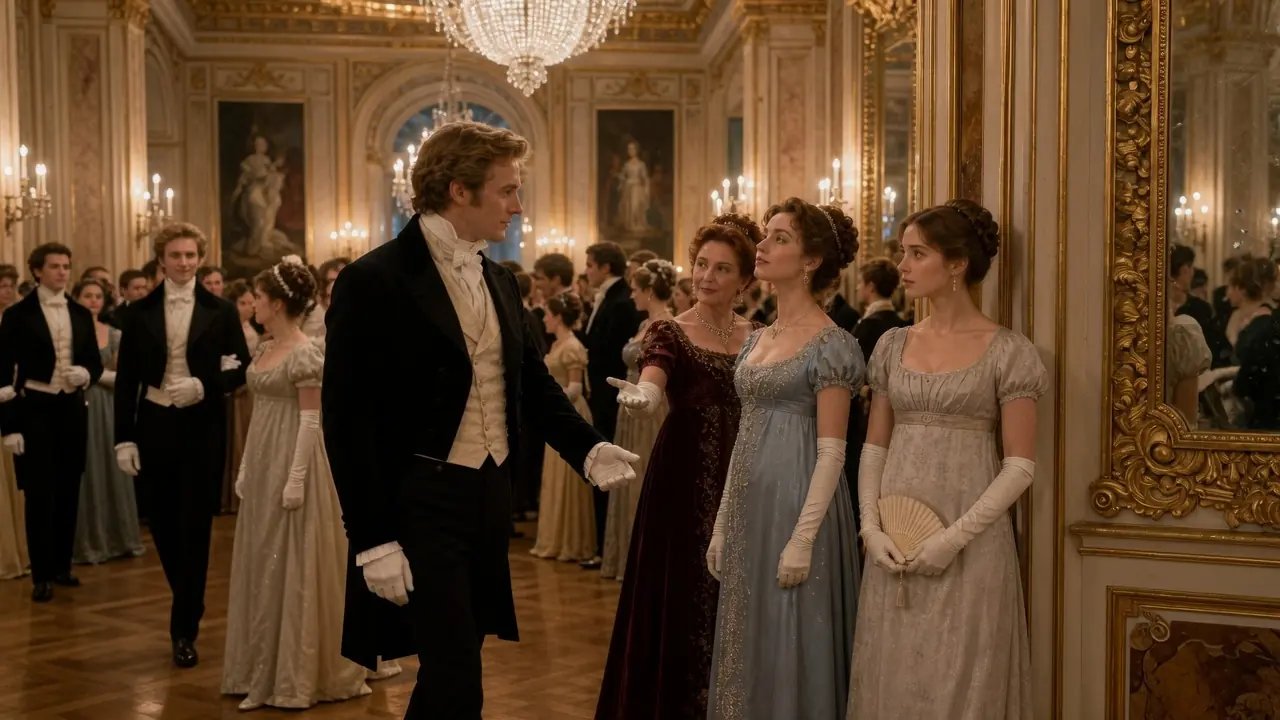
Fenwick Grange was modest but well-kept, its stone warmed by age and softened by ivy that never quite dared to overtake it. It sat upon gentle land that offered neither drama nor misery, good pasture, tidy hedges, a small wood, and a brook that ran with reliable determination. Clara could walk the lanes without drawing notice. She could attend church without becoming a subject. She could be herself without the perpetual sensation of being assessed. London, she suspected, would not allow such ease.
So when a letter arrived in March, sealed in pale wax and written in her cousin Lavinia Harcourt's confident hand, Clara read it with caution rather than delight. Lavinia had always been a different sort of creature, born, it seemed, to be looked at. She was three years younger than Clara and so beautiful that even as a child she had been treated as a promise. Her hair gleamed like chestnut silk. Her laughter carried. Her expressions were theatrical without seeming false. Most importantly, Lavinia's father had made a fortune in shipping and investments, and her mother's family had supplied the necessary lineage to smooth away any murmurs of trade.
Now Lavinia was to enter society properly and society awaited her like a ballroom awaiting music. The letter wasted no time with preamble. "My dearest Clara," it began. "Mama insists I must have a proper companion for my season, and I refuse to endure London alone. You must come. You will not be pressed forward, I swear it, but I cannot bear the thought of those drawing rooms without someone I trust. Think of it as borrowing a season, only borrowing. You may return to your quiet Grange the moment you tire of us."
Clara folded the letter once, then unfolded it, rereading that phrase, borrowing a season. She set it down and stared out at the morning room window, where the fields lay damp with early spring. Even the clouds seemed sensible here. She wrote back that afternoon with her objections, her responsibilities, her discomfort with crowds, her lack of desire to be paraded. She reminded Lavinia gently that she was not a girl of eighteen with romantic notions of London. She had no dowry worth speaking of, no ambition to marry, and no patience for the constant scrutiny fashionable life demanded.
Lavinia's reply arrived within the week, brisk and affectionate. "You will come," it said. "Mama has already mentioned it to everyone. Besides, no one ever looks too closely at companions. You will be safe beside me." Clara ought to have paused at that claim. But the letter carried such certainty that refusal began to feel like stubbornness rather than wisdom, and there was beneath Clara's caution a small, embarrassed curiosity. What would it be like to see London again? not as a child tucked behind her mother's skirts, but as a woman who could choose what she observed, and when she withdrew.
Perhaps, she reasoned, it would do no harm to go for a short time, a month, perhaps two, she could please her cousin, satisfy Lady Harcourt's insistence, and returned to Fenwick Grange with the experience neatly filed away like a finished account. So she went. The Harcourts' London townhouse was everything Fenwick Grange was not. Tall, polished, bustling with servants, heavy with gilt and silk and the faint perfume of wealth. Clara arrived after a long journey and was received by Lady Harcourt with brisk warmth. "My dear Clara," Lady Harcourt said, kissing the air near her cheek. "You have grown very well. We shall have a delightful season." She spoke as though the season were a piece of property already owned and only waiting to be used.
Lavinia flew into the hall like a bird loosed from a cage and threw her arms around Clara. "You came," she cried. "I knew you would. Oh, you must tell me everything about the country, though it will be dreadfully dull compared to what you will see here." Clara smiled a little stiffly. "I am not certain I will enjoy it as much as you imagine." "You will," Lavinia declared, and then, lowering her voice added with quick seriousness. "And I need you. Mama becomes quite overwhelming when she believes my happiness depends on obeying her." This at least Clara understood. Lady Harcourt's affection was genuine, but it was shaped by expectation. She had not raised Lavinia merely to be happy. She had raised her to be admired, married, and triumphant.
Clara's first week passed in a blur of preparations, dress fittings, morning calls, instructions delivered by Lady Harcourt in an efficient stream. Lavinia accepted it all with ease. Clara followed, quiet as a shadow, and then came the Harcourts' first assembly of the season. Clara stood beside Lavinia beneath a blaze of chandeliers that made the room feel like a jewel box. Everywhere there were faces, fans, gloved hands, jewels catching candle light, conversations swelled and softened like waves. Clara felt absurdly like a small boat in a large sea.
She had chosen a gown of pale gray, simple, respectable. She hoped privately that it would allow her to vanish. Lavinia, by contrast, wore a gown of soft blue trimmed with silver that made her look exactly as society liked to imagine a young heiress, radiant and expensive. Lady Harcourt guided them into the center of attention with practiced ease, presenting Lavinia to acquaintances and friends, receiving compliments, laughing in the correct places. "This is my niece, Miss Fenwick," Lady Harcourt said more than once, with the same casual authority she used when announcing Lavinia. "She will be with us for the season."
Clara noticed that listeners did not respond as one did to a mere companion. Their eyes lingered, their smiles sharpened into interest. One or two gentlemen bowed with a seriousness that startled her. Then a man crossed the room toward them with an ease that suggested he belonged wherever he chose to stand. He was perhaps eight-and-twenty, tall and well-formed, his hair fair and neatly styled, his expression open but not foolish. His coat was cut perfectly, his cravat tied with effortless precision. He looked in short like a man who knew the value of presentation without appearing enslaved to it.
Lady Harcourt brightened. "Mr. Rashford, how pleasant." Clara felt Lavinia straighten slightly, prepared for flirtation, but Mr. Rashford's gaze passed over Lavinia and settled unexpectedly on Clara. "Lady Harcourt," he said, bowing. "May I be introduced?" "Certainly. Mr. Julian Rashford, my niece, Miss Fenwick." Julian Rashford bowed again, this time to Clara. His smile was not the vague politeness of a man obeying form. It was deliberate. "I am very glad," he said, "to make your acquaintance, Miss Fenwick. I had hoped for the opportunity."
Clara's fingers tightened around her fan. "That is kind of you to say, sir." He looked at her as though her quietness interested him rather than repelled him. "Do you enjoy assemblies, Miss Fenwick?" The question itself was startling. Men seldom asked what she enjoyed. They asked what she had read perhaps, or whether she liked music. Enjoyment was a more intimate inquiry. "I have not been to many," she said carefully, "so I cannot claim to be experienced." "Then I shall consider myself fortunate to encounter you at the start of your season," he replied, and there was a warmth in his tone that made Clara's composure wobble.
Lavinia beside her watched with mild surprise. Later, as the evening unfolded, Clara noticed Julian Rashford again and again. He danced with Lavinia once because it would have been rude not to. But his gaze returned always to Clara, and when he came to claim another set, it was Clara he asked. "May I have the honor?" Clara hesitated. She was not a skilled dancer, but refusing would draw attention, and Lavinia's bright encouragement left her no escape.
Julian's hand was steady on hers, his guidance unobtrusive, but firm. He did not push her into mistakes. He adjusted to her pace as though it were natural. "You dance very well," he said quietly. "I do not," Clara replied embarrassed. "Then you have the advantage of being honest," he murmured and smiled as though he found her honesty entertaining. Clara ought to have kept her guard high, but the dance, simple, rhythmic, safe in its rules, allowed her to breathe.
When it ended, Julian escorted her back with care and did not immediately turn away. "I hope," he said, "we shall speak again soon." Clara watched him go with a strange sensation in her chest, part apprehension, part something that felt dangerously like possibility, and somewhere behind her, like a door not fully closed, misunderstanding began to slip quietly into place.
Chapter 2: The Dangerous Comfort of Being Seen
If Clara had been wise, she would have corrected matters at once. But wisdom is not always swift, and courage is rarely immediate. In the days after that first assembly, Julian Rashford appeared wherever the Harcourts went. He was at Lady Bellamy's musical at a morning call in Mayfair at Hyde Park when the weather turned mild. He always found a way to speak with Clara, never rudely monopolizing her, never openly slighting Lavinia, but consistently returning to Clara's side as though drawn by habit. Clara told herself it was simple politeness. She was, after all, a Harcourt niece. London favored connections.
Yet there was a quality to his attention that made politeness an insufficient explanation. He listened to her. It was such a small thing that Clara felt foolish admitting its effect. But in the country, men did not look at her with expectation. They looked at her with mild approval or harmless indifference. Here Julian looked at her as though he believed she contained something worth discovering.
One afternoon during a promenade in Hyde Park, Clara walked beside Lavinia while Lady Harcourt spoke to a friend. Julian fell into step beside Clara as easily as though it had been arranged. "You like the park?" he asked. "It is busy," Clara answered, trying not to sound overwhelmed. He glanced at her. "That is not quite the same as liking it." Clara's mouth tightened into an unwilling smile. "I am not accustomed to so many people." And yet you do not appear frightened of them, he said. I am skilled at appearing calm," she admitted, surprising herself. Julian's smile softened. "That is a valuable skill.
Clara should have been wary. Flattery was common in London, but his tone did not suggest he spoke merely to charm. He asked what she read, what music she preferred, whether she found London exhausting. When she answered cautiously, he did not press her for cleverness. He seemed satisfied with sincerity. Gradually, against her own expectations, Clara began to speak more freely. She told him of Fenwick Grange, of tenants and harvests, of her father's careful ledgers. She expected him to find it dull instead. He looked thoughtful. It must be a certain kind of peace, he said, to know what you are responsible for and to do it well. Clara's heart stuttered at the implicit praise.
Lavinia watched these exchanges with amused curiosity. "I believe you have made yourself an admirer," she teased later when they were alone. Clara flushed. "He is only being polite." Lavinia lifted a brow. "Polite men do not look at companions like that." Clara's stomach tightened. "Do not say such things." "Why not?" "It is true." Clara forced herself to laugh lightly. "London makes you dramatic." Lavinia's smile faded a fraction. "London makes everyone something they were not in the country."
That remark lingered with Clara longer than she liked. It was not only Julian's attention that unsettled her. It was society's. Clara began to notice comments, soft, murmured, easily denied. More than once she heard her own name spoken with a weight it had never carried at home. At Lady Rotham's tea, a matron remarked with a pleasant smile, "Miss Fenwick is such a sensible creature. It is refreshing to see a young lady of fortune who does not flaunt it." Clara felt her blood turn cold. Of fortune. But the matron had already moved on. The remark tossed as casually as sugar into tea.
At another gathering a gentleman said to Julian within Clara's hearing, "You could do far worse, Rashford. A quiet fortune is the best sort." Clara's breath caught. She began to understand. Lady Harcourt's introductions had been too vague. My niece carried assumptions, and London, hungry for certainty, had decided what suited it, that Miss Fenwick was Lavinia's counterpart in wealth, perhaps even the true heiress. It was absurd. Clara's income was comfortable but modest. Her dowry, if one could call it that, would not tempt a fortune hunter. Yet society did not know that. Society rarely cared for facts.
When rumors were more convenient, Clara told herself she would correct it. But when to correct it would require a public statement. I am not rich. It would require admitting that she had been mistaken for something better and had to step down. It would invite pity and mockery. Worse, it would force Julian to reconsider his interest. Because by then, Clara could no longer pretend she did not know what his interest meant. Julian Rashford was a second son. Everyone knew it. Second sons were charming because charm was necessary. Second sons sought wealth because wealth was security. Second sons did not waste time on affection that offered no practical outcome.
And yet Clara's heart, treacherous and tender, began to hope. Not that he loved her, she was not so foolish, but that he might, given time, care for her enough that the truth would not destroy everything. That hope was not rational. It was born from the intoxicating novelty of being seen. One evening after an intimate musical at Lady Bellamy's, Julian escorted Clara to a quieter corridor where servants moved discreetly with trays. "You seem fatigued," he said gently. Clara pressed her fingers to her fan. "London is constant."
His gaze held hers. "And the country is not." "The country is steady," she replied. And then, before she could stop herself, she added softly, "In the country, I am never measured." Julian's expression shifted. "And here you are." "Here," Clara said, choosing her words carefully. "Everyone watches everyone, and one never knows what they see." Julian's voice lowered. "What do you think I see, Miss Fenwick?" Clara's throat tightened. This was too close to honesty, too close to danger. "I think you are very kind," she managed.
He smiled, but it did not reach his eyes. "Kindness is not what I aim to be. Not only Clara's breath caught, "Then what do you aim to be?" Julian hesitated as though weighing his own candor. "A man who chooses wisely," he said at last. The words were sensible. They should have steadied her. Instead, they frightened her because she knew he believed he was choosing wisely, believed she carried the fortune everyone insisted she had.
Clara returned to the drawing room with her pulse unsteady. That night she lay awake in the Harcourts' townhouse, the city's distant noise seeping through walls like restless water, and she finally admitted to herself what she had been avoiding. She was in love with Julian Rashford, and she was standing on a lie.
Chapter 3: The Whisper Becomes a Storm
The season had a rhythm. Anticipation, display, escalation. Clara learned quickly that London did not merely observe. It devoured. By mid-season, Julian Rashford's attentions had become a subject of polite certainty. People did not ask whether he admired Miss Fenwick. They asked when he would make it official. Clara felt the weight of expectation everywhere, at the edge of conversations, in the tilt of a fan, in the sweetened smiles of women who had previously ignored her.
Lady Harcourt, who had never been troubled by assumptions when they benefited her household, began to speak of Clara with a proprietary pride. "My niece is quite admired," she said one afternoon, as though Clara were a successful investment. "It is always gratifying when sensible men recognize merit." Clara's stomach turned. Merit was not the word they meant.
Lavinia, who had first teased and then grown more thoughtful, began to watch Clara with concern. "You have not told him," she said quietly one morning while they were alone in the small morning room. Clara's hands froze over her embroidery. "Told him what?" Lavinia's gaze sharpened. "Do not pretend, Clara. You know what I mean." Clara's throat tightened. It is not my place. It is exactly your place, Lavinia said, surprising Clara with the firmness of her tone. If he thinks you are, if he thinks you have Clara's cheeks burned. I never said I did.
Lavinia's voice softened. But you let him believe it. Clara's eyes stung, but she kept her head up. I did not mean for this to happen. And yet it has, Lavinia replied, gentler now. And it will end badly if you do not stop it. Clara swallowed. If I tell him now, he will hate me. Lavinia hesitated. He will be hurt. He might be angry. But hatred is not the only consequence, Clara. If society learns before he does, if the truth becomes gossip, then you will be ruined whether he hates you or not. Clara's fingers tightened around her needle. I am already ruined then. Lavinia's expression faltered. No, not yet.
But the season did not wait for courage. The unraveling began at a dinner given by the Marchioness of Bellamy, attended by precisely the sort of people who enjoyed other people's discomfort. Clara arrived with the Harcourts, her composure carefully arranged. Julian was there already, speaking with the hostess. He approached Clara almost immediately. You look beautiful this evening, he said. And though the compliment was expected, his tone held something more, something quieter, more personal. Clara's heart clenched. "Thank you."
Julian offered his arm to escort her to dinner. It was the smallest of gestures, yet it drew eyes. Clara felt them like heat on her skin. During the meal, the Marchioness steered conversation toward engagements. It was a favorite sport. "And what of you, Mr. Rashford?" she asked with too bright amusement. "Surely you do not intend to remain unclaimed while the season is still young." Julian smiled politely. "I have not yet decided my intentions are worthy of announcing." The Marchioness's eyes slid toward Clara. "Oh, how wise! One must be certain of one's prize!" Clara's mouth went dry. Across the table, Lavinia shifted uncomfortably. She did not enjoy cruelty, but she had been raised among it.
After dinner, the ladies retired. Lavinia lingered near Clara, unusually quiet. For a moment, Clara thought her cousin might speak again, might urge her toward confession. But the opportunity was stolen by a different disaster. As the ladies gathered with their tea, Lavinia, flushed and careless from wine she had scarcely touched before, laughed at something one of the girls said, and said too loudly, too gay, "Oh, you will all stop fussing about fortune when my father tires of the chatter and announces my settlements plainly, I am sick of hearing my dowry discussed as though it belongs to the ton."
The room went still. Clara's blood turned to ice and then in the hush a voice cut through steady disbelieving Julian Rashford's. "Your dowry," he repeated. Clara turned and saw him at the doorway, having entered just in time. His face had drained of color. His gaze went from Lavinia to Clara as though trying to make sense of a puzzle that suddenly refused to fit. Lavinia's eyes widened in horror. "Mr. Rashford, I—" He took a step forward, his posture controlled but tense. "Everyone has been speaking of Miss Fenwick's—" He stopped as though the words tasted bitter, "of her fortune."
Silence pressed heavy. Even the Marchioness looked momentarily uncertain, as though she had not meant the trap to spring so openly. Clara felt the room tilt. Her heart pounded so hard she feared she might faint, and she hated the thought of giving them that spectacle. She lifted her chin. "May I speak with you privately, Mr. Rashford?" she said, her voice quiet but firm. Julian's gaze stayed on her. "Yes," he said at last. "I think we must."
They moved into the adjoining corridor, where the noise of conversation softened behind closed doors. Clara could hear her own breathing too loud in the silence. Julian stopped near a window, his back straight, his hands clasped behind him as though holding himself together by force. "Tell me," he said, and his voice was controlled to the point of danger. "Tell me, I have misunderstood." Clara's throat tightened. There was no graceful path now, no soft confession. The truth stood naked. "You have misunderstood," she said softly. "But not because you are foolish, because everyone because I allowed it."
Julian stared. "Allowed it." Clara's eyes stung. Lady Harcourt introduced me as her niece. Society decided what it wished to believe, and I, her voice broke, but she steadied it. I did not correct them. Julian's jaw tightened. Why? Clara's hands trembled. Because I was afraid. Afraid of what? His eyes sharpened. "That I would lose interest." The words struck like a slap because they were true.
Clara swallowed. Yes. Julian's expression shifted. Hurt, anger, disbelief. Battling for control. Are you wealthy, Miss Fenwick? he asked, each word measured. Clara forced herself to answer plainly. No. How not? His voice roughened slightly. You are Lady Harcourt's niece. I am her sister's child, Clara said. My father left me a modest estate. I live comfortably, but I am not. She hesitated, hating the humiliation. I am not an heiress.
Julian's eyes closed for a brief moment. When they opened, they looked older. "And you let me," he said quietly. "You let me think you were." Clara's tears threatened. "I never said I was." "No," Julian replied, bitterness threading his control. "You did something more subtle. You let me build my belief around your silence." Clara flinched. I did not mean to trap you. He laughed once without humor. Trap? What an accurate word. Clara's voice trembled. I am sorry.
Julian's gaze held hers. And for a moment there was something raw in it. Pain that made Clara's chest ache. You looked at me, he said, as though you believed I saw you. As though you believed I admired you. Clara whispered. I did. Julian's eyes darkened. And did you admire me, Miss Fenwick, or did you admire the safety of my attention? Clara's breath hitched. I admired you. I She forced herself to say it, because if she was to be ruined, she would at least be honest now. I cared for you.
Julian's face tightened. And I, he said, voice low, thought I was being sensible. Thought I was making a wise choice. Clara closed her eyes. The shame was unbearable. When she opened them, Julian had stepped back as though distance could protect him. "I cannot," he said, and the words sounded like a verdict. "I cannot remain here and be made a fool of." "You are not a fool," Clara whispered. Julian's laugh was sharp. "London will disagree." He turned and walked away.
Clara stood alone in the corridor, her body stiff with the effort not to collapse. Behind the closed doors, society resumed its breath and then its appetite. By the next morning, the story was everywhere. It was not told kindly. Miss Fenwick, the quiet country cousin, had pretended to fortune to snare a gentleman. She had masqueraded as an heiress. She had encouraged Rashford's attentions until he was nearly engaged. Lavinia Harcourt, poor innocent, had been betrayed by her cousin's ambition.
The truth, messy, nuanced, founded on silence rather than deliberate fabrication, was too dull for gossip. Gossip required villains and fools. Clara was made the villain, Julian the fool, and London with its cruel delight feasted. Lady Harcourt raged. She demanded explanations, apologies, reassurance that her household would not be tainted. "You have humiliated us," she cried in the drawing room, her cheeks flushed. "Do you understand what you have done?"
Clara stood very still. I understand. Lavinia, pale and stricken, hovered near the doorway. Mama, do not defend her. Lady Harcourt snapped. You should have been watched more carefully. Clara's throat tightened. This is not Lavinia's fault. Lady Harcourt's eyes flashed. It is no one's fault but yours. I brought you into my house. I presented you. I allowed you to benefit from our name and you repay me with scandal. Clara swallowed. I will leave. Lady Harcourt's anger faltered briefly, replaced by icy practicality. Yes, you will. As soon as possible.
That afternoon, invitations that had been extended were quietly withdrawn. Visits stopped. Even those who had once smiled warmly now avoided Lady Harcourt's gaze for fear of being associated with her embarrassment. Lavinia came to Clara's room that night, her eyes wet. Clara, I am so sorry, she whispered. I did not mean. I know, Clara said softly. Her own voice felt scraped raw. You did not know he was there. Lavinia gripped her hands. You should have told him. Clara nodded, tears burning. Yes.
Lavinia's voice broke. Do you love him? Clara's chest tightened painfully. She could not lie now. Yes, she said. Lavinia's face crumpled. Oh, Clara. Clara held herself steady because if she allowed herself to break, she might never stop. I will return to Fenwick Grange, she said. It is best. And what will you do there? Clara managed a faint smile. What I always do, keep accounts, tend the tenants, live quietly.
Lavinia swallowed. London will not forget. No, Clara agreed. But the country does not require London's approval. Two days later, Clara left. Her departure was quiet, without farewell calls or gracious speeches. Lady Harcourt insisted on discretion. No one must see her house openly cast out its disgraced niece. A carriage took Clara away in early morning before the city fully woke. As London receded behind her, Clara felt both relief and grief so sharp it made her dizzy. She had borrowed a season, and she was returning home ruined.
Chapter 4: The Price of Truth, the Cost of Love
Fenwick Grange received Clara as it always had, without judgment, without curiosity, without the hunger of a ballroom. The familiar scent of the house, polished wood, beeswax, lavender, settled her nerves with bittersweet tenderness. The servants greeted her with respectful concern, but no questions. Mrs. Zulop the housekeeper pressed her lips together and said only, "We are glad you are home, Miss." Clara nodded and retreated to her room where she sat on the edge of the bed and finally allowed herself to cry. Not noisily, not dramatically. She had never been capable of such release, but with silent tears that soaked her gloves and made her chest ache.
In the weeks that followed, she resumed her life with mechanical determination. She met with the steward, reviewed the accounts, visited tenants. She smiled when required, and slept poorly at night. London, she told herself, was far away. But scandal travels. Within a month, whispers reached the nearest market town. A vicar's wife remarked with too sweet sympathy, "How unfortunate, Miss Fenwick, that London proved so trying." A neighbor who had once courted Clara's friendship now hesitated before inviting her to tea.
Another neighbor asked outright, "Is it true you pretended to be an heiress?" Clara's cheeks burned. "No, but you allowed someone to think it." Clara's hands tightened around her reticule. Yes. The woman's eyes gleamed with curiosity. And the gentleman, he left you. Clara's throat tightened. He had every right.
After that, Clara learned to endure a different kind of scrutiny, the country's quieter, more personal judgment. It was not as vicious as London's, but it carried its own sting. People who had once admired Clara's competence now wondered whether she was ambitious beneath her restraint. Clara told herself she deserved it. And Julian Rashford. Julian haunted her in ways she could not prevent. She saw him in her mind's eye whenever she walked the lanes at dusk, whenever she sat before the fire, whenever she read a passage and longed to share it with someone who would listen the way he had. She told herself she would never see him again.
Julian Rashford, meanwhile, discovered that leaving London did not remove the taste of humiliation. He fled to his brother's country estate, intending to hide from the laughing world. Yet, wherever he went, the story had already arrived, polished into a neat anecdote. "Rashford was nearly trapped by a false heiress," someone would say with a chuckle. "He is fortunate he discovered it in time." Julian's pride burned. He did not correct them. Correction would require admitting he had been careless, that he had believed what he wished to believe.
But pride was not the only thing that gnawed at him. There was also Clara's face when she confessed, pale, steady, ashamed. There was the tremor in her voice when she admitted fear. There was the quiet honesty with which she said, "I cared for you." Julian had thought himself wounded by deceit. Yet in the weeks that followed, he found his anger did not settle neatly into certainty. Instead, it tangled with discomforting questions. Had she truly intended to trap him? Or had she been swept into an assumption she did not create? If she were calculating, would she have been so plainly miserable? If she were cold, would her shame have been so evident?
Julian told himself he was a sensible man. He had pursued a wealthy bride because he needed security. He had been honest about that with himself. He had even believed his growing affection for Clara was an agreeable addition to practical intent. But when the practical foundation crumbled, why did the affection remain? It remained because it had never been only practical. Julian tried to dismiss her as a lesson. Yet he found himself remembering how she spoke of Fenwick Grange, of responsibility, of stewardship, of doing what must be done without expecting applause. He remembered her steadiness, her quiet humor, the way her eyes softened when she listened. He remembered that she had never once encouraged him with bold flirtation. She had seemed grateful, perhaps, and frightened.
Julian's pride insisted she had made him a fool. His juice of conscience whispered that he had made himself one by assuming what suited him. When autumn came, bringing with it winds that stripped leaves from trees and made the world feel bare, Julian's restlessness sharpened into decision. He would go to her not to demand anything. He had no right but to speak plainly without London's audience, to offer her what London had denied her, the dignity of being heard.
He arrived at Fenwick Grange on a pale afternoon when clouds hung low and the light was soft as ash. Clara was in the garden supervising the last of the harvest herbs being gathered for drying. She wore a plain cloak, her hair pinned neatly, her posture composed. She looked at first glance, exactly as Julian remembered, quiet, self-contained. Then she turned at a servant's murmured warning and saw him. Her face went white for a moment. Neither moved. The garden seemed to hold its breath. Julian stepped forward, removing his hat. His heart pounded harder than he would have admitted to anyone. "Miss Fenwick," he said quietly. Clara's fingers tightened around the edge of her cloak. "Mr. Rashford."
Her voice was steady, but her eyes were guarded. It struck Julian then how much courage it must have taken to speak to him at all. "I did not come to disturb you," he said, and then realized how foolish the assurance sounded, for his very presence was disturbance. "I came because because I have been unable to leave matters as they were." Clara swallowed. "Matters ended, sir," Julian winced. "Yes, and they ended badly." Clara's gaze flickered away. "That is my fault." Julian's jaw tightened. "Not entirely." Clara looked back at him sharply. "Do not be kind out of pity." He held her gaze. "It is not pity." Clara's breath caught, but she did not soften. "Then why are you here?"
Julian hesitated, searching for words that did not sound like excuse. "I was angry," he began, "and humiliated, and I allowed those feelings to become righteousness. It was easier to believe you had planned everything than to admit I had assumed what suited me." Clara's lips parted, then closed again, as though she could not trust what she heard. Julian continued, voice low. "I believed you had fortune because everyone suggested it. Because Lady Harcourt's introduction implied it. Because your quietness made it plausible, and because if I am honest, I wanted it to be true." Clara's eyes shimmered faintly. I should have corrected it. "Yes," Julian said. "You should have, but you did not invent the story. You only failed to stop it." Clara's throat worked. "That failure ruined me."
Julian's chest tightened. The bluntness of it made him ache. "Yes," he said softly, "and I did nothing to prevent it." Clara's composure trembled. "You could not have. You had been deceived." Julian took a step closer, careful not to crowd her. "Was it deception, Clara, or was it fear?" Clara flinched at hearing her name in his mouth. "Do not." "I am asking," Julian insisted gently, "because I need the truth, not London's version, yours." Clara's eyes closed briefly, as though she had fought this battle alone for months and was tired of losing. "I was afraid," she whispered. Julian's voice softened, "afraid that I would walk away."
Clara nodded, tears threatening. "Yes." Julian's chest tightened painfully. "And did you think—did you think my regard meant nothing beyond what you believed I sought?" Clara's laugh was brittle. "You are a second son, Mr. Rashford. Everyone knows what second sons seek." Julian's jaw tightened. "And what did you think I sought?" Clara looked away. "Fortune, security, a bride who could make your life comfortable." Julian did not deny it. "That is what I intended to seek. It is what I told myself I was seeking." He swallowed. "But what I found with you was not merely convenient. It was it was peace and honesty and something I did not expect to want as much as I did."
Clara's breath hitched. "You left?" "Yes," Julian said quietly. "Because I was ashamed of being seen as a fool. Because my pride mattered more than my understanding." Clara's voice broke. "And London calls me a schemer." Julian's expression tightened with anger. "London is cruel." "It is not only London," Clara whispered. "Even here people look at me differently now." Julian's throat tightened. "I am sorry," Clara's eyes flashed. "Sorry does not return what was taken." "No," Julian said steady. "But perhaps I can give you something in its place." Clara's face tightened. "What could you possibly give me?"
Julian's hands clenched at his sides. "A choice," he said, "not a rescue, not pity. A choice made plainly without illusion." Clara stared. "You speak as though—as though I am asking you to consider me," Julian said, and his voice was rougher now, as though the words scraped at pride and fear alike. "Yes, I am." Clara's breath stopped. "Why?" Julian looked at her truly looked. "Because I have tried to forget you," he said. "And I cannot because I have tried to make my affection a foolishness I can discard, and it will not be discarded. Because when I picture a life that feels worth living, you are in it."
Clara's eyes filled. "You do not know what you are saying." "I do," Julian replied and stepped closer still, stopping at a respectful distance. "And I know the cost. London will not applaud this. Your cousin's family will not thank me. My own family may curse me for choosing affection over advantage." Clara's voice shook. "And you still come?" "Yes," Julian said simply. Clara turned away, pressing a hand to her mouth. Her shoulders trembled. Julian waited, forcing himself not to reach for her because he had no right to touch what he had once hurt. After a long moment, Clara spoke without turning. "You cannot mend my reputation," she said. "You cannot make them forget." Julian's voice was quiet. "I cannot make them forget, but I can refuse to let them define you." Clara swallowed. "If you marry me, if that is what you mean, London will say you were trapped after all."
Julian's mouth tightened. "Let them." Clara turned back, eyes wet. "It is easy for you to say. You have a name that can bear scandal. I do not." Julian's gaze held hers. "Then let my name bear it with you." Clara stared at him as though she had never imagined someone might choose burden alongside her. Her voice was small. "Why would you do that?" Julian's chest tightened. "Because I love you," he said, and the words once spoken seemed inevitable. "Not for a fortune that never existed. Not for what London assumed. For you, quiet, stubborn, honorable you." Clara's breath broke into a sound that was half laugh, half sobbed. "I do not know if I can believe you," she whispered.
Julian nodded, accepting the truth. "Then do not believe me yet. Let me prove it." Clara's eyes searched his face as though looking for deception. She found only raw sincerity, and it frightened her because it offered hope. "You left me," she said, voice trembling. "You let them ruin me." Julian's expression tightened with regret. "Yes." Clara swallowed hard. "And now you come and offer what? A hand and a title. A life that might be harder than the one you could have had." "Yes," Julian said again. "If you will have it." Clara looked away, blinking tears back. "I cannot answer you quickly."
Julian's voice softened. "I do not ask quickness. I ask only that you do not close the door because London slammed it first." Clara's shoulders rose and fell as she breathed. Finally, she whispered, "Come inside." It was not acceptance. It was not refusal. It was a beginning.
Inside Fenwick Grange, Clara offered Julian tea with hands that trembled despite her efforts. They sat in the morning room where she had once read Lavinia's letter. The irony of it almost made her dizzy. Julian spoke of practical things because practical things were safer than feelings at first. He told her he would write to Lady Harcourt and Lavinia, that he would apologize for his part in the scandal, that he would make his intentions clear. Clara's throat tightened. "Lady Harcourt will hate you." Julian's mouth tightened. "She may." "And Lavinia." Julian's gaze softened. "I think Lavinia will be relieved to see you valued rather than mocked." Clara stared into her teacup. "They will say you do this out of guilt." Julian shook his head. "They may say it. It will not be true." Clara's voice was raw. "And your family." Julian's expression sobered. "They will object." Clara's stomach clenched. "Then why choose this?"
Julian looked at her steadily. "Because I cannot go back to living as though I did not learn something from you. You made me see what I was becoming, and I did not like it." Clara's eyes stung. "I did not intend to teach you anything." "I know," Julian said softly. "That is why it mattered."
When Julian left that evening, Clara stood at the window and watched his carriage roll away, her heart aching with a hope she scarcely dared name. The weeks that followed were not easy. Julian wrote to Lady Harcourt. The reply was cold, furious, filled with accusations and warnings. Lady Harcourt insisted Clara had disgraced the family and that Julian should keep away if he valued his own standing.
Julian wrote to Lavinia separately. Lavinia's response came to Clara first because Lavinia, unlike her mother, had never been cruel. "Clara," her letter read, "I am sorry for everything. Mama is unbearable, but she is frightened for my prospects and thinks blame will steady the world. It will not. If Mr. Rashford truly means what he says, do not reject happiness because other people are ungenerous. You have always been better than they deserve." Clara held that letter like a fragile warmth.
Then society learned. Julian's decision, his visits to Fenwick Grange, his clear intention, reached London quickly, because nothing traveled faster than scandal gaining a new shape. The ton responded with delight and disdain in equal measure. Some declared Julian noble for choosing a disgraced woman. Others sneered that he had been ensnared after all and now pretended virtue to save face. A few suggested Clara must have been more clever than anyone suspected.
But what mattered was this. The scandal did not vanish. It changed direction. Now Julian was part of it. His brother's friends sent sly remarks. His mother wrote furious letters demanding explanation. His elder brother warned him that marrying Clara would cut him off from certain advantages, certain alliances, certain funds. Julian endured it with a stubbornness Clara had not expected from a man raised in comfort.
When he returned to Fenwick Grange late in November, his face looked drawn, his eyes shadowed with fatigue. Clara's heart clenched. "You have been fighting," she said quietly as they walked in the garden. "The trees bare now." Julian's mouth tightened. "Yes, because of me." "Because of myself," Julian corrected, stopping to face her. "Because of the life I would have lived if I kept pretending I did not care," Clara swallowed. "Your family will not bless it easily," Julian admitted. "But they cannot forbid it. And if they withdraw support, I will manage." Clara's chest tightened. "I cannot let you sacrifice your future." Julian's gaze sharpened. "Do not decide for me what my future should be, Clara. That was London's habit. I will not let it become yours."
Clara's eyes filled. "And what if you regret it?" Julian stepped closer, voice low. "Then I will regret it as a man who chose honestly, not as a man who lived safely and empty." Clara's breath hitched. Julian took her hand very gently, as though asking permission with the touch. "I am not asking you to trust me because I say I love you," he murmured. "I am asking you to trust me because I keep coming back." Clara's throat tightened. "You do?" "Yes," Julian said, "I do."
And in that moment, Clara realized something that frightened and steadied her all at once. Love, when it was real, did not always arrive with triumph. Sometimes it arrived with consequence. She had been ruined, and Julian was willing to share the ruin rather than demand she be spotless. That was not romance, as London told it. That was something deeper.
Clara's voice trembled. "If you marry me, you must accept that people will always whisper." Julian's mouth tightened into a grim smile. "Let them whisper. We will live." Clara's eyes stung. "And you will not one day look at me and remember that you first came because you thought I was wealthy." Julian's gaze softened. "I first came because I thought you were wealthy," he admitted. "I stayed because I could not stop wanting to be near you. I returned because I could not bear the thought that my pride might be the thing that destroyed something good."
Clara swallowed. "Say it plainly." Julian hesitated, then obeyed. "I love you. I love your quiet courage, your steadiness, your stubborn honesty. I love the way you try to do right even when you fail. I love you for being you when no one applauds." Clara's breath broke and tears spilled despite her effort. She covered her mouth, ashamed of the display. Julian stepped closer, his hand lifting, then stopping, asking silently. Clara nodded faintly. He brushed her tears away with his thumb, gentle as a confession. "I am sorry," he whispered, "for leaving you to the wolves." Clara's voice shook. "I gave them the opening." Julian's eyes held hers. "Yes, and they took more than you deserved. I should have fought harder." Clara's fingers tightened around his. "Then fight now." Julian's expression sharpened with resolve. "I will."
The formal proposal came two weeks later in the morning room with Clara's steward and solicitor nearby to satisfy propriety. Julian did not attempt grand speeches. He understood Clara too well for that. But his voice was steady when he asked, and his hand did not tremble when he offered the ring. Clara accepted with quiet certainty that surprised even herself.
When the news reached London, it caused the expected storm. Lady Harcourt was scandalized. Lavinia was quietly triumphant. Julian's family was furious, then resigned, then calculating. And Clara stood at Fenwick Grange, looking at the familiar walls, and realized she had not merely borrowed a season. She had borrowed a glimpse of another life, and paid for it with pain. But she had also gained something she had never expected to have, a man who chose her with full knowledge of her flaws, and a love that survived the stripping away of illusion.
Their wedding was small, deliberately. Clara did not want a spectacle. She did not want London's eyes on her vows. Yet even a small wedding created ripples. Some in the county refused to call. Others came with cautious politeness, curious to see what sort of woman could cause such talk. Clara endured them all with the steadiness she had always possessed. Julian, to her surprise, proved stronger than his charm had suggested. He was not merely a man of easy smiles. He was a man willing to be uncomfortable, to lose favor, to endure whispers, because he had decided what mattered.
In time, the scandal softened. Not because society grew kinder, but because society grew bored. New stories replaced old ones. New brides entered the season. New foolishness drew laughter. Clara and Julian built a life that did not depend on applause. They were not invited everywhere. They were not universally approved. But they were honest, and they were together.
One evening, months later, when winter lay heavy outside and the fire burned low, Julian sat beside Clara in the Fenwick Grange Library, reading aloud from a book she loved. Clara listened, her head resting lightly against the chair. Julian paused and looked down at her. "What?" Clara asked, smiling faintly. Julian's gaze softened. "I was thinking," he said quietly. "How strange it is that I once believed I needed a fortune to be safe." Clara's brow lifted. "Do you not?" Julian shook his head. "No, I needed truth. I needed a home that did not require performance." Clara's chest warmed. "And you found it." Julian's smile was quiet, certain. "Yes."
Clara's eyes stung unexpectedly. "I feared you would regret choosing me." Julian leaned closer, his voice low. "Clara, if I regret anything, it is that I did not choose you sooner, and with clearer eyes." Clara's fingers tightened around his hand. Outside, the wind moved through bare branches. Inside, Fenwick Grange held its quiet. A season had been borrowed. Love remained.
The End.