There was a particular chair at Lady Cressingham's that Theodora Ivers had come to regard as her own, in the way a sparrow might regard a particular gutter.
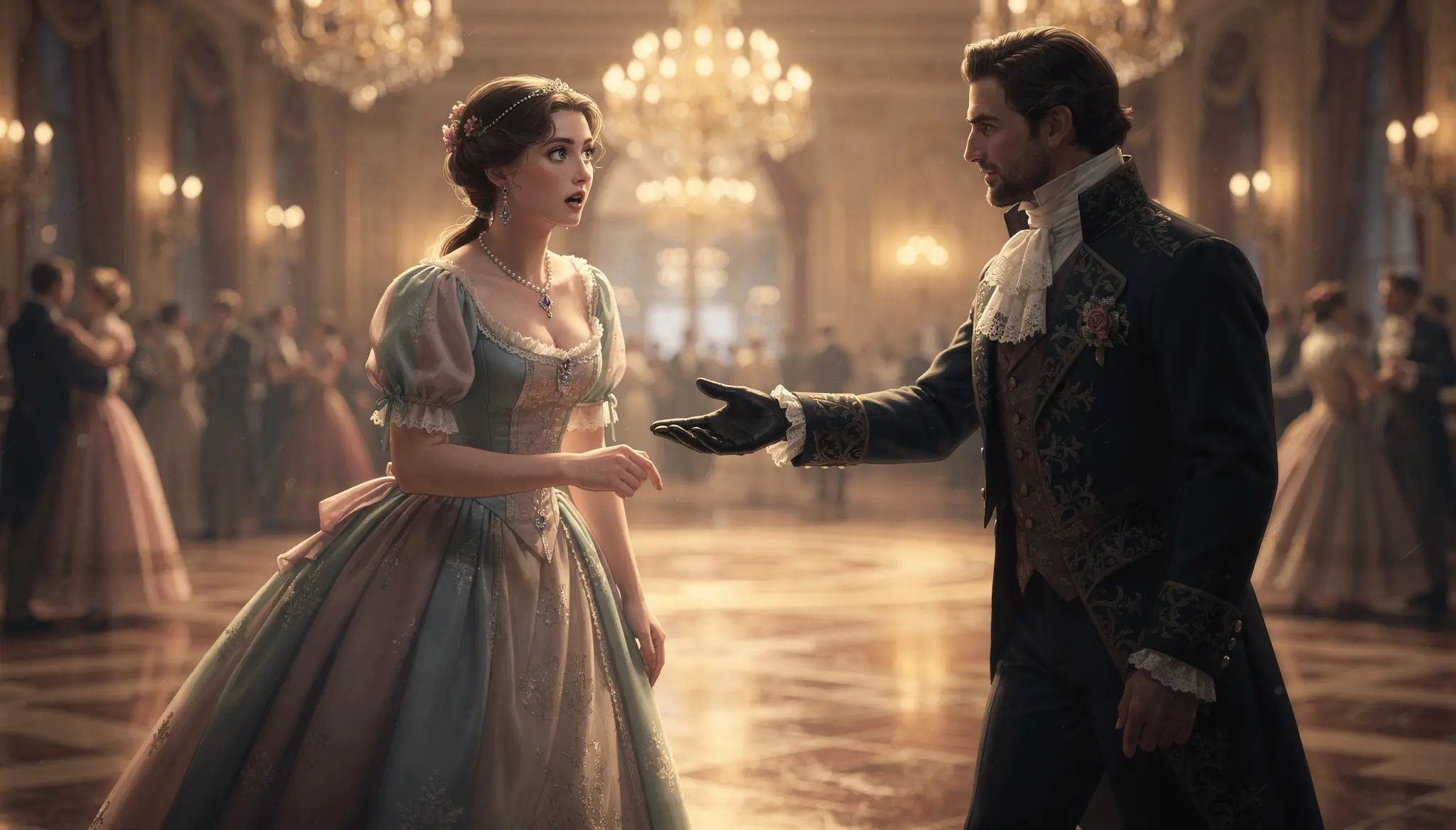
It stood between the second pier glass and a tall Chinese jar that nobody had ever put anything in, and it had a cushion of faded gold damask with a darn in one corner wheresome earlier wallflower, in some earlier decade, had picked at the threads through a long night of not being asked.
Theodora had found the darn in her first Season. In her second she had added to it, a little, without meaning to. In her third, which was this one, the spring of 1818, she kept her gloved hands folded firmly in her lap and left the darn alone, because she was four-and-twenty now and had decided that a woman of four-and-twenty did not fidget. She watched instead.
She was very good at watching. It was the one accomplishment her mother had never listed for prospective suitors, because it was not the sort of thing that could be listed, and because Lady Ivers did not know her daughter had it.
From the chair between the pier glass and the jar, Theodora could see the whole long ballroom of the house in Brook Street: the chalked floor already scuffed into grey rivers by the first three sets, the musicians sawing away in their little gallery under a garland of hothouse lilies that were sweating faintly in the heat, the double doors to the supper room, the card room beyond it, and the hundred and fifty faces of the best society that could be persuaded to come to Lady Cressingham's in the second week of May. And because she could see their faces, she could, with a little effort, hear what they were saying.
Not with her ears. Her ears were perfectly ordinary and the music drowned everything beyond ten feet. But Theodora had a brother who had been born deaf, and from the time she was eleven and he was a red-faced infant who did not turn his head when the dinner bell rang, she had been learning to read the shapes that words made on a mouth. She had learned it beside him, the two of them on the nursery floor at Coldharbour with a looking glass propped against the fender, making faces at it. Piers had needed it to live in a speaking world. Theodora had needed it, at first, only to keep him company. Then she had discovered that it was the most useful thing she knew.
Lord Dunstable, near the supper doors, was telling Miss Fenn that her eyes were like the sea, and Miss Fenn was asking him which sea, and he did not know. Two matrons beneath the musicians' gallery had agreed that the Cressingham lobster patties were not what they had