Imagine opening your front door at sunrise and finding 300 Apache warriors waiting in complete silence. Would they come for revenge, or to repay a kindness that changed everything?
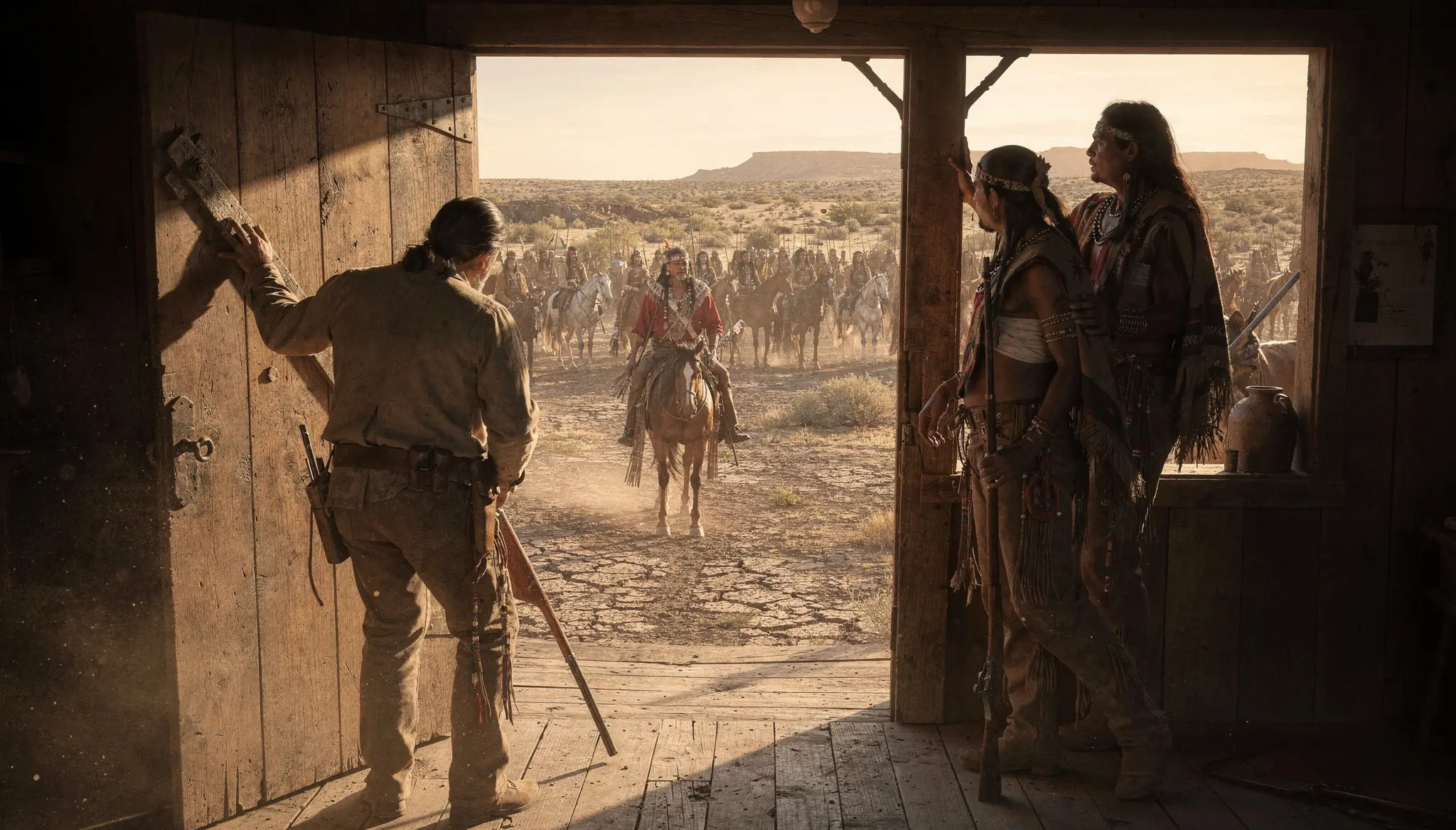
Today's story takes us back to the rugged Arizona frontier of the 1800s, where one lonely rancher made a choice that everyone else would have called a mistake. But by the next morning, that single act of compassion would create a moment that became legend across the Wild West.
In the autumn of 1874, Samuel Carter had already spent twelve lonely years on his cattle ranch along the rugged Arizona frontier. His nearest neighbor lived nearly twenty miles away, and most days passed with nothing but the sound of grazing cattle, distant coyotes, and the endless wind sweeping across the dry grasslands. Life on the frontier demanded strength, patience, and courage. Samuel had learned all three after losing his parents during a harsh winter and building the ranch with his own hands. Though many settlers carried hatred toward native tribes because of past attacks, Samuel believed every person deserved to be judged by their own actions rather than by fear or old stories.
Each morning before sunrise, Samuel saddled his trusted chestnut horse, Ranger, and rode across miles of open range checking fences, counting cattle, and repairing broken gates. The land was beautiful but unforgiving: giant saguaro cacti stood like silent guards over the desert, while rocky hills stretched toward distant blue mountains. Water was precious, and every spring had to be protected. Samuel lived simply inside a small log cabin with a stone fireplace, a wooden table, and shelves lined with supplies for long winters. Although his life was peaceful, he remained alert, because trouble could appear without warning on the frontier.
That afternoon, dark clouds rolled across the sky much earlier than expected. The warm autumn breeze turned cold as heavy thunder echoed through the mountains. Samuel knew storms in the Arizona territory could become dangerous within minutes. He gathered the last of his cattle toward safer ground before riding the western fence line to inspect for any damage. Dust swirled around Ranger's hooves while flashes of lightning lit the horizon. Rain began falling in thick drops, turning the dusty trails into muddy paths. Samuel pulled his hat lower against the wind and urged Ranger forward, determined to finish his work before darkness covered the land.
As the storm grew stronger, Ranger stopped and nervously snorted. The horse's ears pointed toward a cluster of large boulders near a dry creek bed. Samuel placed one hand on the rifle resting in its saddle scabbard and carefully approached.
At first, he thought he had discovered injured travelers hiding from the storm. Then he noticed traditional Apache clothing soaked by rain and instantly realized they were native people: a wounded Apache man lay against a rock struggling to breathe while trying to shield a frightened woman and a young girl no older than eight. The woman looked exhausted, and the child clung tightly to her mother's arm.
Samuel remained perfectly still. Stories told in nearby settlements warned ranchers never to approach Apache families because warriors might be hiding nearby. Yet, as he studied the scene more carefully, he saw no ambush waiting in the rocks: the injured man had lost a great deal of blood, and his shirt was torn where a bullet had struck his shoulder. His wife looked weak from hunger, and the little girl's face showed fear rather than anger.