Burglar Uncovers Shocking Crime During Robbery, Turns Himself In and Exposes Serious Offense
Facts 16/12/2025 23:59
Scattered across Norway’s dramatic fjords and mountain valleys, you’ll find houses that look as though they’ve grown directly out of the earth itself. Their roofs are thickly carpeted in green moss and grass, blending so seamlessly into the landscape that it can be hard to tell where nature ends and architecture begins. While these homes often appear in travel photography for their fairytale beauty, the moss-covered roofs are not a modern aesthetic choice. They are the result of a centuries-old Viking innovation designed for survival.
Long before modern insulation materials or climate control systems existed, Viking communities faced the challenge of building homes that could withstand Norway’s harsh climate. Winters were long, dark, and bitterly cold, while summers were short but damp. Timber was abundant, but stone and advanced construction materials were not. The solution they developed was both practical and remarkably sophisticated.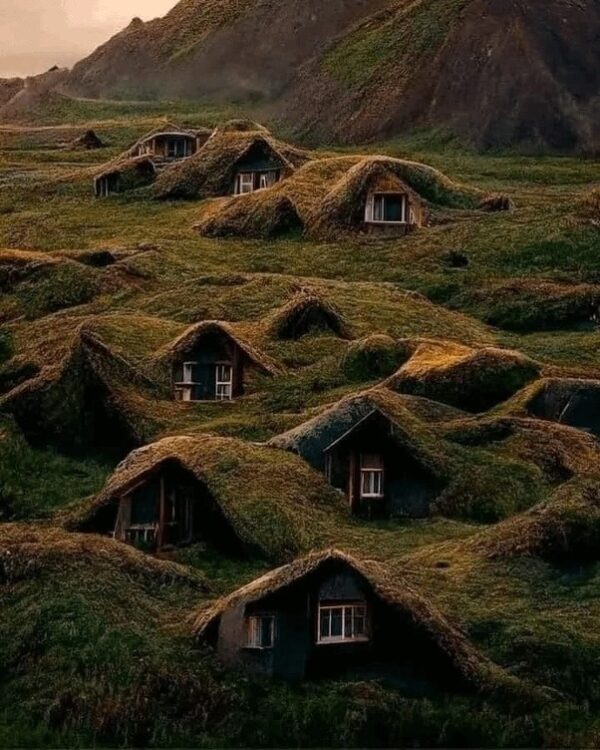
Traditional Norwegian turf roofs, often mistakenly called “moss roofs,” were built using layers of birch bark topped with soil and vegetation. The birch bark acted as a waterproof membrane, while the soil and moss above it provided thick insulation. This design trapped heat inside the house during freezing winters and helped keep interiors cool during warmer months (Norwegian Directorate for Cultural Heritage).
The moss layer also added weight, which helped compress the wooden structure and prevent drafts — a crucial advantage in regions battered by wind and snow. Unlike modern insulation, this system required no energy, no machinery, and no replacement materials. With minimal maintenance, turf roofs could last for decades (Encyclopaedia Britannica).
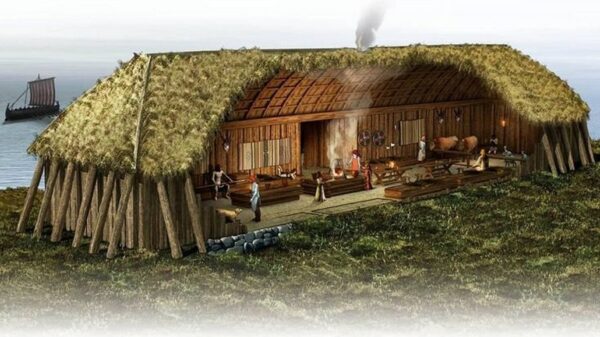
Beyond temperature control, moss-covered roofs offered another advantage: environmental harmony. The vegetation absorbed rainwater, reducing runoff and protecting the roof from erosion. It also helped stabilize the structure by shielding the bark layer from ultraviolet exposure and sudden temperature changes (Smithsonian Magazine).
This approach reflected a worldview common in Viking and early Scandinavian culture — one that emphasized coexistence with nature rather than domination over it. Homes were designed using locally available materials, shaped by climate and geography, and meant to age naturally alongside the land.
Although turf roofs declined with industrialization and modern building techniques, they never vanished entirely. In rural Norway, many historic farmhouses and cabins still use traditional green roofs. In recent decades, the concept has experienced a revival, influencing modern eco-architecture and sustainable design worldwide.
Today’s “green roofs” in urban settings echo the same principles Vikings relied on centuries ago: natural insulation, reduced energy use, and environmental integration. Modern studies have confirmed that vegetated roofs can lower heating and cooling costs, improve air quality, and extend roof lifespan — validating what Viking builders understood through experience alone (International Green Roof Association).
What makes these moss-covered Norwegian houses so striking is not just their beauty, but the intelligence behind them. They are living proof that sustainable design is not a new concept, but an ancient one. Long before sustainability became a global conversation, Viking builders had already mastered the art of using nature as an ally.
So the next time you see a photo of a Norwegian house crowned in moss, remember that you’re not just looking at a charming architectural detail. You’re seeing a piece of living history — a reminder that some of humanity’s smartest solutions were developed long before modern technology ever existed.