By the winter of 1888, there were two things almost everyone in Oakhaven, Colorado, knew about Caleb Whitmore.
The first was that he was rich enough to buy half the town.
The second was that nobody wanted to live with him.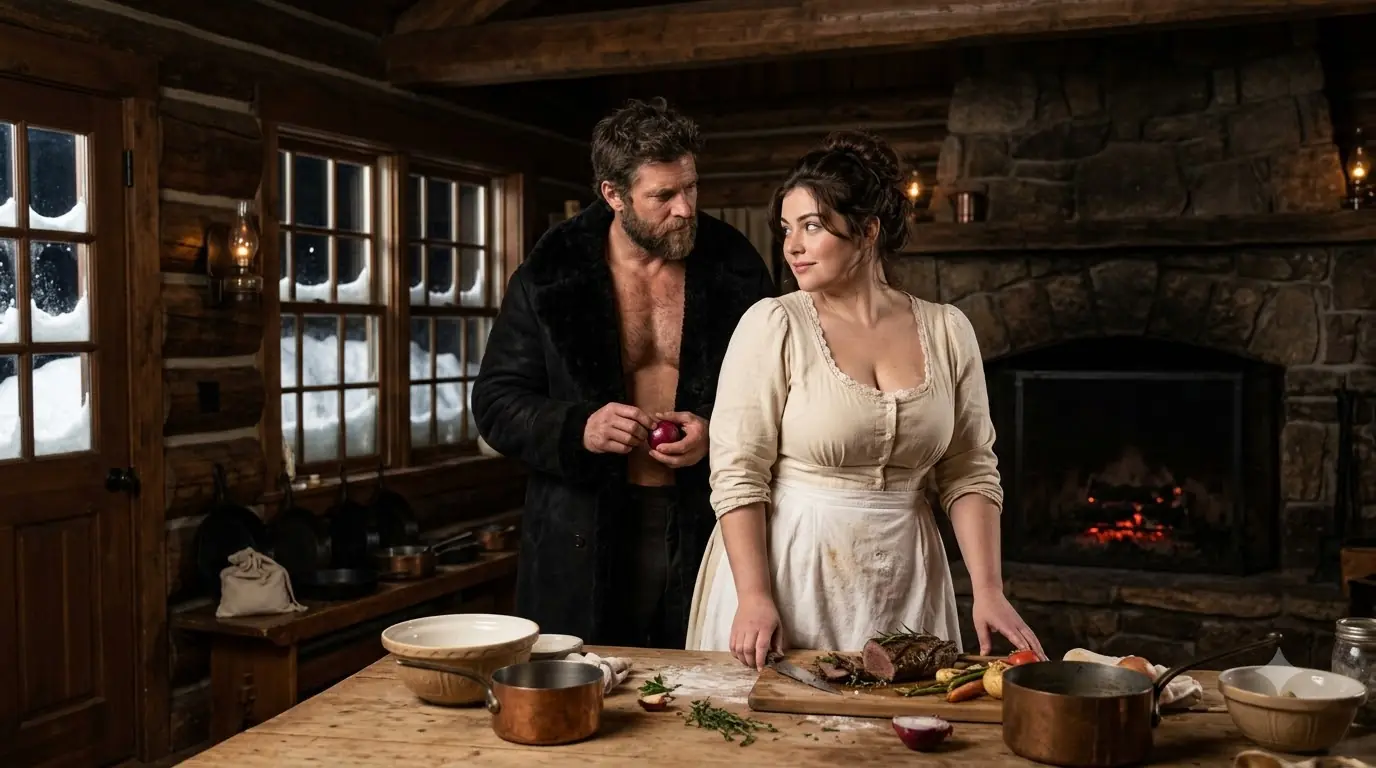
Ridge View Estate stood seven miles above Oakhaven on the northern shoulder of Blackstone Mountain, a sprawling fortress of pine timber, gray granite, and narrow windows built to withstand winters that buried fences and killed careless travelers. Caleb had designed the house himself after striking one of the largest silver veins in western Colorado eleven years earlier. The estate contained twelve bedrooms, a ballroom he never used, a dining hall long enough to seat thirty people, servants’ quarters, two kitchens, a wine cellar, three enormous fireplaces, and a library filled with expensive books Caleb rarely opened.
People in town called it a mansion.
Caleb privately called it a mistake.
He had built Ridge View when he was thirty, newly wealthy and still foolish enough to believe prosperity required visible proof. Eastern investors came west wearing polished shoes and suspicious expressions, and Caleb had wanted them to understand that the mountain prospector they once dismissed had become a man worth negotiating with.
So he constructed the largest house within forty miles.
Then he discovered that a large house became very quiet when nobody loved living inside it.
By forty, Caleb had more money than he knew how to spend and fewer people around him than when he had slept in a mining camp beside thirty dirty men and one iron stove.
His housekeeper quit in October.
The butler followed two weeks later.
Two maids left after Caleb threw a ledger across his office during an argument with a supplier.
The cook stayed longest.
Mrs. Hanley had survived three years of his temper, but on the morning of November twenty-third, she placed her apron on the kitchen table and informed Caleb that she was finished.
“I have worked for difficult men,” she told him.
Caleb stood beside the pantry door, stunned.
“And?”
“You are trying very hard to become the most difficult.”
“I pay you double what the hotel pays.”
“That is why I lasted three years.”
“Mrs. Hanley.”
“No.”
Her voice was not angry.
That made it worse.
“You are not cruel, Mr. Whitmore. Cruel men are easier. At least one knows where one stands.”
Caleb frowned.
“What does that mean?”
“It means you expect everybody to know what you want before you say it, and when they fail, you punish the room for disappointing you.”
He stared at her.
Mrs. Hanley picked up her coat.
“And you don't need a cook nearly as badly as you need somebody willing to tell you when you've become unbearable.”
Then she left.
At eleven that morning, Caleb stood alone inside a kitchen containing fifty pounds of provisions, six bottles of wine, enough tableware for twenty people, and absolutely no ability to transform any of it into dinner.
His guests would arrive at six.
Josiah Abernathy and Arthur Pendleton represented Eastern Continental Rail.
If they agreed to fund a twelve-mile spur from the main line into Whitmore territory, Caleb could move ore through winter without relying on wagon roads. Without the rail extension, two new mine shafts would become economically useless for nearly five months each year.
The deal involved hundreds of thousands of dollars.
Possibly millions over time.
And Caleb could not boil potatoes without burning the bottom of the pot.
He tried.
At twelve fifteen, he ruined the potatoes.
At twelve twenty-three, he swore.
At twelve thirty, he saddled his horse.
The ride into Oakhaven took forty minutes when the road was clear.
That day the wind came down Blackstone Mountain like a warning.
Caleb reached town shortly after one and walked directly into McGreevy’s Tavern.
Everyone inside noticed him.
Most people pretended not to.
Caleb Whitmore had that effect.
He was six feet four, broad enough to make doorways look narrow, with dark hair that never stayed combed, a heavy beard, and blue-gray eyes people often mistook for anger even when he was simply thinking. Years before the silver mines, he had trapped, logged, hunted, and broken horses. Wealth had changed his coat but not his hands.
McGreevy looked up from polishing a glass.
“You’re early.”
“I need a cook.”
The tavern keeper stopped.
“A what?”
“A cook.”
McGreevy stared.
“Today?”
“Now.”
“Your cook finally kill you?”
“She quit.”
McGreevy nodded as though a long-awaited prophecy had been fulfilled.
“Good woman.”
“Can you help me?”
“Depends.”
“On?”
“How desperate you are.”
Caleb pulled a fifty-dollar banknote from his pocket and placed it on the bar.
McGreevy whistled softly.
“For supper?”
“For tonight.”
“And cleanup?”
“If necessary.”
“Serving?”
“Yes.”
McGreevy looked toward the far window.
“There is one woman.”
“Who?”
“Beatrice Gallagher.”
Caleb knew the name vaguely.
“Baker?”
“Cook.”
“I thought she sold bread.”
“She sells whatever people will pay for.”
McGreevy leaned against the bar.
“Her father died three winters back. Left her the cabin and debts. She cooks for mining crews when they bother paying. Weddings when respectable women stop pretending they don't know her. Funerals. Logging camps.”
“Why wouldn't respectable women know her?”
McGreevy smiled without humor.
“Because Bee Gallagher weighs more than they think a woman ought to, speaks louder than they think a woman ought to, and once broke Mrs. Claiborne’s finger when that old goat grabbed her arm and told her to use less butter.”
Caleb raised an eyebrow.
“Did she break it deliberately?”
“Depends who tells the story.”
“Can she cook?”
McGreevy's expression changed.
“Better than anyone in this valley.”
“Where does she live?”
He gave directions.
Then added:
“Whitmore.”
Caleb stopped.
“Don't treat her like a servant you can bark at.”
“I’m hiring her.”
“That is exactly why I'm warning you.”
Caleb stared at him.
McGreevy returned to his glass.
“Her cooking may be worth your fifty dollars. Her patience probably isn't.”
Caleb rode another mile through town.
Beatrice Gallagher’s cabin sat behind an abandoned cooperage near the river.
Tiny.
Roof patched with mismatched boards.
Chimney smoking.
Vegetable garden dead beneath early frost.
Caleb dismounted and knocked.
No answer.
He knocked harder.
From inside came a woman's voice.
“If you're selling something, I’m poorer than you.”
“I’m not selling.”
“Then knock like a civilized man.”
Caleb looked at his fist.
Before he could answer, the door opened.
Beatrice Gallagher filled the doorway.
Not because she was unusually tall.
Because she possessed the kind of physical presence most people noticed before anything else.
Bee was thirty, perhaps five feet six, heavy through the hips and stomach, broad across the chest, with full cheeks, warm brown eyes, and dark hair pinned loosely at the back of her head. Flour covered one side of her faded brown dress. Her sleeves were rolled to the elbows.
She looked at Caleb.
Then at his expensive coat.
Then at his horse.
Her expression suggested none impressed her.
“You're Caleb Whitmore.”
“Yes.”
“I know.”
“Good.”
“Not necessarily.”
Caleb almost smiled.
“I need a cook.”
Bee crossed her arms.
“You need several things.”
“A cook tonight.”
“How many?”
“Three guests including me.”
“Three men.”
“Yes.”
“What kind?”
“Railroad investors.”
Her eyebrows rose.
“East Coast?”
“Yes.”
“Fussy?”
“Probably.”
“Rich?”
“Yes.”
“Then definitely.”
Caleb exhaled.
“They arrive at six.”
Bee glanced at the light.
“You came at one thirty.”
“I know.”
“What are you serving?”
“I have venison.”
“What cut?”
“I don't know.”
Her eyes closed briefly.
“Potatoes.”
“What kind?”
“I don't know.”
“Vegetables?”
“Yes.”
“What kind?”
“I don't know.”
Bee stared.
Caleb stared back.
Finally she said:
“You own mines.”
“Yes.”
“Many?”
“Several.”
“Employ hundreds?”
“Yes.”
“And nobody taught you the difference between a turnip and a carrot?”
“I employ people for that.”
“Not anymore, apparently.”
Caleb nearly laughed.
Bee saw it.
Her mouth twitched.
He removed the fifty-dollar note.
“One night.”
Bee looked at the money.
More than she earned in months.
Her face revealed nothing.
“Seventy-five.”
Caleb frowned.
“Fifty.”
“Seventy-five.”
“For supper?”
“For supper, serving, cleanup, climbing a mountain in November, tolerating your reputation, and risking my cooking on people who probably believe pepper is a sign of lower breeding.”
Caleb looked at her.
“You negotiate like a banker.”
“I negotiate like a woman who has met men with money.”
He pulled another note.
“Seventy-five.”
Bee smiled.
“Then we understand one another.”
“I leave in ten minutes.”
“I leave in fifteen.”
“Ten.”
“Twenty.”
Caleb stared.
Bee closed the door.
“Fifteen!” he called.
From inside:
“Now you're learning.”
Caleb stood in the cold and laughed once despite himself.
He had not expected that.
Neither had Bee.
They reached Ridge View shortly before three.
Bee entered through the kitchen door carrying two cast-iron pans, three knives wrapped in cloth, jars of spices, dried herbs, preserved peaches, blackberry jam, flour, yeast, and an iron coffee pot she apparently trusted more than anything Caleb owned.
She stopped inside the kitchen.
Looked around.
Then turned slowly toward him.
“What?”
Caleb asked.
“This room is dead.”
“It is a kitchen.”
“Exactly.”
Bee walked toward the stove.
Cold.
She checked the fireplace.