At 11:47 p.m. in the Sterling Tech Tower garage, Samuel Johnson pushed his cleaning cart past Richard Sterling's black Tesla Model S. The interior light glowed faintly—wrong for a parked car. Samuel's trained eyes caught movement in the rear seat.
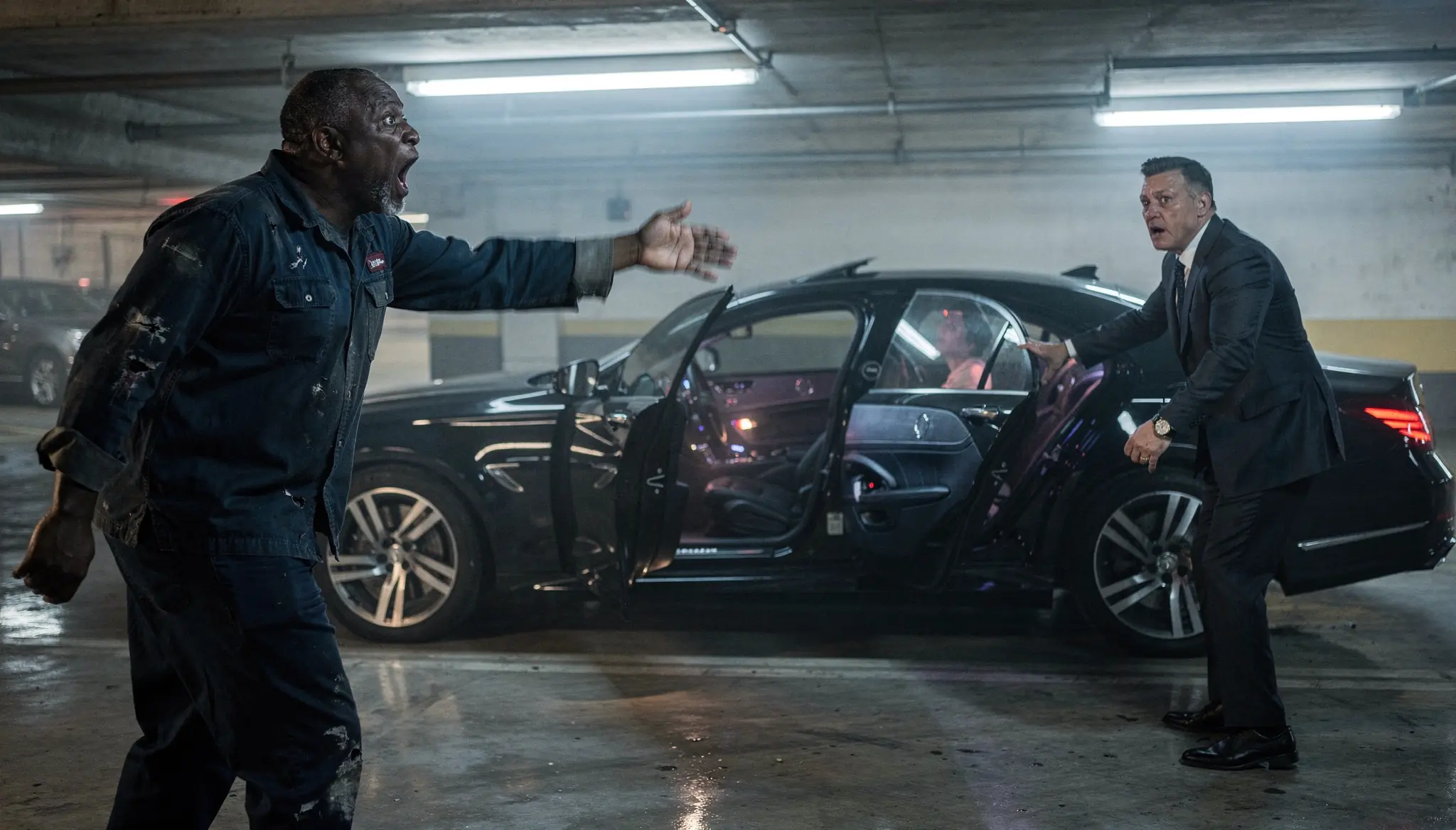 The elevator chimed. Sterling emerged, walking confidently toward his vehicle."Don't get in that car!" Samuel shouted.Sterling stopped, hand on the door handle, face twisted with irritation. "What did you just say to me?"But as Sterling looked through the rear window, his expression changed completely. A red laser dot danced on his chest. Inside his car, the silhouette of a gunman sat waiting, a weapon aimed at the driver's seat. Sterling froze, hand trembling on the handle. The billionaire CEO who commanded billions stood paralyzed, staring at his own death.The garage fell silent except for the faint hum of the laser sight. Who was the assassin? And how did a janitor see what Sterling security missed?Three hours earlier, Samuel Johnson had arrived for his final shift at Sterling Tech Tower. At 45, his broad shoulders carried the weight of invisible burdens—a man society had taught to stay unseen. His dark janitor's uniform hung loose on his 6'2" frame, deliberately oversized to avoid drawing attention. The unusual blue-green eyes that marked his mixed heritage stayed focused downward as he badged through security.Sterling Tech Tower pierced the Manhattan skyline like a glass and steel monument to technological supremacy: 60 floors of innovation, with Richard Sterling's penthouse office and private garage claiming the crown. The building's facial recognition systems, biometric locks, and AI-powered security represented the pinnacle of Sterling's empire, a $50 billion company that had revolutionized surveillance technology.For three years, Samuel had cleaned these floors in the shadows. Night shift, 8:00 p.m. to 6:00 a.m.—invisible work for invisible wages. He knew every corner, every camera blind spot, every emergency protocol. What Sterling's security team never noticed was how Samuel moved: scanning exits first, positioning himself near walls, watching reflections in polished surfaces—old habits from a different life.Richard Sterling embodied everything Samuel had once protected against. The 52-year-old CEO commanded his empire from the 60th floor, surrounding himself with bulletproof glass and million-dollar views. His silver hair was perfectly styled, his Armani suits cost more than Samuel's annual salary, and his handshake could topple governments or launch technologies that reshaped warfare. Sterling's recent divorce had cost him $2 billion and left him paranoid and bitter. His ex-wife had taken the Hamptons estate, half his stock portfolio, and his confidence in personal relationships. Now, he trusted only technology: cameras, sensors, and algorithms that never betrayed or demanded alimony.Tonight was different. Sterling had called the temp agency that afternoon, his voice dripping with disdain: "Replace the night cleaner immediately. I want him gone."The reason? Samuel had been too thorough, too observant. He'd noticed things: delivery schedules that didn't match, new security personnel without proper badges, unusual vehicle patterns in the garage. When Samuel reported these discrepancies, Sterling saw insubordination, not protection."People like you," Sterling had said during their last encounter, "should be grateful for any job in this country."The words cut deeper than Sterling knew. Samuel's file showed work authorization, but not the Purple Heart hidden in his studio apartment, not the commendations from three presidents, not the daughter in Georgia who hadn't spoken to him in two years. Samuel lived in a 400-square-foot studio in Queens, sending half his meager paycheck to his mother's nursing home in Savannah. His ex-wife had remarried a successful contractor. His daughter, Grace, now 16 and brilliant, was applying to pre-med programs he couldn't afford. The girl who once called him "Daddy the Hero" now answered his calls with polite distance.As Samuel loaded his cart for the final time, he carried more than cleaning supplies. Hidden beneath folded towels lay tools that had nothing to do with janitorial work: emergency communication devices, tactical lights—items that spoke to training most people couldn't imagine.Sterling's Tesla sat in its designated spot, positioned with military precision twelve feet from the elevator bank. The custom Model S represented more than transportation; it was a fortress: bulletproof glass, reinforced frame, and biometric locks that responded only to Sterling's thumbprint and retinal scan. The vehicle had cost $300,000 and could withstand everything from bullets to explosives. No one could enter without Sterling's authorization.No one except a professional who understood that every fortress had weaknesses.