A flight crew called a Black woman a security threat. She helped pull their $3.5 billion government contract. A single request for something as simple as a glass of water spiraled into an unbelievable chain of events toppling a multibillion-dollar deal and transforming a quiet businesswoman into an unwitting crusader against injustice. When a calm, dignified Black woman found herself labeled a security threat for daring to ask for water on a routine flight, no one could have predicted the explosive consequences that would follow. This is the story of how a powerful corporate giant underestimated the wrong person and paid a staggering price.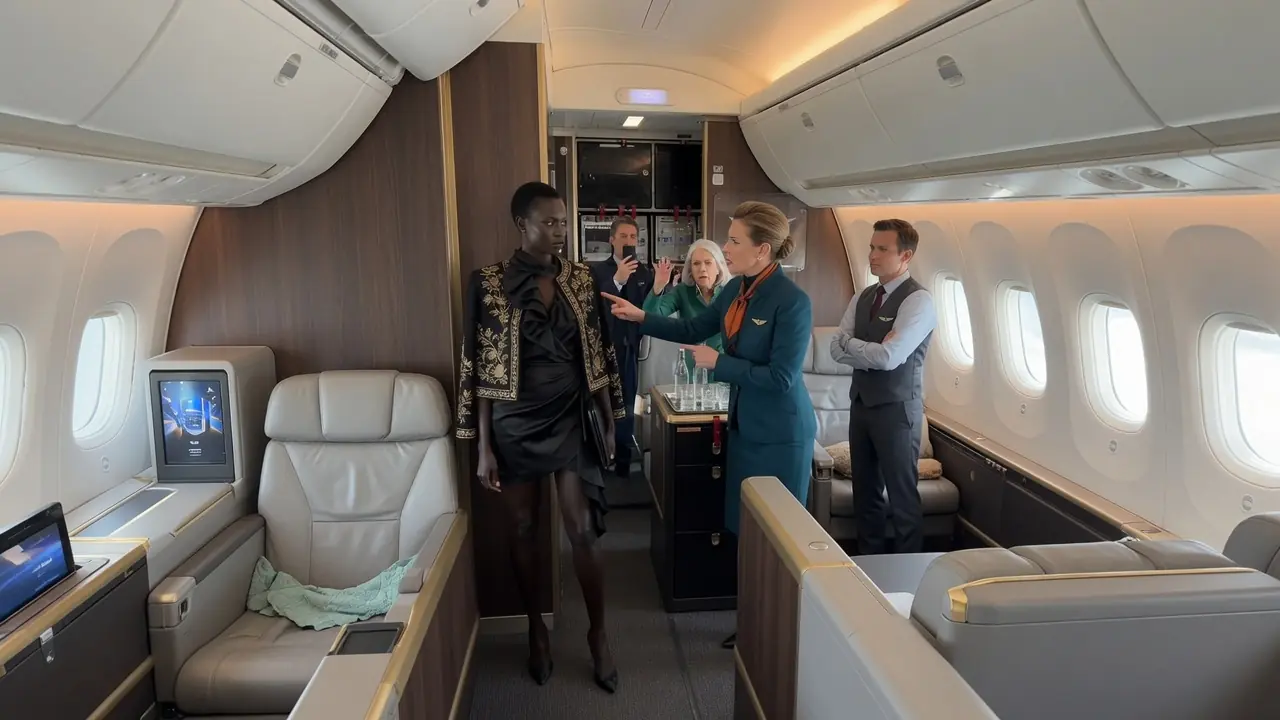
Buckle up, because this is more than just an in-flight dispute. It's a thrilling tale of karma, secrets, and high-stakes retribution. Harper Williams awoke before dawn to finalize her presentation for a major conference in Atlanta. As principal consultant at Willpower Strategies, she was accustomed to high stakes meetings, but today felt especially significant. Her upcoming presentation involved cost-saving measures in government travel, a domain worth billions of dollars, including a colossal contract rumored to be on the table for Silver Horizon Airlines.
Arriving at Ronald Reagan Washington National Airport, Harper checked in smoothly, her mind focused on the day ahead. She anticipated a straightforward flight followed by a game-changing meeting. Little did she know that a casual request on board would shake her world and Silver Horizon's entire future. Harper settled into business class on Silver Horizon Airlines Flight 3721 bound for Atlanta. The cabin had the usual hum of early travelers, a weary parent herding twin toddlers, a tired businessman typing away on his laptop.
Though Harper had flown countless times before, something about the crew's demeanor felt slightly off. The head flight attendant, Bethany, greeted passengers with a forced smile, and another attendant, Joshua, looked rushed. Nevertheless, Harper shrugged off any unease. She had important work on her mind, but an unremarkable flight soon took a dark turn. A simple glass of water would become the flash point for accusations of security threat and spark a scandal worth $3.5 billion.
Shortly after takeoff, the cabin lights dimmed to provide a calm environment. Some passengers dozed off while others opened laptops to finish up last-minute work. Harper, feeling a little dehydrated after sipping only coffee all morning, pressed the call button. She'd quietly ask for water and continue reviewing her presentation. Bethany approached with a measured smile.
"Yes, ma'am. May I have a glass of water, please?" Harper asked politely. "Room temperature, if possible." "Certainly," Bethany replied.
Her smile was there, but something about her tone felt rehearsed. Harper returned to her notes, skimming bullet points about cost-saving measures, streamlined bidding processes, and oversight protocols. Minutes ticked by 5, 10, then 15. She lifted her gaze from her notes, half expecting a tray with drinks to appear. When Bethany passed by again, but didn't stop, Harper figured she might just be busy.
She waited a few more minutes. Still nothing. Finally, Harper pressed the call button again. A different flight attendant arrived. A younger man named Joshua.
How can I help you? He asked a bit briskly. I asked for a glass of water about 20 minutes ago. Could I please have it when you have a moment? Joshua's eyes flicked with barely concealed annoyance.
We're still preparing the beverage cart, ma'am. You'll have to wait until we begin service. Harper was taken aback. Business class passengers usually received prompt beverage service, especially a simple request like water. She nodded politely, but felt a faint prickle of discomfort.
Something was off. She told herself it was probably just understaffing, or the flight attendants having a rough day. Service finally began another 15 minutes later. Bethany wheeled the cart down the aisle, distributing drinks. Harper watched her stop at the row behind, then the row across from her, then the row in front of her, before moving on.
Somehow she managed to skip Harper's row entirely, like a deliberate oversight. Now Harper felt a prick of indignation. Was this an innocent mistake, or was she being singled out for some reason? She tried to get Bethany's attention, but the purser seemed to avoid eye contact. The older woman seated next to Harper furrowed her brow.
"That's odd," she whispered. "They skipped us, too." Harper calmly pressed the call button for a third time. At this point, a couple of other passengers noticed. One or two gave her supportive nods, as if they too had witnessed something strange.
When Bethany finally arrived, Harper asked in a polite but firm tone, "Could I please have that water now?" The purser's face tightened. "We're just very busy, ma'am. You'll have to wait your turn. We can't accommodate every request immediately.
But you've served everyone around us," Harper stated, gesturing lightly at the other rows. She kept her voice measured, not wanting to escalate. "I've been waiting for close to 40 minutes now. It's just water. Bethany let out an exasperated breath.
Ma'am, I don't appreciate your tone. Harper blinked, caught off guard. My tone? You're raising your voice? Bethany insisted.
I'll get you water when we can. Please stop pressing the call button. The older woman next to Harper decided to interject. She's not raising her voice at all. In fact, she's being quite calm.
But this was the first time she'd encountered outright hostility over something so minor. The tension in the air was palpable. She wondered if it was because she was a Black woman asking for service. It wouldn't be the first time prejudice showed itself in subtle ways, sometimes in a store clerk's stony stare, sometimes in the daily microaggressions that chip away at one's peace. But was it happening here, 30,000 feet above the ground?
Choosing to remain calm, Harper turned away. She decided to wait for beverage service to cycle through. However, she couldn't shake the nagging feeling that something bigger loomed. She glanced at the overhead bin containing her laptop and the documents about the contract negotiations with the Department of Defense. An odd thought struck her.
What if they knew who I was? The possibility seemed far-fetched, but a prickle of intuition told her that her role in upcoming negotiations might have put her in some flight crews crosshairs. Or perhaps it was just plain discrimination without any deeper conspiracies attached. Either way, the seeds of confrontation had been planted. All Harper wanted was water.
Instead, she was about to be labeled something infinitely more threatening. About an hour into the flight, the tension had not dissipated. Harper still had no water. The beverage cart had come and gone, somehow missing her row again. The older woman next to Harper had finally flagged down Joshua herself to ask for coffee and gotten it, albeit with glaring reluctance.
Harper decided to approach this with her usual directness, politely heading to the galley to inquire about water. As she stood and made her way up the aisle, she felt the eyes of a few other passengers on her. Some offered empathetic glances, others simply watched curiously, as if waiting to see how the drama would unfold. When Harper reached the galley, Bethany and Joshua were whispering in hushed tones. Bethany noticed Harper's approach and instantly put on a cold, guarded expression.
Ma'am, you're not allowed in this area, Bethany said curtly, standing more erect. I understand this is the galley, Harper replied, maintaining composure. I'm just wondering if I can get a glass of water now. I've been waiting quite a while. Bethany sighed heavily, exchanged a look with Joshua, and then turned on Harper with an accusatory glare.
"You're making a scene," she said. Harper felt her chest tighten. I haven't raised my voice or caused any disturbance. I'm simply asking for water. Joshua folded his arms.
M A M. We have protocols to follow. We can't have passengers loitering in the galley, especially if they're agitated. Harper blinked. I'm not agitated.
I'm just thirsty. Bethany's face hardened. We have reason to believe you may be a security threat. A shockwave of disbelief coursed through Harper's body. Her mind raced, trying to fathom how the situation escalated from requesting water to being labeled a security threat.
Was this some kind of twisted misinterpretation or a blatant abuse of power? The words stung, but Harper fought to keep her voice steady. "A security threat? Because I asked for water?" Bethany glanced at Joshua, who nodded as if to affirm her statement.
You've been pressing the call button incessantly, leaving your seat, harassing flight attendants. Bethany rattled off. We've notified the captain. If you don't return to your seat, we'll have to take further measures. For a split second, Harper considered the possibility that she was living in an alternate reality.
She couldn't recall a single instance where she'd used any threatening language or even raised her voice above a normal speaking level. She realized that if they truly believed or claimed to believe she was a security threat, that the consequences could be severe. Flight crews had sweeping authority to involve law enforcement. She'd seen headlines about passengers forcibly removed or even arrested over misunderstandings or small disputes. Her heart thundered in her ears.
A mixture of anger and fear pulsed through her. She also felt a well of sadness because she knew this was more than just incompetent service. This was about prejudice, pure and simple. Her entire life she'd been cautioned that as a Black woman she'd have to stay calm in situations where others might lose their temper to avoid being labeled as the angry or aggressive one. But she never expected to be labeled a security threat over a glass of water.
Before she could form a coherent response, Bethany stepped forward, her eyes narrowed. "Go back to your seat now." Harper swallowed her indignation and turned back to her seat, acutely aware of the stares from other passengers. She forced herself to breathe, focusing on the short walk down the aisle as if it were a gauntlet. She must not give them any excuse to escalate.
Her mind reeled. What next? Would they land the plane early? Would the police greet her at the gate? Would this blow up her entire day, her entire career, right before one of the most important presentations of her life?
Upon returning to row three, Harper found her seatmate trembling with anger. I heard, the older woman said quietly. This is outrageous. Harper sank into her seat, her cheeks burning. I'm not sure what to do.
She had always believed in addressing problems through appropriate channels, but at 30,000 feet she had limited options. She pulled out her phone to type a quick note, knowing full well she couldn't get service in flight. Perhaps she could record a short video or at least document the time and the conversation she just had. If anything further happened, she wanted a record. The older woman placed a comforting hand on Harper's arm.
I'll back you up," she whispered. "You've been nothing but polite." Harper nodded, attempting a grateful smile, but inside a storm raged. She recalled the many policy briefs she'd authored on airline accountability. Ironically enough, the airline industry was fraught with tension between customer service and security measures.
She had never imagined that one day she herself would become the poster child for those tensions, especially on a flight that seemed routine just minutes ago. Little did she know that the next steps the crew took would not only turn her world upside down, but also cast a massive shadow over Silver Horizon Airlines. A storm of press, legal scrutiny, and corporate retribution lay on the horizon. And Harper Williams, unassuming consultant, would soon be at the epicenter of a scandal that could cost the airliner $3. 5 billion government contract one she had helped structure. Harper felt the first jolt of turbulence rumble through silver horizon Flight 3721 just as she realized she might never get the simple glass of water she'd requested.
Soft overhead chimes signaled for everyone to remain seated and the captain's calm but firm voice reminded passengers to keep their seat belts fastened. Around her lights flickered and the plane lurched slightly. A baby a few rows back let out a startled cry. She tightened her seat belt, mind churning over the bewildering confrontation that had already taken place. Hours ago she'd boarded the flight with no inkling that asking for water could incite hostility.
Yet here she was, pinned by the flight crews stony glares and cold demeanor. Harper kept revisiting the moment Bethany, the purser, explicitly called her a security threat. The weight of that accusation pressed in on her chest, all the more chilling when made midair, far from any neutral oversight. Sitting beside Harper, the older woman, who had attempted to intervene, looked equally unsettled. She had introduced herself only briefly.
Her name was Evelyn, but the two had quickly bonded in a shared sense of disbelief. Evelyn gave Harper a meaningful nod as if to say, "I'm still on your side." and gently touched her arm. Harper felt a flicker of relief that someone else had witnessed everything. While the plane rocked through another wave of turbulence, the flight attendants hustled to secure the galley. Joshua, the attendant who had brushed off Harper's water request earlier, cast a sidelong look toward row three.
Harper straightened her posture, determined not to appear meek or intimidated. She had done nothing wrong, asked for nothing unreasonable. Suddenly, the loudspeaker crackled. "Ladies and gentlemen," the captain said, "we've been advised of potential weather ahead." "Out of an abundance of caution, we'll begin our descent slightly earlier than scheduled.
Please remain seated with your seat belts fastened until further notice." A low murmur drifted through the cabin. An early descent. Harper's pulse quickened. Evelyn caught her eye and whispered.
I wonder if this is really about the weather or if the crew reported you to the captain. The thought sent a wave of dread through Harper. In the back of her mind, she knew that any passenger flagged as aggressive or disruptive could be met by security upon landing. It was a terrifying prospect. As the turbulence subsided, Bethany walked down the aisle one last time to ensure compliance with the seat belt sign.
When she reached Harper's row, she paused and made pointed eye contact. She said nothing, just stared, then moved on. It felt more like a threat than a routine check. Evelyn bristled. "That was so uncalled for," she muttered.
Harper clenched her hands in her lap, forcing herself to breathe. She tried to recall her professional training. Calmness under pressure was essential when negotiating with high-level officials. In many ways, this was a negotiation, one for her dignity, her rights as a passenger, and her personal safety. She reminded herself that once they were on the ground, there would be procedures, witnesses, and hopefully a chance to prove she had not in fact threatened anyone.
Minutes later, the plane broke through clouds. The Atlanta skyline faintly visible through the window. Another jolt shook the cabin as the landing gear lowered, followed by a heavy thud. Harper's stomach twisted. Anxiety gnawed at her.
Would she be detained, interrogated, branded with some permanent record as an unruly passenger? The wheels touched the tarmac with a squeal. Passengers collectively exhaled. The tension in the cabin, however, didn't lessen. A hush fell, broken only by the usual flight crew announcements about gate arrival and keeping seat belts fastened until the plane stopped completely.
Finally, the aircraft turned onto the taxiway, rolling to a halt. Bethany's voice came over the intercom. We ask all passengers to remain seated momentarily. We have a minor matter to address before general deplaning begins. The words rang ominous.
No one missed the emphasis on minor matter. Furtive whispers rippled among passengers. Evelyn shot Harper a look of fierce support. "They're coming for you," she said softly, her eyes flicking toward the exit. "Sure enough, the cabin door opened, and two uniformed airport security officers stepped inside, their presence instantly shifted the atmosphere from nervous speculation to outright alarm.
People craned their necks, curious or appalled. Harper's mouth felt dry. Her pulse thrummed so loudly she could barely hear the officer's greeting. One of the security officers spoke calmly. "Good afternoon, folks.
We just need to speak with a passenger who's been reported as a potential risk. Once we resolve this, we'll allow everyone to exit." He flipped through a paper on his clipboard, then asked, "Harper Williams." The moment hung in the air. Harper raised her hand slightly.
"Yes, that's me," she managed, voice tight. The officer asked her to step forward, her stomach in knots, Harper unbuckled her seat belt. Evelyn gave her arm a reassuring squeeze. "I'll help," she whispered. "This is outrageous."
Under the watchful eyes of other travelers, Harper made her way to the front of the aircraft. Bethany and Joshua stood in the galley, arms folded. Bethany's gaze was impassive. Joshua avoided eye contact. Harper halted beside the security officers, hands trembling at her sides.
She willed herself to speak calmly. "I'm not a threat to anyone," she said, projecting confidence she didn't fully feel. "All I did was ask for a glass of water and question why I wasn't being served. Nothing more," Bethany interjected, her tone clipped. That's not entirely accurate, officer.
She entered our galley, refused to wait her turn, and appeared hostile. We were concerned for our safety. Harper felt a wave of indignation flare. I never raised my voice or disobeyed instructions. They refused to serve me multiple times.
When I politely inquired, they acted like I was attacking them. The security officer's brow furrowed, his expression torn between official duty and a sense that something was off. He glanced at Harper, then at the flight attendants. Before he could respond, Evelyn stepped forward from her seat. I was right there the whole time, she announced.
This woman did nothing but speak politely. The flight crew completely ignored her, singled her out, and then fabricated reasons to call her a threat. It's appalling. She turned to the other passengers. Anyone else see it?
A man across the aisle nodded vigorously. Another woman raised her hand. A quiet outpouring of support began with multiple voices murmuring agreement. The officer exchanged looks with his partner who joined them at the front. They seemed increasingly skeptical of the flight attendants version of events.
Ma'am, the lead officer said to Bethany, could you please elaborate on how exactly Miss Williams was threatening? Did she use profanity or refused to remain in her seat, make any violent statements? Bethany hesitated. She she insisted on getting water and we had to prep for turbulence, she finally said. She was in the galley uninvited.
That's a clear breach of safety protocols. The second officer's eyes narrowed, but no actual threats or aggressive behavior. Bethany's cheeks flushed. She glanced at Joshua for support. He coughed and looked away.
"She made us uneasy," he mumbled. "The officer turned back to Harper, a note of apology creeping into his voice." "Miss Williams, let's step off the plane and we'll clarify this with a short interview. If we determine there's no security risk, you're free to go." Heart pounding, Harper nodded, grateful for a chance to defend herself.
She followed the officers off the aircraft, leaving behind a cabin of onlookers, who clearly knew this was far from an average minor matter. Evelyn, determined, trailed behind with the permission of the second officer, who waved her forward as a witness. Outside, the stale airport air greeted Harper like a reprieve. In that liminal space between the aircraft and the gate, she braced herself for a confrontation that would either clear her name or confirm her worst fears. That in moments of power imbalance, an innocent person could be labeled a threat with life-altering consequences.
Standing on the jet bridge, Harper took in the sight of two more airport security officers, along with a smattering of onlookers, gate agents, curious staff, even a few bystanders who peered from beyond the tinted windows. She inhaled sharply, trying to regain composure. The lead officer, who had escorted her off the plane, began asking pointed questions. Miss Williams, we need your account of what happened in detail. He flipped open a small notepad.
When did the conflict begin? Harper recounted the ordeal from the first time she pressed the call button to the moment turbulence struck and she approached the galley. She described her interactions with Bethany and Joshua, maintaining a measured tone. It was crucial not to sound angry or defensive despite her frustration. Any hint of aggression might reinforce the very label she was fighting against.
The officer's pen scratched across the notepad as Harper spoke. Evelyn, standing nearby, chimed in, "I'm not related to Miss Williams. I'm just a passenger who saw what happened. She was polite and calm, yet they avoided her every time. That's not normal, and it was definitely not threatening."
Within minutes, a second officer emerged from the aircraft with Joshua in tow. The flight attendant's posture looked tense, jaw set. His eyes flicked from Harper to the older woman, then back to the officer. According to your statement, the officer addressed Joshua. Miss Williams supposedly refused to comply with seat belt instructions and was aggressive in the galley.
But multiple passengers contradict that. Can you clarify? Joshua's gaze darted nervously. We were preparing for turbulence. She showed up unexpectedly.
She was giving us a certain look. We felt uneasy. The logic sounded thin, even to Harper's ears. The second officer tried to conceal his skepticism. All right.
Well, the other flight attendant, Bethany, remains inside. We'll gather her statement too, but so far I'm hearing conflicting accounts. Harper crossed her arms, feeling a swirl of indignation and relief in the same breath. Conflicting accounts were good. At least they proved she wasn't alone in her version of events.
She thought about her day schedule, the high stakes conference, her important presentation. A glance at her watch told her she was now behind. She clenched her fists, frustration bubbling up. This fiasco could jeopardize her professional obligations, but she also knew it was essential to get the record straight. Evelyn touched Harper's shoulder.
"I'll be happy to stay and vouch for you as long as needed," she said gently. Her solidarity was a balm to Harper's raw nerves. Moments later, Bethany herself stepped onto the jet bridge, accompanied by yet another airport official. The expression on her face flickered between defiance and worry. Harper detected a certain shift in the purser's confidence now that other passengers had contradicted her.
Still, Bethany stuck to her script. She came at us in the galley. Bethany insisted, demanding water. We told her to wait, then she argued about our safety procedures. Harper found herself taking a slow, steady breath.
I asked for water. I didn't come at anyone, nor did I argue. I asked for an explanation when you refused multiple times. The officer in charge checked his watch, looking fatigued. It was clear he was used to dealing with more blatant onboard disturbances, drunken brawls, violent altercations.
This, by contrast, seemed to hinge on intangible perceptions of threat or unease. He turned to Evelyn. M AM. You maintained that Miss Williams never behaved aggressively. Absolutely.
Evelyn affirmed. She never raised her voice, never stood over them threateningly. She simply went to ask for water after being ignored for nearly an hour. Another passenger who had quietly followed them off the plane now spoke up. I can confirm that, she said.
I was one row back. This entire thing was blown out of proportion. The officer's expression shifted, relief mingling with exasperation. "Bethany, Joshua," he said, addressing the two flight attendants. "It appears your version of events doesn't match those of several witnesses.
Based on what I've heard, Miss Williams has not violated any security regulation." Bethany flushed. "But we have the right to report any passenger who makes us feel unsafe," she snapped. That right is reserved for legitimate threats, the officer replied firmly. There's no evidence of that here.
Joshua lowered his head, muttering something Harper couldn't hear. Bethany let out a frustrated exhalation. The officer turned back to Harper. You're free to go, Miss Williams. If you wish, you can file a formal complaint with the airline and the airport authority.
Evelyn let out a soft cheer of relief, clasping Harper's hand. Harper nodded her thanks. tension draining from her limbs. She'd avoided the worstc case scenario, but a heavy sense of injustice remained. She took a moment to breathe, wiping away a faint sheen of sweat from her brow. "Thank you," she told the officer.
"I appreciate your fairness." She pivoted to Evelyn. "You have no idea how grateful I am. You saved me from possibly being arrested or placed on a no-fly list." Evelyn squeezed her hand.
No one should stand by and let this happen. Across the jet bridge, Harper spotted a man in a sleek navy suit peering at her with conspicuous concern. He held a tablet emblazoned with the Silver Horizon logo. She recognized him from earlier announcements. Greg Mathers, a regional operations manager.
His anxious gaze met Harper's, and he approached with hesitant steps. Miss Williams? he asked quietly. "I'm terribly sorry about what transpired on your flight. Is there anything I can do right now to resolve this?" Harper forced a brittle smile.
"Were you aware of what your crew labeled me?" "A security threat for asking for water." Mathers's cheeks reddened. "I'm hearing conflicting stories," he said. "But I truly apologize if our staff overreacted.
I can arrange a travel voucher for future flights or offer lounge access. She shook her head, cutting him off. That doesn't solve the root problem. What I need is accountability. Your employees called security over nothing.
She pulled a slim business card from her purse and handed it to him. If your corporate office wants to discuss this further, they can reach me there. Mathers glanced down at the card. Willpower Strategies, a consulting firm tied to federal projects. His expression shifted from polite regret to genuine alarm.
Wait, you're involved in government travel contracts. That's correct, Harper replied, her voice level. And I have somewhere important to be, so if you'll excuse me. She began walking away with Evelyn trailing behind. Mathers called after her, but she didn't break stride.
At the gate, she paused long enough to hug Evelyn, exchanging numbers in case she needed a witness statement. The ordeal wasn't fully behind her. There would be phone calls, possibly media coverage, and definitely formal complaints, but for the moment, she was free to continue her day. As she headed toward the exit, the sting of humiliation clashed with a perverse sense of relief that justice had partially prevailed. Still, she knew that once news of this incident reached Silver Horizon's higherups, and especially once they learned of her role in an impending $3.5 billion government contract her ordeal might become more than an ugly blunder.
It could become the spark that torched an entire corporation's ambitions. 30 minutes later, Harper arrived at the Grand Hotel in downtown Atlanta, where the conference was being held. She checked her reflection in a restroom mirror, smoothing her hair and dabbing away the sheen of sweat on her forehead. She forced herself to center her thoughts on the task at hand, delivering the best possible presentation. Harper emerged into the bustling foyer where attendees wearing colorful lanyards milled about networking and comparing notes. She recognized faces from the Defense Logistics Agency, the General Services Administration, and private companies that specialized in government contracting.
A sense of familiarity washed over her, grounding her in the environment she knew best. Before heading to the conference room, she made a beeline for the coffee station. A strong cup of coffee might settle her frazzled nerves. As she poured, she felt a tap on her shoulder. Harper, I am so glad you made it.
The voice belonged to Nigel Campbell, a senior official from the Department of Defense. He was a key figure in awarding and overseeing contracts that Harper had helped negotiate. "Nigel," she said, forcing a polite smile. Good to see you. He gave her an appraising look.
You're right. You look a bit shaken. Harper hesitated. Part of her wanted to spill the entire story of her morning, but she felt it might be too personal, too raw. She was also wary about involving the DoD in what might initially appear to be a personal matter.
She chose diplomacy. I had a rough flight, but I'm here now, ready to go. Nigel nodded sympathetically. Well, if you need a moment, we can push the start time back. She shook her head.
No, let's do this. Where's the hall? He pointed to a set of double doors across the lobby. We're in Salon B. You've got about 10 minutes if you want to gather your thoughts.
Everyone's eager to hear what you've prepared. Harper thanked him and made her way to Salon B. Inside a large stage was set up, flanked by banners of various agencies. Rows of chairs faced the podium, and about a hundred people were already seated, chatting quietly. The room buzzed with anticipation, taking a final sip of her coffee.
Harper scanned the front row, her gaze catching on a placard labeled Silver Horizon Airlines. The seat next to it read Skylide Transport. These were some of the commercial carriers seeking new or expanded federal contracts. The seat for Silver Horizon was empty, but she suspected a representative would appear soon. Fate, it seemed, had a cruel sense of timing.
How surreal that she was about to tout the value of fair, transparent contracting, while one of the contenders had just humiliated her that very morning. She steadied herself. The truth was the best contract award would go to whichever bidder offered the federal government the best overall value not just the best price but also the best track record. She had a duty to remain objective no matter her personal experience. Yet she couldn't deny that personal experience now colored her perspective on Silver Horizon.
An event coordinator tapped the microphone, announcing that the session would begin. Harper forced a professional smile and headed for the stage. Nigel introduced her. Ladies and gentlemen, we're privileged to have Harper Williams, principal consultant of Willpower Strategies, who has been instrumental in pioneering new frameworks for government travel contracts. Please give her a warm welcome.
Polite applause rose as Harper approached the podium. She arranged her notes, cleared her throat, and launched into her presentation. Her voice trembled a bit at first, but she soon found her rhythm. Good morning, everyone. My focus today is creating transparent, ethically responsible pathways for awarding government travel contracts.
In the current landscape, we must balance security, reliability, and the comfort of federal employees. With such large sums at stake, public trust is paramount. She flicked through slides detailing cost analyses, historical performance data, and the challenges of ensuring equitable treatment of passengers under government travel mandates. As she spoke, she glanced periodically at the door. She wondered if Silver Horizon's representative might walk in late.
Part of her braced for confrontation, another part of her hoped no one would show. By the time she reached the final slide, she was fully immersed in her topic, her voice steady and confident. Ultimately, the integrity of our government's partnerships is tested each day in how passengers are public servants, contractors, and even everyday citizens are treated. We cannot separate performance metrics from real-world behavior. If a carrier violates the public trust, no sum of money can truly compensate for that breach of faith.
Harper's eyes skimmed the room. Her gaze settled briefly on an empty seat labeled Silver Horizon Airlines, and she felt a twinge of satisfaction. Had they learned of her confrontation already, or were they too arrogant to attend a conference that determined their future? She concluded with a final statement. In awarding a $3.5 billion contract, we must ask not just who can transport our employees, but who can do so with respect, dignity, and unwavering commitment to safety.
That is how we build a truly accountable government travel framework. The audience applauded. Some rose to their feet, perhaps moved by her conviction. Harper stepped down from the stage, her heart hammering, but not from nerves related to public speaking. She knew that beyond these four walls, an entire corporate empire hung precariously close to a reckoning one she might set in motion.
No sooner had Harper finished her presentation than she was approached by a flurry of attendees. Some wanted to congratulate her on her thorough analysis. Others had questions about her data sources. She graciously fielded queries, handing out business cards. The synergy was palpable.
Then a figure slipped into the room, scanning for her. She recognized him as Greg Mathers, the Silver Horizon regional operations manager she had encountered in the terminal. His face was etched with anxiety. Spotting Harper, he waved awkwardly and motioned to speak with her in private. Harper excused herself from the conversation she was having and walked over to him.
"Mr. Mathers," she said coolly. "Miss Williams," the executive apologized for interrupting, he began, "Voice hushed so as not to attract undue attention from others. But I need to speak with you urgently." She crossed her arms. About what?
He inhaled sharply. I just got off a conference call with our executive leadership. They're aware of the incident. Harper's eyebrows rose. Oh, and what's their position?
Mathers seemed to struggle for words. We were hoping to resolve this quickly and quietly. Our CEO, Roland Whitaker, would like to meet with you personally to apologize if you're open to it." She stared at him, recalling the humiliation she had just endured. Now you want to apologize.
Mathers fidgeted with his tie. I can't express how seriously we're taking this. Bethany and Joshua are being placed under review and if their actions are deemed discriminatory, they'll be terminated. But more than that, we want to ensure you that Silver Horizon Airlines is fully committed to fair, respectful treatment of all passengers. A swirl of emotions engulfed Harper.
Part of her wanted to relish the discomfort of a company that had wronged her so blatantly. Yet she also believed in due process. She exhaled, regaining her composure. I'll consider meeting with Mister Whitaker. But I won't be used to gloss over systemic issues.
Mathers nodded vigorously. We understand. We're prepared to make a public statement addressing the incident and reaffirming our commitment to diversity and inclusion. We would welcome your input if you're willing," she paused. The corporate scramble to contain this story was evident.
They were terrified of bad press, especially with the $3.5 billion contract at stake. "All right," Harper said. "When is Mr. Whitaker available? He can meet you this afternoon at our downtown office if that suits you. Or we can come to you.
Harper checked her schedule. She had a few breakout sessions in the afternoon, but nothing as critical as her presentation. I'll be free around 2:00 p.m. today. Mathers looked relieved. That's perfect.
Let me confirm with the executive office and send you the details. He handed her a card with a personal phone number scribbled on the back. Then, with a final handshake, one more contrite than formal, he departed, leaving Harper in a maelstrom of thoughts. The very airline that had wronged her was now scurrying to minimize the fallout, presumably because they realized who she was in the context of the Department of Defense contract. A short while later, after the lunchtime break commenced, Harper checked her phone.
A new email from Mathers confirmed a 2:00 p.m. meeting with Roland Whitaker at Silver Horizon's Atlanta headquarters. She stared at the message, a swirl of apprehension in her stomach. How would this conversation play out? She didn't have much time to dwell on it. Nigel Campbell found her again, wearing a broad grin.
Congratulations on a stellar presentation. People are really impressed. We might want you to conduct a training session next month with some of our contracting officers. That would be an honor, Harper said, forcing a polite smile. She bit back the urge to tell Nigel the drama that was unfolding.
For now, she'd keep it to herself. Thank you for the opportunity. As the break wore on, she mulled over how to handle the upcoming meeting with Silver Horizon's CEO. Should she push for systemic changes or merely demand a personal apology? Could she in good conscience recommend awarding them any segment of that massive DoD contract after they so flagrantly discriminated against her?
Her thoughts turned to the flight crews malicious actions. Was it an isolated case or symptomatic of deeper corporate rot? One meeting might not provide all the answers, but it was a start. And if the leadership stance was dismissive or superficial, Harper would have the moral clarity to advise the government to look elsewhere for that $3.5 billion partnership. Harper arrived at Silver Horizon's downtown Atlanta headquarters at precisely 1:55 p.m. The skyscraper towered, all steel and glass, a symbol of modern corporate might.
She walked through the sleek lobby, checking in with a receptionist who escorted her to a private elevator leading to the executive floor. When the doors opened, Greg Mathers was waiting, his expression a mix of relief and anxiety. Miss Williams, thank you for coming. Right this way, he led her through a corridor adorned with framed photographs of Silver Horizon's achievements, massive new aircraft acquisitions, awards for innovation, snapshots of philanthropic endeavors. Harper felt a pang of cynicism.
None of those accolades shielded passengers from discrimination. They reached a large conference room where two other executives, one male, one female, waited. Both offered polite, if tense, smiles. Near the head of the table stood Roland Whitaker, a tall man in his early 50s with salt and pepper hair and an air of commanding authority. He extended his hand.
Miss Williams, I'm Roland Whitaker, CEO of Silver Horizon Airlines. I sincerely appreciate your taking the time to meet with us on such short notice. Harper accepted the handshake, finding his grip firm but not overbearing. Thank you for inviting me. They all took seats around the polished wooden table.
A pitcher of water sat in the center, a discomforting reminder of how this entire fiasco started. Whitaker cleared his throat. First, allow me to express my deepest apologies for the events on flight 3721. Our investigation is ongoing, but it's clear something went terribly wrong. I'm personally outraged that a passenger, any passenger, was treated with such disrespect.
Harper studied his demeanor. He appeared genuinely disturbed, though it was impossible to say if this was pure sincerity or corporate damage control. It went well beyond disrespect, she replied. I was labeled a security threat. Ground security was called.
The implications of that are significant. Whitaker nodded gravely. We understand and we're prepared to take full responsibility. We've placed the purser and flight attendant involved on immediate suspension pending a formal internal review. If their conduct is verified as discriminatory, they will be terminated.
Additionally, we're launching a company-wide retraining initiative focused on anti-discrimination policies and passenger rights. He gestured to the female executive on his left. This is our chief diversity officer, Allison Nunez. She's leading the overhaul of our sensitivity and inclusion training. Nunez gave a tight smile.
Miss Williams, we're already working on new protocols. Rest assured, the crew members actions do not reflect the ethos Silver Horizon strives for. Harper glanced at the picture of water in the center of the table, then back at Whitaker. That's all commendable, but do you understand how close this came to derailing my career? If your employees had succeeded in painting me as unruly or threatening, I could have faced criminal charges or be placed on a no-fly list.
I had an important presentation just hours after your crew detained me on false pretenses. Whitaker's eyes flicked with alarm. I do. And the last thing we want is for an innocent passenger, especially one with your professional standing, to be victimized. We failed you.
There's no excuse. Harper leaned back, crossing her arms. It's not just me. What about people who face such discrimination but don't have the platform or resources to fight it? This isn't just a one-off incident, Mr. Whitaker.
This is about broader corporate culture. He took a deep breath. We're ready to prove we can change and we'd like your input on ensuring that. If you feel comfortable, we'd like you to meet with our training and policy teams to discuss how we can better address racial bias among cabin crew. A part of Harper was impressed by the readiness to act.
Another part remained skeptical, wondering how genuine the effort would be once the immediate crisis abated. I'll consider it, she said. But there's another matter the Department of Defense contract Whitaker's face tensed. Clearly, this was the crux of the panic. Yes, we understand you have influence in that arena.
We want to be transparent. We believe our proposals to the DoD are strong on their merits, and we'd hate to see the actions of two staff members tarnish our entire workforce. But we respect your perspective. Harper kept her voice neutral. The DoD places high value on ethical conduct, especially when dealing with the public.
A $3.5 billion deal isn't just about flights. It's about trust. I can't in good conscience ignore what happened to me. He nodded. We wouldn't ask you to ignore it.
Only to consider our response and our commitment to systemic change. The misconduct of a few should not overshadow the efforts of thousands of hardworking employees who do treat passengers with respect. Her jaw tightened. That's why I'm here because thousands of jobs could be on the line. But the leadership must demonstrate a zero-tolerance policy for racial discrimination.
Nunez and Mathers exchanged looks. Whitaker clasped his hands together. Miss Williams, I give you my word. We will leave no stone unturned. If you can convey to the DoD that we're addressing this incident comprehensively, we'd be grateful.
She studied them all. The cynic in her warned that the entire airline stance might shift the moment the DoD contract was secured, but the idealist in her saw a chance to affect real change. I'll be watching closely, she said at last. Your swift and transparent action will shape my professional recommendations, Whitaker inclined his head. Thank you.
We'll keep you informed every step of the way. As the meeting concluded, Harper felt a swirl of conflicting emotions. On one hand, she appreciated the corporate contrition. On the other, she resented having to be the catalyst for it, all because she was dehumanized for simply asking for water. Only time would tell if Silver Horizon would become an example of genuine transformation or if their newly professed values would dissolve once the spotlight faded.
Days turned into a week. Harper flew back to Washington DC, her return trip on a different airline. Unwilling to relive the trauma on Silver Horizon, she settled into her routine, except now she found herself embroiled in a public relations storm. Unbeknownst to her, fellow passengers from Flight 3721 had posted photos and a partial video online of the confrontation. Their footage captured Harper calmly asking for water, the flight attendant snappish response and the moment Harper was escorted off by airport security.
The images went viral on social media under headlines like flight crew labels Black woman security threat over water request. Within days, mainstream news outlets picked it up, featuring interviews with eyewitnesses who described the ordeal as a blatant case of racial discrimination. Journalists found out Harper was a respected consultant in the government contracting space, intensifying the coverage. Suddenly, her name was all over the news. Silver Horizon scrambled to contain the fallout.
They issued a press release condemning any form of discrimination, reiterating that the employees involved had been suspended pending investigation. But the public demanded more than promises. Social media was awash with calls to boycott Silver Horizon. Meanwhile, Harper was inundated with interview requests. She turned many of them down, not wanting to overshadow her professional work with personal drama.
However, under pressure from the older woman who had helped defend her, who believed it was important to speak up, Harper agreed to one major broadcast interview. She chose to appear on a well-respected evening news show, one known for balanced reporting. On the night of the interview, the anchor introduced the story. A simple request for water spirals into allegations of racial bias and possible legal consequences for an airline on the verge of a $3.5 billion deal with the Department of Defense. Tonight, Harper Williams shares her story.
Appearing via live video feed, Harper maintained her calm, professional demeanor. Though her heart pounded, she recounted the flight step by step, emphasizing how the crew's overreaction led to humiliating accusations. When asked what she hoped to achieve by coming forward, she replied, "I want accountability and systemic change. This isn't about vengeance. It's about ensuring no one, Black, white, or otherwise, has to endure being labeled a security threat over a simple request.
Within hours of the broadcast, her phone buzzed incessantly with messages of support. She also received a direct call from Nigel Campbell at the DoD, who confirmed that top brass had seen the news. Her pulse quickened. Would this scandal shift the DoD's perspective on awarding Silver Horizon the contract? By the next morning, it was national news that the DoD would be conducting a comprehensive review of all proposals, including Silver Horizon's.
The subtext was clear. The airline's brand was now tainted in the eyes of high-level government officials. In a desperate bid to repair its image, Silver Horizon rushed through a massive rollout of new anti-bias training for cabin crews, dispatching executives to major airports for damage control. They even pledged a donation to a civil rights organization, though critics slammed it as a shallow PR stunt. Meanwhile, the internal investigation concluded that Bethany and Joshua had violated multiple company policies.
They were terminated, but the damage was done. Discrimination lawsuits from other former passengers suddenly surfaced, fueling the notion that Flight 3721 was not an isolated case. Like a row of dominoes, each revelation toppled the next, culminating in the biggest blow of all. Leaked documents suggested that Silver Horizon executives knew of recurring bias complaints among cabin crew, but failed to address them adequately. The Department of Defense quietly conducted its final evaluations.
For weeks, speculation ran rampant. Would Silver Horizon still clinch the deal? After all, the airline had spent years lobbying for it, promising state-of-the-art aircraft and improved security protocols, but a tarnished public image and potential legal issues posed a serious liability for any government partnership. At the end of that month, an official notice was released. Silver Horizon Airlines would no longer be considered for the $3.5 billion travel contract.
Instead, rival airline Sky Glide Transport was awarded the contract, having demonstrated not only comparable financial and logistical stability, but also a far cleaner record on customer treatment. The industry was stunned. Silver Horizon's stock price plummeted overnight, shedding nearly 40% of its value. Investors panicked. Employees feared layoffs.
And the board of directors launched an internal probe to see who was to blame. Some pinned it on the fiasco with Harper Williams, claiming it ignited the negative publicity that sank their proposal. Others argued that the underlying corporate culture was the real culprit. In the midst of this corporate meltdown, Roland Whitaker submitted his resignation. He cited personal reasons, though industry insiders knew he was forced out by the board.
So who demanded accountability for a fiasco that cost the airline billions and tarnished its brand. Greg Mathers was demoted, eventually leaving the company altogether. As for Harper, she found herself in an odd position. Some hailed her as a champion who stood up against discrimination, while others accused her of having an axe to grind. But she carried on with her consulting work, refusing to bask in public adoration or cower before criticism.
One afternoon, she received an unexpected visitor at her Washington DC office, the older woman from Flight 3721. they had kept in sporadic contact but hadn't met since the day of the incident. "It's good to see you," the woman said, smiling warmly. "I'm sure you heard the news about Silver Horizon losing the contract." Harper nodded.
"Yes, it was inevitable." They talked about how the airline's downfall had become a cautionary tale about the costs of injustice." Eventually, the woman reached over and took Harper's hand. You did the right thing by not staying silent.
And sometimes karma does the rest. Harper smiled, gratitude welling up in her. I couldn't have done it without you standing up for me that day. They parted ways, each understanding that while the flight from DC to Atlanta had been a nightmare, it led to a moment of reckoning for an entire corporation.