Eliza Ward walked into the Red Mesa freightyard with a hungry seven-year-old beside her. A sound bay geling on a rope and enough pride left to make the next sentence hurt. Buy my horse for $2. Caleb Rowan stopped beside a half-loaded wagon. Around him, men were rolling flower barrels toward a canvas covered freight bed.
Harness chains clicked. A hammer rang against iron somewhere inside the repair shed. Caleb looked first at Eliza, then at the girl holding the side of her skirt. Then he looked at the horse. That animal's worth $40 on a bad day.
I know. Eliza kept her hand on the lead rope. Then why too? Because beans cost money today. Her daughter Molly lowered her eyes.
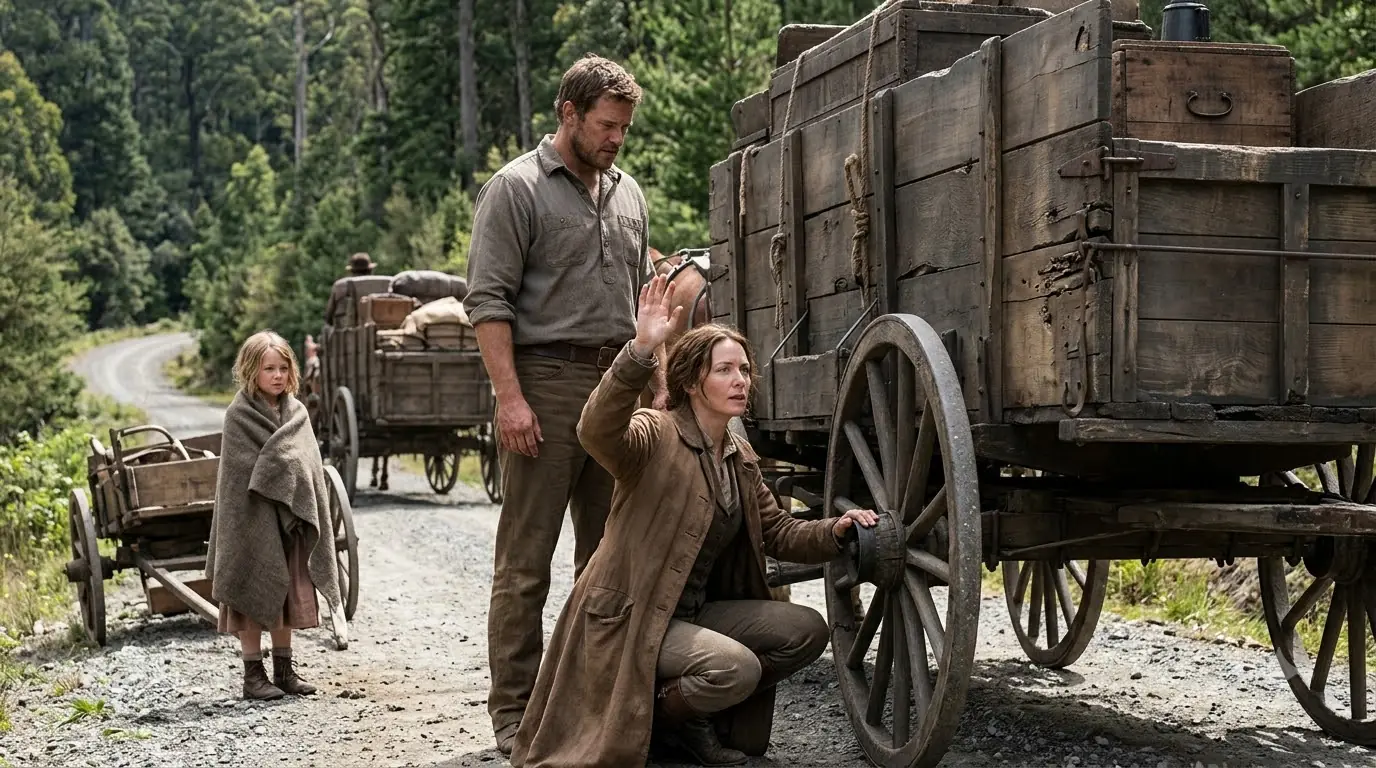
Eliza hated that more than the asking. Caleb removed his hat. He was a broad-shouldered man near 40, sunbred with a shirt marked by wagon grease at one elbow. He did not look rich. He looked busy.
What's your name? Eliza Ward. And hers? Molly? Caleb nodded toward the geling.
And him? Jackson. The horse flicked one ear. Caleb studied Eliza for another second. I won't buy him for $2.
Eliza tightened her grip on the rope. She had walked nearly 5 miles into Red Mesa because riding felt wrong when she planned to sell the horse at the end of the road. She had passed two livery yards already. One man had offered $8 because he thought hunger made a widow stupid. The other had told her to come back without the child.
She had kept walking. Now she turned. All right, Mrs. Ward. She stopped.
Caleb rubbed the back of his neck. I don't mean I'm sending you away. That is generally what no means. I mean, I'm not taking a $40 horse for $2 from a woman trying to feed her child. Eliza faced him again.
Caleb glanced toward Molly. There's food in the cookshed. No. His eyebrows lifted. No, I came to trade, not beg.
I didn't call it begging. You were about to. I was about to say, "Maybe God sent me to save you some trouble. " Eliza stared at him. Caleb seemed to hear his own words after they were already loose. One of the freight hands nearby looked down quickly and found great interest in a coil of rope.
Eliza pointed past Caleb. "You see that lead wagon? " He turned. "What about it? The left rear wheel is bad. " Caleb frowned. That wagon was inspected yesterday.
Then whoever inspected it was wrong. The nearest freight hand looked offended. Caleb walked toward the wagon. Eliza followed Molly beside her. The wagon carried sacks of flower stacked waist high under folded canvas.
A crate marked medical glass sat near the front. Eliza crouched beside the wheel. She ran her thumb around the wooden rim. Then she pressed two fingers against the iron tire. Here.
Caleb leaned closer. I don't see anything. You're looking. She reached into the pocket of her faded brown coat and pulled out a short piece of blue chalk. She drew a line across the wheel.
Listen. Eliza stood and pushed hard against the freight bed. The wagon rocked. A faint wooden click came from the marked section. Caleb's expression changed.
Eliza pushed again. Click. The hub's beginning to warp, she said. Tire isn't seated evenly either. Put that wagon on a hard grade loaded like this and you'll be changing a wheel on the road if you're lucky.
Caleb looked toward the freight hand. Ben, I checked it. I believe you. That surprised both Ben and Eliza. Caleb pointed to the wheel.
She heard something we didn't. He turned back to Eliza. You a wheel right? My husband was. That isn't what I asked.
Eliza slipped the chalk back into her pocket. Yes. Caleb looked at her hands. There were old cuts across the fingers and dark grease under one thumbnail that washing had never fully removed. How long?
Since I was 16. Your husband teach you. My father did. Caleb nodded once. All right.
He reached into his pocket and brought out two silver dollars. Eliza looked at them, then at him. What's that? You're $2. For what?
Tell me how to fix the wheel. No. Caleb blinked. You asked for $2 for the horse. And I said, I'm not buying the horse.
Then keep your money. Molly shifted beside her mother. Eliza saw it. Caleb saw it, too. He closed his hand around the coins.
What would make this fair? Eliza looked toward the repair shed. A roof covered three workbenches, spokes, iron bands, hammers, wedges, and wheel rims leaned against the back wall. You feed my daughter. Caleb nodded.
I repair that wheel. Another nod. You pay me $2 when it holds. Caleb looked toward Jackson and the horse. Still mine.
Good. Eliza narrowed her eyes. You agree quickly. I know bad arithmetic when I hear it. For the first time that morning, the corner of her mouth almost moved.
Almost. Caleb called toward the cookshed. Mrs. Pike. A gray-haired woman appeared in the doorway.
Plate for the girl, please. Eliza stepped in before Caleb could add anything. One plate. Mrs. Pike looked from Eliza to Molly.
One plate. Molly went reluctantly. Halfway across the yard, she looked back. Eliza nodded. Only then did the child continue.
Caleb noticed that too. He said nothing. For the next hour, Eliza forgot hunger. She had always liked wheels because they told the truth. Wood either sat straight or it did not.
A hub either carried weight or it failed. There was comfort in work that could not flatter or pity you. She unloaded enough weight for the wagon to be lifted safely, then removed the wheel with Ben helping under her direction. The problem became clearer once it was off. The hub had swollen unevenly after old water damage.
Eliza shaved one section carefully, reset the tire, replaced two worn wedges, then worked the wheel back onto the axle. Caleb watched without interfering. That mattered. Most men who doubted her skill tried to improve it while she was doing it. Caleb only asked questions.
Why shave that side? Because the other side already sits true. Why not replace the whole hub? Because you'd lose a day. His eyes narrowed.
How do you know I can't lose a day? Eliza wiped wood dust from her fingers. You have five wagons half loaded before noon and men moving like somebody has a clock on them. Caleb looked toward the yard. You notice too much.
It keeps wheels attached. They tested the repaired wagon underweight. No click. Caleb pushed the bed harder. Still nothing.
Ben crouched and inspected the wheel. Well, Eliza held out her hand. Caleb placed $2 in it. She closed her fingers around the coins. Fair.
Fair. Caleb glanced at the other wagons. Would you look at four more for pay? For pay? How much? $2 a day.
Three. 250. Meals for Molly. Yes. Feed for Jackson.
Yes. A place for us to sleep that has a door. Caleb pointed to a small office beside the tool shed. Unused since my clerk left. Eliza considered him.
How many days? Four? Maybe five? What happens after that? If the wagons leave sound, you get paid and walk away.
For where? That's your business. The answer came without hesitation. Eliza looked toward the cookshed. Molly sat at a table near the open door, eating beans and cornbread.
She had broken the cornbread exactly in half. One piece remained untouched beside her plate. For Eliza. Caleb followed her gaze. He lowered his voice.
These wagons are carrying flour, tools, lamp oil, and medicine to Copper Basin. If I miss the delivery date, I lose the contract. That why everybody's running? That's one reason. One, Caleb picked up his hat from the wagon bed.
The rest can wait until you decide whether you work here. Eliza looked along the line of freight wagons. Then she pulled out her blue chalk. She walked to the next wheel. A thin crack ran beneath the rim.
She marked it. Then the next wagon. Another mark. Then a third. Caleb's face grew tighter with each blue line.
Eliza finally turned toward him. I'll work. Caleb nodded. She pointed at the row of wagons. But you're not leaving in 4 days unless these tell me they're ready.
Caleb looked at the blue marks spreading down his freight line. For the first time since she entered the yard, he did not look like a man considering how to help her. He looked like a man realizing he might need her. And Eliza Ward knew before the afternoon was over that the $2 horse had never been the real problem. Caleb Rowan's wagons were.
By sunrise the next morning, Eliza had three wagon wheels off their axles, and Caleb had stopped pretending the freightard was under control. She worked with her sleeves rolled to the elbows. Blue chalk tucked behind one ear, calling for wedges, grease, and dry spokes, while Ben and another hand followed her instructions. Caleb stood beside the loading platform with a list in one hand. We leave in 3 days.
Eliza did not look up. Then you have 3 days to stop saying that like it will repair something. Ben coughed into his fist to hide a laugh. Caleb gave him a look. Ben went back to the wheel.
Eliza pressed a thumb against the inside of a hub. This one needs rebuilding. Caleb came closer. Can you brace it for a flat road? Black spur isn't flat.
No. How long? Half a day if nobody bothers me. Caleb looked toward the warehouse. Half the copper basin freight was already stacked for loading.
Flower sacks stood in neat rows. Tool crates sat under canvas. Two wooden cases of medicine had been marked fragile in red paint. We lose half a day. We load at night, then light lamps.
He looked at her. She finally met his eyes. You hired me to tell you which wheels will hold. I did. This one won't.
Caleb turned toward the men. Unload wagon three. Nobody argued. That told Eliza something. Men did not obey a man that quickly only because he paid them.