Now we begin. James Caldwell said it quietly to no one, to the rain-streaked windshield of a dark green rental sedan moving at precisely the speed limit down Dryden Avenue at 11:31 p.m.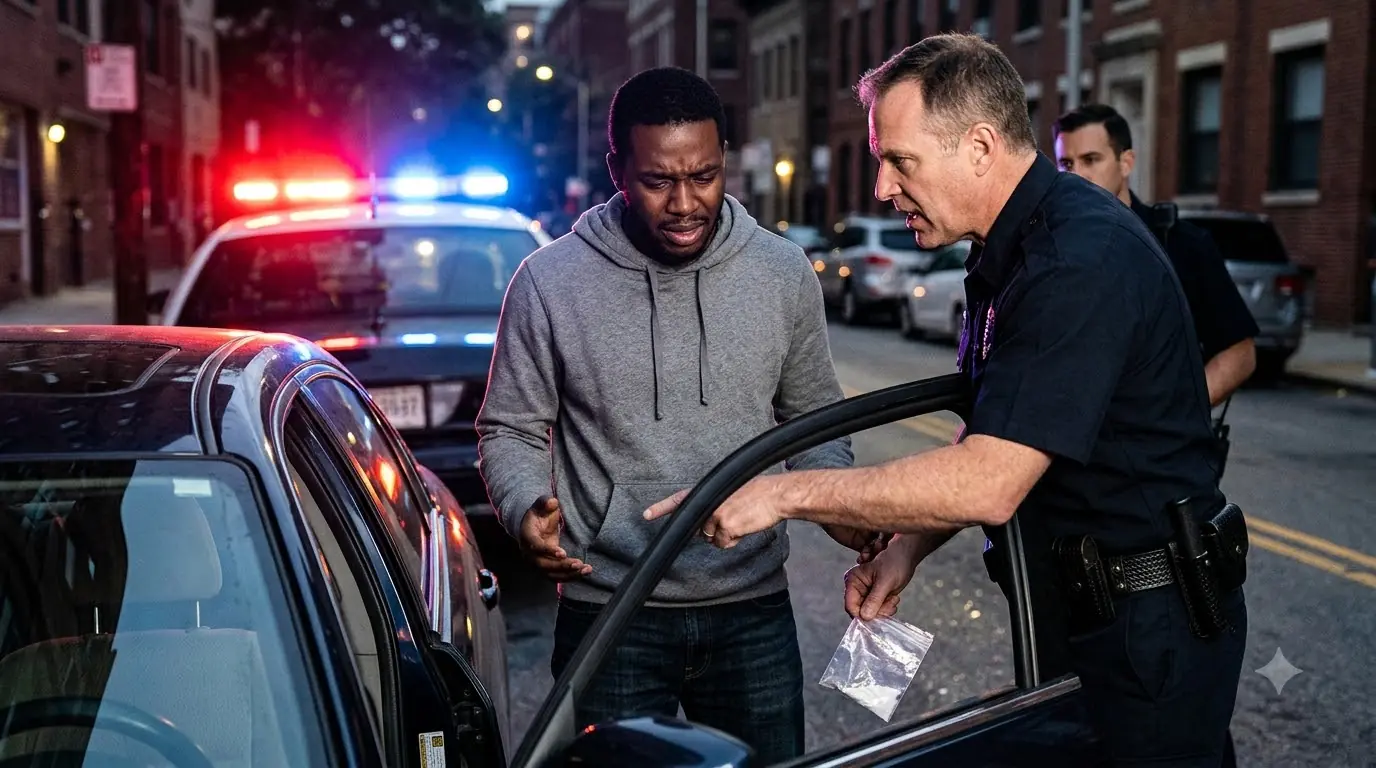
He said it the way a surgeon says scalpel, not with drama, but with the particular calm of someone whose preparation has been so complete that the moment of execution feels almost like a formality.
The wire transmitter was taped against his left ribs with medical-grade adhesive pressed flat beneath the crisp cotton of his dress shirt. The suit jacket's heavy lining creating just enough interference to make it undetectable to a standard search.
He had no weapon.
He had not wanted one.
Not tonight.
Tonight the only tool he needed was already running, broadcasting a clean audio signal through layers of fabric, through the rain, across nearly a mile to the matte black mobile command unit parked in the alley behind a shuttered dry cleaning business on Fletcher Street.
In his breast pocket, a ghost ID under the name Michael Carter, an Illinois driver's license, a rental agreement attached to a ghost account maintained by the FBI's Operational Support Division.
The alias, the wire that was his equipment. Everything else he carried was invisible. He had studied Captain Roy Briggs with the patience of someone who understood that the only way to dismantle a machine was to first understand every gear inside it.
He knew Briggs was parked in the shadows of the gravel turnout, the shuttered textile building on the south end of Dryden Avenue.
He knew the exact calculation that would run through the man's mind when a nice car with out-of-state plates moved slowly through his territory after 11:00 at night.
He had mapped this man's habits, his patrol patterns, his specific territorial reflexes, the way a cartographer maps dangerous terrain, not to admire it, but to move through it without dying.
James kept his hands at 10:00 and 2:00. He let the dark green sedan move through the Dryden district like a man with nothing to hide and nowhere urgent to be.
Beneath the careful neutrality of his expression, he thought of one name, Thomas Okafor, a hardware store on Oak Street, a worn black ledger in a false bottom desk drawer, a handwritten entry pressed hard into the page: Thomas O, $6,200. Refused. Handled.
He thought about what handled had cost a 60-year-old man who had simply said no.
He thought about 3 years. He thought about a daughter who drove 4 hours every month to sit across a glass partition from her father.
He thought about the specific weight of that word handled and what it meant to be reduced to a single notation in a corrupt man's accounting of the world.
And then the red and blue exploded in his mirror, and James Caldwell exhaled once, slowly, completely. Now we begin.
What he did not think about, what he had trained himself over 20 years not to think about until the work was done, was what would happen in the next few hours to the man in the gravel turnout who believed with the absolute certainty of someone who had never once faced a real consequence that tonight was just another profitable evening in a territory he owned.
Captain Roy Briggs was about to learn what it felt like to be the prey.
Drive into Caldwell Parish from the interstate on a clear morning and you would see what the tourism brochure described as the crown jewel of the region. You would see the downtown skyline catching the early light: glass office towers, a restored Victorian courthouse with a copper dome that had turned green over a century of Louisiana summers, a riverfront park with restored gas lanterns and a walking path wide enough for families to spread out on Sunday afternoons.
You would see the wide, well-maintained boulevards of the Magnolia Hills neighborhood in the city's north, where houses sat behind generous lawns, and the SUVs in the driveways cost more than most people in Caldwell Parish earned in 3 years.
You would see the Cypress Ridge Golf and Country Club, its iron gates visible from the highway, its manicured grounds an immaculate declaration of who belonged and who did not.
But drive south on Dryden Avenue past the point where the streetlights started flickering and the sidewalk started crumbling, and you would find a different city entirely.
The Dryden Avenue district had not always looked this way. Older residents could tell you about the era when Oak Street was a commercial artery, with a barber shop that had a 4-week wait list, when children played in the streets until the lights came on, because parents were not afraid to let them, when the neighborhood had the particular quality of a place that believed in itself.
That belief had been built over generations by families who stayed, by businesses that extended credit when times were tight, by the specific and stubborn conviction that a community could make itself out of work and loyalty, and refusal to be moved.
That was before the Third Precinct became what it had become, before Captain Roy Briggs decided that the Dryden Avenue district was not a community to be served, but a territory to be owned.
Briggs had been with the Caldwell Parish Police Department for 24 years. He had made captain at 42, a promotion the department's press release attributed to exceptional leadership and an unparalleled arrest record.