Jamal sat in his parked Honda Civic at the edge of a Walmart parking lot. Windows cracked, engine off, waiting. He wasn't nervous. 14 months undercover had taught him how to control his breathing, his heartbeat, his thoughts, but he was alert. Because in his line of work, the difference between alert and nervous was the difference between living and dying.
A silver Nissan Alultima pulled into the spot two spaces over. The driver's door opened. A white guy in his mid30s stepped out, twitchy hands, darting eyes, sweat on his forehead despite the cool afternoon air. His street name was Keys. And today, Keys was about to hand over the most important piece of intel Jamal had been chasing for over a year.
Keys slid into the passenger seat and shut the door without a word. The air inside the car immediately felt heavier, smaller, like the walls were closing in. "You got it? " Jamal asked, voice low and steady. Keys nodded, wiping his palms on his jeans. "Yeah, yeah, I got it.
But listen, man. If they find out I gave you this, I'm dead. Not arrested. Not roughed up, dead. Jamal didn't blink.
He'd heard that line a hundred times. Then don't get caught. Keys reached into his jacket and pulled out a folded piece of paper. Small, wrinkled, edges worn like it had been opened and closed too many times. He handed it over like it was a live grenade.
Jamal unfolded it carefully. A time stamp. A drop location. A code name scrolled in faded ink. Sandstorm.
This was it. 14 months of living a double life. 14 months of pretending to be someone he wasn't. 14 months of dangerous meetings, risky conversations, and walking a razor thin line between justice and survival. And this piece of paper was the payoff.
This was the key to dismantling a weapons trafficking network stretching from Charleston to Atlanta. Guns moving through ports, warehouses, back roads. Nobody watched. Guns that ended up in the hands of people who used them to destroy lives. Jamal folded the paper and slipped it into the inside pocket of his gray hoodie.
"We done? " Keys asked, already reaching for the door handle. "We're done? " Keys paused, looked at Jamal one last time. "You're a good dude, man. I hope I hope this works. " Jamal said nothing. There was nothing to say.
Keys got out, walked back to his Altea, and drove away without looking back. Jamal sat alone for another 60 seconds. Long enough to make sure no one was watching. Long enough to let his heart rate settle. Long enough to remind himself that the hardest part wasn't getting the intel, it was getting home with it.
He started the engine and drove two miles to a quiet residential neighborhood where his safe house was tucked between treelined streets and well-kept lawns. He parked two blocks away, standard protocol. Walking the last stretch made him less noticeable, but as Jamal stepped on to Sycamore Road and started walking, he felt it. The stairs. An elderly white woman in a floral dress saw him coming, clutched her purse tighter, and crossed to the other side of the street.
A jogger in expensive running shoes did a double take, slowed his pace, then sped up and passed him quickly. A man washing his car in his driveway stopped mid-spray, hose still running in his hand, and just watched. Jamal kept his head down, hands visible, shoulders loose, posture non-threatening. But it didn't matter because to some people, a black man in a hoodie didn't need to do anything wrong. He just needed to be.
Jamal was halfway down the block when he heard it behind him. An engine, slow, deliberate, following. He didn't look back. Not yet, but his stomach tightened because he recognized that sound. A patrol car.
And then, chirp, short, sharp, territorial. The cruiser rolled up behind him. Lights flashing, but no siren. Just the slow, intentional crawl of authority announcing itself. Jamal's hand instinctively moved toward the evidence slip in his pocket.
Not now. Not today. The patrol car stopped. The door opened. Boots hit pavement hard.
Hey, you in the gray hoodie. Jamal froze. He knew that voice. He'd heard it twice before. Officer Ryan Callaway.
And just like that, everything Jamal had worked for. 14 months, one piece of paper, one chance to take down an entire weapons network was about to be put at risk. Not by criminals, not by traffickers, but by a cop who saw a threat instead of a person. Officer Ryan Callaway stepped out of his patrol car with the kind of swagger that came from 8 years wearing a badge and zero accountability. Jamal recognized him immediately.
This was the third time. The first time Callaway had stopped him outside a Publix, accused him of loitering in the parking lot. Jamal had been loading groceries into his trunk. The second time at a Shell station. Callaway said he was acting suspicious by looking around too much.
Jamal had been checking his mirrors before pulling out. Both times Jamal had stayed calm, polite, compliant. Both times Callaway had let him go with a warning that felt more like a threat. And now here they were again. Callaway didn't recognize Jamal or didn't care.
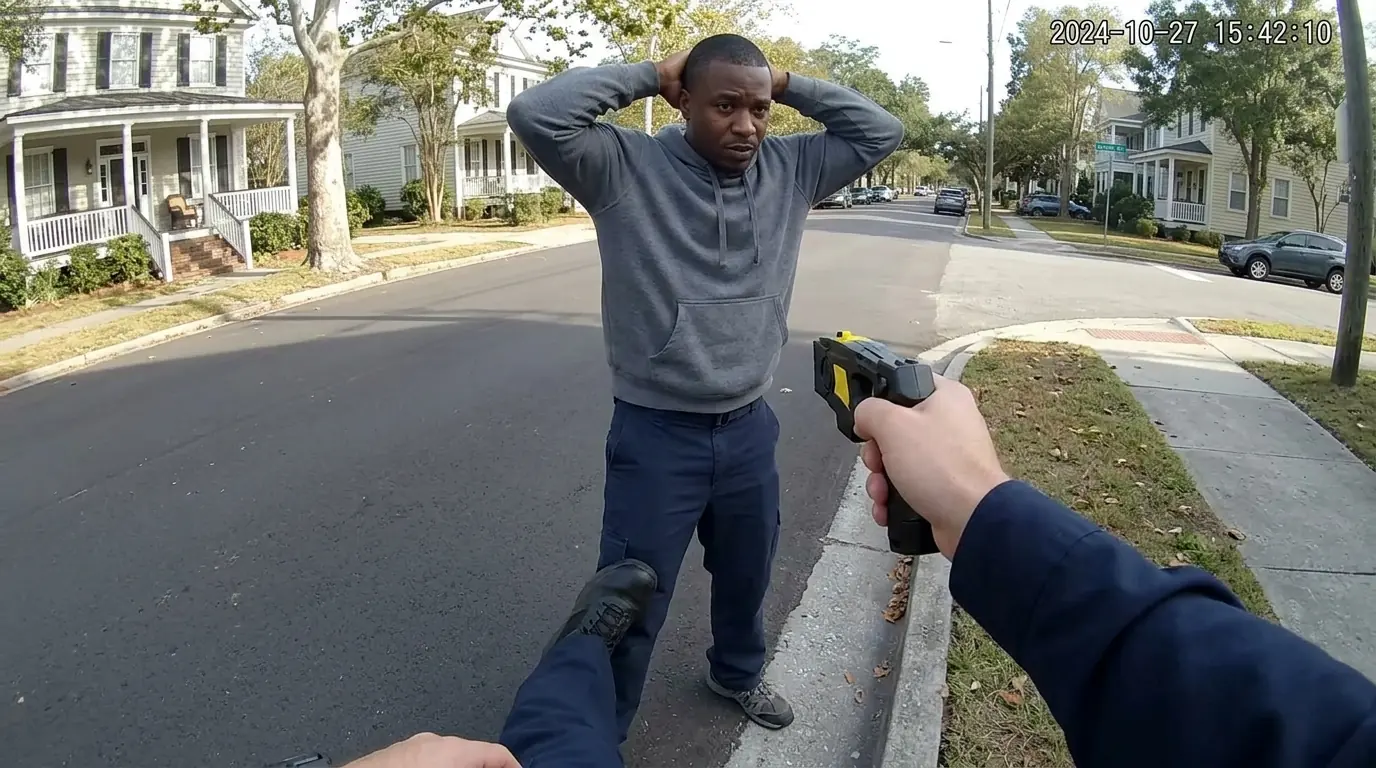
His hand hovered near his belt, fingers twitching close to his holster. "I need to see some ID," Callaway said, his tone sharp, clipped like he was already convinced of guilt. Jamal turned slowly, hands visible, palms open. Marine training kicked in. "Control the situation by controlling yourself. " "Yes, sir," Jamal said evenly.
"I'm reaching for my wallet now. Inside pocket, left side. He moved with deliberate precision, every motion slow, visible, predictable, but Callaway's eyes weren't on Jamal's hands. They were locked on the folded evidence slip peeking out from his jacket pocket. What's that?
Callaway's voice sharpened. What are you carrying? Jamal's pulse stayed steady. It's just a note, officer. Nothing.
Drop it. Callaway barked. Hands where I can see them now. Jamal froze, not because he was afraid, but because he knew what happened when scared cops made bad decisions. Across the street, a woman walking her dog stopped, stared.
Two kids on bikes paused at the corner, wideeyed. A man on his porch lifted his phone, started recording. Callaway noticed the crowd forming, his jaw tightened. "You don't live around here, do you? " Callaway said, stepping closer. I do actually," Jamal replied calmly.
"Then why are you so calm? " Callaway's voice rose. Innocent people get nervous when cops stop them. "You hiding something? " Jamal fought the urge to shake his head. There it was. The logic that didn't make sense.
"Be nervous, you're guilty. Be calm, you're guilty. Be black, you're guilty. " "Officer, I'm just trying to get home," Jamal said. Callaway grabbed the evidence slip from Jamal's pocket before he could react. He unfolded it, stared at the handwritten timestamp, the address, the code name.
His eyes narrowed. What is this? A drug deal? Burglary instructions? No, sir.
I can explain. Shut up. Callaway's hand moved to his holster. Turn around. Hands behind your head.
The crowd murmured. Phones rose higher. A mother pulled her child behind her. Jamal calculated his options in milliseconds. If he resisted, even legally, his cover was blown.
14 months of undercover work destroyed. If he complied, Callaway might escalate anyway. Scared cops were dangerous cops. If he revealed his identity now, the traffickers could be watching. The network would scatter.
In his pocket, Jamal's FBI communication device buzzed silently. Two short pulses. His team was checking in. He couldn't respond without blowing everything. Callaway's breathing quickened.
His hand gripped the holster tighter. I said, "Turn around. " Jamal obeyed slowly, hands rising behind his head. But Callaway wasn't satisfied. What's a guy like you doing in a neighborhood like this? Callaway's voice dripped with suspicion and something uglier.
A voice from the crowd. He's not doing anything. Callaway spun toward the crowd. All of you back up. This is police business.