The blue paint transfer entered the evidence file before anyone at the Ninth District checked the vehicle intake sheet. Imani Rhodes did not know that yet. She was stopped at a red light two blocks from the Ashford County District Attorney's Office, one hand flat on the steering wheel, the other resting beside a slim black glasses case in the center console, waiting for the signal to change. The silver hybrid sedan was hers. The registration was active.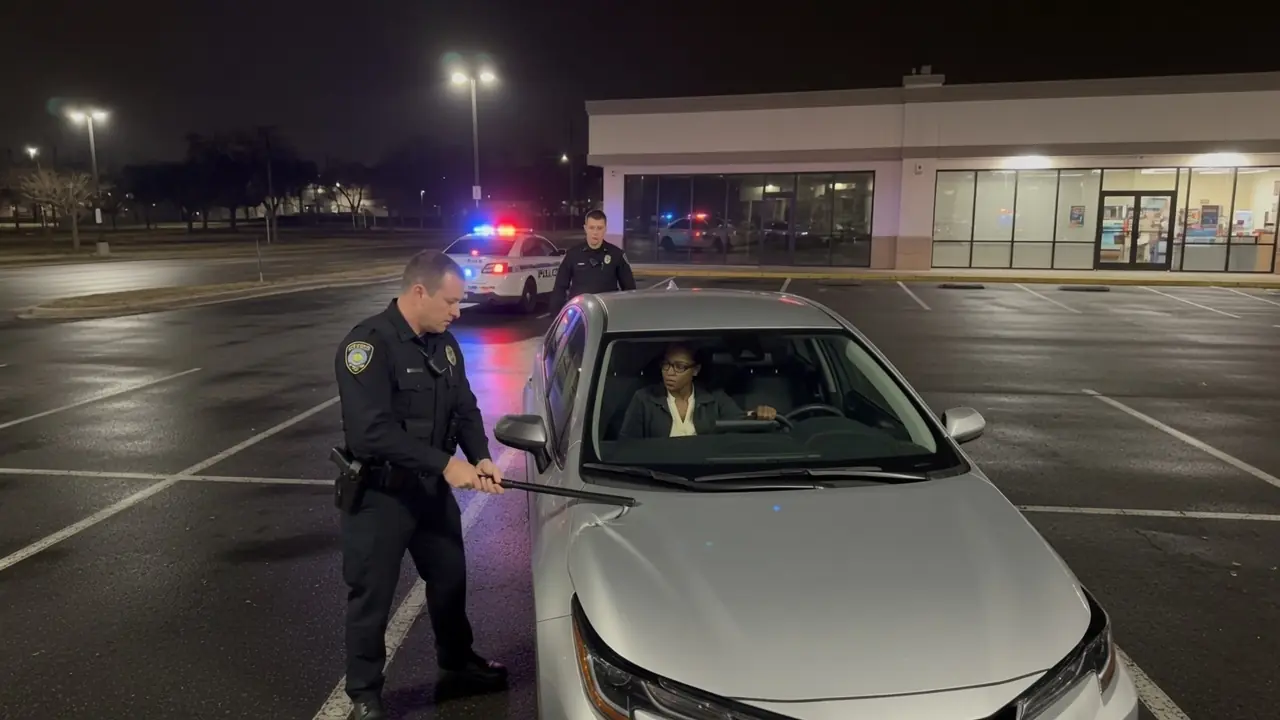
The parking garage camera had recorded every body panel intact when she left the building at 11:14 that night. For three quiet seconds, that should have been the whole story. Imani wore a charcoal work jacket over a cream blouse. Her hair was pulled back from her face. The smart glasses on her nose looked ordinary.
She had used them during the evening to record short voice notes about seven vehicle cases scheduled for a closed review the next morning. Each case involved the Ninth District. Each contained damage descriptions that changed after a vehicle reached impound. Officer Calvin Strickland's name appeared in several of them. The light changed.
Imani drove east. Behind her, a patrol cruiser entered the lane and remained there through two intersections. The emergency lights activated near an empty pharmacy parking lot. Imani pulled over beneath a street lamp. She shifted into park, lowered the radio, and placed both hands where they could be seen.
Officer Lucas Avery sat in the cruiser's passenger seat. He had heard the dispatch description less than 10 minutes earlier. Blue sport utility vehicle, possible front-end contact, last seen traveling west. Imani's car was a silver sedan traveling east. Avery looked at the rear of her vehicle, then at Strickland.
Strickland opened his door. He did not call in the plate before approaching. Pull over and get out of the vehicle. Imani lowered her window halfway. I am already stopped.
What is the reason for the contact? Strickland walked past the window without answering. He moved to the front of the sedan. The first strike landed on the hood. The metal folded beneath the baton, leaving a shallow dent above the driver's side headlight.
Imani's fingers tightened once against the steering wheel. She released them. Officer, why are you damaging my vehicle? Strickland moved to the side mirror. The second strike broke the housing.
The mirror remained attached by two wires and hung against the door. Avery stepped out of the cruiser. He did not come forward. The third strike hit the lower corner of the windshield. A crack moved upward through the glass in a narrow white line.
I did not strike another vehicle. Your car has fresh collision damage. You created that damage. Strickland placed one hand on the roof and leaned closer. That is your account.
It is what just happened. My account goes in the report. Imani looked past him toward Avery. Officer Avery, you observed the condition of this vehicle before he approached it. Avery's mouth opened slightly.
Strickland turned his head. Stay where you are. Avery looked at the pavement. Imani unfastened her seat belt. I am opening the door.
My hands will remain visible. Strickland pulled the door wider and directed her toward the rear quarter panel. She complied. He fastened the cuffs behind her wrists. Then he moved close enough that his voice no longer carried toward the cruiser.
You should have left Ninth District files alone. Imani did not turn toward him. The sentence confirmed what the stop itself had not. He knew her. He knew about the review.
This was not an officer making a poor identification from a vague dispatch call. It was an officer building a replacement record before the original record could be examined. Strickland guided her into the patrol car. From the rear seat, Imani watched him photograph the dent, the broken mirror, and the windshield crack. He photographed each angle twice.
Then he opened a small field notebook. Avery stood beside him. Strickland spoke while writing. Damage visible on initial approach. Driver immediately denied involvement.
Driver attempted to influence assisting officer's recollection. Avery looked at the sedan. He had seen the baton rise. He had heard the glass break. He said nothing.
Strickland keyed his radio. Female driver in custody. Vehicle damage consistent with reported hit and run. Transporting to the Ninth for processing. The dispatch description remained unchanged on the cruiser screen.
Blue sport utility vehicle westbound at the station. The booking clerk entered Strickland's language before Imani finished stating that the damage had been created during the stop. Nervous, argumentative, attempted influence of witness. Imani asked for counsel. She signed nothing except the property receipt.
Before dawn, Officer Calvin Strickland completed the arrest report. He wrote that the hood, mirror, and windshield were damaged before he reached the driver's door. He signed beneath the statement. Across town, Imani's smart glasses sat unopened inside a sealed property pouch. The report had its first signature.
The original recording still had none. The first preservation notice reached Riverside Municipal Vehicle Facility at 6:23 that morning. Teresa Vaugh printed it on plain white paper, read the vehicle identification number twice, and attached an electronic hold note to Imani Rhodes's intake record. The notice did not prevent police access. It required a name, a badge number, a reason for entry, a time in, and a time out.
It also required the officer to state whether anything had been placed on the vehicle or removed from it. Teresa had worked the municipal lot for 9 years. She did not know Imani. She did not know Calvin Strickland. She knew how to complete an access form.
Across town, Arthur Gaines placed the sealed property pouch containing Imani's smart glasses into a tamper-evident evidence bag. He wrote the time across the seal. Imani sat on the other side of his desk. She was still wearing the clothes from the night before. The arrest report is filed, Arthur said.
Your office will receive it before breakfast. He wrote the damage existed before contact. Yes. Officer Avery signed a short supplemental. It says he observed damage during the detention.
Imani looked at the wording. Not before the detention. During it, a sentence narrow enough to protect Avery's conscience and broad enough to support Strickland's report. Arthur slid the page back into the folder. Do not call him.
I wasn't going to. You were considering it. Imani did not answer. Her phone vibrated against the desk. Deputy District Attorney Owen Carlisle.
Arthur answered on speaker. By the end of the call, Imani had been placed on administrative leave. Her system access was suspended. She was ordered not to contact witnesses or discuss the case publicly. Owen called it neutral procedure.
Imani looked at the gray notice Arthur had printed from the email. Strickland had arrested the person reviewing his files. The office had now removed that person from the review. Arthur asked Owen to lock every Ninth District file Imani had accessed and preserve the audit history. Owen hesitated.
Then he agreed. The smart glasses went to Celeste Park before noon. Celeste photographed the sealed bag, recorded the serial number, and opened it beneath a fixed evidence camera. She did not play the original files. She created a forensic image first.
The device log showed cloud uploads beginning before Imani reached the pharmacy parking lot. The route data never crossed the reported collision site. The first video showed a smooth hood beneath the office garage lights. The second showed an intact side mirror. The third showed Strickland lifting the baton.
Three impacts followed. Then his voice, You should have left Ninth District files alone. Celeste wrote only what the data supported. Original device consistent. Upload times predated the arrest report.
No editing indicators detected. GPS route inconsistent with collision location. Arthur did not send the footage to the press. He did not send it to the Ninth District. He sent an authentication summary to the outside prosecutor assigned to the preliminary hearing.
At the precinct, Strickland read Avery's supplemental and tapped the signature line with one finger. Good, he said. Avery remained standing. The dispatch vehicle was blue. Descriptions change.
It was a sport utility vehicle. Witnesses get body types wrong. We were traveling east. Strickland closed the folder. You signed what you observed.
I observed you strike the car. Strickland looked toward the open report room door. No one nearby turned. He lowered his voice. You observed a damaged vehicle during a felony stop.
That is what your report says. Keep it that way. By late morning, Strickland had another problem. The hit-and-run report described possible paint transfer from a blue vehicle. Imani's sedan had dents and broken glass.
It had no blue paint. He opened the bottom drawer of his desk and removed a clear evidence sleeve from an unrelated collision file. A small blue flake rested inside. It had no barcode, no collection number, no chain of custody label. Strickland placed the sleeve inside his jacket.
At Riverside, Teresa slid an access sheet beneath the glass. Purpose: follow-up inspection, evidence collection confirmation only. She handed him a temporary visitor badge. The vehicle is under preservation notice. Photographs must be logged.
Anything placed or removed must be documented. Strickland clipped the badge to his belt. I know the procedure. The impound camera recorded him entering the bay alone. He photographed the damaged hood, the broken mirror, the windshield.
Then he crouched beside the front bumper. His right hand entered his jacket pocket. It returned closed. He pressed two fingers into a narrow seam near the grillee. The camera could not resolve the object.
It recorded the sequence. Strickland took three additional photographs. When he returned to the office window, Teresa held her pen above the final two boxes. Did you remove any item from the vehicle? No.
Did you place any item on or inside it? Strickland looked at the form. No. Teresa marked both answers. The blue paint appeared in the evidence file 41 minutes later.
Strickland described it as transfer material discovered during follow-up inspection. He sent Avery a second supplemental. The language did not claim that Avery had seen the paint. It stated that Avery had been advised of additional evidence and continued to confirm the original vehicle damage. Avery read it twice.
I was not at the impound lot. It does not say you were. Then why do you need my signature? Because consistency matters. Strickland placed a pen across the page.
Avery signed. That evening, Arthur received the updated evidence summary, the impound access entry, and the new photographs. Imani placed the intake sheet beside them. No paint transfer at arrival. One officer entered after preservation.
Blue paint appeared afterward. Arthur looked at her. He is adding structure. He is adding exposure. At the Ninth District, Strickland sent Avery one final message.
Stay consistent. Your evaluation depends on it. Avery did not delete it. For the first time, he forwarded a copy outside the precinct. Three weeks later, Celeste placed the forensic image, the dispatch archive, and the impound camera export into three separate sealed containers.
On the hearing witness list, Calvin Strickland's name remained first: primary probable cause witness. Courtroom 4B opened with Calvin Strickland under oath. Judge Marlene Hightower asked the prosecutor to establish probable cause without speeches. Strickland described the stop in the same sequence as his report. He described fresh damage on Imani Rhodes's sedan, an immediate denial, behavior he considered calculated, blue paint found during follow-up processing, and Officer Lucas Avery supporting the initial observations.
Arthur Gaines waited until Strickland finished. What vehicle did dispatch describe? A blue vehicle. What body type? Strickland adjusted the microphone.
A sport utility vehicle. What direction? Westbound. Arthur placed a street map on the display stand. Ms. Rhodes was driving a silver sedan eastbound.
What connected her vehicle to that call before you stopped her? The damage became visible during the investigation. Before or after you reached her window? Before. Did you strike the hood?
No. Did you break the driver's side mirror? No. Did you strike the windshield? No.
Did you place blue paint on the front bumper at Riverside Municipal Vehicle Facility? No. Judge Hightower looked over her glasses. You understand those answers are under oath? Yes, your honor.
Arthur called Celeste Park. She identified the smart glasses by serial number. She explained that the original device had been sealed before examination, that she created a forensic image, and that the files carried consistent device identifiers, upload times, and location data. She did not call the recording perfect. She called it authentic.
The first clip showed Imani's sedan beneath the district attorney's office garage lights. The hood was smooth. The mirror was intact. The windshield had no crack. The second clip began after the traffic stop.
Strickland entered the frame holding the baton. The first impact bent the hood. The second broke the mirror housing. The third marked the windshield. The next audio segment captured Imani stating that he had created the damage.
Then Strickland's voice. You should have left Ninth District files alone. Arthur stopped the recording. He did not ask Strickland to explain it. He called Teresa Vaugh.
Teresa identified the Riverside access ledger. Strickland's badge number appeared beside the entry time. His stated purpose was follow-up inspection. The preservation notice had already been attached to the vehicle record. Arthur directed her to the final two boxes.
Did Officer Strickland report removing anything from the vehicle? No. Did he report placing anything on or inside it? No. The impound bay video showed Strickland entering alone.
He photographed the existing damage, crouched beside the bumper, removed his hand from his jacket, and pressed two fingers into a seam near the grillee. The camera did not resolve the blue flake. The intake sheet resolved the sequence. No paint transfer had been recorded when the sedan arrived. The official close-up photograph was created during Strickland's access period.
The blue material appeared for the first time in that image. No evidence technician had entered the bay. No second officer had witnessed the discovery. Judge Hightower called Lucas Avery. Avery held the edge of the witness chair with both hands.
He admitted that the dispatch description did not match Imani's sedan. He admitted seeing Strickland strike the car. He admitted signing two supplemental reports. Why? Arthur asked.
Officer Strickland controlled part of my field evaluation. Did that prevent you from writing what you saw? No. What did it do? It made me afraid to write it.
Avery identified the message Strickland had sent him. Stay consistent. Your evaluation depends on it. He had preserved the message and refused a third declaration, claiming the vehicle's evidence chain had remained secure. Judge Hightower dismissed the hit-and-run complaint for lack of probable cause.
She ordered the reports, device files, impound records, messages, photographs, and report drafts preserved. The transcript was referred to an independent prosecutor for review of false reporting, evidence tampering, witness intimidation, retaliation, and perjury. Before Strickland left the courthouse, a department integrity commander collected his duty weapon badge and access card. His evidence credentials, patrol login, and impound authorization were disabled. The card failed when he tried to pass through the secured employee exit.
A court officer opened the door from the other side. After an independent warrant review, Strickland was booked later that day. The department completed its administrative case separately. The final order sustained findings for discriminatory retaliation, evidence fabrication, false reporting, improper force, and interference with a witness. Strickland was terminated for cause.
His certification record was referred to the state standards board. The finding remained attached to his employment history and could not be converted into a voluntary retirement entry. Avery received an unpaid suspension and sustained findings for false reporting and failure to intervene. He lost independent patrol status. He could not serve as a field training officer.
Every report he had signed without personally observing the underlying facts was placed into secondary review. His cooperation reduced the disciplinary recommendation. It did not erase the signatures. The Ashford County District Attorney's Office reinstated Imani. Her administrative leave notice was withdrawn and replaced with a conflict review memorandum stating that the arrest had been connected to her official examination of Ninth District conduct.
The public docket was corrected. The phrase vehicle damage consistent with hit and run was removed from the active case summary. In its place appeared: Charge dismissed. Evidence referred for officer misconduct investigation. Ashford adopted a vehicle evidence separation order.
An arresting officer could no longer enter an impounded vehicle alone. Evidence found after intake required a new barcode, a non-involved technician, a continuous access log, and an explanation for why the item had not appeared on the original condition sheet. Supplemental reports now required each sentence to be marked as personal observation, radio information, or later information received from another officer. A preservation notice automatically extended camera retention and sent an access alert outside the arresting officer's command. Darnell Webb's old case became the first file transferred to independent conviction review.
The late paint evidence could not be authenticated. His plea was vacated. The commercial driving disqualification attached to the case was removed. A compensation hearing was scheduled for lost wages, towing costs, and the years his record had remained marked by a report Strickland helped build.
Weeks later, Imani left the office at the end of a normal workday. The repaired sedan waited in the garage. The new mirror held the lane behind her without distortion. At the next light, Imani adjusted it once, checked the empty lane, and moved when the signal changed.