A police officer with a prejudiced glare pulls over a black woman, attempting to use his authority to intimidate her. What he doesn't realize is that this woman is the Chief of Internal Affairs, the person who holds his career in her hands. This story showcases a tense clash between prejudice and justice, exposing the truth about abuse of power.
The city of Sacramento bathed in twilight exuded a serene beauty that was almost enchanting. The vibrant hues of orange, pink, and soft lavender painted the sky, blending harmoniously and reflecting off the buildings and streets below. The hum of traffic filled the air as people headed home after a long day. Dana Williams was no exception.
Dana, a confident and captivating black woman, sat behind the wheel of a sleek black sedan, a symbol of her professionalism and success. Her tailored gray suit fit her perfectly, complimented by polished black heels, while her laptop rested carefully on the seat beside her, a testament to a busy day at the office. She had just wrapped up an important meeting, her mind still racing with unfinished plans and strategies. Yet the gentle evening air and the soothing notes of jazz on the radio brought a fleeting moment of calm, a brief pause before she returned to the comfort of her home.
As her car rolled slowly through an intersection, the traffic light shifted from yellow to red. Dana braked and came to a complete stop, waiting for the green light to proceed. She didn't notice the flicker of red and blue lights in her rearview mirror at first, a faint glimmer that suddenly intensified, accompanied by the sharp wail of a siren. Frowning slightly, she wondered what she could have done wrong. The siren blared insistently. Dana took a deep breath, steadying herself, and pulled over to the side of the road with deliberate calm.
From the police cruiser emerged Patrick Mitchell, a tall, imposing officer in a meticulously pressed uniform, exuding the confidence of someone accustomed to wielding authority. Adjusting his belt, his eyes scanned Dana's car, landing on her face through the windshield. Dana lowered her window, her expression composed. Patrick approached with a swagger, his voice firm and edged with something sharp. "License and registration," he demanded, offering no explanation.
Dana studied him for a moment, unease creeping in despite her composed demeanor. Her tone remained polite. "Is there a problem, officer?" Patrick didn't answer immediately. Instead, his gaze lingered on her as if searching for something, some reason, any reason. "We'll talk about that after license and registration, if you don't mind." Dana opened the glove compartment slowly, retrieving her license and registration. Her hand was steady even though she felt the weight of his scrutinizing stare pressing down on her.
As Patrick took the documents, his eyes never left her, and in that fleeting moment Dana sensed something familiar: prejudice. What should have been a routine traffic stop began to reveal layers of deeper meaning. Dana realized this encounter might not be as ordinary as she had initially thought.
Patrick grabbed the driver's license and registration from Dana's hand, his eyes darting quickly over the information but lingering just a moment longer than necessary. A tense silence stretched between them, not the kind of silence that brought calm but the kind that hinted at impending conflict. "You ran a yellow light," Patrick said, his voice steady but lacking the impartial tone it should have carried.
Dana paused briefly. "My address is on my license," she replied, her eyes not wavering from his. But Patrick didn't seem interested in her answer. "An address is one thing," he said, his tone turning dry, "but my instincts tell me something else. Why were you in such a hurry to get through that intersection?" The question made Dana more acutely aware of the unusual tone in Patrick's behavior. This wasn't how an officer typically questioned a traffic violation. It felt personal, as though he were looking for a reason to prolong this interaction.
"I wasn't in a hurry," Dana said firmly, maintaining her composure. "I was driving home, as I said. I stopped when the light turned red." Patrick smirked, a fleeting expression devoid of warmth. "Home? Where's home?" "As I mentioned," Dana said, her voice still calm but with an edge of sharpness, "the information is on my license. If anything is unclear, you're welcome to check again." Patrick nodded but made no move to examine her documents further. Instead, he stood there, his gaze dissecting her as though he were trying to peel back layers. "Where do you work?" he pressed, veering further away from the original reason for stopping her.
Dana felt her pulse quicken. This wasn't a routine traffic stop anymore; it was an interrogation, not of her driving but of her identity, of her presence, and perhaps of her skin color. "I don't believe that question is relevant to why you pulled me over, officer," she said, for the first time allowing a trace of coldness into her voice. Patrick squinted slightly, his movements deliberate. "Sometimes I ask questions that aren't strictly about traffic violations," he said, his tone dripping with implication. "Just trying to get to know the person I'm speaking with, especially when they don't seem like the people I usually see around here."
The last words hung in the air, stretched out and dropped like a gauntlet. Dana didn't reply immediately, but she understood his meaning all too well. Not like the people he usually saw. His words weren't about her suit or her car; they were about something he couldn't hide in his gaze: his prejudice. "Well," Dana said slowly, her voice measured, "I hope your curiosity doesn't delay me too long on my way home." Patrick gave a slight chuckle but didn't back down. "You know," he said, "people often hide a lot when they try too hard to be polite. Anything you're hiding, Miss Williams?"
His final question made the air between them feel heavier. Patrick was no longer just a police officer enforcing the law; he was probing for something, or perhaps simply trying to assert dominance. Dana could sense that this wasn't about a routine traffic stop at all. It was a power play veiled under the guise of procedure. Even so, she didn't flinch. She knew that showing any fear or hesitation would only give Patrick more reason to push further. But with every word and action of his, she understood she was facing a challenge far greater than just this interaction: a challenge to maintain her dignity and self-respect while confronting a system that had produced individuals like Patrick.
Patrick tilted his head, his gaze sharpening as though he had just made a critical decision. After a tense moment of silence, he straightened his back and issued a command, his voice low but firm. "Step out of the car." Dana's brow furrowed slightly. "Officer," she said, her tone calm but tinged with curiosity, "could you explain the reason? I've fully cooperated and haven't committed any serious violations." Patrick smirked, his smile laced with mockery. "Are you arguing against a lawful police request? That's not exactly the smartest way to handle this." His words carried a thinly veiled threat, a warning that any resistance, verbal or otherwise, could escalate the situation.
Dana understood this unspoken message clearly. She drew a deep breath, keeping her tone measured but resolute. "I'm not arguing," she replied, her eyes locked on Patrick. "I just want to ensure we both understand the reason behind your request." Patrick's gaze bore into her, his mocking smile fading, replaced by the steely expression of someone asserting authority. "I don't have to explain everything to you," he said, his voice deeper, heavier. "Step out of the car. Now." Dana knew that refusing could turn the situation volatile. Slowly she unbuckled her seat belt, opened the car door, and stepped out.
In that moment, she could feel Patrick's scrutinizing gaze as he evaluated her from head to toe. Her poised demeanor, tailored suit, and polished black heels seemed to clash with whatever preconceived image he had of a woman of color in this context. Patrick took a step back, crossing his arms over his chest. "Place your hands on the hood," he ordered, his tone leaving no room for negotiation. Dana met his eyes directly, her gaze unflinching, calm but piercing. "What exactly are you suspecting, officer?" she asked, her voice steady and firm.
Patrick let out a derisive chuckle, though it didn't reach his eyes. "Standard procedure," he said, the sarcastic undertone in his voice making the explanation feel more like an attack. "You never know what someone might be carrying. Better safe than sorry." Dana chose not to respond. She understood that any remark she made could be twisted into a justification for further intimidation. She turned and slowly placed her hands on the hood as instructed, her posture straight and unyielding.
Patrick approached, his boots clicking audibly on the pavement in the strained silence. He began his search, but his actions felt deliberate, unnecessarily prolonged, as though he were trying to assert dominance. His hands moved slowly, lingering in ways that weren't simply about security protocol. "You're taking longer than necessary, officer," Dana said, her voice maintaining its composed edge, though an unmistakable steeliness crept in. Patrick didn't respond immediately. He finished the search, stepping back with a frustrated expression. "You're clean," he muttered, as if the result was somehow disappointing.
Dana turned to face him, her stance firm. "I've fully cooperated," she said, her tone even though her eyes gleamed with determination. "Now can you tell me the real reason behind all of this?" For a moment, Patrick didn't reply, as though weighing his options. Instead of offering an explanation, he shrugged, his cold eyes meeting hers. "You seem awfully familiar with this process," he said, his tone low and laden with implication. "This isn't your first time, is it?" Dana didn't answer immediately. Her gaze remained steady, unwavering against his provocation. She understood that this was no longer about a traffic stop. It was about power, a power Patrick was wielding not just as a police officer but as someone embodying deep-seated prejudice. She could sense the tension thickening, the unspoken lines being drawn. But beneath it all, she knew something else with unshakable certainty: Patrick had chosen the wrong person to test his authority against.
Dana held her gaze steady, her eyes locked onto Patrick, not because she wanted to provoke him but because she understood that silence could sometimes be the most potent weapon. But this time she chose to break the silence with a sharp question. "Do you often stop women in suits driving cars like mine?" The question rang out clearly, without a trace of hesitation. Her words weren't just a rebuttal; they were a challenge, forcing Patrick to confront the absurdity of his actions.
Patrick hesitated momentarily, caught off guard by Dana's audacity, but his uncertainty lasted only a fraction of a second. He quickly rebuilt his usual wall of defense, the mocking smirk reappearing on his face. "You should be careful with your tone," Patrick said, his voice low and cold, though a flicker of impatience flashed in his eyes. "I'm just trying to do my job. You wouldn't want to make things more difficult, would you?" Dana raised an eyebrow, her expression betraying a hint of mockery. "I'm fully cooperating, officer. But if you're dragging this out to find a reason, maybe you should be a bit more upfront about it."
Patrick's grip on his belt tightened, an almost unconscious gesture to mask the unease creeping in. "Up front?" he repeated, his tone sharpening. "Are you suggesting I'm deliberately giving you a hard time?" Dana didn't answer immediately. Instead, she offered a calm but unwavering look. "I didn't say that," she replied, her voice gentle but carrying the weight of an unspoken accusation. "I just find it curious how much time you're spending asking questions unrelated to a traffic situation." Patrick froze as if her words had struck a nerve. But rather than retreat, he chose to escalate the situation.
"You seem to know a lot about what I'm authorized to do," he said, his voice dropping to a provocative tone. "Is there something you're hiding?" Dana's lips curled into a fleeting, unfriendly smile. "Hiding?" she echoed, drawing the word out as if deliberating its meaning. "No, I don't think I have anything to hide. But I find it interesting that you'd think so." Patrick stepped closer, encroaching on Dana's personal space. "Interesting," he repeated, his voice a low growl. "People often think confidence will get them out of trouble, but you should know confidence can easily be misinterpreted as something else."
The insinuation was unmistakable. Dana knew Patrick was deliberately twisting her composure into a reason for further suspicion. But she also realized that every word he spoke only revealed the insecurity and prejudice underlying his behavior. "So according to you," Dana said, her voice steady and unflinching, "what's the proper attitude to have when faced with an officer stopping me without any clear reason?" Patrick opened his mouth to reply, but this time no answer came immediately. Instead, he glanced around as if searching for a new justification, a fresh excuse to maintain control.
"You seem very familiar with how things work," he finally said, breaking the silence. "What kind of work do you do to know so much?" Dana tilted her head slightly, her gaze as sharp as a blade freshly unsheathed. "I work in a field where transparency and accountability are critical," she said, her tone enigmatic yet devoid of fear. Patrick frowned, clearly agitated by her vagueness, but instead of pressing further, he took a step back, frustration flickering across his face.
Deep down, Dana knew Patrick was losing his grip on the situation, but that didn't make the tension any less palpable. Instead, it underscored something she could see clearly: Patrick wasn't just stopping her to check her credentials. He wanted to make her feel small, insignificant, a goal she had no intention of letting him achieve. Dana observed Patrick intently, her eyes steady and unflinching. After a long silence that let the tension linger, she finally spoke, her words measured and deliberate, like the edge of a sharp blade. "Officer, I'm well aware of how this process works, and I believe we can both see that it's going far beyond the initial reason for the stop." Her tone wasn't raised nor was it provocative, but it carried the weight of an unspoken accusation.
Patrick hesitated, a flicker of uncertainty flashing across his face. He wasn't used to being confronted like this, especially not by someone like Dana who exuded a calm confidence that made it clear she wasn't easily intimidated. "What are you implying?" Patrick asked, though the firmness in his voice had faltered. Dana offered a small smile, one devoid of warmth. "I'm not implying anything, officer. I'm merely stating that everyone has the right to be treated fairly, and I don't believe what's happening here aligns with that principle."
Patrick clenched his jaw, the tension palpable as he grappled with the loss of control over the situation. He took a step forward as though to reassert his authority. "You should remember," he said, his voice dropping to a colder, more menacing tone, "I'm the one in charge here, and I don't need a lecture on fairness from you." Dana didn't flinch, nor did she blink. "Then perhaps we should return to the matter at hand," she replied, her tone steady. "I pulled over as instructed. I've complied. I've answered all your questions. So what's next, officer?"
Patrick's discomfort became evident. He had no valid reason to prolong the encounter, but his inability to intimidate or subdue Dana left him visibly frustrated. "People like you," Patrick suddenly said, his voice laced with irritation, "always think you can get away with anything." The words landed with the force of a slap. Though he hadn't shouted, the malice and prejudice in his tone hung heavy in the air. Dana straightened, her gaze sharp and unwavering, now openly reflecting her indignation. "People like me?" she echoed, drawing out each word with pointed precision.
Patrick flinched slightly, realizing his misstep, but instead of retreating, he stiffened, doubling down on his stance. "I mean people who think the rules don't apply to them." "Really?" Dana replied, her tone light but full of challenge. "Let me be clear: I follow the rules. I know my rights. And I also know that what's happening here has nothing to do with a minor traffic violation anymore." Patrick bit his lip, struggling to maintain a semblance of authority. Yet every word he spoke, every action he took, only served to expose his growing helplessness. "Listen," he said, lowering his voice as though to mask his impatience, "if you want to get this over with quickly, you'll keep quiet and do as I say."
Dana crossed her arms, her eyes never leaving Patrick's. When she spoke again, her voice carried a colder edge. "Officer, we both know that's not how this system is supposed to work, and I won't stay quiet while things are handled the way they shouldn't be." Patrick's fists tightened, his frustration barely contained. He was acutely aware that he had pushed too far, said too much, and now stood against someone who couldn't be easily subdued. Dana's composure not only held firm but also forced Patrick to confront himself. In that moment, he wasn't just facing a citizen; he was facing the bias and injustice that had driven his actions. But rather than step back, Patrick felt an overwhelming need to reassert his power, no matter the cost. The situation teetered on the edge of a dramatic shift, and both of them knew that from this point forward, there was no turning back.
Dana tilted her head slightly, her eyes sharp as a beam of light piercing through the shadows of Patrick's prejudice. She repeated his earlier words, each one enunciated with deliberate meaning. "People like me." Her voice was soft, calm, not raised in anger, but it was precisely that calmness that made her question feel so much heavier. Those words hung in the air, forcing Patrick to confront himself. Patrick froze, his gaze faltering for a moment. He tried to mask his unease by straightening his posture, adjusting his stance as if authority could restore his sense of control. "That's not what I meant," he stammered, but his expression betrayed his discomfort.
Dana didn't break eye contact. "Then what did you mean, Officer Mitchell?" she asked, her voice steady and devoid of anger, yet each word felt like a scalpel cutting through the tension between them. Patrick pressed his lips together, clearly struggling to find an answer. He didn't want to admit his mistake, but he couldn't escape Dana's piercing gaze. "I just meant that..." he hesitated, his eyes darting away before continuing in a defensive tone, "a lot of people think they can avoid responsibility, and you... well, you seem like one of them." Dana's lips curved slightly, not into a smile but into an expression of profound disappointment. "I seem like that?" she repeated, her tone calm though her eyes carried the weight of her words. "And what exactly gives you that impression, officer? My skin color? The suit I'm wearing? Or the fact that I refuse to be intimidated by your authority?"
Patrick tightened his grip on his belt, his face reddening. He didn't respond immediately, but his silence spoke volumes. Dana could see the tension, the insecurity, and the frustration in his eyes as he struggled to maintain his usual dominance. "I don't have to answer these questions," Patrick said, attempting to regain his composure. "I'm just doing my job, and I won't let you turn this into some kind of argument." Dana stepped slightly closer, undeterred by his larger frame or the weight of his commanding tone. "I'm not arguing, Officer Mitchell," she said, her voice low but firm. "I'm simply questioning how you're doing your job, and if that makes you uncomfortable, maybe you should reflect on why."
Patrick opened his mouth to say something but couldn't find the words. Dana's response didn't just challenge him; it forced him to confront a truth he had been avoiding: that his actions weren't driven by duty but by prejudice and a desire to dominate. Dana didn't stop. She pressed on, her tone growing colder yet remaining controlled. "It seems you've underestimated how well I understand my rights," she said, her eyes unwavering. "So let me make it clear: I know my rights better than you think." Patrick clenched his fists, anger and insecurity battling for control on his face. He wasn't used to being challenged, especially not by someone like Dana who refused to back down.
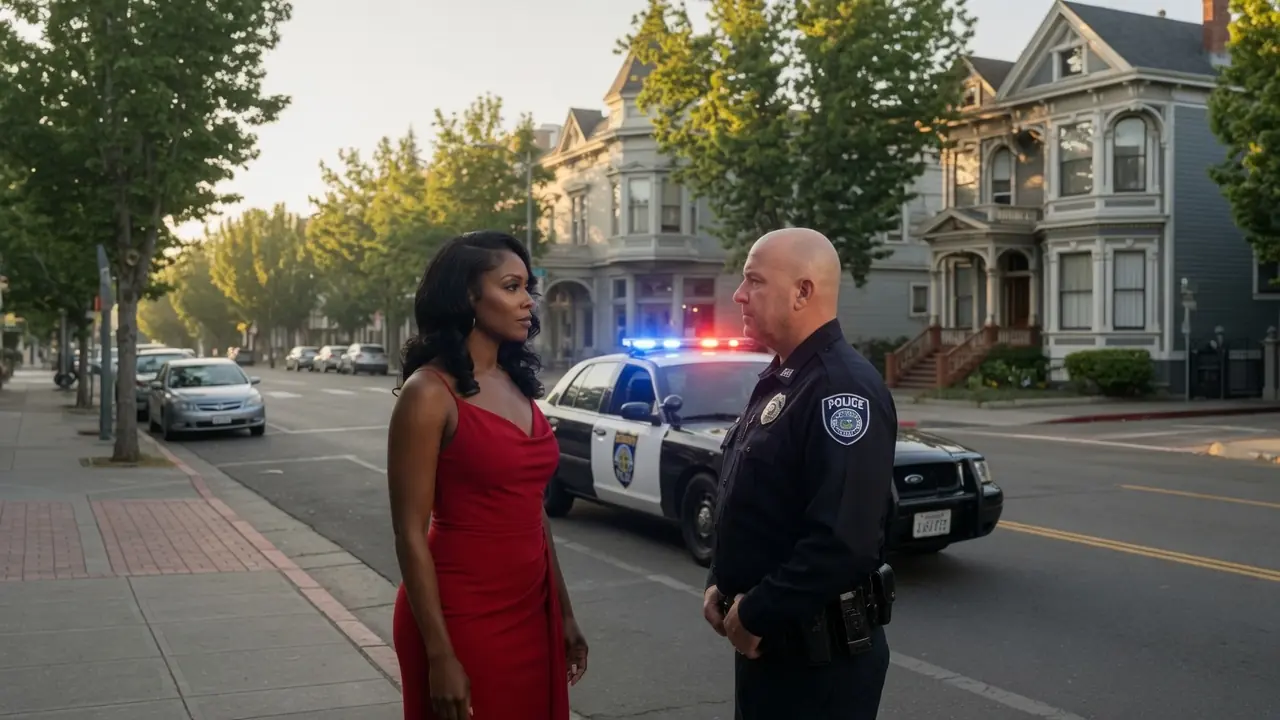
"You think you're smarter than me, don't you?" Patrick said, his voice dropping into a near growl, laced with a hint of threat. "You think your clever words are going to stop me from doing my job?" Dana didn't respond immediately. She let the silence linger for a moment before replying, each word carefully measured. "No, I don't think I'm smarter than you. But I do know this: confidence is not a crime, and respect is not a privilege. It's something every citizen deserves, no matter what they look like." Patrick took a step back, not from her words but from the weight of her gaze. He was losing control, not just of the situation but of himself. Dana knew she had pushed Patrick to his limit, but she also knew that if she didn't speak up, this injustice would continue unchecked. And she was ready to face whatever consequences might come, because deep down she understood this wasn't just about her; it was about everyone else Patrick and people like him had wronged and would continue to wrong.
The air between them was taut as a drawn string, every word from Dana slicing through the facade of authority Patrick was desperately trying to maintain. Patrick remained rooted in place, his eyes flickering between anger and confusion, struggling to regain some semblance of the power he had lost. But Dana wasn't about to give him a moment to find his balance. Slowly she raised her hand to her pocket, her gaze calm yet commanding. "I'm going to take something important out. Don't worry," she said, her words measured and deliberate, as if she controlled every second of this tense standoff.
Patrick instinctively stepped back, his reaction so instinctual it bordered on primal. His hand briefly hovered over the holster at his hip, but he froze midway, realizing there was no overt threat from Dana's movements. Still, his nervous response spoke volumes. Patrick wasn't facing an actual danger but an invisible fear born from his own prejudices. Dana carefully retrieved a black leather wallet, her movements deliberate, emphasizing her full control of the situation. Yet for the briefest moment, an unease flickered within her. She knew revealing her identity could have unpredictable consequences, especially when dealing with someone already displaying signs of abuse of power. Would this revelation pacify Patrick, or would it make him more volatile, feeling his authority threatened? She pushed the thought aside, refocusing on her task. Her hands remained steady, her gaze unwavering, as though fear held no sway over her actions.
She opened the wallet and extracted a gleaming badge, holding it up for Patrick to clearly see every detail. "Dana Williams," she stated, her voice low and resolute, "Chief of Internal Affairs, Sacramento Police Department." Patrick froze, his eyes locked on the badge as if it had just dismantled his entire world. His face turned pale, and in an instant the false confidence he had maintained throughout the encounter crumbled. "What?" Patrick stammered, his voice stripped of its former toughness. His gaze darted from the badge to Dana, searching for an explanation, perhaps even a denial that this was real. But nothing in Dana's expression or demeanor suggested anything but the truth.
"I oversee police conduct in this jurisdiction," Dana continued, her tone steady but weighted with authority. "My job is to ensure that people like you, those who wear the badge and carry its power, use it responsibly and without abuse." Patrick opened his mouth to respond, but the words caught in his throat. His face flushed red, not with anger but with embarrassment and shame. He stood there looking like a man who had just taken a hit he couldn't recover from. Dana's gaze never left his. "I'm not saying this to threaten you," she said, her tone utterly professional. "I'm saying this to remind you that you don't just represent yourself. You represent the entire system you serve. And today, you failed that responsibility."
Patrick inhaled deeply, attempting to regain some control, but the trembling in his hands betrayed him. "I... I didn't know," he muttered, his eyes still fixed on the badge in Dana's hand. "Didn't know?" Dana raised an eyebrow, her voice calm but razor-sharp. "Didn't know who you were dealing with? Or didn't know that your actions went far beyond the boundaries of a routine traffic stop?" Patrick dropped his head, clearly unable to find an answer that could salvage the situation. Dana lowered the badge, but she didn't back down. "You might think you were just doing your job," she said, her voice softer now but no less powerful, "but the truth is you let your own biases dictate every action you took in this situation. And that's why we're standing here, not because of a traffic violation, but because of a much deeper problem."
Patrick offered no response. He simply stood there, staring at the ground, his face a portrait of shame and the dawning realization that he had crossed a line he could never uncross. When Dana returned to the office the next morning, the quiet space and the soft light streaming through the large glass windows offered a sense of calm. But within her, an undercurrent of tension was surging. Last night's incident wasn't merely a personal confrontation with Patrick Mitchell; it was a glaring symptom of a deeper issue, one she was all too familiar with in her role as head of internal affairs.
She placed her briefcase on the desk, powered up her computer, and entered Patrick Mitchell's name into the internal records management system. The results appeared instantly. Before her lay Patrick's detailed profile: not just his professional achievements but also the blemishes that had been ignored or filed away over the years. Dana methodically scrolled through the entries. Unprofessional behavior. Abuse of authority. Hostility during traffic stops. She paused at a note from a colleague: "Mitchell tends to target individuals from minority groups, particularly people of color and women. Previous complaints have not been adequately addressed."
She closed her eyes for a moment, letting the weight of disappointment settle over her. These actions weren't new, and Patrick wasn't an isolated case. Dana understood all too well that the real issue lay within the system, a system that had allowed such behaviors to persist without meaningful consequences. Reaching for another file, she quickly printed out key complaints and incidents linked to Patrick. This wasn't just about him; it was evidence to convince those in higher positions that the problem needed to be addressed at its roots.
That afternoon, Dana stepped into the office of Police Chief Edward Thompson, a middle-aged man with streaks of gray in his hair and sharp, tired eyes. He sat behind a large wooden desk. He looked up as Dana entered, holding a thick stack of documents in her hands. "Dana," he greeted her with a nod. "I heard about what happened last night. I hope it wasn't too serious." Dana placed the stack firmly on the desk, her gaze unwavering. "Chief, I believe what happened last night is a clear example of a much more significant issue."
Thompson raised an eyebrow but didn't interrupt. "This is Patrick Mitchell's file," Dana began, opening the folder and sliding it toward him. "What happened last night wasn't just unprofessional. This is a long history of complaints that we've overlooked or failed to address properly. And I don't think he's the only one." Thompson picked up the file and began leafing through its pages, his expression shifting from curiosity to concern and finally to a heavy seriousness. "I won't deny there's a problem," he said, setting the file down. "But these issues, Dana, aren't always easy to fix. We have to consider..."
Dana cut him off, her tone firm but respectful. "Chief, we can't afford to consider anymore. Behavior like this not only damages the reputation of our police force but also erodes the community's trust in us. If we don't act now, the situation will only get worse." Thompson remained silent, his eyes locked on hers as if weighing the gravity of her words. "I'm not just proposing that we address Patrick Mitchell," Dana continued. "I'm asking for a comprehensive investigation, not just into individual misconduct, but into the work culture and how we train and manage our officers. We need to fix this from the ground up."
The chief leaned back in his chair, his face pensive. "You realize this won't be easy, don't you? It's going to stir up a lot of resistance, not just within our ranks but also from higher up." Dana nodded, her eyes resolute. "I understand. But I also know that staying silent and allowing this to continue will lead to far worse consequences. If we don't act now, we're sending a message that behavior like Patrick's is acceptable. And I can't stand by and let that happen." Thompson exhaled deeply, but a flicker of determination lit up his gaze. "All right," he said. "I'll support you in this. But you need to be prepared for what's coming. We're going to face a lot of pushback, both from within and outside the organization." Dana offered a faint smile, not out of victory but because she knew she had taken the first step on a long and arduous path. "Thank you, Chief. I'll be ready."
As Dana left the meeting room, she felt the new wind blowing. It wasn't the resolution of the issue but the beginning of a battle, a battle she was prepared to fight not just for herself but for the community she represented. When Dana left the conference room, the final words of Police Chief Edward Thompson still echoed in her mind: "We're going to face a lot of pressure." She understood that clearly. She knew that a reform of this magnitude wasn't just about correcting the behavior of one individual but embarking on a grueling journey to confront and overhaul a system that had rotted from within. Yet with Thompson's reluctant but crucial support, Dana began laying out her plans.
Her goal wasn't just to expose Patrick Mitchell's misconduct but to address the root problem: a culture of opacity, lack of accountability, and tacit tolerance for abuse of power. Less than a week later, a notice about a comprehensive review was sent to all departments within the Sacramento Police Department. Dana took on the role of lead supervisor, and her team was tasked with examining every aspect, from unresolved complaints to current training and oversight procedures. Edward Thompson, though still cautious, stood by the decision, asserting, "This is an opportunity to regain the community's trust, and we won't let it go to waste."
However, resistance began surfacing from the very first days. Dana received more than a few cold stares from senior officers who saw the review as a direct threat to their positions and authority. One of the most vocal opponents was Lieutenant Mark Reynolds, a veteran with over 20 years of service. During an internal meeting, Mark openly challenged her. "Dana, do you really think exposing all these faults to the public is wise? We're destroying the fragile trust they still have in us." Dana turned to him, her gaze sharp and unyielding. "Mark, trust isn't destroyed by transparency. It's destroyed by wrongdoing we fail to address. If you don't see that, then you're a part of the problem."
The exchange left the room tense, but it also made it clear that Dana wasn't just battling external issues; she was also confronting internal resistance. Internal meetings grew more contentious, with murmurs that she was damaging the reputation of the entire department. "This isn't the way to improve," a senior officer said during one meeting. "We need unity, not internal division." Dana listened, but when it was her turn to speak, her voice was firm and resolute. "Unity only matters when it's built on integrity," she replied. "If our reputation rests on hiding misconduct, then it's not a reputation worth preserving."
Her words plunged the room into silence. Dana knew that real reform couldn't just stem from within the system; it also had to arise from understanding the struggles faced by the community. She began organizing community forums where citizens could come and share their experiences with the police. During one such event, a young man, likely in his 20s, stood up, his eyes brimmed with both anger and hurt. "I was stopped by the police just because I was driving an expensive car. They thought I couldn't possibly own it. They didn't ask me a single question, just searched everything in my car like I was a criminal." His story left the room in silence. Dana listened, feeling the weight of his words. When he finished, she simply said, "I'm deeply sorry that happened to you. And I promise you, behavior like that will no longer be tolerated."
These forums weren't easy. Stories of abuse, discrimination, and negligence echoed like heavy accusations. An older woman stood up during one session, her voice trembling but filled with emotion. "We used to trust the police, but that trust has eroded as we've seen our children treated like criminals simply because of the color of their skin." Dana sat quietly, listening to every word. She didn't interrupt or make excuses. Instead, she absorbed the weight of each story, reminding herself that her work wasn't just a responsibility; it was a mission.
Dana didn't stop there. She collaborated with external experts to design new training programs focusing on two key areas: recognizing implicit biases and emphasizing personal accountability for each officer. In one training session, Dana stood before a group of young officers, her eyes scanning each face. "We all have biases," she said, her tone free of judgment. "But it's your responsibility to recognize them and ensure they don't influence how you enforce the law. That's what this community expects of you and what you've sworn to do." Her words left a strong impression, though not everyone was immediately receptive. Dana knew change wouldn't happen overnight. It required time, patience, and unwavering determination.
Beyond internal resistance, external organizations also began voicing their opinions. Some reform advocacy groups applauded Dana's efforts, while more conservative factions criticized her, claiming she was weakening law enforcement. Dana didn't let the criticism deter her. At a press conference, she addressed it head-on. "Our job isn't just to enforce the law. It's to build trust and protect everyone without discrimination. If anyone thinks this weakens our force, they've misunderstood our mission."
After weeks of relentless work, a preliminary report was released outlining significant gaps in the current system: lack of oversight, ineffective complaint handling, and a pervasive culture enabling abuse of power. Dana presented the report to Chief Thompson, who sat silently for several minutes after reading it. "We have a lot of work to do," he said, his voice more solemn than usual. Dana nodded. "But this is the first step," she replied. "And I believe we can change."
As she left his office, she felt a mix of relief and resolve. What she had started wasn't just a review or a training initiative; it was a revolution in mindset, a cultural shift she hoped would not only transform this police department but also serve as a model for others. The battle was far from over, but Dana knew she was on the right path.
A few weeks after the comprehensive review was launched, an internal hearing was convened. This was a decisive step in addressing Patrick Mitchell's conduct, not just to handle the case individually but also to send a message that abuses of power would no longer be tolerated. In the internal meeting room, light from the overhead fixtures reflected off the large wooden table. Patrick sat across from the panel, his back straight though his face betrayed tension. His eyes darted around the room, taking in the presence of senior officers, the investigative team, and most notably Dana Williams.
Dana sat at the head of the table, exuding authority without overt intimidation. Her intent was clear: to uncover the truth, not only about Patrick but also about the systemic failures that had enabled his behavior. As the hearing commenced, the investigative team presented the results of their review. Repeated complaints against Patrick Mitchell were laid out in detail: abuses of authority during traffic stops and overt hostility toward individuals from minority groups. "The first complaint against Officer Mitchell was filed three years ago," one investigator began, his tone cold as he read from the report. "A citizen alleged that he used discriminatory language during a traffic stop. However, the complaint was dismissed due to insufficient evidence, and no action was taken."
Patrick sat motionless, his hands clenched on his lap. He didn't attempt to justify himself, partly because he knew every pair of eyes in the room was poised to dismantle any defense he might offer. Dana remained silent throughout the presentation, quietly taking notes. Her gaze, however, never left Patrick, ensuring he felt the weight of every accusation. When it was Patrick's turn to speak, his voice was hoarse and slightly shaky, a stark contrast to the confidence he had displayed when confronting Dana that night. "I admit I've made some mistakes," he began, his eyes avoiding Dana. "But I don't believe those mistakes are severe enough to overshadow my entire career. I was just doing my job, and sometimes I was misunderstood."
Dana gave no immediate reaction, but her unwavering gaze made it clear she was unconvinced. One of the investigators asked, "So do you acknowledge that your actions in the situations we've outlined were inappropriate?" Patrick hesitated before finally replying, "I acknowledge that I may have acted too rigidly at times, but I never intended to harm anyone." After Patrick finished, Dana spoke, her voice calm yet carrying immense authority. "Officer Mitchell's behavior is not just a personal issue," she said, turning her attention to the senior officers in the room. "It is a glaring manifestation of a system that has failed to uphold accountability and transparency. Actions like these cannot be dismissed as misunderstandings. They are matters of ethics, power, and how we treat the community we've sworn to protect."
She turned back to Patrick, her gaze unflinching. "You say you never intended to harm anyone, but your actions, intentional or not, have caused harm not only to those you've wronged but also to this entire police force. And that is something we cannot deny." After hours of discussion, the final decision was announced. Patrick Mitchell was suspended indefinitely and required to undergo comprehensive retraining. But no sooner had the punishment been declared than a group of veteran officers signed a petition accusing Dana's actions of being overly harsh and divisive. The petitions quickly circulated within the department, prompting Chief Edward Thompson to call an emergency meeting.
In that meeting, Dana faced a barrage of criticism. One senior officer remarked, "We're undermining the morale of the entire force. A personal mistake doesn't warrant such severe consequences." Dana stood firm. "This personal mistake was tolerated for years. If we don't act now, our promises of fairness and transparency are nothing more than empty words." While the punishment stopped short of outright dismissal, it sent a strong message that such behavior would no longer be condoned. More importantly, it signaled that the system was beginning to change.
As Patrick left the room, his expression was vacant, as though the weight of consequences he never anticipated had finally settled on him. As the hearing concluded, Dana addressed those remaining in the room, her voice resolute. "This isn't just about Patrick Mitchell," she said. "This is about the system we've built and what we've allowed to happen within it. This is our opportunity to fix it, to build a culture we can be proud of. And I won't stop until that becomes a reality."
Dana's words were not just a closing statement for the hearing; they were a declaration of her commitment to the reform she had set in motion. And while the road ahead would be fraught with challenges, she knew she was one step closer to her goal: a system that was fair, transparent, and worthy of the community's trust.
A few weeks after the hearing, on a warm, sunlit evening in Sacramento, a community event was held at a large conference center. Hundreds of local residents gathered: elders who had witnessed societal changes and young people full of hope for the future. All eyes were fixed on the stage where Dana Williams was about to take the podium. Standing backstage, Dana adjusted the microphone clipped to her blouse. The murmurs in the hall gradually quieted as the host introduced her, emphasizing that Dana was not just a leader but a symbol of change, a person willing to face challenges head-on to rebuild trust within the community.
Dana walked to the podium with a confident demeanor. The stage lights illuminated her face, and in her eyes one could see both determination and compassion. She surveyed the room, taking a brief moment to silently connect with the audience before speaking. "When I stepped into this role, I knew it wouldn't be easy. I knew there would be challenges, criticisms, and even resistance. But I also knew that if we didn't start somewhere, the issues we are facing would never be resolved." Her voice rang out clear and strong, commanding the attention of everyone present.
"In the past few weeks, we've seen misconduct brought to light. But this isn't just about one individual. This is about a system, a system that has allowed injustice to persist. And I'm here to say: we will not let that continue." A round of applause erupted from the audience, but Dana raised her hand gently to signal for silence. She wasn't done. "Justice isn't just about holding wrongdoers accountable," she continued, her voice filled with emotion. "Justice is about ensuring that those entrusted with enforcing the law do the right thing. Justice means respect, transparency, and fairness, not just for some, but for everyone."
Dana scanned the room, her gaze meeting each face. "I understand that trust in law enforcement has been shaken. I know that some of you here have endured injustice. And I know that words alone cannot erase those wounds. But I promise you: action will." She paused briefly, letting her words sink in. Then she resumed, her tone even firmer. "We have initiated reforms, not just in how we address officers who act improperly, but in how we train, oversee, and communicate with our community. This is my commitment to you. I will not stop until trust is restored once again."
Applause filled the room, louder and more fervent this time. But this time Dana didn't ask them to stop. She let their support ripple through the hall, an affirmation that her mission was the right one. Dana's tone softened, and her gaze grew more tender as she delivered her closing words. "We have a long road ahead. But I believe that with determination and courage, we can build a future where everyone, no matter who they are or where they come from, can feel safe and respected. And I promise you: I will not stop fighting for that."
She stepped down from the podium to resounding applause. The crowd rose to their feet, expressing their overwhelming support. Dana smiled gently, but inside her resolve grew even stronger. This wasn't the end; it was only the beginning. As she left the hall, Dana's eyes remained focused forward. The future held more challenges, but with every step she felt closer to achieving a just system and a community built on trust. That was a goal she would never abandon.
Dana Williams's story is not just a personal journey of confronting injustice; it's a powerful reminder that anyone can spark change by standing up for what's right. Her fight for justice has not only delivered accountability but also planted hope for a more transparent and fair system. So what about you? If you were in Dana's shoes or had witnessed injustice, what would you do? Share your thoughts in the comments. We'd love to hear your story. If this story inspires you, don't forget to like, share it with your friends, and subscribe to the channel to catch more meaningful stories. Together we can spark vital conversations to build a better society.