Why Food Preparation Matters More Than You Think
Nutrition doesn't stop when food leaves the grocery store.
How you wash, cook, blend, freeze, or store food can influence the amount of vitamins, antioxidants, and other beneficial compounds that remain by the time it reaches your plate.
Some nutrients, such as vitamin C, are sensitive to heat and water. Others become easier for the body to absorb after cooking. Understanding these differences allows you to maximize both nutrition and flavor without making your meals more complicated.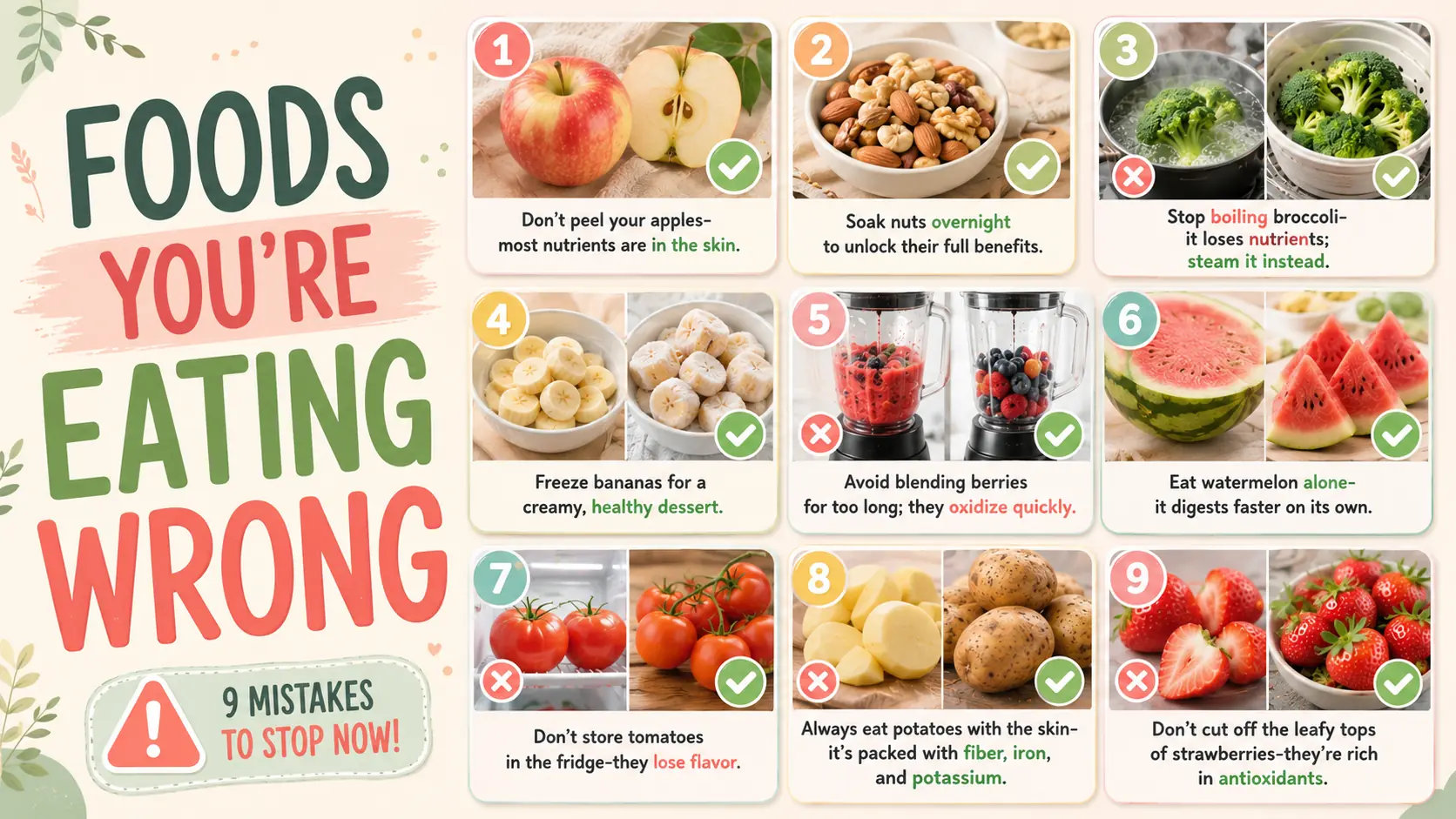
1. Eat Apples With the Skin Whenever Possible
Many people automatically peel apples, but the peel contains a significant portion of the fruit's fiber and beneficial plant compounds.
Apple skin is particularly rich in:
- Dietary fiber
- Quercetin
- Flavonoids
- Polyphenols
- Antioxidants
Removing the peel reduces much of the fiber that helps support digestion and healthy cholesterol levels.
Instead of peeling apples, wash them thoroughly under running water before eating. This helps remove dirt and reduce pesticide residues.
Unless your doctor recommends otherwise or chewing is difficult, eating apples with the skin is usually the healthiest option.
2. Soaking Nuts Is Optional—Not Essential
You've probably heard that soaking almonds or other nuts overnight "activates" them or unlocks hidden nutrients.
The reality is more balanced.
Soaking nuts can:
- Soften their texture
- Make them easier to blend
- Slightly reduce naturally occurring phytates
However, for most healthy people eating a balanced diet, phytates do not significantly interfere with nutrient absorption.
Whether soaked or not, nuts remain nutritional powerhouses packed with:
- Healthy unsaturated fats
- Plant protein
- Magnesium
- Vitamin E
- Fiber
If you enjoy the softer texture, soaking is perfectly fine. But don't worry if you eat them straight from the bag—you'll still receive nearly all of their nutritional benefits.
3. Steam Broccoli Instead of Boiling It
Broccoli is one of the most nutrient-dense vegetables available.
It supplies:
- Vitamin C
- Vitamin K
- Folate
- Fiber
- Sulforaphane precursors
Boiling broccoli for long periods allows water-soluble vitamins, particularly vitamin C, to leach into the cooking water.
Steaming preserves more nutrients while maintaining the vegetable's bright color, crisp texture, and natural flavor.
Light steaming also helps preserve myrosinase, an enzyme involved in producing sulforaphane—a plant compound that researchers continue to study for its potential health benefits.
Boiled broccoli is still healthy, but steaming generally provides the best balance between nutrition and taste.
4. Freeze Bananas Instead of Throwing Them Away
When bananas become overripe, many people throw them away.
A better option is to peel, slice, and freeze them.
Frozen bananas make an excellent base for:
- Smoothies
- Healthy "nice cream"
- Oatmeal
- Homemade baking
As bananas ripen, some of their starch naturally converts into sugar, giving them a sweeter taste without adding refined sugar.
Freezing also reduces food waste while preserving most of their nutrients.
5. Blending Berries Doesn't Destroy Their Nutrition
A common online claim is that blending berries destroys all of their antioxidants because they oxidize.
Fortunately, that's not true.
Blending does expose berries to oxygen, and some sensitive nutrients—such as vitamin C—may slowly decline over time.
However, most beneficial compounds remain intact, especially if you drink the smoothie shortly after blending.
Berries continue to provide:
- Anthocyanins
- Fiber
- Vitamin C
- Polyphenols
- Manganese
The simplest advice is to blend your smoothie fresh and enjoy it soon afterward.
6. Watermelon Doesn't Have to Be Eaten Alone
Some nutrition myths claim watermelon should always be eaten by itself because it digests faster than other foods.
Current digestive science doesn't support this idea.
Food naturally mixes together inside the stomach before gradually moving into the intestines.
Eating watermelon with other foods will not cause it to ferment or "rot" inside a healthy digestive system.
In fact, pairing watermelon with protein or healthy fats may help increase fullness.
Popular combinations include:
- Watermelon and feta cheese
- Watermelon with Greek yogurt
- Watermelon as part of a balanced summer meal
If you personally prefer eating fruit separately, that's completely fine—but it isn't medically necessary.
7. Don't Refrigerate Tomatoes Until They're Fully Ripe
Cold temperatures change the chemistry inside tomatoes.
When stored in the refrigerator before they're ripe, tomatoes often lose:
- Flavor
- Aroma
- Juiciness
- Pleasant texture
Instead:
- Store unripe tomatoes at room temperature.
- Keep them away from direct sunlight.
- Refrigerate only after they have fully ripened if you need to extend freshness.
Interestingly, cooked tomatoes contain lycopene in a form that's easier for the body to absorb than raw tomatoes.
Fresh and cooked tomatoes both offer valuable nutritional benefits.
8. Eat Potatoes With the Skin—When They're Safe
Potato skins contain important nutrients including:
- Fiber
- Potassium
- Vitamin C
- B vitamins
- Antioxidants
Keeping the skin on helps increase fiber intake and may improve satiety.
However, always inspect potatoes before cooking.
Throw away potatoes that are:
- Green
- Moldy
- Heavily sprouted
- Bitter tasting
Green potatoes may contain elevated levels of solanine, a naturally occurring compound that can be harmful in large amounts.
Baked or roasted potatoes with the skin are generally healthier choices than heavily processed potato products.
9. Strawberry Leaves Are Edible—But They're Not a Superfood
Strawberry leaves are often discarded, yet they're completely edible after proper washing.
They contain small amounts of:
- Vitamin C
- Polyphenols
- Antioxidants
Some people blend them into smoothies or use them in herbal teas.
However, there is little evidence that eating the leafy tops provides major additional health benefits compared with simply eating the fruit itself.
If you enjoy them, they're safe to eat.
If you remove them, you're not losing a significant portion of the strawberry's nutritional value.
The Bigger Lesson: Focus on Overall Eating Patterns
Many people spend too much energy worrying about tiny nutrition details while overlooking the habits that matter most.
Whether you soak almonds or eat strawberry leaves will never have as much impact as consistently eating a balanced diet filled with:
- Vegetables
- Fruits
- Whole grains
- Beans and legumes
- Nuts and seeds
- Lean protein
- Healthy fats
Simple food preparation techniques—such as steaming vegetables, storing produce correctly, minimizing food waste, and choosing minimally processed foods—can have a meaningful impact over time.
Nutrition isn't about perfection.
It's about building habits you can maintain for years.
Conclusion
Healthy eating doesn't require complicated food rules or expensive supplements.
Instead, small evidence-based habits can help you get more nutrition from the foods you already enjoy.
Keep the skin on your apples whenever possible. Steam broccoli instead of boiling it for long periods. Freeze ripe bananas instead of throwing them away. Store tomatoes properly for the best flavor. Enjoy potatoes with the skin after checking they're safe, and don't worry about eating watermelon alongside other foods.
The healthiest diet isn't built on viral nutrition myths.
It's built on consistent, informed choices made every single day.