The news arrived on a Tuesday, carried in an envelope of such startling quality it seemed an affront to the stained pine of Mrs. Reeve's rented table. The paper was thick as cream. The seal was a deep, unforgiving blue, impressed with a coronet she did not recognize. For a moment Edith simply looked at it. News in her life was rarely good and never grand.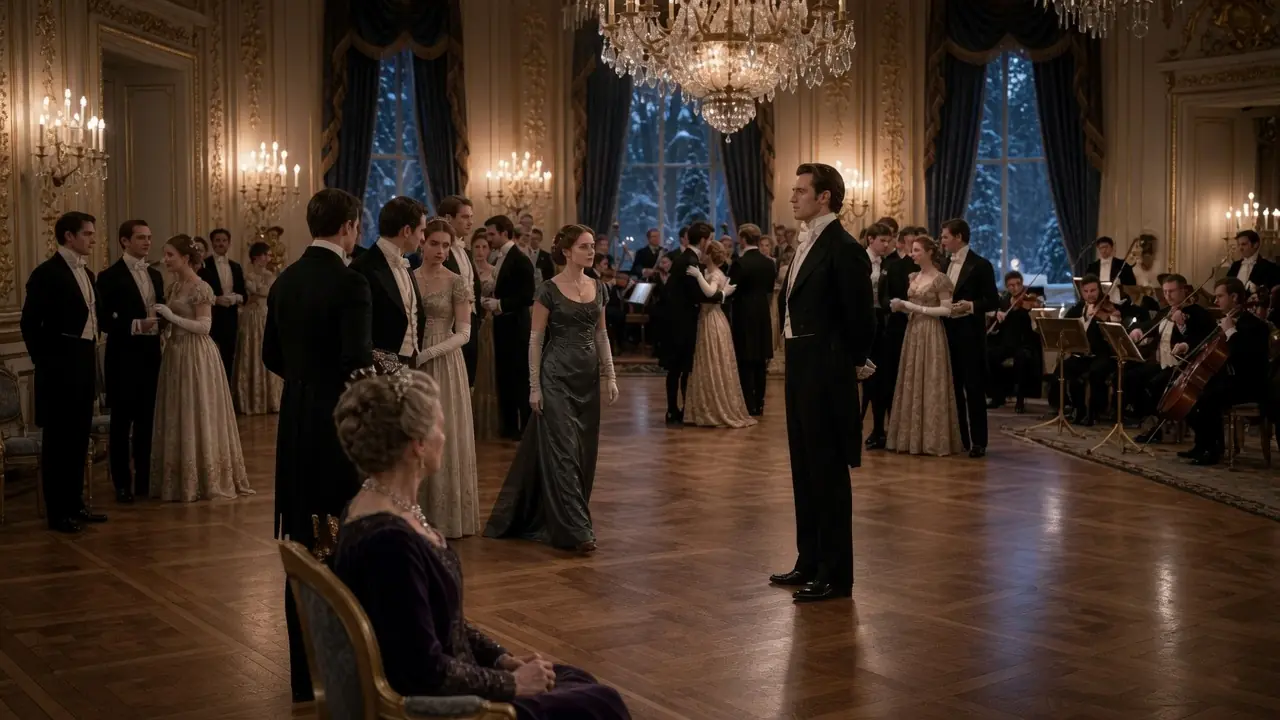
It was the butcher's bill, a note from her landlady concerning the damp in the scullery, a letter from her late husband's cousin inquiring with tedious politeness after her dwindling finances, this was different. This was an object from another world. She slipped the seal with the small practical knife she used for her mending. The handwriting within was a testament to a bygone era. It was a spidery, elegant script full of sharp peaks and graceful loops, penned by a hand that had never known a day of labor.
Mrs. Reeve, it began without preamble, I am informed by my man of business in London that you are a gentlewoman of good sense and practical nature lately widowed and seeking a situation. He speaks of your character in terms that for a lawyer verge on the effusive. I am in need of a companion. My health is variable. My disposition, I'm told, is not.
The country air here in Yorkshire is bracing. The society is nonexistent which I count as a blessing. My offer is £300 per annum with all lodging and board at my estate, Westbourne. Your duties will be light. Your primary responsibility will be to endure me.
There is the matter of my great nephew, the Duke of Whitchurch, whose house this is. You will find him private. His seclusion is a matter of long establishment. It need not concern you. I require your services to commence at your earliest convenience.
A coach will be arranged upon receipt of your acceptance. Hortense, Dowager Duchess of Whitchurch. Edith read the letter twice, £300. It was a fortune. It was independence, security.
It was the end of the cloying pity in her relations' eyes and the constant grinding arithmetic of making her small widow's portion last, westbourne. The Duke of Whitchurch. The name was a faint echo from a world she had only ever brushed against. A great title, an old family. She remembered her husband, Arthur, a physician whose practice had served the fringes of the aristocracy, mentioning the name once, the Whitchurch dukedom.
A hero of the peninsula, they had called him years ago, then nothing. The name had vanished from the papers, from the gossip her husband would sometimes bring home like a strange and useless trinket, as if the man himself had ceased to exist. His seclusion is a matter of long establishment. The phrase was a masterpiece of aristocratic understatement. It was a door firmly closed.
It was a warning. It meant gossip and whispers and a deep unspoken sorrow. Edith, whose own life had been carved by sorrow, was not afraid of it. What she was afraid of was poverty. The slow, creeping erosion of her personhood into a state of dependency.
She looked around the small, tidy room. Her books, Arthur's medical texts beside her own volumes of poetry, were neatly shelved. The chair she sat in was her own. The small writing desk, her own. They were the last vestiges of a life that had been full and then, suddenly, was not.
Arthur had been a good man, a kind man. His death from a sudden fever had been a brutal amputation. It had left her with a competence of mind and a deep, aching void where the easy companionship of her marriage had been. She was 28 years old and felt she had already lived a lifetime. A companion to a dowager.
It was a respectable fate. A quiet shelving of a life not yet half-lived. But the letter hinted at something more. The bracing air, the non-existent society, and the duke, the secluded duke. The sentence meant to be a deterrent was, to Edith, a strange sort of lure.
A problem to be observed, if not solved. Her mind, trained by Arthur in the arts of diagnosis, of looking for the root cause beneath the symptom, was intrigued. She did not deliberate for long. Practicality was the bedrock of her nature. She took out a sheet of her own plain, respectable paper, dipped her pen, and wrote her acceptance.
She informed the Dowager Duchess she could be ready to travel in a week. The week passed in a flurry of quiet activity. She settled her accounts, packed her few trunks, and sold the furniture she could not take with her. Saying goodbye to the familiar weight of Arthur's desk was the hardest part. It felt like a final severance.
She stood in the empty room, the key in her hand, and felt a pang of pure fear. She was stepping off the edge of her known world. The coach that arrived was not merely a coach. It was a statement, lacquered in a black so deep it seemed to drink the light, with the ducal crest on the door. It was drawn by four perfectly matched grays.
The world of Westbourne had reached out and claimed her. As she settled against the plush velvet squabs, the sheer unthinking luxury of it was disorienting. It was the kind of wealth that did not need to announce itself, it simply was. The journey north was long. England unrolled outside her window.
The tidy fields of the south gave way to the starker, more dramatic beauty of the north. The roads grew worse, the hills steeper. Finally, after three days of travel, the coach turned off the main post road and onto a private drive. They passed through gates of magnificent wrought iron, sagging slightly on their hinges, and green with lichen. The drive beyond was rutted.
The great oaks and beeches that lined it grew too close, their branches tangling overhead, creating a long green tunnel. The parkland on either side was beautiful, but wild. The grass overgrown, bracken creeping in from the edges. It was in a state of immense size and immense neglect. It had the air of a place holding its breath.
Then the house appeared. Westbourne was not beautiful, it was magnificent. A vast, sprawling edifice of gray stone, built over centuries. It commanded the landscape with a sort of brooding dominance. Its multitude of windows stared out like blank eyes.
Only a small section of the west wing showed any sign of life. The rest of the house was shuttered, dark, asleep. A house in mourning for itself. The coach pulled to a stop before the grand entrance. The horses' hooves echoed in the profound silence.
A footman, his livery immaculate but aged, opened the door. As Edith stepped down, the great oak doors of the house swung open and a butler, who looked as ancient and solid as the house itself, stood waiting. "Mrs. Reeve," he said, his voice a low rumble, "Welcome to Westbourne. Her Grace, the Dowager Duchess, is expecting you. " He led her inside.
The scale of the entrance hall was breathtaking. It rose two stories to a coffered ceiling from which a great, dust-shrouded chandelier hung like a fossil. The air was cold, still, and smelled of stone, beeswax, and something else, the faint, dry scent of disuse. Her footsteps and the butler's were the only sounds. It was quieter than a church, a mausoleum.
Finally, the butler stopped and opened a set of double doors. Mrs. Reeve, my lady. The room she entered was a shock. Where the rest of the house was dim and cold, this chamber was filled with light and warmth. A fire blazed in the hearth, and every surface was cluttered with books, needlework, porcelain figures, and pots of flowering plants.
It was an island of defiant life in a sea of slumber. In the center of it all, in a high-backed wing chair, sat a woman who could only be the Dowager Duchess of Whitchurch. She was tiny, ancient, and dressed in a severe black silk that made the diamonds at her throat and on her gnarled fingers seem all the more brilliant. Her face was a fine web of wrinkles, but her eyes, a startling intelligent blue, were very much alive. "So," the Dowager said, her voice crisp and clear, "you are Mrs. Reeve.
You are younger than I expected. " "I am 28, Your Grace," Edith replied, giving a small curtsy, "An excellent age. Old enough to have sense, young enough not to be set in your ways, sit down, child. The journey is a trial. You will take tea.
It was not a question. The butler, who had been waiting silently, withdrew. Edith sat in the chair opposite the dowager, her spine straight. She felt as though she were being assessed, weighed, and measured. My man of business described you as practical.
The dowager continued, her sharp eyes missing nothing, are you? I believe so, Your Grace, good. I have no time for hysterics. And you are a physician's widow. Did you learn anything from your husband?
Anything useful, I mean. Not just how to bill his patients. The question was blunt, almost rude, but Edith found she did not mind. It was a relief after the careful, veiled condolences she had grown so tired of. I assisted him with his accounts and the running of his dispensary.
I know a little of herbs and the preparation of tinctures. And I know how to listen. The dowager gave a short, sharp nod as if Edith had passed a test, listening, a lost art. Most people simply wait for their turn to speak. Tea arrived, brought by a nervous-looking maid.
The dowager duchess poured with a steady hand, the fine China rattling faintly. For a few moments, they sat in silence. The only sounds the crackle of the fire and the ticking of a grand clock in the corner. Westbourne is not what it was, the dowager said abruptly, staring into the fire. This house used to be the heart of the county, music, laughter.
Now she trailed off, her mouth tightening, now it sleeps. As does its master. She turned her gaze back to Edith. My great-nephew, William, the duke. You will see him.
Or perhaps you will not. He keeps to his own wing, he dines alone. He speaks to no one but his valet and his man of business. And to me when he must. I understand, Your Grace, edith said quietly.
The letter was quite clear, was it? The dowager's smile was thin and humorless, no, Mrs. Reeve, it was not. It was a polite fiction. The truth is never clear. It is a tangled, wretched thing.
The truth is that a war I never understood stole the boy I knew and sent back a duke, a title in the shape of a man. The intensity in the old woman's voice was startling. This was the real reason she was here. She was not here to read aloud or play piquet. She was a tool, a lever, brought here to pry open a door that had been sealed for a decade.
Just then, the door to the drawing room opened. A man stood on the threshold. He was tall, broader in the shoulder than the current fashion dictated, and dressed in a coat of black superfine that was exquisitely tailored but severe. His hair was dark brown, thick and unruly, and his face was a study in harsh angles. A strong jaw, a straight nose, a firm mouth.
It was a face that might have been handsome, but was instead merely formidable. His eyes, a shade of cool, clear gray, swept the room and settled on Edith with an expression of faint, chilling distaste. But it was not his face or his bearing that held the eye. It was his left side. The sleeve of his coat was pinned neatly flat against his torso.
Where his left arm should have been, there was nothing. He did not enter the room. He stood poised in the doorway, one hand resting on the frame. His entire posture, a masterpiece of controlled tension, "Aunt," he said. His voice was a low baritone, clipped and devoid of warmth.
"You have a visitor. " "I have a new companion, William. " the dowager replied, her tone sharpening. "This is Mrs. Reeve. " "Mrs. Reeve, may I present my great nephew, His Grace, the Duke of Whitchurch.
" Edith rose and gave another small curtsy. She kept her eyes on his face, not on his shoulder. It was a deliberate choice. She would not be one of the starers. The Duke gave a nod so infinitesimal, it was almost an insult.
His gaze did not linger on her. It was as if she were a piece of furniture his aunt had acquired, and an unwelcome one at that. "I trust she will be comfortable. " he said, the words addressed to the air between them, "She will be. " the dowager snapped.
"No thanks to the state of the guest wing. I have had rooms prepared for her here, in this part of the house. " A flicker of something, annoyance, resentment, crossed his face, "As you wish. " He did not say another word. He simply turned and was gone.
His footsteps receding down the long, silent corridor. The emptiness he left behind was more potent than his presence had been. Edith slowly sat down, her heart beating a little faster than she would have liked. She had seen him, the recluse, the wounded hero, and she had seen in his eyes not sorrow, but a deep, cold, bottomless rage. The dowager sighed, a long, weary sound.
"Well," she said, her voice suddenly tired, "Now you know. That is the Duke of Whitchurch. And that, Mrs. Reeve, is the piece of Westbourne. " The first weeks passed in a strange, quiet rhythm. Edith's duties were, as the dowager had promised, light.
She read from the papers in the morning, wrote letters for the old lady in the afternoon, and sat with her in the evening, sometimes talking, sometimes in companionable silence. Lady Hortense was sharp, opinionated, and fiercely intelligent. She spoke of politics, of literature, of her youth in a glittering, long-dead court. She spoke of everything, in fact, except the one subject that permeated the very stones of the house, her great-nephew. Edith learned the geography of Westbourne.
It was a house divided. The west wing, where she and the dowager resided, was kept clean and warm. It was a small, habitable island. The rest of the house, the grand state rooms, the ballroom, the endless guest corridors, was shrouded in dust sheets and silence. And then there was the north wing, the duke's wing.
It was his fortress, his sanctuary, his prison. No one went there but his valet, a grim-faced man named Fletcher, who had served with him in the army. She saw the duke infrequently, a glimpse of him crossing the unkempt lawns, his stride long and purposeful, his two large hounds at his heels. A brief, tense appearance at the dowager's door to ask a clipped question about an estate matter. He never acknowledged Edith beyond a stiff, formal nod if their eyes happened to meet.
He was a ghost in his own house, a palpable absence. Edith, however, was not one to be idle. Her practical nature required an outlet. With the dowager's amused permission, she began to impose her own quiet order on the chaos. She started with the household accounts, which were in a state of neglected disarray.
She spent days in the estate office, a small, cold room off the main hall, poring over ledgers. Her clear handwriting bringing sense to the sprawling, illogical entries of the elderly steward. She discovered the estate was bleeding money. Not through malice or theft, but through sheer inattention. Bills paid twice, rents uncollected, repairs commissioned and forgotten.
It was the finance of apathy. She drew up a new, simplified ledger and presented it to the dowager. "Good heavens, child," the old lady said, peering at the neat columns through her lorgnette. "You have a mind for figures. " "I thought that was a male complaint.
" "Order is a comfort, Your Grace. " Edith replied simply, "Is it? " The dowager looked at her shrewdly. "Or is it a weapon against chaos? " Edith did not answer.
Her next project was the still room. It had been abandoned for years. A place of cobwebs and dust-covered jars. Edith had it scrubbed from top to bottom. She found the old herb garden, a tangled wreck behind a high brick wall, and spent hours there, her hands gloved, patiently weeding and tending until she had resurrected a few tough, fragrant survivors, lavender, rosemary, thyme.
She began drying them, making sachets to scent the damp linen, and simple infusions for the dowager's tisanes. The work was grounding, physical, it settled her. Her greatest discovery, however, was the library. It was a magnificent room, two stories high, with soaring arched windows that looked out over the wild parkland. Bookshelves climbed to the ceiling, accessible by a rolling ladder.
But, like the rest of the house, it was come into a gentle decay. A film of dust lay over everything. The leather bindings were dry and cracking, and the air was thick with the scent of old paper and neglect. It was the one room, outside his own wing, that the duke was known to frequent. Edith would sometimes see a lamp burning there late at night.
Yet, he did nothing to halt its decline. He used it, but he did not care for it. Edith decided the library would be her domain. She began, one shelf at a time, the monumental task of cataloging the collection. She took down each book, dusted it gently, assessed the condition of its binding, and entered its title in a fresh ledger.
It was slow, methodical work, and it soothed her. She loved the feel of the old books, the whisper of the pages, the sense of history held within them. She was there one afternoon, halfway up the rolling ladder, when he found her. He entered so silently, she didn't hear him. She was reaching for a heavy volume of Plutarch when she felt a change in the air, the subtle shift that denotes another presence, she looked down.
The Duke of Whitchurch stood at the base of the ladder, looking up at her. His cool, gray eyes were unreadable, his expression impassive. "What are you doing, " he asked. The question was not curious. It was an accusation.
"I am cataloging the books, Your Grace. " Edith replied, her voice steady. She did not move from the ladder. To descend would be to retreat, "Why? " "Because they are in need of it.
Some of the bindings require repair. Without a catalog, there is no way to know what is even here. " He gestured vaguely at the thousands of volumes surrounding them. "It is a futile exercise. Most of these books have not been opened in a century.
" Edith looked from the book in her hand to his face. She saw the tension in his jaw, the rigid control in his posture. He was a man braced for a blow that had already fallen. Order is never futile, Your Grace. She said, her voice softer than she intended.
It is a form of peace. The words hung in the dusty, sunlit air between them. She had expected a sharp retort, a dismissal. Instead, he was silent. He looked away from her.
His gaze sweeping over the chaotic shelves as if seeing them for the first time. For a long, stretched moment, he said nothing. A muscle worked in his jaw. Then, without another word, he turned and walked out of the library. His boots echoed on the polished floor.
Edith remained on the ladder, her heart pounding. It was the longest conversation they had ever had. And in it, she had seen the first infinitesimal crack in the fortress of his solitude. She looked down at the heavy book in her hands. It suddenly felt less like a task and more like a beginning.
The small moment in the library did not precipitate a sudden change. The duke did not seek her out, nor did he begin to frequent his aunt's drawing room. The vast, silent house continued in its somnolent state. Yet, something had shifted subtly. When she saw him at a distance now, his nod of acknowledgement was no longer an insult, but a neutral fact.
When he passed her in a corridor, his cool, gray eyes would meet hers for a fraction of a second longer before sliding away. He was aware of her. An observer in his own wilderness, he had taken note of a new species. Edith continued her work. The library became her sanctuary.
She learned the feel of the room, the way the light moved across it during the day. She learned that the Duke's preferred reading was history and military strategy. He would take a book from a shelf and leave it on a reading table, a silent communication that he had been there. She would find it, note its title, and return it to its proper place. They had a strange, silent partnership in the care of the books.
She began to notice the small, practical difficulties his injury caused him. She saw the faint tremor of frustration in his right hand as he tried to manage a large, unwieldy folio. She saw how he angled his body to shield his left side, a constant, unconscious act of defense. She saw the way his valet, Fletcher, would anticipate his needs, opening a door, placing a glass just so, cutting the meat on his plate before it was brought to him in his private dining room. The Duke's life was a carefully constructed edifice designed to minimize the humiliation of needing help.
Edith never offered help. Pity, she knew, would be an unforgivable offense. It would be to see only the injury, the absence. Her husband, Arthur, had taught her that a physician's greatest tool was not sympathy, but clear-eyed observation. To see the patient, the whole person, not just the ailment.
Instead of offering help, she made small, unobtrusive changes. She located a heavy wrought iron bookstand in a dusty corner of the library and had it polished and placed near his preferred reading chair. It was an old design, one that could hold a book open, its pages weighted down, allowing it to be read with one hand. She did not mention it. She simply put it there.
A week later, she saw him using it, his long fingers resting on the page. He did not look up as she passed, but she felt his awareness of her. When the dowager asked her to consult a particular book of architectural drawings stored in a high cabinet, Edith made sure to place the rolling ladder on the right side of the cabinet, so it could be mounted and held with a strong right hand. They were tiny, almost invisible acts of consideration, competence, not coddling. She was making the world fit him, rather than asking him to struggle against a world designed for two hands.
One rainy afternoon in late autumn, a crisis arose. Not a grand crisis, but a small domestic one that at Westbourne felt like a major event. A message arrived from a tenant farmer, a man named Hobbs, whose cottage roof was leaking so badly one of the bedrooms was unusable. His wife was expecting a child, and the damp was a real danger. The steward, an elderly man named Dawson, who was long past his prime, had dismissed the farmers' concerns.
The dowager, upon hearing of it from a distraught housemaid whose sister was married to Hobbs, was incensed. Dawson is a fool, she declared, and my nephew is blind. He pays the man to manage the estate and assumes it is managed, this cannot stand. Edith, you will go and speak to William, edith's heart sank, me, Your Grace, yes, you. He won't listen to me.
He will think I'm meddling. He will dismiss Dawson. But you, you have a practical head on your shoulders. You will not approach it as a tragedy, but as a problem of logistics, go. Armed with a reluctant sense of duty, Edith made her way towards the north wing.
It was territory she had never entered. The corridor grew colder, the air more still. She felt like an intruder. She found the duke not in his private study, but in a small stark room that contained little more than a workbench, a set of maps, and several polished pieces of what looked like disassembled clockwork. He was bent over the intricate mechanism, a jeweler's loupe in his right eye, his single hand moving with surprising dexterity among the tiny cogs and wheels.
He did not seem surprised to see her. He straightened up, removing the loupe from his eye, mrs. Reeve, your Grace; i apologize for the intrusion. Fletcher would not have permitted it if it were not important, what is it? She explained the situation with the Hobbs cottage, keeping her tone calm and factual.
She detailed the leak, the damp, the impending birth. She did not embellish. She did not speak of suffering. She spoke of water ingress and compromised timbers. He listened, his expression hardening.
Dawson was informed of this? Two weeks ago, I believe. And he did nothing? It was a statement, flat and cold. The man is past it.
I will dismiss him. And the roof, Your Grace, edith pressed gently. Dismissing the steward will not keep the Hobbs family dry tonight. He gave her a sharp look. I am aware of that, Mrs. Reeve.
I will send men from the estate yard tomorrow. Forgive me, Your Grace, but the forecast is for more rain. Tomorrow may be too late to prevent further damage, and the cost of repair will be greater. She held out a sheet of paper she had prepared. I took the liberty of looking at the accounts.
There is a builder in the village, a Mr. Ames, who has done work for the estate before, he is reliable. I have estimated the cost of timber, slate, and two days labor. It is not an insignificant sum, but it is less than the cost of rebuilding a collapsed roof and treating a child for lung fever. He took the paper from her. His hand was steady.
The fingers long and elegant. He studied her neat figures. His brow furrowed in concentration. The silence in the small cold room stretched out. He was being challenged.
Not on his authority, but on his practicality. She had brought him not a problem, but a solution. Finally, he looked up. His gray eyes were not angry, they were assessing. You think of everything, Mrs. Reeve.
I try to think of what is necessary, Your Grace. He was quiet for another moment. This room, he said, gesturing to the half-repaired clock, it is my penance. An exercise in frustration to train one hand to do the work of two. It requires patience, method, and understanding of the mechanics of the problem.
He looked back at the paper she had given him. You have approached this in the same way. He walked to the door, fletcher, he called. The valet appeared instantly. Take a note to Dawson.
Inform him he is to pay a voucher to Mr. Ames of the village for the immediate repair of the Hobbs Cottage roof. The amount is not to exceed this estimate. He handed Fletcher the paper. And send a cart with dry firewood and blankets to the farm at once, yes, Your Grace, fletcher disappeared. The duke turned back to Edith.
He stood before her, a formidable figure in the dim light. You did not come to me wringing your hands over the plight of the poor. You came to me with a ledger and a solution, why? Edith chose her words with care. Because the plight of the poor is a matter for charity, Your Grace.
A leaking roof on your property is a matter of responsible management. They are not the same thing. A strange expression crossed his face. It was the ghost of a smile, a flicker of something that was not bitterness. No, he said slowly.
I suppose they are not. He held her gaze for a beat longer. In that moment, she felt as if he were truly seeing her for the first time, not as his aunt's companion, not as a female presence in his house, but as an individual, an equal in mind, if not in rank. Thank you, Mrs. Reeve, he said. The words were quiet, but they landed with the weight of a pronouncement.
She inclined her head, your Grace. As she walked back down the cold corridor to the warmth of the west wing, she felt a sense of triumph that was entirely out of proportion to the small victory of a repaired roof. She had met the duke on his own ground, the ground of logic, competence, and control, and he had not dismissed her, he had listened. Later that evening, as she sat with the dowager, the old lady looked at her over the rim of her teacup. The roof is being mended, I hear, yes, Your Grace.
Did he bite your head off? No. He was reasonable, reasonable, the dowager snorted. William has not been reasonable in a decade. He has been barricaded. There is a difference.
She put her cup down, her blue eyes sharp and knowing. You are good for him, Edith. You do not treat him like a broken thing. Edith had felt a warmth spread through her chest. I see a man who has endured a great deal.
I do not pity him. "Pity," the dowager said with venom, "is a useless, corrosive emotion. It is an insult dressed as a kindness. What William needs is not pity. He needs a reason.
A reason to come out of the dark. " She looked at Edith, and her expression was both hopeful and deeply sad. "I am an old woman. I had begun to fear he would never find one. " That night, for the first time, Edith allowed herself to think of the duke not as a problem to be managed, but as William, a man trapped not by the loss of his arm, but by the loss of his world.
And she, in her own quiet, practical way, was standing at the edge of it, holding a candle. She did not know if he would ever choose to walk towards the light, but for the first time, she felt the possibility of it. A fragile, tentative hope in the great, sleeping house. From his window, William Bowhurst, Duke of Whitchurch, watched her. It was a habit he had fallen into.
He would stand in the shadows of his study, the room that looked out over the west lawn, and watch Mrs. Reeve as she walked in the gardens. She had a calm, purposeful stride. She did not wander aimlessly. She would pause to examine a struggling rose bush or pull a persistent weed. Her movements efficient and graceful.
He had spent the better part of 10 years cultivating a state of perfect unbreachable solitude. He had built walls of silence and duty reinforced with routine and isolation. His world was small, controlled, and safe. He had his books, his maps, his clocks. He had Fletcher, who understood everything without needing to be told.
He had his aunt, a familiar and welcome irritant, it was enough. It had to be enough. Then Mrs. Reeve had arrived. He had resented her presence at first. She was an intrusion, a new piece on a board he had long since mastered.
He had expected a simpering, nervous creature who would flutter at the sight of him, her eyes darting to his empty sleeve with that familiar, sickening mixture of horror and pity. But Edith Reeve did not flutter, she was still, she was calm. And she did not look at his shoulder. She looked at his face. Her gaze was direct, intelligent, and unnervingly clear.
It was like being seen by sunlight after a decade in a cave. He found himself thinking about her at odd moments, the way she'd stood on the library ladder, surrounded by chaos, and spoken of order as a form of peace. The way she had presented the problem of the tenant's roof, not as a plea for mercy, but as a failure of logistics. She did not appeal to his heart. She appealed to his intellect.
It was this that disarmed him. For 10 years, people had been trying to get at his heart. His aunt, with her sharp-tongued affection, his man of business, with his talk of ducal duty, the few old friends who had tried in the early years to breach his walls, they had all come with hammers of sentiment and sympathy. Mrs. Reeve came with a key, a key forged of logic and quiet competence. He replayed their conversation in his workshop over and over again.
He had told her the room was his penance. He had never admitted that to another soul, not even Fletcher. The words had simply come out, why? Because she had not looked at the intricate, half-finished clockwork as a strange hobby. She had looked at it, he sensed, and understood it for what it was, a discipline, a battle against the clumsiness of a world remade.
One morning, he was in the estate office with Dawson, the elderly steward he had not yet brought himself to dismiss. The man was flustered, his papers in a hopeless muddle. He was trying to explain a discrepancy in the accounts for the home farm. William's patience, always a finite resource, was wearing thin. The numbers swam before his eyes, a testament to incompetence.
The door opened, and Mrs. Reeve entered. She paused on the threshold, her eyes taking in the scene. Forgive me, Your Grace. I was looking for the seed receipts from last spring. I will locate them, Mrs. Reeve, Dawson said, shuffling a pile of papers miserably.
She came further into the room. Her presence seemed to suck the panic out of the air. Perhaps I can assist. I believe I saw them when I was sorting the correspondence from March. She moved to a large, cluttered cabinet.
Her hands were deft and certain. She did not rummage. She seemed to know the precise location of everything. After a moment, she produced a thin folder, here they are. She placed them on the desk.
Then her eyes fell on the ledger Dawson and William had been struggling with. Ah, she said softly, the dairy accounts. She pointed a slim finger at a column of figures. The error is here, I believe. The revenue from the sale of cheese to the inn at Market Crossford was entered as an expense, william looked, she was right.
A simple, foolish error that had thrown the entire balance out. Dawson stared at the page, his mouth slightly agape. William looked at Edith. She had seen the problem in an instant. Not just the numbers, but the fog of confusion and frustration in the room.
And she had fixed it simply and without fuss. Thank you, Mrs. Reeve, he said. The words felt inadequate. It was nothing, Your Grace, she replied. She gave a small nod and left the office, closing the door quietly behind her.
Dawson let out a long breath. A remarkable woman, Your Grace. A mind like a steel trap, but gentle with it, william said nothing. He stared at the corrected ledger. A mind like a steel trap, yes.
But it was more than that. It was the quiet way she moved through his world, not demanding a place in it, but simply making it better, tidier, more logical, calmer. He found himself making excuses to cross her path. He would go to the library at a time he knew she would be there, ostensibly to find a book, but really just to be in the same room with her, they rarely spoke. But the silence in the library when she was there was different from the silence when he was alone.
His was an empty silence. Theirs was a shared quiet, a peace. One afternoon, he came upon her in the walled garden. She was on her knees, her skirts protected by a rough apron, patiently clearing a bed that had been choked with weeds for years. Her brow was furrowed in concentration.
A smudge of dirt on her cheek. He stopped a few feet away. His hounds, who normally growled at any stranger, sat at his side, watching her with placid interest. She looked up, startled. A flush rose in her cheeks as she saw him.
She started to get up, "Don't, " He said. The word sharper than he intended. "Don't stop on my account. " She settled back on her heels, her hands resting on the trowel in her lap. "I am attempting to see if the old rose varietals can be saved, Your Grace.
" "My grandmother's roses, " He said, his voice quiet. He had not thought of them in years. He remembered his grandmother, a woman much like his aunt Hortense, tending these very beds. It was a memory from another life. A life with two hands.
A life before the war. "Some of them are still strong, " Edith said. "They just need light and air. " "They just need light and air. " The simple phrase struck him with the force of a physical blow.
He looked from the tangled, struggling rose bush to her face, illuminated by the pale afternoon sun. He looked at her capable, earth-stained hands. She was not just talking about roses. Was it that simple? Could the tangled, overgrown wilderness of his own life be reclaimed with something as basic as light and air?
"My grandmother was a great gardener. " he said, the admission surprising him. "She believed anything could be brought back to life with enough patience. " "She sounds like a wise woman. " Edith replied, softly, they fell silent.
The only sounds were the calling of a rook in the high branches of a beech tree, and the distant bleating of sheep. It was not an awkward silence. It was a moment of profound, unspoken understanding. He was the Duke of Whitchurch, the master of this vast, decaying world. She was a paid companion, a widow with no fortune.
And yet, in this forgotten garden, they were simply a man and a woman, looking at a broken thing and seeing the possibility of life. He felt a sudden, sharp desire to tell her everything. To explain the cold rage that had been his only companion for a decade. To tell her about the flash, the noise, the sudden shocking absence where his arm had been. To describe the phantom limb that ached and burned with a pain no one could see.
To confess the deep abiding shame of his own survival when so many others had not. But the habit of silence was too strong. The words would not form. Instead, he said, "It is growing cold. You should go inside.
" She looked at him, and for a moment, he was certain she could see the torrent of unspoken words in his eyes. Her expression was one of deep, quiet compassion. But it was not pity. He knew the difference now, pity looked down. What he saw in her eyes was a looking with, a shared humanity.
"Yes, Your Grace," she said, and began to gather her tools. He watched her walk back towards the house, her posture straight, her step even. He remained in the garden for a long time. The cool air on his face, his dogs resting their heads on his knees. For the first time in 10 years, the silence of Westbourne did not feel like a comfort.
It felt like a cage, and he was suddenly, desperately aware of the key. The first snow of winter fell in early December. A soft, thick blanket that transformed the wild parkland of Westbourne into a place of stark and silent beauty. The house grew quieter still, hunkered down against the cold. The world shrank to the fireside, the lamp-lit rooms, the long dark corridors.
In this compressed world, the presence of Edith Reeve became more potent. She was a steady, quiet flame in the gloom. The west wing, under her gentle administration, ran with a smoothness it had not known in years. The servants, who had been cowed and listless, began to take pride in their work again. There was a new polish on the silver, a fresh scent of beeswax in the air.
These were small things, but they were not insignificant. They were the signs of a house beginning to breathe again. William found he was orchestrating his days to intersect with hers. A walk on the terrace at the hour she usually took the air. A visit to the library when he knew she would be at her cataloging.
These were not assignations, they were observations. He was studying her, trying to understand the nature of her calm. He learned to read the small signs of her moods. A slight tension in her shoulders when she was tired. A thoughtful frown when she was wrestling with a column of figures.
The rare, lovely curve of her lips when one of the dowager's sharp-witted stories amused her. He, who had spent a decade observing nothing but the state of his own internal landscape, was now a student of another. The dowager watched them both with her shrewd, knowing eyes. But for once, she held her tongue. She seemed to understand that this fragile, tentative connection was that could be shattered by a single misplaced word.
She simply kept creating opportunities for them to be in the same space. Her strategic mind, as sharp as it had ever been. The catalyst for the next great shift came in the form of a letter. Not a quiet, personal one, but a thick, formal invitation delivered from the grandest house in the neighborhood, Larchwood Park, the seat of Sir John and Lady Ashworth. It was an invitation to their annual Christmas assembly.
Invitations to Westbourne were rare. For years, the county had respected the Duke's seclusion. Or more accurately, they had grown tired of his refusals and had given up. But the Ashworths were new to the area, wealthy from trade, and eager to establish themselves. They were either ignorant of the Duke's habits or audacious enough to ignore them.
The dowager held the invitation aloft like a battle standard. They have invited us, all of us. The Duke of Whitchurch, the Dowager Duchess of Whitchurch, and guest, her eyes glittered. That means you, Edith. William, who had been summoned to his aunt's drawing room on some pretext, stood stiffly by the fireplace.
You will send our regrets, of course. I will do no such thing, the dowager retorted, we are going. I do not go to assemblies. His voice was flat, final. You do not, his aunt agreed.
And as a result, the entire county believes you are either mad, dying, or both. Your cousin Quincy has been making himself very useful, spreading the rumor that you are no longer competent to manage your own affairs. He suggests a regency might be in order. With him as regent, naturally. A muscle jumped in William's jaw.
Quincy Bowhurst, his second cousin and heir presumptive, a man whose ambition was matched only by his lack of scruple. Quincy is a fool. He's a dangerous fool. And you have given him ammunition by hiding yourself away for 10 years. People will believe him.
It is time you reminded them who the Duke of Whitchurch is. We will go to this ball. You will be seen. It is your duty. I have done my duty, William said, his voice dangerously low.
He unconsciously touched the empty sleeve of his coat. I did my duty for king and country. I will not be paraded like a freak for the entertainment of the local gentry. The room fell silent. The word hung in the air, freak.
It was the secret, ugly word he had lived with for a decade. The word he saw in the averted eyes, the sudden silences when he entered a room. Edith, who had been sitting quietly by the window with her needlework, felt her heart contract. She looked at him, at his proud, rigid posture, at the raw pain in his gray eyes. It was the first time he had ever named the monster that haunted him.
The dowager's face softened. The fight went out of her. William, she began, her voice full of a rare, gentle sorrow. But he did not want her sorrow. He turned on his heel.
"Send the regrets," he said, and strode from the room. The dowager sighed, her shoulders slumping. She looked old and defeated. "I push him too hard. But if he does not fight back, men like Quincy will devour this estate.
They will pick it clean. " She looked at Edith, her eyes pleading. "He will not listen to me. " Later that day, Edith found him. She had known where he would be, the ballroom.
It was a vast, magnificent room, its parquet floors covered in a film of dust, its gilded mirrors tarnished, its chandeliers shrouded in Holland cloth like sleeping ghosts. It had not been used since before the war. It was the epicenter of the house's sorrow. He was standing in the center of the room in the fading light from the tall, grimy windows, staring at his own faint reflection in a tarnished mirror. He was a dark, solitary figure in a cavern of dead memories.
Edith did not make a sound as she approached. She stopped a few feet behind him. "Your Grace," she said softly. He did not turn. "If you have come to lecture me on duty, Mrs. Reeve, you may save your breath.
I have had enough of duty for one day. " "I have not come to speak of duty," she said. "I have come to speak of courage. " That made him turn. He faced her, his expression guarded, wary.
"What would you know of courage? I know that there are different kinds, she replied, her voice even, her gaze direct. I know there is the courage of the battlefield, of facing fire and steel. I have heard the stories of your bravery. You have that kind in abundance.
She took a step closer. The space between them felt charged, electric. But there is another kind of courage. There is the courage of the everyday. The courage to face a room full of whispers.
The courage to endure the stares. The courage to live in a world that is no longer made for you. And there is the courage to simply be seen as you are. He stared at her, his face a mask of stone. But she could see the flicker of turmoil in his eyes.
She was naming things he had never dared to give voice to himself. They say you were a soldier, Your Grace, she continued, her voice dropping lower, more intimate. A soldier's courage is not a single act on the battlefield that earns a medal. Sometimes the bravest thing a soldier can do is to come home, to walk back into the world. Your aunt is wrong.
You should not go to this ball for duty or to spite your cousin. You should go for yourself, to show them, and to show yourself, that you are still here. She paused, letting her words settle in the vast, silent room. I am not asking you to dance, Your Grace. I am not asking you to make pleasant conversation.
I am simply asking you to be present, to stand in that room and let them look. Their whispers cannot hurt you. Their pity cannot touch you. You are the Duke of Whitchurch. You are more than your injury.
It is time you remembered that. She had said her piece. She had laid her argument before him as she had with the leaking roof, with logic and clarity. But this was not about timber and slate. This was about the very architecture of his soul.
He did not reply. He simply stood there, his single hand clenched into a fist at his side, his gaze fixed on her face. He looked at her as if she were a puzzle he could not solve. A strange and unexpected variable in the long, bleak equation of his life. Edith held his gaze for a moment longer.
Then, she gave a small nod, turned, and walked away, leaving him alone with her words in the gathering dark of the dead ballroom. She did not know if she had succeeded, but she had shown him her own courage, the courage to speak the truth to a man who had wrapped himself in silence. And now, the choice was his. The night of the Ashworths Assembly arrived, cold and clear. The stars were like chips of ice in the black sky.
Edith did not know until the last moment whether the Duke would go. There had been no word, no sign. An hour before they were due to depart, she sat in the Dowager's drawing room, dressed in a gown of deep gray silk, a modest dress she had owned for years. The Dowager was resplendent in purple velvet and her formidable diamonds, her expression grim. The carriage had been ordered, but the master of the house was nowhere to be seen, "He's not coming.
" the dowager said, her voice flat with disappointment. "I was a fool to hope. " At that moment, the door opened, fletcher stood there. "His Grace is ready, my lady. " And behind him, William appeared.
He was dressed in immaculate evening attire, a coat of the blackest wool, a waistcoat of white silk, a cravat tied with stark precision. The severity of the black and white made him look taller, more formidable than ever. His dark hair was brushed back from his face, and his cool gray eyes were shadowed, his jaw set. His empty sleeve was pinned with its usual neatness. He looked like a figure from a gothic novel, the dark, brooding lord emerging from his tower.
He was terrifying and magnificent. He did not look at Edith. He addressed his aunt. "The carriage is waiting. We should not be late.
" The dowager's face was a mask of astonishment and relief. She rose, her composure recovered in an instant, "Of course, William. " The journey to Larchwood Park was made in near total silence. The dowager seemed too afraid to break the spell. William stared out of the window into the dark, his face unreadable.
Edith sat opposite him, her hands clasped tightly in her lap. She felt a strange mix of apprehension and pride. He had come, and he had made the choice. Larchwood Park was a blaze of light and noise. Carriages lined the drive, and the sound of music and laughter spilled out into the cold night air.
It was everything Westbourne was not. Alive, loud, and glittering. As they stepped out of the carriage, Edith felt a tremor of fear. This was the world she was asking him to face. She glanced at William.
His face was pale, but his expression was resolute. He had put on his title like a suit of armor. Their entrance into the ballroom caused an immediate and palpable sensation. A wave of silence rippled out from the door, followed by a rising tide of whispers, every head turned. Every eye was on the Duke of Whitchurch, the mythical recluse, returned from the dead.
They stared at his face, his severe black coat, and inevitably at his left side. William stood for a moment on the threshold, his gaze sweeping the room. His face was a mask of cold aristocratic hauteur. He seemed to see no one. He offered his right arm to his aunt, "Ma'am.
" The dowager placed her hand on his arm, and together they began to move into the room. Edith followed a step behind, a small gray shadow in their wake. It felt like walking into a battle. The whispers were like arrows. Good God, it's him.
I never thought to see him again. Look at his arm, the poor man. They say he's not right in the head. William gave no sign that he heard. He moved through the crowd as if parting water, his expression unchanging.
He led his aunt to a pair of chairs near the patronesses, seated her, and then stood beside her, a grim, solitary sentinel. No one approached him. They stared, they whispered, but they kept their distance, as if he were surrounded by an invisible wall of ice. Edith stood beside him. She did not know what else to do.
She felt the stares as keenly as he must, the weight of a hundred pairs of eyes. She lifted her chin. She would be a part of his wall. She would stand with him and meet their gazes with her own quiet dignity. Sir John and Lady Ashworth bustled over, their faces wreathed in triumphant smiles.
They had snared the county's greatest prize. Your Grace, what an honor. We are so delighted you could grace us with your presence, lady Ashworth gushed. Lady Ashworth, William said, his voice clipped. He gave a stiff bow.
The conversation was stilted, awkward. The Ashworths tried to draw him out, but his replies were monosyllabic, his demeanor glacial. After a few painful minutes, they retreated, flustered. The evening wore on. The music played, couples swirled on the dance floor, and William remained by his aunt's chair, unmoving.
A few brave gentlemen, old acquaintances of his father, approached to pay their respects. He received them with cold civility, his answers brief and formal. No one asked him to dance. The idea was unthinkable. He was a monument, not a man.
A relic of a war everyone else wanted to forget. Edith felt a rising tide of anger on his behalf. These people with their easy lives and their careless whispers, what did they know of what he had endured? They saw a broken duke. She saw a man of immense, tightly controlled strength.
Then, she saw Quincy Bowhurst across the room. He was holding court, a smug, satisfied look on his handsome face. He was watching them, and he was smiling. He was enjoying William's discomfort, seeing it as proof of his own predictions of William's incompetence. Something in Edith snapped.
A quiet, determined resolution. The orchestra struck up a waltz. The floor filled with color and movement. William stood like a rock in a churning sea, his gaze fixed on some distant point over the heads of the dancers, edith moved. She took the two steps that separated them.
She stood before him, her heart hammering against her ribs. He looked down at her, his gray eyes questioning, a flicker of surprise in their cool depths. "Your Grace," she said. Her voice was low, for his ears only, but it was clear and steady. "You told me once you could no longer dance.
" His expression tightened. He thought she was about to commit the ultimate cruelty, to ask the impossible. "You did not say," she continued softly, holding his gaze, "that you could no longer stand on a dance floor with a friend. " She did not offer him her hand. She did not gesture to the floor.
She simply stood before him, her eyes full of a trust and an understanding that went beyond words. She was not asking him to pretend to be whole. She was inviting him to be himself with her in the full view of the world. It was an act of breathtaking audacity and profound faith. He stared at her.
The noise of the ballroom, the music, the whispers, it all faded away. There was only her face, her calm, courageous eyes, a friend. The word resonated in the silent, lonely chambers of his heart. For 10 years, he had been defined by what he could not do. He could not tie his own cravat without aid.
He could not cut his own meat. He could not write a letter without smudging the ink. He could not dance. But she had not asked him what he could do. She had simply offered her presence, a place to stand.
Slowly, deliberately, he gave a single, stiff nod. He did not offer her his arm. He simply turned and began to walk towards the crowded dance floor. Edith fell into step beside him. They moved through the fringe of onlookers who stared, mouths agape.
They walked to the very edge of the swirling mass of dancers and stopped. He stood straight and tall, his hand resting on the hilt of a dress sword he was not wearing. Edith stood beside him, her hands clasped loosely in front of her. They did not speak. They did not touch.
They simply stood together, two quiet figures on the edge of the maelstrom. The waltz soared around them. It was the most scandalous thing that had happened in the county in a decade. It was more shocking than a duel. More intimate than a stolen kiss in the conservatory.
The Duke of Whitchurch and the unknown woman in gray standing still while the world danced, the whispers died. The stairs were no longer of pity or morbid curiosity. They were of astonishment, of awe. They were watching something they did not understand. But whose power they could not deny.
Edith looked at William's profile. His face was still a mask. But the tension in his jaw had eased. His shoulders were a little less rigid, he was breathing, he was present. He had walked back into the world.
And he was not alone. The music swelled to its crescendo. And then faded into applause. And in the silence that followed. William turned his head and looked at her, a real look.
It was a look of gratitude so profound it needed no words. And for the first time, she saw the ghost of a real smile touch the corner of his mouth. It was the barest flicker of a thing. But it was there. It was a beginning.
The drive back to Westbourne was as silent as the journey out. But the quality of the silence had changed. It was no longer tense and apprehensive. It was deep, resonant, and peaceful. A silence of shared experience.
When they arrived, the dowager pleading fatigue retired to her rooms almost immediately. But not before giving Edith's hand a sharp, meaningful squeeze. William walked with Edith to the door of his aunt's drawing room. "Mrs. Reeve," he said, his voice a low rumble in the quiet hall, "Your Grace, " "Thank you. " It was only two words, but they contained a world of meaning.
"There is no need for thanks, Your Grace. " she replied softly. "I was glad to stand with my friend. " She used the word again, deliberately. She saw something shift in his eyes, a lowering of the guard.
"Edith," he said, her given name sounding strange and wonderful on his lips. "My name is William. " Her heart gave a lurch. This was another threshold crossed, another door unlocked, "William," she repeated, it felt right. He gave her that same infinitesimal nod he had given her on the dance floor, "Good night.
" "Good night, William. " She went into the drawing room and stood by the dying fire, her hand pressed to her chest. She had gone to the ball expecting to be a shield. She had not expected to find a friend. She had not expected to hear him say her name.
The great sleeping house of Westbourne felt for the first time full of a quiet, thrilling possibility. The morning after the assembly, the atmosphere at Westbourne was irrevocably altered. The spell of inertia had been broken. It was as if a window had been thrown open in a sealed room, letting in a draft of fresh, clean air. William began to emerge from his wing.
He took his breakfast not in his solitary dining room, but in the small morning room that adjoined the dowager's suite. At first, he would simply sit with the paper, speaking little, but he was there. His presence was a new fact in the household's daily equation. He started to walk the estate with a new purpose, not just for exercise with his dogs, but with the eye of a master. He had long, difficult conversations with Dawson, the steward.
A week after the ball, the old man was retired with a generous pension, and a new, younger, more vigorous man was hired from an estate in the next county. William involved Edith in his plans. He would unroll maps and plans on the great table in the library, and ask for her opinion. Not on matters of architecture or agriculture, he was the expert there, but on the human side of the estate. Which tenants were reliable?
Which families were struggling? She had, in her quiet way, learned more about the people of Westbourne in a few months than he had in 10 years. "You are my eyes and ears, Edith. " He told her one afternoon as they looked over a plan to repair a row of cottages near the village. "I have been blind for too long.
" Their conversations were rarely personal. They spoke of drainage and crop rotation, of roof timbers and rents, but beneath the practical surface, a deeper conversation was taking place. They were learning the rhythms of each other's minds. She learned to appreciate his sharp, logical intellect, his deep-rooted sense of responsibility that had been buried under years of pain and anger. He learned to rely on her calm judgment, her quiet empathy, her unerring sense of what was right.
The library became their shared office, their sanctuary. The work of cataloging continued, but now they sometimes did it together. He would sit at the table, his single hand moving with slow precision as he made notes, while she stood on the ladder calling down titles. The air would be filled with the quiet sounds of their work, the rustle of paper, the scrape of a chair, the low murmur of their voices. It was a kind of domesticity that was more intimate than any drawing room flirtation.
One day, he came into the library to find her struggling to lift a heavy box of books down from a high shelf. "Allow me," he said, moving to her side. Before she could protest, he reached up with his right arm. The muscles in his shoulder and back bunched with the effort. For a moment, she thought the box was too heavy, too awkward, but then he got it balanced, his jaw tight with concentration, and lowered it safely to the floor.
He stood there for a moment, breathing a little heavily, a faint sheen of sweat on his brow. He did not look at her. He seemed embarrassed by the effort, by the demonstration of his own limits. Edith did not say, "Thank you," or "Are you all right? " She simply said, The folio editions of Dryden.
I knew they would be heavy. She treated his feat of strength as a simple practical matter, stripping it of any drama or pathos. He looked at her then, a look of profound relief and gratitude in his eyes, she understood, she always understood. She did not see a struggle. She saw a task accomplished.
As the weeks turned into months, and winter began to soften towards spring, the changes in William became more pronounced. The harsh lines of his face began to relax. The coldness in his eyes was often replaced by a look of quiet contemplation. He still did not smile easily, but the ghost of a smile she had seen at the ball made more frequent appearances. He began to reclaim the house.
One day, he ordered the dust sheets taken off the main drawing room. The next week, the great saloon. The windows were unshuttered, the furniture polished, the rooms aired out. Light and life were creeping back into the dark corners of Westbourne. He still wore his injury like a piece of himself, an undeniable fact of his body.
He was often frustrated by his limitations, but the black rage had subsided, replaced by a kind of grudging acceptance. He was learning to live in the world as he was. And he was doing it, Edith realized, because she was there to witness it. Her calm, unpitying gaze gave him the courage to be imperfect. They spent more and more time together.
They would walk for hours in the park, the dogs ranging ahead of them, talking of books, of politics, of the future of the estate. He had a fine, dry wit that he had kept hidden for a decade, and he made her laugh. She, in turn, shared stories of her life with Arthur, of her love for medicine, and the quiet satisfaction of a diagnosis correctly made. She spoke of her past without sorrow, as a part of the journey that had brought her here. She was falling in love with him.
The realization came to her, not in a flash, but as a slow, dawning certainty, as gentle and inevitable as the coming of spring. She loved his mind, his resilience, his hidden kindness. She loved the way he looked at her, as if she were the only person in the world who made sense. She did not know what he felt for her. He was still a deeply private man.
He had called her his friend, his eyes and ears. He relied on her, but whether his feelings went any deeper, she could not guess. He was a duke, and she was a paid companion. The gulf between them was vast, and she would never, ever be the one to presume upon his kindness. One bright, cold afternoon in early March, he asked her to walk with him to the old walled garden, the one where she had been working on his grandmother's roses.
The garden was transformed. Over the winter, he had hired two new gardeners, and they had worked a miracle. The overgrown beds were cleared, the paths weeded, the fruit trees pruned, and the rose bushes, the ones Edith had despaired of, were covered in the tight green buds of new life. They stood together in the center of the garden, a place of order and promise. "It is beautiful," Edith said softly.
"Your grandmother would be pleased, " "She would, " William agreed. He was not looking at the garden. He was looking at her. She believed anything could be brought back to life with enough patience, he paused. "You have been very patient, Edith.
" "I have enjoyed watching the garden recover," she said, her heart beginning to beat a little faster. "I was not talking about the garden," he said quietly. He took a step closer. He was so close now, she could see the flecks of silver in his cool gray eyes. "For 10 years," he said, his voice low and intense.
"I was a ghost. I haunted this house, and I haunted myself. I thought that was all that was left for me, a life of shadows. And then you came. You walked into my darkness, and you did not try to drag me out.
You simply lit a candle, and you waited. " He reached out his hand, not to touch her, but as if to show her something. "I am not the man I was. The war took him. This," he gestured to his pinned sleeve, "is a part of me now.
It will always be a part of me. I will never be whole, not in the way the world understands it. " He finally looked into her eyes, and she saw a vulnerability there that took her breath away. "But when I am with you, Edith, I do not feel broken, i feel seen. And I feel possible.
He fell silent as if the admission had cost him everything. Edith's heart was overflowing. He was offering her the most precious thing he had, his truth. The raw, unvarnished truth of his wounded soul. And she knew she had to offer him hers in return.
It was her turn to be brave. "William," she said, her voice trembling only slightly. "When I look at you, I do not see a wounded duke. I do not see a man who is broken or incomplete. I see the man who reads Tacitus in the original Latin.
I see the man who has the patience to repair a clock. I see the man who stood in a ballroom and faced down a hundred whispers because he was asked to by a friend. I see a man of strength and honor and kindness. I see the man I love. " The words were out.
The most terrifying, most honest words she had ever spoken. She had thrown her heart at his feet with no idea if he would or even could pick it up. He stared at her, his face utterly still. For one terrible, agonizing moment, she thought she had made a catastrophic mistake. That she had presumed too much, destroyed the fragile peace between them.
Then, slowly, he raised his right hand. He cupped her cheek, his thumb tracing the line of her jaw. His touch was hesitant, gentle, as if he were touching something infinitely precious and fragile. "Edith," he whispered, and his voice was thick with an emotion she could not name. He leaned in and kissed her.
It was not a passionate, demanding kiss. It was a kiss of profound tenderness, of gratitude, of homecoming. It was a quiet confirmation of everything that had passed between them wordlessly for months. It was the sealing of a pact. When he drew back, his eyes were shining.
"I do not know if I am worthy of your love," he said, "but I will spend the rest of my life trying to be. " Tears welled in Edith's eyes, but they were tears of joy. She had chosen, and he had chosen her back. In the quiet of the resurrected garden, surrounded by the promise of new life, their own new life was just beginning, epilogue. One year later, a letter lay on the polished surface of the breakfast table in the morning room at Westbourne.
The sun, streaming through the tall, clean windows, caught the ducal crest on the seal. It was addressed, in an elegant, flowing hand, to Her Grace, the Duchess of Whitchurch. Edith slit the envelope open. It was another invitation. The Ashworths, relentless in their social ambition, were hosting another assembly, she smiled.
A year ago, such a thing would have been a declaration of war. Now it was just a piece of paper. She looked across the table. William was there, reading a report from his new steward. The morning room, once a tense and silent space, was now their comfortable habit, he looked well.
The harsh, haunted look was gone from his eyes, replaced by a quiet authority, a settled peace. He still dressed in his severe, well-cut coats, his left sleeve still pinned with Fletcher's customary neatness. The arm had not grown back. The phantom pains still came on damp nights. The war was a part of him, a scar on his soul as much as his body.
Love had not cured him. It had, instead, made a space for him to be whole with his wounds. He looked up as if feeling her gaze, and his mouth curved into that rare, familiar, almost smile that was reserved only for her. Another summons from Lady Ashworth? Indeed, Edith said, folding the letter.
She requests the honor of our company. And what shall be Her Grace's reply? he asked, a teasing light in his cool, gray eyes. Edith tapped the invitation on the table. Her Grace thinks she might enjoy a dance, william's smile widened.
He rose from his chair and came around the table to stand behind her. He rested his hand on her shoulder, his warmth seeping through the fabric of her dress. Together, they looked out of the window at the grounds of Westbourne. The parkland was no longer a tangled wilderness, but a landscape of managed beauty. The house was alive, its windows shining, its heart beating steadily once more.
They had found their own rhythm, a life built not on grand passions, but on quiet companionship, shared work, and a profound, abiding respect. They had their books, their gardens, their quiet evenings by the fire. They had built a world together. A world of order and peace. A world of light and air.
William leaned down and pressed a soft kiss to her temple. "Then we shall go," he said. His voice a low, contented murmur against her hair. And this time I believe the Duke of Whitchurch might even know the steps.