The first encounter began with something so ordinary that, under different circumstances, nobody outside Keller, Texas, would ever have heard about it.
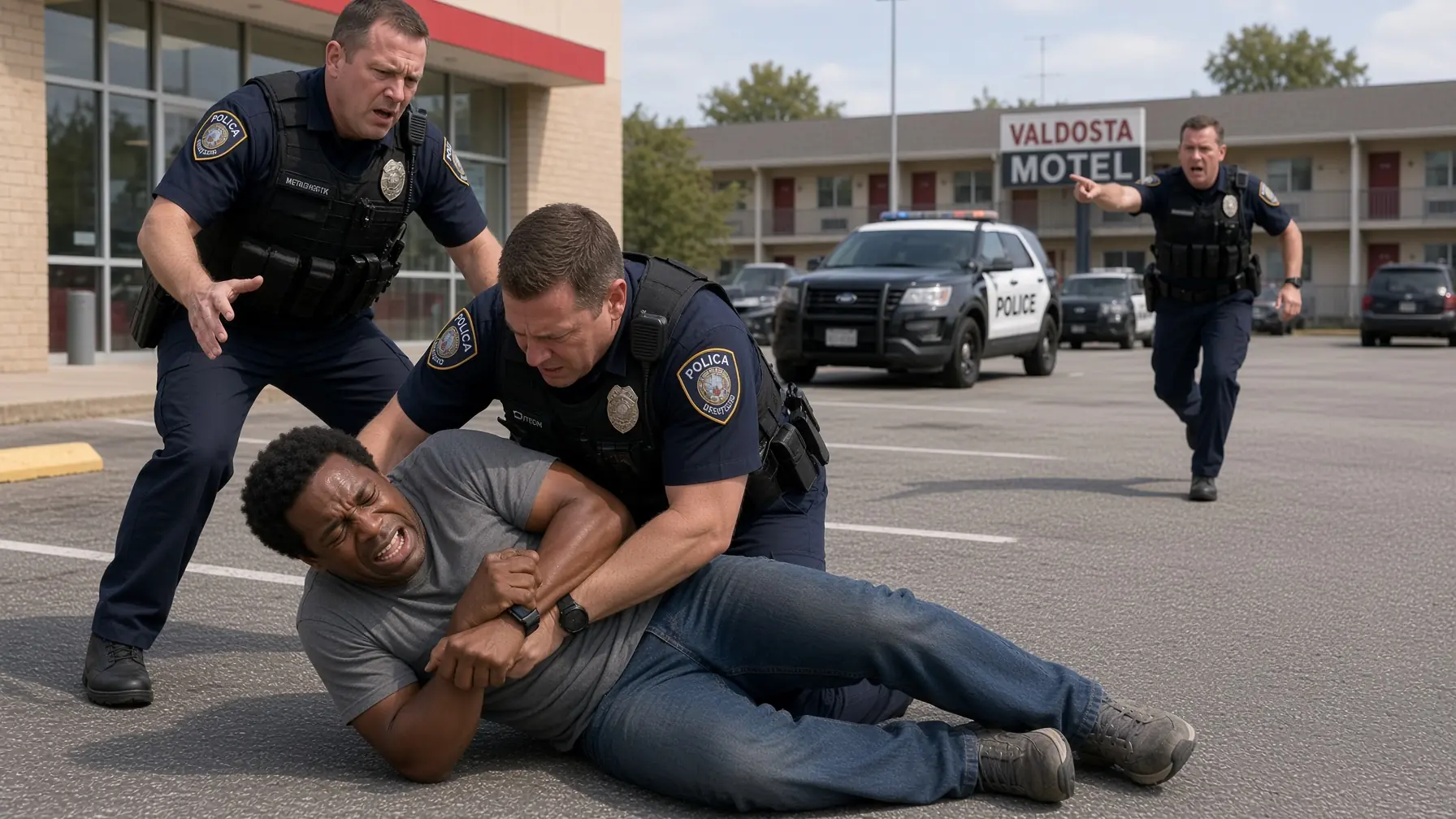
In August 2021, an officer stopped a twenty-two-year-old driver after seeing him make what he described as a wide right turn. It was the kind of traffic stop that could have ended with a warning, a citation, or a short conversation on the side of the road. Instead, Sergeant Blake Shimanek approached the vehicle already focused on one detail that had apparently bothered him: as he walked toward the car, the young driver had rolled up his window. Shimanek questioned him about it almost immediately, asking why he would raise the window during what should have been a routine stop.
The driver explained that he had rolled it up because he was concerned about his own safety. That answer did not calm the officer. Shimanek ordered him out of the vehicle, directed him where to stand, placed his hands behind his back, and began treating the closed window as suspicious behavior. The young man kept trying to explain that closing his own window was not an attempt to flee, hide evidence, or interfere with the stop. But the conversation had already shifted. What might have been an ordinary traffic violation had become a confrontation over whether the driver’s behavior showed disrespect or danger.
Then his father arrived.
Marco Puente had learned his son had been stopped and came to the scene while the traffic stop was still underway. He was not charging toward the officers. He was not physically interfering with the detention. He was inside his own vehicle when the encounter first expanded to include him. His son identified him simply: “That’s my dad.”
The officers immediately told Puente to move his vehicle. When he questioned what was happening, he was warned that he could be arrested for blocking the roadway and interfering with police work. Puente complied. He moved, parked, got out, and began recording what was happening to his son from a distance.
That should have reduced the conflict.
It did not.
Puente continued filming. The officers continued ordering him farther away. The footage showed him trying to document the detention while the situation became increasingly hostile. Then came the order that changed everything.
“Arrest him.”
Puente could hardly believe what he was hearing. He continued recording and told his phone that he was being arrested while simply standing there watching what police were doing to his son. Officers moved in. His phone was taken. The scene became physical. At one point Puente was taken to the ground and pepper sprayed. As he sat restrained afterward, his eyes burning, officers discussed getting medical assistance for him.
The original traffic stop had begun with a wide right turn.
It ended with a father in custody after he tried to record his son’s detention.
Puente did not simply accept what happened. He pursued a civil-rights lawsuit against the officers and the City of Keller. According to the account, the police chief met with him only two days later and personally apologized. The city ultimately agreed to pay $200,000 to settle the matter, and Shimanek was demoted rather than fired.
The amount drew headlines.
But the larger problem was visible much earlier than the settlement check.
The encounter escalated not because Puente attacked an officer, ran into the stop, or attempted to free his son. It escalated around his decision to remain nearby and record what police were doing. Once his presence began being treated as interference, normal actions took on a different meaning. Standing nearby became obstruction. Recording became antagonism. Questioning commands became something requiring control.
The camera preserved the sequence.
And sequence matters.
Because if someone sees only the final seconds—officers restraining a man who is upset and arguing—it is easy to describe the scene as officers responding to resistance. But when the video begins earlier, the question changes. What created the confrontation in the first place?
That same question became even more important in Valdosta, Georgia, where an entirely different police encounter began with officers hunting for a man who actually was wanted.
This time there was a warrant.
This time police had a legitimate suspect to locate.
The problem was that they put their hands on the wrong person.
Forty-seven-year-old Antonio Smith was outside near businesses in Valdosta when officers approached him while investigating suspicious activity connected to another man. Smith explained what he had been doing. He said he had been waiting to receive money through Western Union. He told officers they could contact his sister in Florida. He had identification. He was talking with officers rather than running from them.
The interaction initially appeared manageable.
An officer asked where Smith had been and why.
Smith answered.
Then another officer approached from behind.
That officer apparently believed Smith was the person wanted on the warrant.
Without the misunderstanding being clarified first, the encounter suddenly became physical. Smith was grabbed and taken to the ground while being ordered to put his hands behind his back. The takedown was forceful enough that Smith immediately screamed in pain.
“My wrist!”
He repeatedly cried out that his wrist had been broken.
The officers continued securing him.
Then the radio traffic and conversation around the scene began revealing what had gone wrong.
There were two different men.
The wanted man was elsewhere.
Smith was not him.
The officers themselves could be heard trying to untangle the confusion. One officer explained that people nearby had pointed Smith out, while another officer believed the person with the warrant was a different man. One said he had assumed something important had happened before he arrived because he saw another officer ordering Smith to put his hands behind his back.
That assumption became action.
Action became injury.
And only afterward did the officers slow down enough to reconstruct who was who.
The body-camera conversation is striking because the officers did not seem to be hiding the mistake from one another. They were openly confused. One officer essentially admitted that he thought Smith was the warrant suspect because of what he saw another officer doing. Another tried to explain how bystanders had apparently pointed to more than one person.
It was a communication failure happening in real time.
And Smith paid for it with his wrist.
Once they realized he was the wrong man, the scene did not suddenly become compassionate. Smith told them again that he had been forced down as he was preparing to comply. Officers asked whether he wanted emergency medical services. He declined treatment at the scene.
But declining an ambulance did not mean he considered the matter finished.
Smith later filed a federal civil-rights lawsuit seeking hundreds of thousands of dollars in damages. According to the account, the case ultimately settled for $350,000.
Again, the settlement amount was significant.
Again, the footage mattered more.
Police are allowed to make reasonable mistakes in uncertain circumstances. A mistaken identity by itself does not automatically prove misconduct. Officers often arrive with partial descriptions, conflicting witness information, rapidly changing radio traffic, and very little time.
The deeper question is what they do with uncertainty.
Do they verify before using force when circumstances permit?
Do they communicate clearly with each other?
Does one officer assume another officer already knows something he does not?
And once the mistake becomes clear, do they acknowledge what happened and respond appropriately to the injury caused by it?