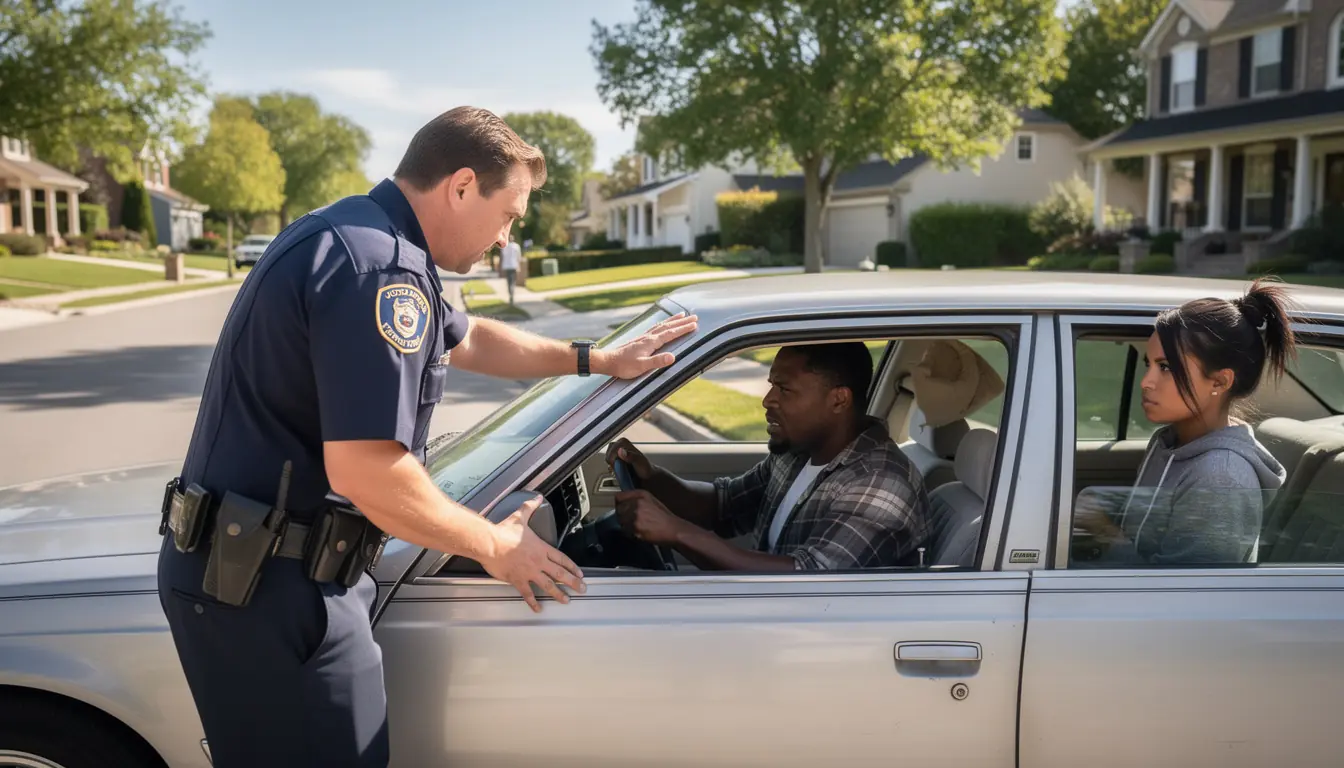
But he had no idea the Black couple in the beat-up Chevy were the exact investigators sent to destroy his career.The rain slicked the asphalt of Route 114, transforming the winding suburban road into a mirror that reflected the dim amber glow of the streetlights. It was just past midnight in Oak Haven, an affluent, predominantly white enclave nestled on the outskirts of the city. Oak Haven was famous for its manicured lawns, its prestigious country clubs, and a police department that operated more like a private militia than a public service.For years, rumors had swirled about the tactics used by Oak Haven's finest to keep undesirables outside their city limits. But rumors weren't enough to build a federal case: that required evidence; it required witnesses; it required bait.Inside a faded 2012 Chevrolet Malibu, David Jenkins adjusted his grip on the cracked leather of the steering wheel. He was dressed in a worn flannel shirt and faded denim, looking every bit like a tired blue-collar worker heading home from a grueling double shift. Beside him in the passenger seat sat Khloe Patterson: she wore a simple unbranded hoodie, her hair pulled back into a messy bun, her eyes fixed on the side mirror.To anyone looking into the vehicle, they were just an ordinary Black couple driving a heavily depreciated car through a neighborhood where they supposedly did not belong. But David and Khloe were anything but ordinary: both were senior investigators for the State Attorney General's elite Internal Affairs Bureau.David had spent ten years working deep undercover in narcotics before transferring to the bureau, carrying with him a cold, calculated composure that made him legendary among his peers. Khloe was a former county prosecutor who had stepped down from the courtroom to join the investigative side after seeing one too many fabricated police reports cross her desk. They were meticulous, unyielding, and completely immune to intimidation."Check your six," Khloe murmured, her voice barely rising above the rhythmic thumping of the windshield wipers.David glanced into the rearview mirror. About a quarter-mile back, half-hidden in the shadows of a defunct strip mall parking lot, sat a black-and-white Oak Haven police cruiser. It had no headlights on; it was merely waiting—a mechanical predator lurking in the dark."I see him," David replied, his tone perfectly even.He checked the speedometer: he was doing exactly 33 mph in a 35 zone; his hands were placed perfectly at ten and two. The Malibu's tags were up to date; the taillights were fully functional, and the turn signals worked flawlessly. They were giving the officer absolutely no legal justification to initiate a traffic stop.That was exactly the point of the operation.For the past eight months, the Internal Affairs Bureau had been drowning in civilian complaints originating from this specific two-mile stretch of Route 114. The complaints all shared a disturbing pattern: minority drivers pulled over late at night for phantom traffic violations, subjected to aggressive questioning, illegal searches of their vehicles, and unwarranted physical intimidation.