I.
By the time Edmund Garrow sealed the third letter, the candle was a stub no taller than the joint of his thumb. He sat a while afterward and watched the flame lean and recover in the draught from the sash, as if it were also deciding whether to go on.
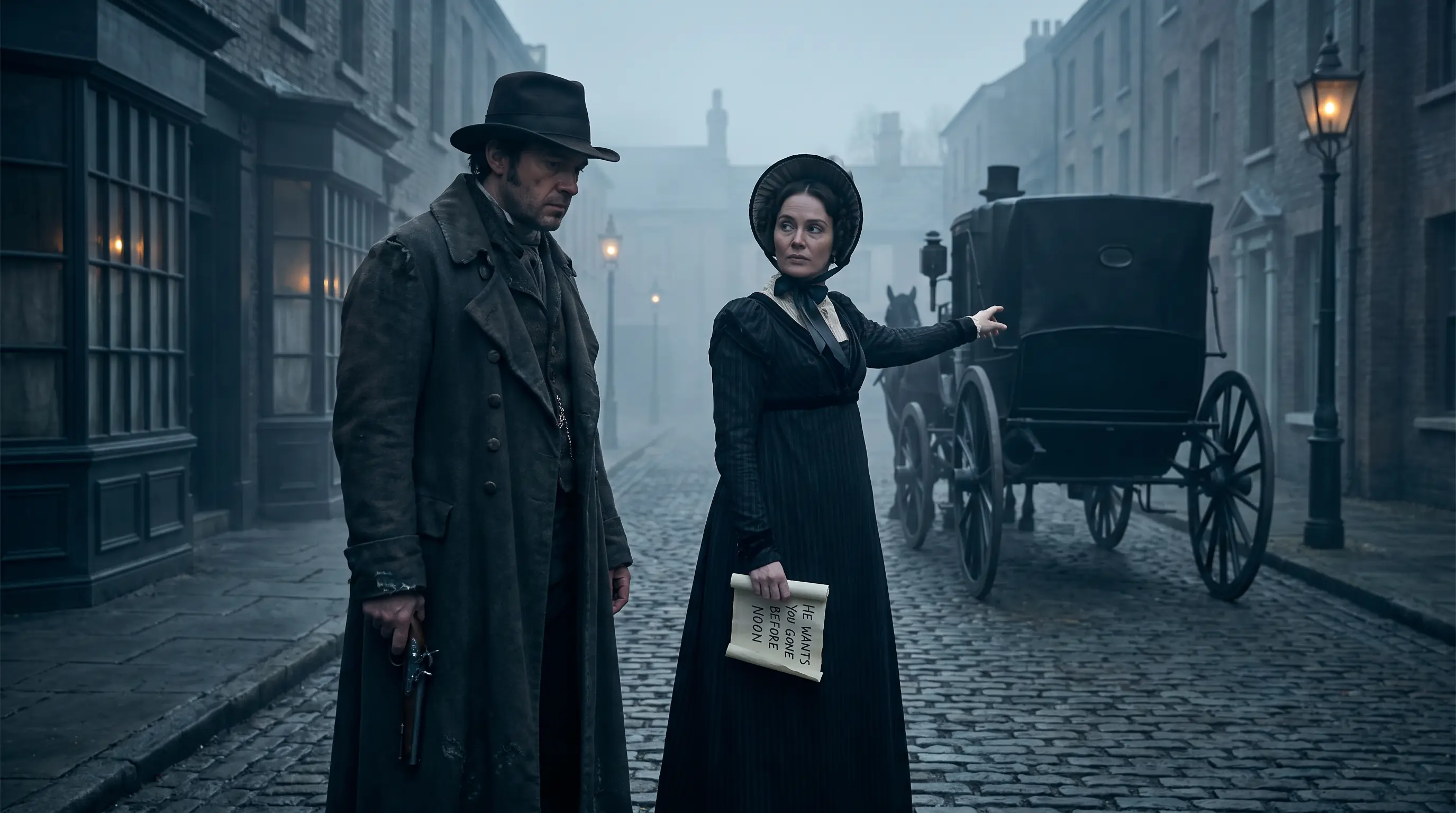
There were three letters. One was to his sister Kate in Norfolk, who would weep and then be practical, in that order, and who had always been better than he was at both. One was to Mrs. Dacey, his landlady. It settled the quarter's rent and asked that his books go to the parish school at St Clement Danes, except the Smollett, which was not suitable for children and should go to Kit. The third, much shorter than the others, was to his father. He had written it four times. The first draft ran to two pages of accusation. The second was a page of forgiveness he did not feel. The third was a single line, and he burned it because it was cruel. The fourth said only: *Sir — I have done what I believed right. I hope in time you will be able to say the same. Your son, E. G.*
He did not write to Lady Sophia Ardleigh. A man who is about to be shot over a lady's name does not make things worse by leaving her a letter that might be found on his body.
Outside, Clement's Inn had the silence of legal London before dawn. The lawyers were abed and the laundresses not yet stirring. A single watchman's lantern went by in the lane below, swaying slowly in the hand of a man more than half asleep. It was the eleventh of June, 1814. Somewhere across the city the Emperor of Russia slept at the Pulteney Hotel, and the King of Prussia at Clarence House. The bells had rung for peace so long and so often that Londoners no longer heard them. Bonaparte was on Elba and the war was over. Men like Edmund, who had spent their twenties in it, were finding that peace asked for a different kind of courage, and nobody had issued them any.
He flexed his right hand. The two last fingers would not close fully, and had not since the boat action off Pasajes, when a French ball took the oar out of his grip and a good deal of his grip with it. He could write. He could hold a fork. What he could not do, as Kit had discovered in the gallery at Manton's last week with growing horror, was hit a wafer at twelve paces with a pistol in his right hand. With his left he could barely hit the wall.
"You'll stand side-on," Kit had said. "Make yourself narrow. And for God's sake, Ned, don't fire first. Fire into the ground. Delope. He won't shoot a man who's deloped."
"Hugo Stannard would shoot a man who had said his prayers aloud and was holding a lamb," Edmund had said. "He's killed two."
"In fair fights."
"Then I shall have a fair fight, and he will kill a third."
That ended the conversation, as Edmund had meant it to. He did not want to be talked out of anything. For most of his life people had talked him out of things, chiefly his father, who was very good at it.