Caleb Reed was arguing over a freight bill when the homeless woman on the depot bench said, "That wagon number is on there twice. " The clerk stopped talking. Caleb turned. The woman sat beside one worn carpet bag with a small black slate in her hands. Her coat was clean, but thin at the elbows. Dust marked the hem of her skirt.
The freight clerk frowned. "Ma'am, this doesn't concern you. It concerns him if you charge him twice. Caleb looked back at the bill. Two lines carried the same wagon number.
He had been ready to pay. The clerk pulled the paper closer. Probably copied wrong. Then the total is wrong, too, the woman said. A couple of teamsters near the door turned their heads.
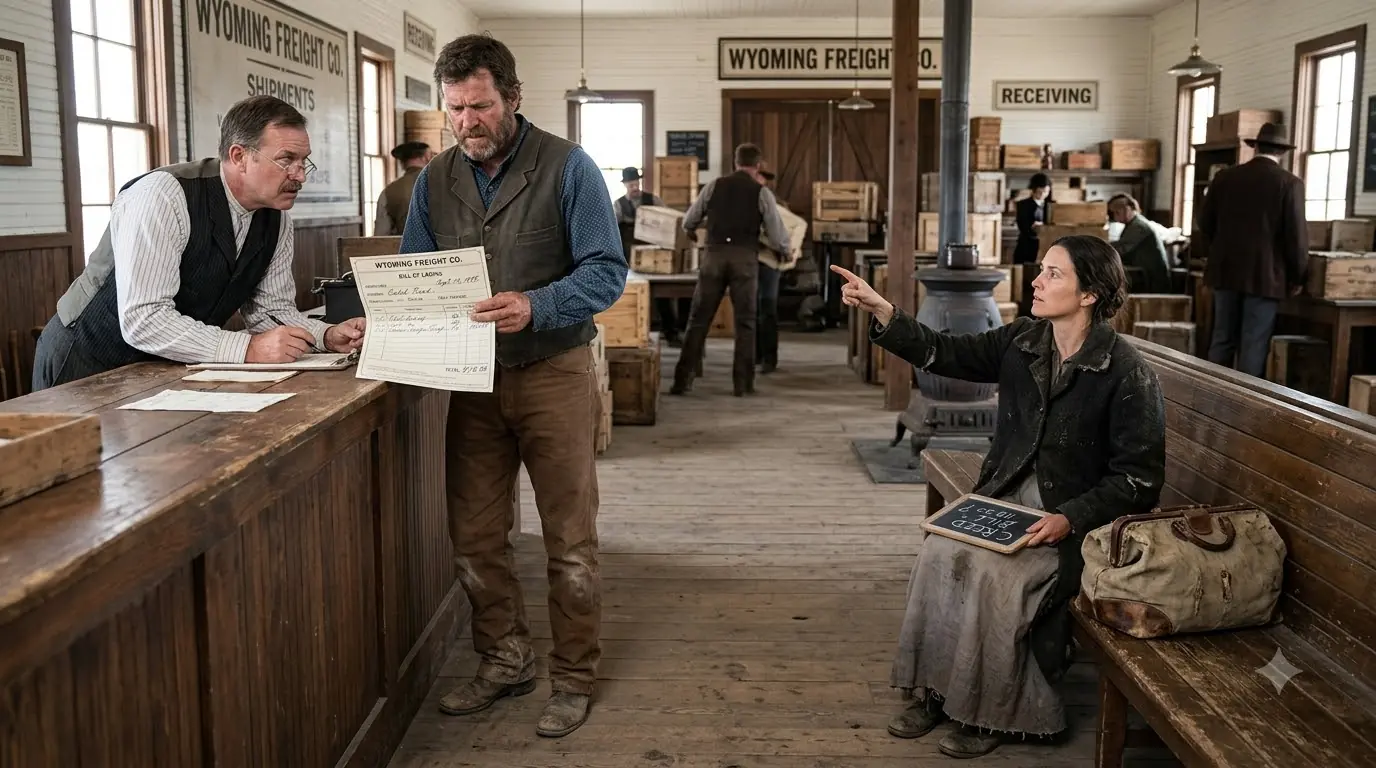
The clerk's face tightened. You looking for trouble? No, just arithmetic. Caleb held out his hand for the bill. Figure it again.
This time the total came out $11.40 lower. That was more than Caleb paid a ranch hand for a week. He counted out the corrected amount and looked toward the bench. The woman had already returned to her slate. You work freight?
He asked. Used to where? Cheyenne, then Laramie. The clerk gave a short laugh. She's been sitting there since yesterday.
No room, no address, no job. You want advice, Reed? Get it from somebody who owns more than a carpet bag. The woman's eyes lowered. Caleb looked at the clerk.
Seems she just saved me $11. That doesn't make her respectable. No, Caleb said it makes her right. A telegraph key ticked behind the partition. He turned back to her.
What's your name? Nora Mercer. I'm Caleb Reed. Reed Ranch, 12 miles west. I know the place.
How? Your cattle shipments come through here. Caleb studied her. For 3 years, Reed Ranch had bled money in ways he could not explain. Feed cost more.
Freight cost more. Cattle sold for less. His former partner had once handled the books. Then the man disappeared with 6 months of payroll money. Since then, Caleb handled everything himself.
Badly if he was honest. You looking for work? Norah's chin lifted. What kind? Accounts 6 weeks.
Doing what? Sorting invoices. Sale receipts. Freight feed. Payroll pay $8 a week.
Meals included. There's an unused cookhouse behind the main cabin. Separate quarters. Hours. Sun up to supper.
Sunday's yours. If I end it early, I pay the week. " Norah watched him a moment. Then she picked up her carpet bag. I'll need paper. I've got paper.
Good ink. I've got ink. Then I'll come. No thanks, no relief, just terms accepted. Caleb found he preferred it.
By noon, Norah was behind the small desk in the Reed Ranch office while Caleb stood near the door, regretting the arrangement. The room had one window, two chairs, a warped filing cabinet, and paper stacked wherever it would stay. Norah opened the first account book, then another. She looked at Caleb. Who arranged these?
I did. They're not arranged. I know where things are. She held up a feed receipt. Where does this go?
Caleb pointed toward a shelf. She pulled down a tobacco tin. He said nothing. Norah set the receipt on the desk. All right.
What? Nothing. That sounded like something. It was arithmetic. He left before she could see him smile.
For 4 days, Norah worked through the ranch records without asking for sympathy or conversation. She ate with Caleb and Foreman Eli Boon. At the kitchen table, she asked direct questions. How many calves survived spring? Which supplier delivered oats in March?
Why did a rail charge appear twice in June? Eli disliked her questions. Cattle ain't columns, he said one evening. No, Norah answered. But men who buy them use columns.
Eli scratched a mark into his tally stick. I know what a healthy steer looks like. I believe you. He eyed her. That all?
That's why I need your numbers. Caleb watched Eli lose the argument without realizing it. On the fifth morning, Norah placed two feed invoices on Caleb's desk. You paid these? I can see that you paid them twice.
Same delivery date, same wagon, different invoice numbers. Caleb checked the entries. Norah was right again. How much? $28 over three deliveries. His mouth hardened.
That supplier's been selling to us eight years. Then he's had plenty of time to learn. You don't check him. Caleb looked at her. She did not soften the sentence.
He took the short chain from inside his vest, removed the office key, and set it on the desk. Norah glanced at it. You won't need me unlocking the room every morning. For the first time since arriving, she seemed unsure. She picked up the key.
I'll keep it here. That's what keys are for. Their eyes held one second too long. Caleb stepped away first. That afternoon, Norah began studying cattle receipts, not bills.
Waits. She asked Eli for his old headcounts. He brought them reluctantly. She asked how the cattle had looked before each drive. Mostly good.
How good? Good enough. I'd have bought him. By sunset, the office wall held three columns in chalk. Headcount.
Expected weight. Paid weight. Caleb came in and stopped. What's that? Your cattle.
My cattle aren't on that wall. The missing part of them is. Norah placed three old vain stockyard tickets beneath Eli's tallies. One shipment had gone through autumn rain. One during a dry September, one after a short easy drive.
Different years, different herd sizes, different conditions. She tapped the final figures. The losses should move. Caleb frowned. They do move.
Not enough. Norah took her black slate from her pocket and worked the figures again. Then again, the room grew darker around them. Finally, she wrote one line beneath the numbers and turned the slate toward him. Caleb read it.
The cattle ar not losing this weight. Outside, a steer struck the corral rail. Caleb looked from the slate to the old sale tickets. Then back to Nora. What are you saying?
She closed her fingers around the chalk. I'm saying somebody is. Caleb did not answer Norah at once. He picked up one of the old vain stockyard tickets and carried it closer to the lamp. Cattle lose weight on a drive.
I know they lose more in heat. I know they lose more if they bunch hard or go too long without water. I know that, too. His eyes lifted from the paper. Then what are you saying?
Norah turned back to the wall. I'm saying the loss should change. She pointed to the first shipment. Wet autumn, short drive, then the second. Dry September, longer road.
Then the third. Cool weather, smaller herd. Her finger moved down the paid weights. Different conditions. Almost the same percentage gone.
Eli Boon stood in the doorway with his hat pushed back. He had been listening. You can't weigh a steer with chalk. Norah looked at him. No.
She handed him one of his old tally sticks. That's why I need someone who knows cattle. Eli took it. You trying to sweet talk me? No.
Good. He came inside. For the next hour, Norah asked him about shipments going back 4 years, which herd had been heavy, which had been thin, which had been held overnight before leaving Reed Ranch, which had walked straight through. Eli remembered more than Caleb expected. Those red steers in 84 were heavy, Eli said.
Too heavy, maybe. Caleb's father liked them broad. Norah found the corresponding sale ticket. The paid weight was low. Eli leaned closer.
That ain't right. Caleb looked at him. You sure? I loaded those cattle. Eli tapped the ticket with one rough finger.
They didn't leave here that light. Norah added another chalk mark to the wall. For the first time, Eli did not complain about the arithmetic. Over the next week, the office changed. Norah sorted invoices into clean bundles.
Sale slips went by year. Feed accounts went by supplier. Freight charges went by route. And the wall kept filling. Caleb came in at dawn before chores.
And again after dark. Sometimes Norah was already there. Sometimes she was still there when he returned. She never asked him whether she was doing well. She simply kept finding things.
One night, Caleb found her seated on the floor beside an open wooden chest. Old account books surrounded her. The office key lay beside her knee. He stopped in the doorway. That chest was locked.
I know. You used my key. You gave me your key. That's not the same thing. Norah looked up.
It either opens the office or it doesn't. Caleb stepped inside. The chest held records from the years when Luke Fenner had been his partner. Caleb had avoided them since Luke disappeared with the payroll money. Norah reached for another ledger.
Caleb's hand came down on the lid. That's enough. She looked at his hand, then at him. I need those. No.