The woman came to the door a little after midnight on the sixteenth of June, 1877, and she did not knock. She stood in the yard where the lamplight from the one window could reach her and waited for someone inside to notice, because a knock in that country, in that week, was the kind of sound that got a person shot through the planks before anyone had asked a name.
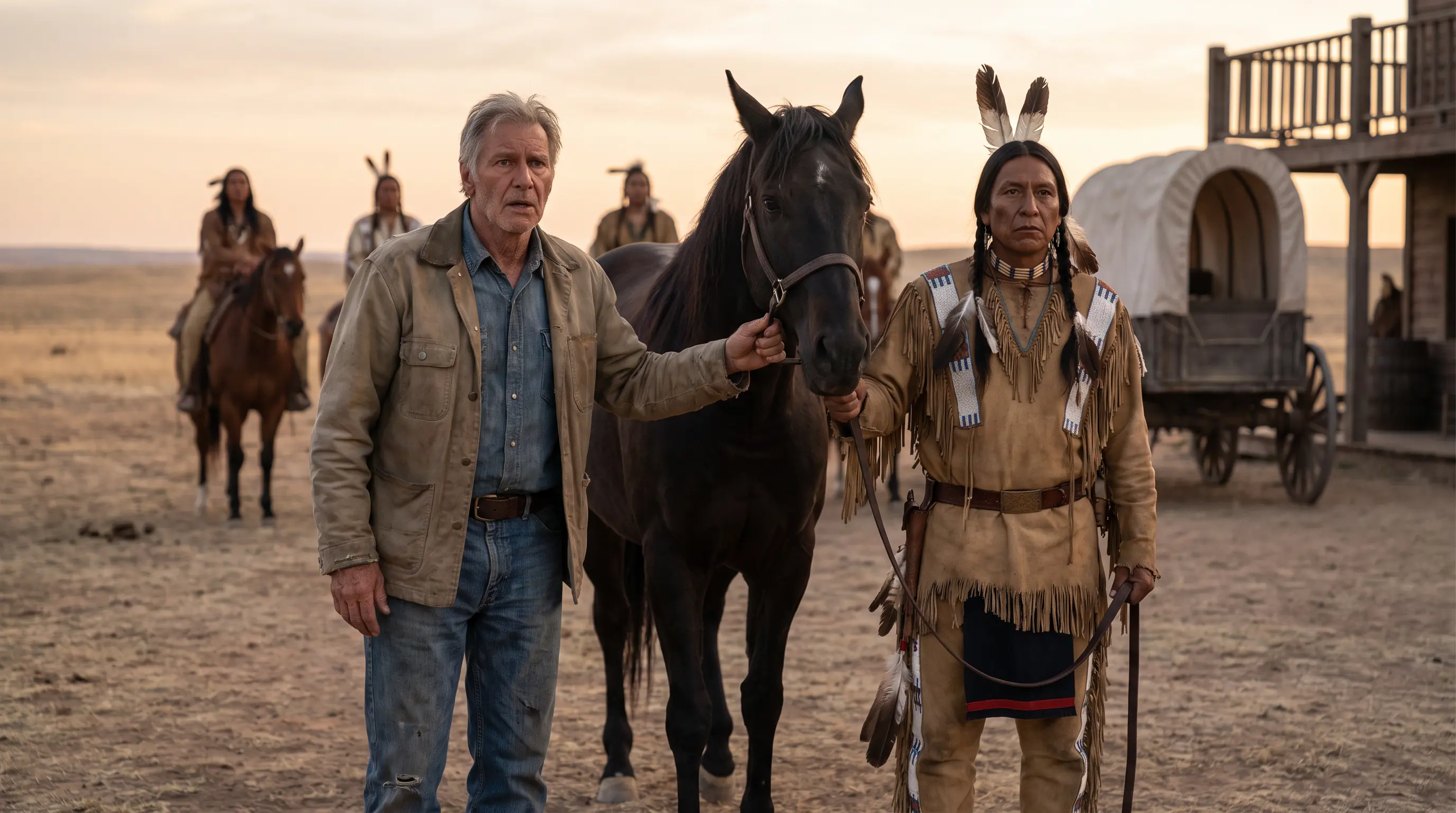
Nils Ordway noticed her because the mare noticed her first. The mare was in the lean-to against the north wall of the cabin, and she gave a low, questioning nicker, not the shrill call she made for strange horses but the soft one she used for people she expected to bring her something. Nils was awake anyway. He had been awake most of the last three nights, sitting at the table with the shotgun across his knees and his daughter asleep in the box bed behind the curtain, listening to the prairie and trying to decide whether a man who leaves his claim is a coward or whether a man who stays is a fool.
He went to the window with the lamp turned low and looked out, and there she was. A woman in a dark wool dress and a blanket capote, a basket hat pushed back on her head, a child of four or five on her hip. Behind her, sitting in the grass as though he had been set down there like a sack, an old man with his hair in two white braids and his legs stretched straight out in front of him.
Nils knew enough to understand what he was seeing and not enough to know what to do about it. He had been on the Camas Prairie for four years, on a hundred and sixty acres of black soil three miles west of the Cottonwood road, and in four years he had traded with Nimiipuu families at the store in Mount Idaho, had watched their horse herds move across the prairie in the spring like weather, had hired two young men one harvest to help him get his oats in before the rain. He had learned perhaps forty words of their language from his wife, who had learned two hundred from the women she met digging roots, and his wife had been dead for two years now, and most of the words had gone with her.
But he knew what had happened on the Salmon River that week, because everyone knew. He knew that young men from the bands that refused the new treaty had killed settlers along the Salmon and White Bird Creek, men who by most accounts had earned killing many times over and some who had not. He knew that the soldiers had come down from Fort Lapwai and been beaten in White Bird Canyon the day before yesterday, that riders had gone through Cottonwood yelling that every Indian on the prairie had risen, and that the families from the whole country were crowding into the stone fort they were throwing up at Mount Idaho. He knew that the volunteers riding out of Mount Idaho were not stopping to ask which band a person belonged to.
He unbarred the door and opened it a hand's width.
"I am alone here except my girl," he said. It was the first thing that came to him, and it was the wrong thing, because it sounded like a threat or a plea and he did not mean either. He tried again. "Ta'c halaxp. Good evening. Is the old man hurt?"
The woman looked at him for a long moment. She was perhaps twenty-five, with a broad, tired face and a scar through one eyebrow that pulled it slightly higher than the other, so that she looked faintly skeptical even when she was not. The child on her hip was a girl, asleep with her mouth open.