I.
The fog came up off the Wolds before dawn and did not lift.
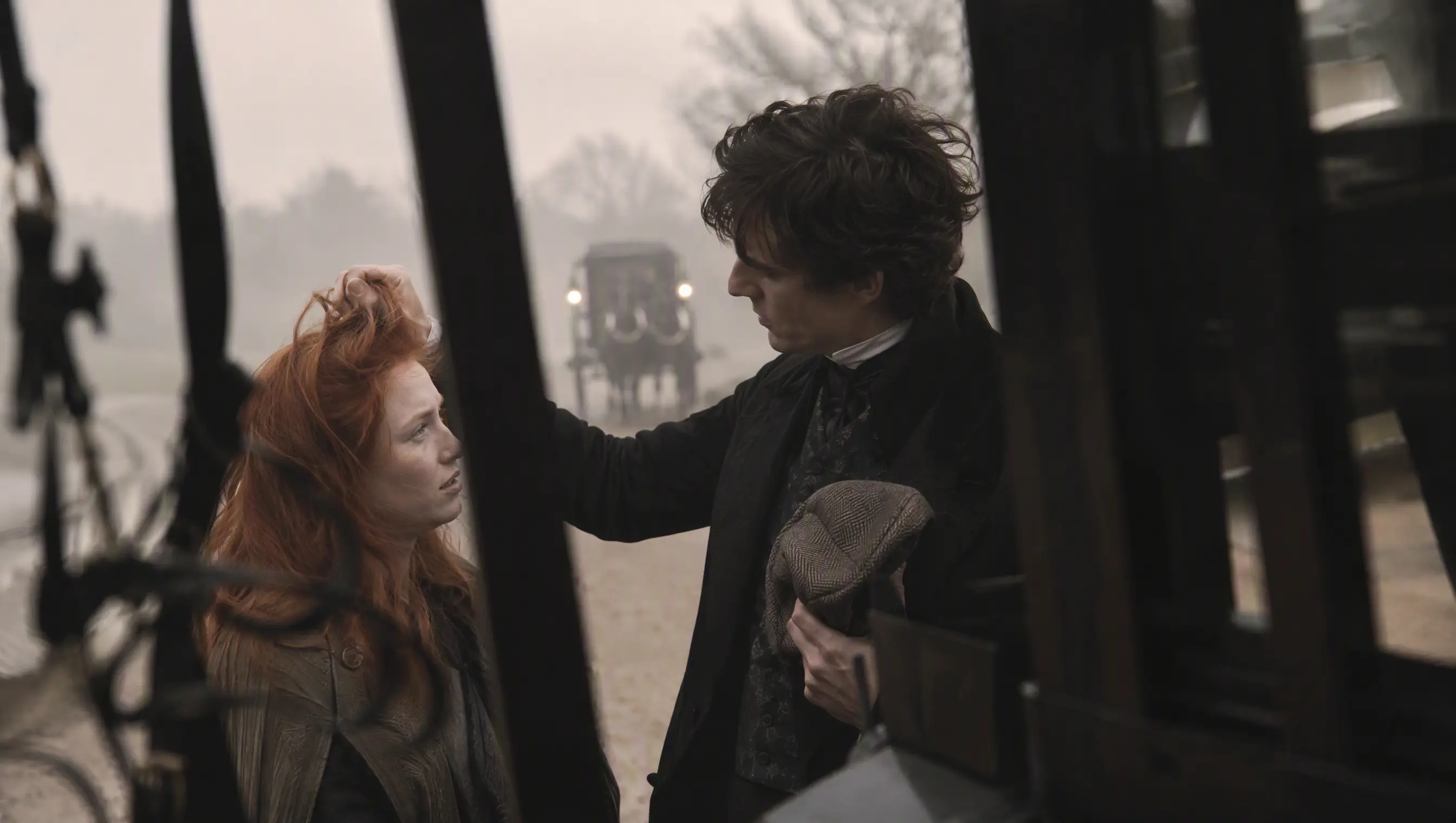
By eight o'clock it had swallowed the park, the lake, the long avenue of limes, and most of Brayford Hall itself, so that from the stable yard the house was only a suggestion: a tower here, a cluster of tall chimneys there, the grey teeth of Gothic battlements floating above nothing.
The sun was somewhere behind it all. It turned the white world the colour of weak tea and honey, and every lantern still burning in the yard wore a halo.
Harriet liked the fog. It made faces harder to see.
She stood in the middle of the cobbles with the bridle of the big brown gelding in her left hand and her right palm flat against his neck, and she waited for him to decide that he was not going to kill her this morning. Absalom was sixteen and a half hands of muscle and grievance. He had come out of his box with his ears pinned and the white of his eye showing, had gone straight up on his hind legs the moment his shoes rang on the stones, and had dragged Kit Mabey halfway to the water trough before Harriet took the reins out of the boy's blistered hands. Now he stood blowing, every vein raised under his dark coat, his tail lashing, his weight shifting from foot to foot as if the ground itself had lied to him once and might again.
"There," she said, low, not to him so much as near him. "There now. Nobody's asking anything of you."
She clicked her tongue twice, softly, the way her father had done it: two short clicks and a long breath out. She did not look the horse in the eye. She looked at his shoulder, and she hummed under her breath four bars of a tune that had no name, a tune her father had hummed over every frightened colt she had ever watched him handle in the yards at Newmarket. Absalom's near ear swivelled toward the sound. The off ear followed. His head came down an inch. Then another.
Around the yard, work had stopped. Two of the lads stood in the door of the feed room with their forks forgotten in their hands. Kit was sucking his rope-burned palm and staring. Old Abel Thorne, the head groom, had come to the arch of the coach-house and was leaning there with his arms folded and his face, as always, giving away nothing at all.
And on the mounting block beneath the clock tower, a gentleman was watching her.
She had felt him before she saw him. Three weeks at Brayford had taught her the particular change in the air when the master came into the yard: the way lads straightened, the way voices dropped and swearing stopped. She had seen him only at a distance before, a dark figure on a tall bay going out across the park, a voice in the passage behind the tack room. She had not wanted to see him closer. She had made very sure of it.
Now he stepped down off the block and crossed the cobbles toward her, his boots unhurried, and she kept her eyes on the horse.