The marquee of the Sunflower Theatre had eleven hundred and forty light bulbs, and on the night of July 13, 1985, a hundred and six of them were dead.
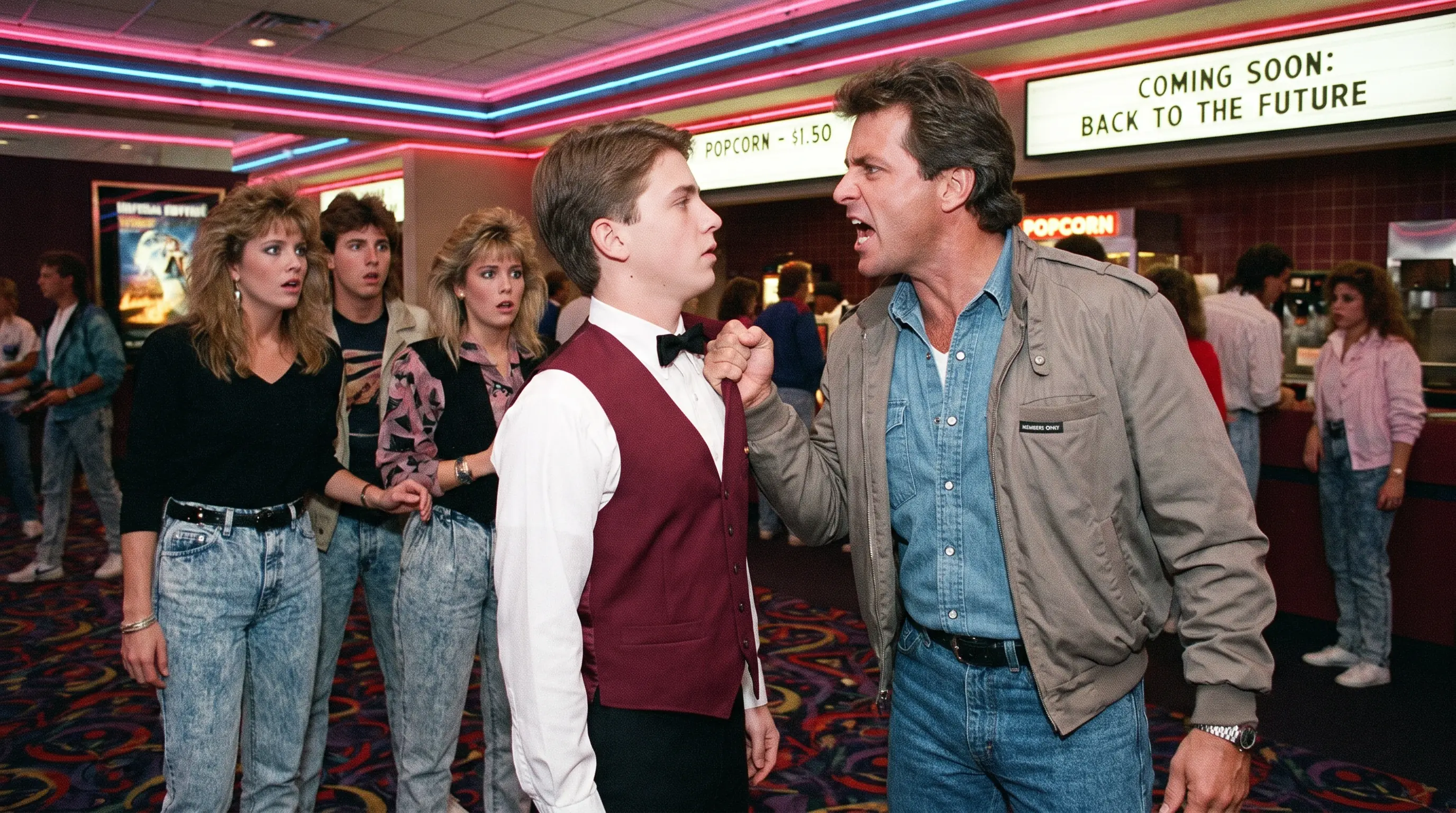
Danny Kowal knew the number because he had counted them from the curb two weeks earlier, on his break, with a Dr Pepper sweating in his hand, and then he had gone inside and told Mrs. Dunning in the ticket booth, and Mrs. Dunning had looked at him over the top of her half-glasses and said, "Honey, I know exactly how many are out. I could tell you which ones." She had then named, without turning around, the second R in BACK TO THE FUTURE, most of the left-hand chase border, and the little sunflower at the top of the vertical sign whose petals were supposed to bloom in sequence and now only managed to cough.
"Bulbs are a dollar ten apiece wholesale," she said. "The ladder's four hundred, if you want to buy a ladder that won't kill Ansel. And the bulbs aren't the problem. The bulbs are a symptom." She had made change for a family of five, slid the tickets out through the brass half-moon in the glass, and smiled at the youngest child as if nothing in the world were dying. "Go tear tickets, Danny."
So he tore tickets. That was the job. Three dollars and thirty-five cents an hour, the federal minimum, to stand at the inner doors of a 1927 movie palace in a maroon jacket with brass buttons that had been let out and taken in by so many generations of teenagers that the seams looked like the rings of a tree. He tore the ticket in half, kept the stub, handed back the other half, and said, "Enjoy the show." He said it the way Mrs. Dunning had taught him: to the person, not to the ticket. Look up. Every time.
It was the Saturday of Live Aid. All afternoon the concession stand radio had been tuned to the broadcast from Philadelphia, and Lupe Herrera, who ran the candy counter with the ferocity of a customs agent, had been turning it up for Led Zeppelin and down for anyone she considered beneath her, which was most of them. By seven o'clock the line for the seven-thirty show stretched past Kresge's and the shuttered Rexall and around the corner onto Fourth Street, because Back to the Future had opened ten days before and every kid in Merritt, Kansas, and half the parents, wanted to see the DeLorean hit eighty-eight miles per hour on a screen forty feet wide instead of on the little screens at the new Cinema 4 out at the Westgate mall, where the auditoriums were the size of shoeboxes and the floors stuck to your sneakers.
The Sunflower's floors did not stick. Danny mopped them himself after the last show, every Friday and Saturday, under the gold-leaf proscenium with the plaster sheaves of wheat and the sun-faced masks at either corner, one smiling and one not. There were eight hundred and twelve seats on the main floor and three hundred and twenty in the balcony. The balcony was roped off now, had been since spring, because of the water stains spreading across the ceiling above it like a map of a country nobody wanted to visit. When it rained, Ansel set out galvanized buckets in rows C and F, and you could hear them during the quiet scenes, a soft metronome, plink, plink, as if the building were keeping time.
Danny was sixteen. He had worked at the Sunflower for eleven months. He had been planning, for about two of those months, to quit.
* * *
It was not that he didn't like it. That was the embarrassing part. He liked it more than he had liked anything since his father drove off to the oil patch near Seminole, Oklahoma, in the fall of 1982 with a promise to send for them that had turned, over three years, into a money order every second or third month and a phone call at Christmas. He liked the smell of the place, popcorn and old velvet and the faint electrical tang that came down the stairs from the booth. He liked the hush right before the curtain opened, the real curtain, gold and red, which Ansel Voss still drew on a motor from the booth at the start of every show because, he said, people ought to be shown that something was about to begin. He liked the old men who came to the Tuesday matinee and sat in the same seats, and the high school couples who sat in the back row and pretended he didn't see them, and the little kids who came out of the cartoons blinking and amazed. He liked Lupe, too, more than he would say out loud, though she mostly communicated with him by throwing Milk Duds at the back of his head.
But Kenny Strand had gotten a job washing cars at Hadley Chevrolet-Oldsmobile out on Highway 50, and Kenny was making four and a quarter an hour plus tips, and Kenny had a Walkman, the real Sony one, and Kenny had said, "Royce Hadley's hiring for the lot in August. Lot boy. You just move cars around and keep 'em pretty. I'll put in a word." And Danny's mother worked the night shift at St. Anne's as a nurse's aide and slept with a towel over her eyes in the afternoons, and their rent on the duplex on Ninth Street had gone up forty dollars in June, and ninety cents an hour more was ninety cents an hour more.