“I don’t shake hands with people like you.”
The words left Conrad Ashford’s mouth with the lazy confidence of a man who had never been punished for cruelty. He did not stand. He did not even look embarrassed. He simply leaned back in his leather chair at the head of the glass boardroom table, his silver cufflinks catching the afternoon light while every executive around him waited to see whether the Black woman in front of him would break.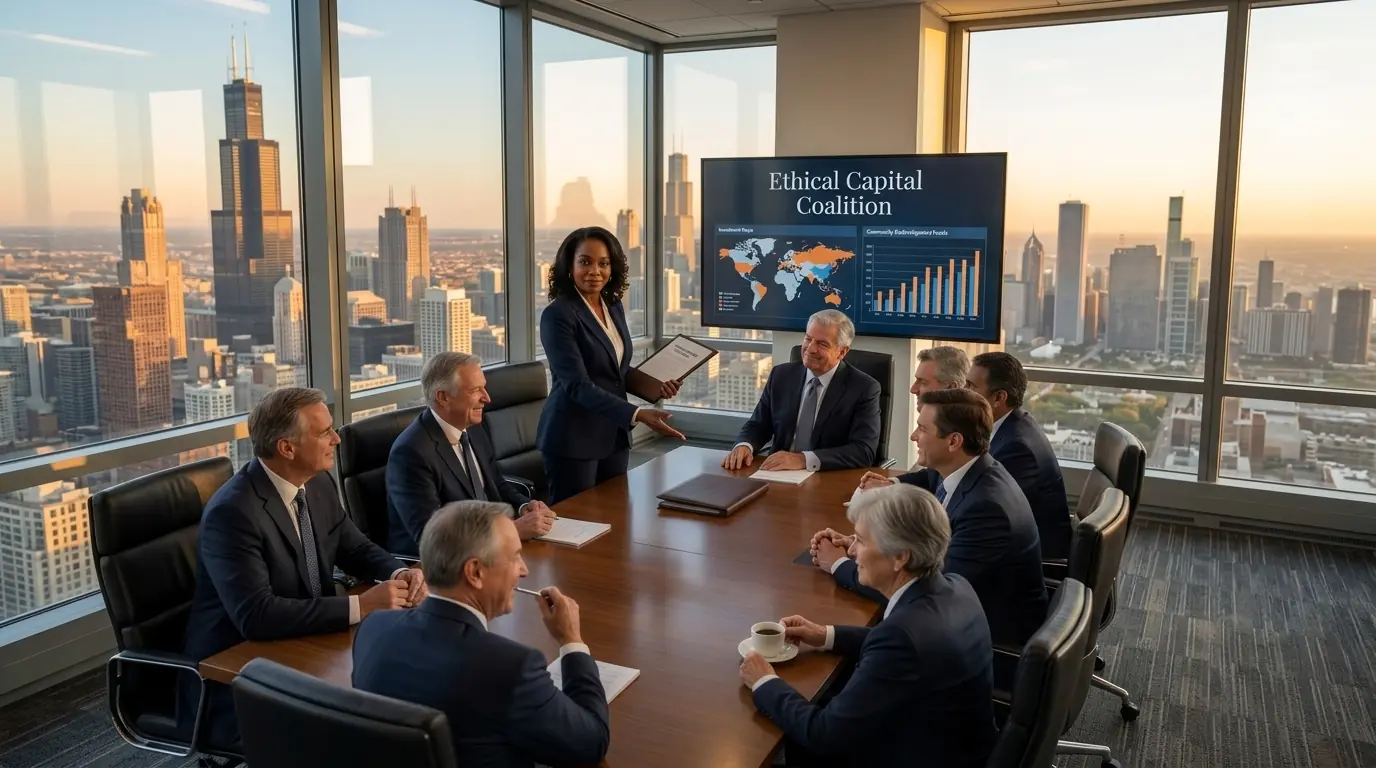
Dr. Selah Bennett kept her hand extended for one more second.
Just one.
Long enough for the silence to expose the room.
Then came the laughter. Not all at once, but in pieces. A short snort from Miles Keaton, Ashford Sterling Capital’s public relations chief. A cough disguised as amusement from a junior partner near the window. A low chuckle from a man who had spent the entire presentation pretending to check emails while Selah explained how their firm could save itself without destroying the communities it claimed to serve.
Selah lowered her hand slowly.
Her face did not change. That was the part they hated most. Men like Conrad expected anger, humiliation, trembling, some visible proof that his words had reached their target and left damage behind. Selah gave him nothing but a calm gaze and the kind of stillness that made weak men feel suddenly overexposed.
The boardroom sat forty-two floors above downtown Chicago, where the river bent between towers of glass and steel.
Everything in the room had been chosen to announce power. The long table was Italian walnut, polished so smoothly it reflected the ceiling lights. The chairs were black leather, the coffee cups bone china, the walls decorated with abstract art expensive enough to feed entire neighborhoods Conrad would never visit without security.
Selah had spent the last hour presenting a funding model that could restructure Ashford Sterling’s failing community redevelopment portfolio.
She had shown them projections, risk maps, municipal data, pension fund commitments, and case studies from cities where abandoned factories had become worker-owned manufacturing spaces instead of luxury condos. The proposal was not charity. It was disciplined, profitable, and tied to strict ethical governance. It would make money, yes, but not by stripping poor neighborhoods down to dirt and calling it renewal.
Conrad had barely listened.
He had tapped on his phone, whispered twice to Miles, and once rolled his eyes when Selah spoke about community oversight. He was a billionaire financier whose father had taught him that markets were cleaner when people stayed in their assigned places. On television, Conrad talked about innovation and national recovery. In private, he talked about leverage, weakness, and how fear remained the most reliable currency in business.
When Selah finished, she walked the length of the table and offered him her hand.
Professional.
Measured.
Expected.
That was when Conrad smiled and gave the room permission to show itself.
“I don’t shake hands with people like you,” he said. “Pull your hand back before you contaminate the table.”
The laughter followed.
So did the silence.
Selah heard every piece of it. She saw Miles Keaton hide a grin behind his pen. She saw two younger partners glance at each other, entertained by the thrill of watching someone powerful be publicly cruel. She saw Patricia Rowe, the firm’s governance chair, stare into her coffee cup like it had suddenly become the most urgent document in the room.
That kind of silence had its own sound.
Cowardice often does.
Selah gathered her folder with steady hands. “Thank you for your time.”
Conrad’s smile deepened. “That’s it?”
She looked at him. “For now.”
He laughed again, but this time the sound seemed to end earlier than he intended.
Selah walked out of the boardroom with her spine straight and her heartbeat thudding hard enough to hurt. The marble hallway outside was bright, cold, and quiet. Through the glass wall, she could see junior staff working at long desks, heads bent over spreadsheets they did not own, decisions they did not make, futures controlled by men who treated whole cities like numbers.
Her fingers trembled only after the doors closed behind her.
She hated that.
Not because trembling meant weakness, but because her body still reacted to insults her mind had long ago learned to expect. She had two doctorates, twenty-five years of financial architecture behind her, and a national reputation for building ethical capital coalitions. Still, one rich man could look at her skin and decide she was something unclean.
The voice came from beside a printer alcove.
A young analyst stepped out, clutching a stack of reports to her chest. She was Black, maybe twenty-six, with tired eyes and the careful posture of someone who had learned to make herself small in expensive offices. Her badge read Maya Collins.
Selah turned. “Yes?”
Maya glanced toward the boardroom doors. “They decided before you walked in.”
Selah said nothing.
Maya swallowed. “Two weeks ago. Mr. Ashford told Miles to let you present anyway because he wanted the board to see what happens when outside coalitions forget their place.”
The words landed softly and still cut deep.
“Why are you telling me?” Selah asked.
Maya’s eyes shone, but her voice stayed low. “Because I watched them laugh. And because I’ve been watching people here swallow things for years. I don’t want to swallow this one.”
Before Selah could answer, Miles Keaton appeared from the corridor with his polished smile already in place.
“Dr. Bennett,” he said, all smooth voice and expensive cologne. “Patricia would love a quick word before you go. Just to smooth out any misunderstanding.”
Misunderstanding.
Selah almost smiled.
There was always a softer word waiting for cruelty once powerful people needed to protect it.
Patricia Rowe’s private office was half glass, half image management. Framed magazine covers lined one wall, each praising Ashford Sterling’s bold leadership or visionary investment strategy. Patricia stood near the window with both hands clasped in front of her, looking distressed in a way that seemed carefully lit.
“Selah,” she said, as if they were friends. “I am truly sorry for Conrad’s comment.”
“Are you?”
Patricia blinked.
Miles took the seat beside the door, not blocking it exactly, but close enough to make the room feel arranged. Selah noticed. She noticed everything.
Patricia gave a weary smile. “Conrad is from an older world. That doesn’t excuse him, of course. But these institutions take time to change.”
“They change when people make them change.”
“Exactly,” Patricia said too quickly. “Which is why I don’t want today’s unfortunate moment to derail a promising partnership.”
There it was.
The offer came wrapped in velvet.
Patricia suggested a smaller pilot fund with Ashford Sterling branding. Selah’s coalition could appear as a supporting adviser. Conrad’s name would remain attached. The community oversight seats would be reduced to a consultative panel, and public messaging would emphasize collaboration, healing, and shared vision.
Miles leaned forward. “The press would love it. A difficult moment turned into progress. You would look gracious. The firm would look responsive. Everybody wins.”
Selah looked at him. “Everybody?”
His smile twitched.
She thought of her father then, a postal worker from Detroit who taught her chess on a folding table after Sunday dinner. He used to tap the board and say, Never move because someone rushed you. Move because you know what their next three moves will be.
Selah rose from her chair.
“I’ll review any revised terms in writing,” she said. “With the full board present.”
Relief flashed across Patricia’s face.
Miles stood. “Wonderful. I knew we could be reasonable.”
Selah held his gaze for a moment. “You have no idea how reasonable I am being.”
Fifteen minutes later, Selah walked back into the boardroom.
The laughter had faded, but its residue remained. People sat looser now, as if the hard part of the day was behind them. Conrad had returned to typing on his phone. Patricia entered behind Selah looking hopeful, while Miles wore the expression of a man who believed the damage had been managed.
Selah placed her folder on the table and remained standing.
“I have one question before we discuss revised terms,” she said.
Conrad did not look up. “Make it quick.”
Selah opened the folder and removed a single page. “Does this board understand who controls the community impact bonds currently supporting Ashford Sterling’s liquidity position?”
Several heads lifted.
Patricia’s face tightened.
Miles stopped smiling.
Selah continued, her voice calm enough to make the room colder. “My coalition represents thirty-two pension funds, nine labor trusts, eleven church investment councils, and four international social-impact partners. Combined committed capital: three billion dollars.”
Conrad looked up then.
Finally.
“That capital,” Selah said, “is not theoretical. It is the backbone supporting your Henderson acquisition, your three municipal redevelopment positions, and the distressed infrastructure package you announced last week.”
A board member near the center sat up straight. “Wait.”
Selah slid the document down the table.
It stopped in front of Patricia.
“That is a notice of conditional withdrawal,” Selah said. “Signed this morning by twenty-seven of our principal partners. The remaining partners have authorized me to act pending ethical review.”
Patricia picked up the page with both hands.
Her eyes moved quickly.
Then her face went pale.
Conrad’s voice changed. “You don’t have that authority.”
“I structured the coalition,” Selah replied. “I wrote the governance triggers. I negotiated the withdrawal clauses your firm signed because you were desperate for stability after your last liquidity crisis.”
The room was no longer laughing.
Selah looked around the table slowly. “Today’s incident is not simply a personal insult. It is evidence of a governance failure. A firm led by someone who openly degrades the representative of its capital partners cannot claim ethical compliance.”
Miles leaned forward. “Now, let’s not make emotional decisions.”
Selah turned to him. “That word will not save you.”
He went quiet.
Conrad stood, palms flat on the table. “You come into my building, threaten my firm, and expect us to bow because you gathered some activist money?”
“No,” Selah said. “I expect you to read the contract you signed.”
A younger board member whispered something to the man beside him. Someone else began typing frantically into a laptop. Patricia was still staring at the withdrawal notice as if the paper had become a loaded weapon in her hands.
Selah let the silence work.
Three billion dollars can speak loudly without raising its voice.
“The withdrawal takes effect in forty-eight hours unless specific conditions are met,” she said. “Removal of Conrad Ashford from all operational authority. Full transparency on investment criteria. Community oversight seats with binding voting power. Independent review of retaliation complaints. Written accountability measures enforceable by withdrawal.”
Conrad laughed once, but no one joined him.
“You think you can remove me from the firm with paperwork?”
Selah met his eyes. “No. I think you did that when you refused to shake my hand.”
The boardroom emptied in panic after that.
Not immediately. People like that try to look composed until the math starts screaming. Then phones came out, assistants were summoned, legal counsel was called, and men who had laughed twenty minutes earlier hurried into corners to ask whether the Henderson deal could survive a capital withdrawal.
Conrad stayed behind.
So did Miles.
Patricia pulled Selah into her office again, but this time her hands were shaking.
“You have to understand what this could do,” Patricia said. “Thousands of jobs. Municipal projects. Retirement funds. You cannot pull the foundation out overnight.”
“The foundation was already cracked,” Selah said.
“We can fix this internally.”
“You had years.”
Patricia sat down slowly. “What do you want from me?”
“The same thing you should have offered before the money scared you,” Selah replied. “Truth.”
Before Patricia could answer, Conrad burst through the door.
Miles followed him like a shadow, tablet in hand, already building damage control in real time.
“You think this ends with your little notice?” Conrad said. “By tomorrow morning, financial reporters will be asking questions about your competence. By noon, your coalition partners will wonder whether you’re using their money for political theater. By next week, regulators will be asking whether your structure is even legal.”
Selah stood.
Conrad stepped closer. “People like you always make the same mistake. You learn the vocabulary, put on the suit, get invited upstairs, and start believing you belong at the table.”
Patricia whispered, “Conrad, stop.”
He ignored her. “You don’t belong here. You never did. You are a guest in a world built by people better than you.”
Selah felt the old anger rise then.
Not hot.
Deep.
The kind passed down through families who had cleaned offices they were qualified to run, built cities they were denied mortgages in, and survived men who believed money made them permanent.
She picked up her folder.
“My grandfather’s neighborhood was bulldozed for a highway men like you called progress,” she said. “My father delivered mail to banks that would not give him a loan. My mother balanced church books at night while teaching me numbers could reveal what lies tried to hide.”
Conrad’s face hardened.
“So no,” Selah continued. “I am not a guest in your world. I am part of the bill that finally came due.”
She walked out before he could answer.
By sunrise, Conrad’s attack had begun.
The first headline appeared before Selah finished her second cup of coffee.
Controversial Economist Threatens Major Firm Over Personal Grievance.
Then another.
Impact Coalition Faces Questions About Governance.
Then a third.
Sources Warn Of Radical Pressure Campaign Inside Institutional Finance.
Miles Keaton’s fingerprints were everywhere. The same phrases appeared across outlets: emotional instability, political intimidation, opaque coalition structure, market disruption. Selah’s photograph was always the same stern image from a conference panel two years earlier, cropped to make her look severe and unsmiling.
Her attorney, Imani Cho, called at 6:12 a.m.
“They’re trying to make you angry,” Imani said.
“They already made me angry.”
“No. They need you to perform anger. There’s a difference.”
Selah stood at her kitchen window, looking down at early traffic moving through the city. “They’re painting me as reckless.”
“Because reckless is easier to dismiss than right. Stay factual. Stay documented. Let them look emotional.”
A text came from Maya Collins.
They’re monitoring internal emails. Miles sent a memo asking staff to report any contact with you. He has a spreadsheet of coalition partners and pressure points. Family issues. debt. medical bills. Everything.
Selah forwarded it to Imani.
Then she called Reverend Amos Reid.
The church sat on the South Side beneath a gray morning sky, red brick walls holding a century of funerals, weddings, organizing meetings, and whispered plans powerful people never saw coming. Reverend Reid was seventy-two, with a silver beard and eyes that had outlived too many empty promises. He had chaired one of the church investment councils that trusted Selah with the coalition’s framework.
He listened while she told him everything.
The handshake.
The laughter.
The offer.
The threat.
When she finished, he leaned back in his chair.
“That hand was not just your hand,” he said.
Selah nodded, eyes burning now that no camera was there to use it against her.
“When he refused it,” Reverend Reid continued, “he refused every worker whose pension helped build that fund. Every church elder who believed money could serve more than greed. Every child in those neighborhoods they like to profit from but never sit in.”
“I know.”
“And the laughter?”
Selah looked away.
“That was the board choosing safety over dignity,” he said. “Now they must choose again with the lights on.”
That afternoon, Selah held a press conference.
She stood behind a simple podium with Imani on one side and Reverend Reid on the other. Cameras filled the room. Reporters asked the questions Miles had planted for them.
Was she threatening market stability?
Was this revenge for a personal insult?
Was she weaponizing race?
Was her coalition truly transparent?
Selah answered every question with documents, dates, clauses, and numbers. She did not raise her voice. She did not take the bait. When a market commentator near the back muttered into a microphone he thought was off, “Another angry diversity hire who got too much power,” the room heard it.
Gasps rippled through the press.
Selah did not flinch.
“I will answer the substance of your question,” she said, looking directly at him. “The coalition’s structure has been independently audited and verified. Ethical governance is not a threat to markets. It is what prevents markets from becoming extraction machines.”
The clip went viral by evening.
So did the insult.
For the first time, Conrad’s team lost control of the narrative.
Maya Collins met Selah at a quiet coffee shop near Union Station that night.
She was shaking when she slid into the booth. Her laptop bag stayed pressed against her chest, and her eyes kept moving toward the door. Selah noticed a man in a dark suit enter five minutes after Maya, order nothing, and pretend to check his phone near the pastry case.
“Miles has files on everyone,” Maya whispered. “Coalition partners, board members, staff. He knows whose mother is sick, whose mortgage is behind, whose kid got arrested, whose immigration status is complicated.”
She slid a small drive across the table under a napkin.
“Emails. Tracking sheets. Draft statements. He’s forcing staff to sign a letter calling you unstable and self-serving. He wants it released tomorrow.”
Selah slipped the drive into her purse. “Are you safe?”
Maya’s laugh broke in the middle. “No.”
The man in the suit looked over.
Selah stood. “We leave separately.”
Outside, the man followed too closely.
He bumped Selah hard enough to spin her shoulder toward the wall. “You people always want more,” he hissed, loud enough for pedestrians to hear. “Can’t ever be satisfied.”
Phones came out.
That was the trap.
Selah steadied herself and looked at him calmly. “You just assaulted me on a public sidewalk.”
He sneered. “Go ahead. Play victim.”
Imani appeared from a parked car before he could say more. “And you just admitted intent in front of twelve witnesses and four cameras. Would you like to stay for police, or return to whoever sent you and explain why you failed?”
The man’s face flushed.
His phone buzzed.
He walked away.
“Get Maya somewhere safe,” Selah said.
“Already moving.”
By midnight, the counterattack became criminal.
Miles’s team sent threats to coalition partners. Someone contacted Selah’s independent audit firm and pressured them to retract their clean review. A forged regulatory notice appeared, implying Selah’s coalition was under federal inquiry. Three frightened partners suspended public support within an hour.
For a moment, it looked like Conrad had poisoned the well.
That was what he believed too.
What he did not know was that Selah had built the coalition expecting men like him to come for it.
There was a backup structure. Escrow protections. Independent verification outside Conrad’s reach. Parallel documentation channels. A dead-man evidence release that would send every file to oversight bodies if Selah, Maya, or any core partner was threatened.
Her father had taught her chess.
Her mother had taught her books.
Conrad had taught her never to trust powerful men to accept consequences quietly.
When audit partner Harold Voss called Selah at two in the morning, his voice was shaking.
“They threatened my firm,” he said. “If we didn’t retract, they said we’d lose half our institutional clients. I recorded the call.”
“Send it to the secure drop,” Imani said, already on the line.
“I’m sorry,” Harold whispered.
“Don’t be,” Selah replied. “You just gave us proof.”
Maya disappeared for six terrifying hours the next morning.
She had gone to a budget motel after leaving her apartment, but when Selah and Imani arrived, the room was empty. The coffee cup on the table had spilled across the carpet. The clerk admitted that two men from “corporate security” had come before dawn and taken her away after threatening to call her employer.
Selah felt fear then.
Real fear.
Not for herself. For the young woman who had been brave before she had been protected.
Then Maya called from a borrowed phone.
“I got away,” she whispered. “They cornered me in a parking garage. Miles said he could erase my career and bury my mother’s medical debt if I gave him the drive.”
“Where are you?”
“A diner on Fourth. They’re outside.”
Imani moved fast.
Within fifteen minutes, plainclothes federal agents entered the diner through the front while coalition security came through the kitchen entrance. Maya walked out between them, pale but upright, clutching her purse like it held her whole future.
At Selah’s childhood home later that day, Maya sat at the old kitchen table and cried into both hands.
“They said no one would believe me,” she whispered.
Selah sat across from her. “They always say that right before the evidence proves otherwise.”
The oversight hearing began the following morning.
Cameras lined the walls. Committee members sat beneath the state seal. Conrad arrived in a navy suit, smiling for reporters, while Miles arranged papers beside him with the confidence of a man who still believed spin could outrun documentation.
Selah entered with Imani, Reverend Reid, Maya, Harold Voss, and three coalition trustees.
She did not look at Conrad.
That seemed to bother him more than if she had.
Miles spoke first, painting Selah as a destabilizing activist using community funds to force ideological control over a private institution. He said Conrad’s boardroom comment, while regrettable, had been taken out of context. He said the withdrawal threat was disproportionate and dangerous.
Then Selah stood.
She began with the contract.
Then the audit.
Then the forged regulatory notice.
Then the partner pressure spreadsheet.
Then Harold’s recording.
Then Maya’s testimony.
One by one, the pieces aligned into something too precise to dismiss.
Finally, Selah submitted an audio recording from a private Ashford Sterling strategy meeting held eight months earlier. The committee chair allowed it to play.
Conrad’s voice filled the room.
“Keep certain people away from leverage positions. Let them present. Let them feel included. But when they push for actual power, make an example.”
There was nervous laughter on the recording.
Then Conrad again.
“If they fight back, bury them. Their reputations, their funding, their careers. That is how standards survive.”
The room went still.
Conrad’s face changed.
Miles leaned toward him, whispering fast, but the mask was already cracking.
Selah looked at the committee. “That is not one man having a bad day. That is a governance philosophy.”
The chair turned to Conrad. “Mr. Ashford, would you like to respond?”
Conrad stood too quickly.
“You manipulative—”
He stopped himself too late. The microphones had already caught the first words. His face flushed deep red. He pointed at Selah, finger trembling.
“You think you can walk into my world, dig through private conversations, and parade them like trophies? I will destroy you. I will destroy every fund, every partner, every little church account you hide behind.”
Security moved closer.
Selah did not step back.
“You keep saying my world,” she said. “That is the problem.”
Conrad lunged half a step forward before two officers blocked him.
The cameras captured everything.
That afternoon, federal agents met him in the lobby.
Not dramatically.
Not loudly.
Just thoroughly.
“Conrad Ashford,” the lead agent said, “you are under arrest on charges related to wire fraud, financial coercion, obstruction, witness intimidation, and conspiracy to falsify regulatory communications.”
Conrad looked around as if waiting for someone powerful enough to stop it.
No one moved.
Miles Keaton tried to slip toward the side exit but found two agents waiting there too. His tablet was taken. His phone was bagged. His face lost all polish the moment he realized the story could no longer be edited.
Patricia Rowe approached Selah with a signed statement in both hands.
“We failed,” she said quietly. “I failed. I knew what he was. I thought managing him was safer than opposing him.”
Selah took the statement. “Safer for whom?”
Patricia lowered her eyes.
That was answer enough.
Conrad shouted as agents led him past the cameras. “She set me up!”
Selah turned toward him. “No. You spoke freely because you thought no one you harmed could ever make it matter.”
The footage of Conrad in cuffs replayed across every financial network by sunset.
But Selah did not watch it for pleasure.
Punishment was not the point.
The money was.
Within forty-eight hours, the protected coalition activated its new framework. The three billion dollars moved through transparent channels governed by pension representatives, labor trustees, church councils, community organizers, and independent auditors. The Henderson acquisition collapsed, but the neighborhoods Conrad had planned to strip did not.
Funding reached them directly.
A former factory in Milwaukee became a worker-owned fabrication plant.
A housing trust in Detroit received permanent financing.
A Black church coalition in Georgia began building a medical clinic on land developers had tried to buy for luxury apartments.
Maya Collins became deputy compliance director for the coalition, with a salary that made her cry when Selah handed her the contract.
Reverend Reid chaired the first oversight meeting. He opened it with a prayer, then looked around the table and smiled.
“This,” he said, “is what money looks like when it learns manners.”
Six months later, Selah returned to the same building where Conrad had refused to shake her hand.
Ashford Sterling Capital no longer carried his name on the wall. The firm had restructured after federal charges, board resignations, investor withdrawals, and settlements with employees who had been silenced for years. The old boardroom table was gone, replaced by a smaller one with community seats built into the governance structure.
Patricia no longer worked there.
Miles awaited trial.
Conrad was out on bond but banned from financial operations, his empire reduced to legal fees and memories of rooms that once laughed with him.
Selah stood near the window after the first new oversight meeting ended.
Maya joined her, holding a folder against her chest the same way she had the day she first whispered the truth in the hallway.
“You okay?” Maya asked.
Selah looked down at the city.
“I’m thinking about my father,” she said. “He always told me not every win looks like the other person losing. Sometimes a win is making sure they can never do the same harm again.”
Maya nodded. “And this?”
Selah glanced back at the room, where union trustees, church elders, analysts, and community leaders were still talking over budget lines and voting rules like they had always belonged there.
“This feels close.”
As they walked toward the elevator, an elderly woman from one of the church investment councils stopped Selah and held out her hand.
Selah took it.
Then another person did the same.
Then another.
No spectacle.
No cameras.
No cruel test disguised as etiquette.
Just hands meeting hands, equal and warm, sealing work that had survived men who thought power meant refusing touch.
A year earlier, Conrad Ashford had refused to shake Selah Bennett’s hand because he believed dignity belonged to people like him.
He had been wrong.
Dignity had never been his to give.
And power, real power, was never in the hand he refused.
It was in the hand that stayed steady anyway.