Mark Dalton had already decided what kind of woman Claire Bennett was before she spoke her second sentence.
That was the first mistake.
The second was believing the folder in his hand contained her entire life.
The morning began at the Pacific Regional Crisis Response Center outside San Diego, a sprawling federal facility responsible for coordinating hazardous-site evacuations, major infrastructure incidents, kidnappings involving protected personnel, disaster-zone recoveries, and other emergencies too complex for ordinary local resources to handle alone.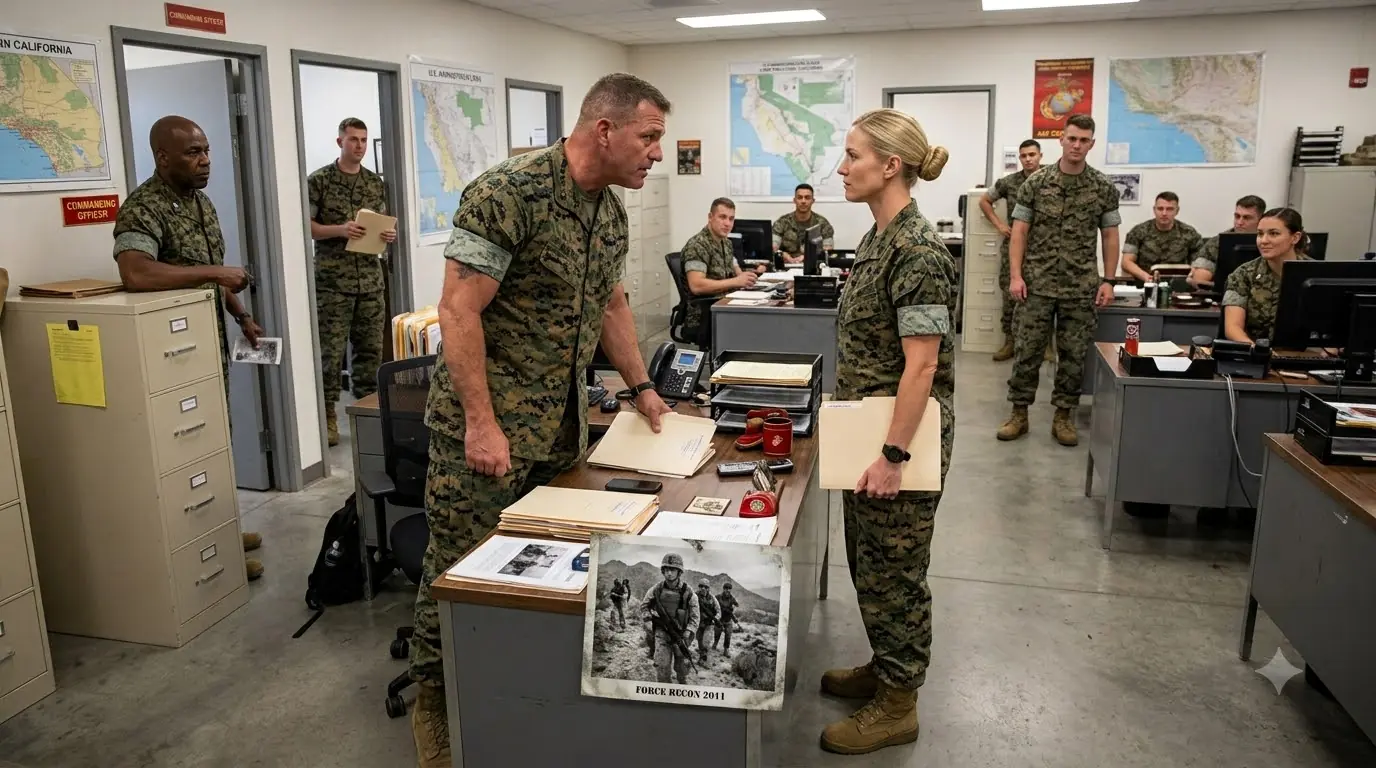
Mark had worked there for seventeen years.
He was forty-five, broad-shouldered, physically imposing, and proud of the fact that almost everyone in the building knew his name.
He supervised twenty-six field specialists.
He had responded to refinery fires, collapsed buildings, transportation disasters, chemical leaks, and several violent standoffs where his team’s responsibility had been evacuation rather than confrontation.
Mark liked pressure.
More accurately, he liked being seen performing well under pressure.
The distinction was subtle enough that he had never bothered examining it.
At 7:40 that Monday morning, he entered the operations bay carrying coffee and found a woman standing near his desk.
She was thirty-six.
Blonde hair tied neatly behind her head.
Dark navy slacks.
White blouse.
Gray field jacket.
No jewelry except a simple watch.
No expensive briefcase.
No entourage.
She was studying the large regional response map mounted on the wall.
Mark looked toward his deputy supervisor, Jason Cole.
“Who’s that?”
Jason lowered his voice.
“Headquarters.”
Mark sighed.
“What now?”
“Evaluation.”
“Of what?”
“Us.”
Mark looked at the woman again.
Claire turned.
“Mr. Dalton?”
Mark walked over.
“You found him.”
She extended a hand.
“Claire Bennett.”
Mark shook it once.
“Washington?”
“Currently.”
That one word bothered him.
Currently.
People from headquarters usually introduced themselves with titles.
Program analyst.
Policy director.
Compliance specialist.
Deputy administrator.
Claire had simply said her name.
Mark looked at the folder tucked beneath her arm.
“You the evaluator?”
“One of them.”
“One?”
“Regional Director Hayes will join us later.”
Mark nodded slowly.
Robert Hayes.
That made the visit slightly more serious.
Hayes did not leave the regional headquarters often.
Mark glanced toward Jason again.
Jason’s expression said the same thing.
This was not a routine inspection.
Still, Mark smiled.
“Well, Ms. Bennett, welcome to the glamorous world of people who actually leave the office.”
Jason looked down immediately.
Claire did not react.
“I’ve been told your team begins the readiness exercise at eight.”
“We do.”
“I’d like to observe from the operations floor.”
Mark took a sip of coffee.
“You may want the conference room.”
“Why?”
“Better view.”
“I prefer the floor.”
“That can get busy.”
“I’m comfortable with busy.”
Mark smiled faintly.
He had heard confidence like that before from headquarters visitors.
They arrived with clipboards.
Used phrases like procedure alignment and decision architecture.
Then flinched when alarms began.
Mark had built a private sport out of seeing how long it took them to retreat behind glass.
“Whatever you like.”
he said.
Claire nodded.
“Thank you.”
Then she moved toward a side desk.
Mark watched her.
Jason waited until she was several yards away.
“You're starting early.”
“What?”
Jason whispered:
“You know what.”
Mark shrugged.
“If headquarters sends people to judge field operations, they should understand field operations.”
“You know nothing about her.”
“I know Washington.”
“That is not a person.”
Mark looked toward Claire again.
She had opened her folder.
He could see the top page.
Personnel summary.
Mark recognized the format.
That interested him.
“Did they send her bio?”
Jason nodded toward Mark’s desk.
“Packet came this morning.”
Mark walked over.
A thin file sat beside his keyboard.
He opened it.
BENNETT, CLAIRE E.
Age thirty-six.
Current assignment:
Senior Program Counsel, National Crisis Oversight Office.
Previous:
Deputy Director, Operational Standards Review.
Before that:
Special Counsel, Emergency Programs Coordination.
Before that:
Several years listed only as:
Federal Service — Restricted Assignment History.
Mark frowned.
“Lawyer.”
Jason looked over.
“What?”
“She’s a lawyer.”
“Apparently.”
Mark laughed.
“Of course.”
Claire heard him.
She turned.
Mark did not lower his voice.
“Nothing personal.”
Claire asked:
“What isn't personal?”
Mark lifted the file.
“Headquarters sent an attorney to grade emergency responders.”
The room quieted slightly.
Several team members were listening now.
Claire looked at the document.
“That's one of my current qualifications.”
“Current?”
“Yes.”
Mark flipped another page.
“Policy.”
“Compliance.”
“Standards.”
“Coordination.”
He looked at her.
“A lot of offices.”
Claire said:
“A federal agency has offices.”
A few people smiled.
Mark did not.
“You ever worked an actual incident?”
Claire paused.
“Yes.”
Mark tapped the file.
“Doesn't say much about it.”
“No.”
“Why?”
“Because that page isn't complete.”
“Convenient.”
Jason shifted uncomfortably.
Claire remained calm.
“It isn't intended to be convenient.”
Mark smiled.
“You know what I think?”
Claire closed her folder.
“No.”
“I think people who haven't done our jobs love explaining our jobs.”
Silence spread across the operations bay.
Jason tried:
“Mark.”
But Mark continued.
“I've seen this cycle for years.”
“Someone sits behind a desk.”
“Writes procedures.”
“Then arrives here and tells people who actually deal with emergencies that our reports should've used different language.”
Claire watched him.
No visible anger.
That annoyed Mark more.
He wanted reaction.
Defensiveness.
Embarrassment.
Something that proved he had exposed her.
Instead she asked:
“Are you finished?”
A couple team members looked away.
Mark laughed.
“Oh, I like that.”
Claire said nothing.
Mark took another sip of coffee.
Then:
“I’m trying to save us both time.”
“How?”
“If the sirens start today, stay out of the way.”
Claire’s eyes narrowed slightly.
That was the first reaction.
Mark noticed.
He continued.
“You can observe.”
“You can take notes.”
“You can write whatever Washington needs.”
“But don't mistake a resume full of conference rooms for field judgment.”
Jason spoke more firmly.
“Mark.”
Claire raised one hand.
“It’s fine.”
Mark smiled.
“See?”
“She's reasonable.”
Claire stepped toward him.
Not aggressively.
Just enough to make their conversation private despite everyone watching.
“You seem very confident about my background.”
“I read the file.”
“You read the visible page.”
“That is usually how files work.”
Claire looked at the folder in his hand.
“You might want to finish reading before you decide who I am.”
Mark spread his arms.
“Then enlighten me.”
Claire looked directly at him.
“No.”
That stopped him.
“No?”
“No.”
“Why?”
“Because you were given the information you're authorized to have.”
The operations bay became completely silent.
Mark felt something shift.
He covered it with laughter.
“Restricted records?”
Claire returned to her desk.
“Apparently.”
Mark called after her:
“Must've been some impressive paperwork.”
Claire did not answer.
Jason leaned toward Mark.
“You need to stop.”
Mark looked at him.
“Why?”
“Because you're enjoying this.”
“She's evaluating me.”
“Exactly.”
Mark smiled.
“Then she should see honesty.”
Jason shook his head.
“That's not honesty.”
“What is it?”
“Showing off.”
Mark stared.
Jason walked away before the argument could continue.