The letter did not ask. It informed. It lay on the breakfast table of the Dower House at Marshwend, folded once, sealed in the gray wax the family man of business had used for thirty years. The Dowager Duchess of Chasewood read it. Then she read it again.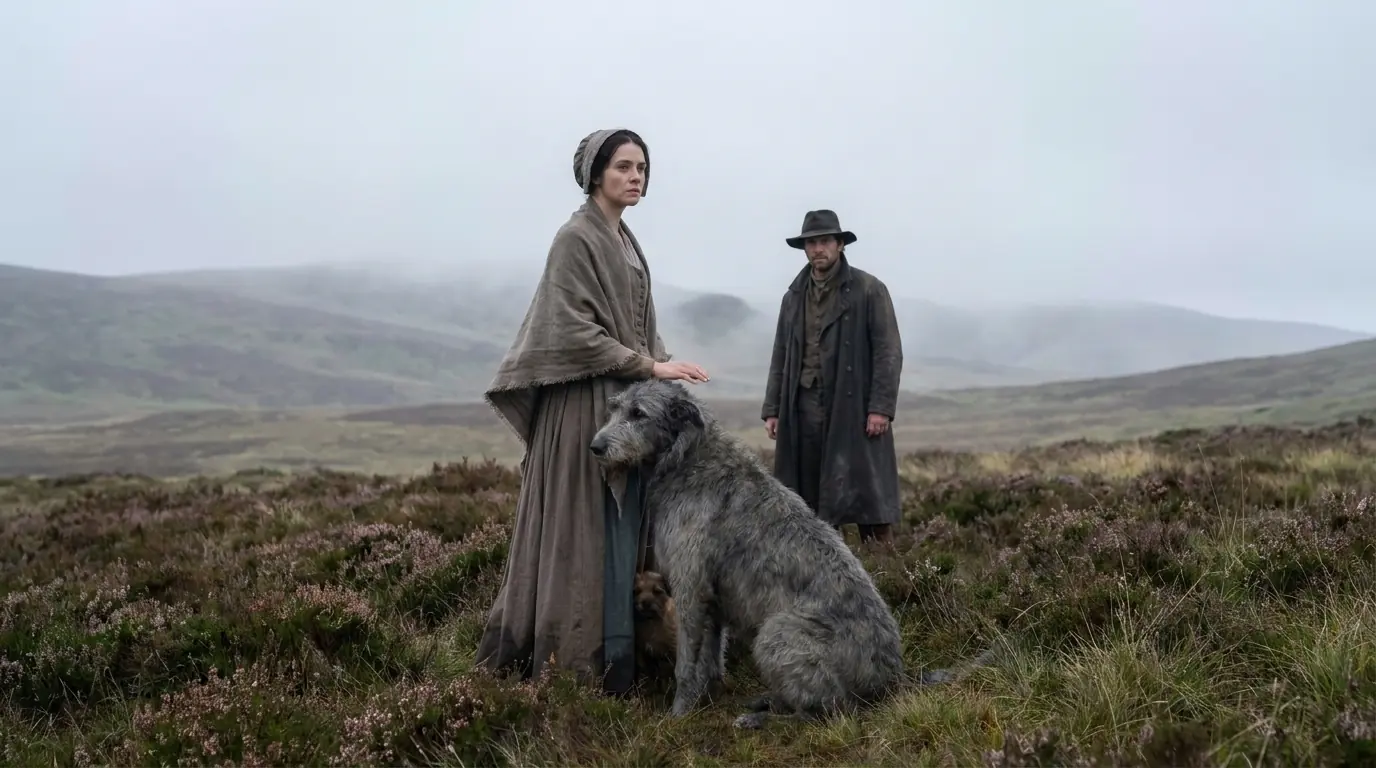
She set it down beside her cooling tea, and for a long time she said nothing at all. Edith Harton waited. She had learned to wait. A companion did not ask what was in a letter. She poured and she buttered the toast that would not be eaten.
And she kept her eyes on the window where the moor began. My grandson, Ursula said at last, must marry. Yes, Your Grace. By his 32nd birthday, which falls in the spring, the old woman's mouth thinned. Or Marshwend passes to a cousin he has met perhaps three times, a cousin who would drain the marsh for pasture and turn out every soul on it.
That is what my late son wrote into his will. He thought it would make Augustus sensible. It had only made him harder. Edith said nothing. There was nothing there a rector's orphaned daughter could usefully say about the marriages of dukes, but she understood the shape of it.
A man with a knife held to his own house a date on a page and a wife required before it like a signature at the foot of a deed. She thought it a cold way to arrange a life. She did not say so. He comes here within the fortnight. Ursula went on to look at the estate before he decides anything.
Quietly. He does not wish to be announced. She looked at Edith then sharp under her lace cap. You will keep that to yourself. Of course.
Good girl. The dowager picked up her tea again. Now the hens have got into the herb bed. Pip is barking at them from the wrong side of the glass. Take him out before he wakes the whole parish.
So it was that Edith Harton went on to the moor that morning with a small dog and no idea at all that her life had just been set in motion. She was three-and-twenty, and the world had never once looked at her twice. There were reasons, or so the world would have told you. She was too tall for the fashion. Her gowns were three seasons old, cut down from her late mother's.
Her hair was dark and would not curl. Her eyes were a plain hazel that no poet had ever thought to praise. She had a straight back, a level look, and a way of saying exactly what a thing was. Men found that unrestful. Women found it dull.
Her father had been the Reverend Harton, rector of the Little Moor Parish. He was a scholar who kept his own accounts and taught his daughter Latin and the price of oats in the same afternoon. He had died four winters past. There had been no money.
There had been a great many books, a small dog, and a name that meant nothing beyond the moor. The Dowager Duchess had taken her as a companion. It was done partly out of kindness, partly out of loneliness. It was done partly, too, because Edith could read aloud in the failing evenings without stumbling, and could add a column of figures faster than the steward. It was a good place.
Edith knew what she owed to it. She did not intend to want anything more than it. Wanting more had never once been rewarded in her. Her days at the Dower House had a settled and quiet shape, and she had made her peace with the smallness of it. She rose before the maids and saw that the fires were laid and the milk brought in.
She read the newspaper aloud to the dowager and the sermons on a Sunday, and the long French memoirs the old woman loved and pretended to despise. She kept the small accounts, wrote the letters of business in her clear, steady hand, and settled the disputes below stairs before they reached her grace's ears. She was, in short, the hinge on which the whole quiet household turned, and no one thought to notice it, least of all herself. The village knew her as the rector's girl, and was kind to her in the careless way of people who have never once had to wonder what she thought of them. The butcher kept back the best of the mutton for the Dower House because she never haggled and always paid on the day.
The old women at the well nodded to her and forgot her before she had turned the corner. It was not unkindness. It was only that a plain woman who asks for nothing is very easy to overlook, and Edith had long ago stopped expecting otherwise. She had her books, her dog, her moor, and her small useful place in the world. She told herself it was enough, and on most days she believed it.
At night, when the house was dark, and the dowager long a bed, she read her father's books by a single candle. He had left her his Virgil and his Horace and a shelf of grave gray volumes on the drainage of wet land which he had studied for the good of his poor parish. She read them all. She read the drainage as readily as the poetry because her father had taught her that a mind is a mind and that there is no shame in a woman knowing how the water moves under a field. It was a strange education for a companion.
She did not know yet how strangely it would serve her. The dog was called Pip. He was small and brown and entirely convinced of his own consequence. He had been her mother's and then her father's, and now he was hers. He barked at things far larger than himself, because no one had ever told him he was little.
Edith loved him past all sense. He was, if she was honest, the only creature on earth who thought her the most important person in it. The moor that morning was doing what the moor did best. It went on and on, brown and gray and wet gold where the sun struck the dead bracken. It rolled to a rim of hills that held the whole world in.
The wind came steady off the west and smelled of peat and rain to come. Edith walked into it with her chin down, her old shawl pulled close. Pip ran ahead. For a little while she was as free as she ever was. She had loved them more since she was a very small child, in the particular way that lonely people come to love a great empty place that asks nothing of them, and gives back only weather and light.
It did not care that she was plain or poor, or that no one at any assembly had ever crossed a room to speak to her. There was a deep and settling comfort in being so entirely unregarded by so vast a thing. Out here she was not the rector's leftover daughter or the dowager's useful shadow. She was only a woman walking small under a wide gray sky. And that was the truest freedom she knew.
She would have told you that morning that she wanted nothing more from life than to go on walking it in peace until she was as old as her grace. And she would have believed every word. She thought as she walked about the letter, not about the Duke. The Duke was nothing to her. She thought about the date at the foot of it.
She thought how strange it was that a man could own so much and still be told by a dead father's hand exactly when and how to give his life away. She had thought her own poverty a kind of cage. Perhaps a title was only a larger one with the bars set further out. Then Pip stopped. He went stiff and he began to bark as though the end of days had come up out of the heather.
And Pip, brave idiot Pip, planted his four small feet and told it exactly what he thought of it. In a voice that carried half a mile. Pip. Edith's own voice came out thin. Pip, come here.
Come here now. He did not. Of course he did not. The wolfhound came on. It slowed.
It lowered its great head to the level of the small, furious animal. Edith could not breathe. She did the only thing she could think of. She stepped forward and put herself between them. "That will do, " she said to the enormous dog.
She used the voice she kept for the dowager's temper, the steward's excuses, and the hens in the herb bed. "Firm, not afraid, or not showing it. That will do. He's very small and very foolish, and he means none of it. Go home. " The wolfhound looked at her, and then it did a thing that stopped her heart for a different reason.
It sat. It folded its long, gray legs, and sat down in the wet heather at her feet. It leaned the whole vast, warm weight of its head against her knee, and it sighed. Pip stopped barking out of sheer astonishment. Bracken.
The voice came from up the slope. A man's voice, low, not raised, with something in it that expected to be obeyed. Edith looked up. He stood perhaps a dozen yards off, and she had not heard him at all. A tall man in a plain dark coat gone gray at the seams.
Good boots, much worn. A hat pulled low. Not young, one-and-thirty, perhaps, though something about the eyes made him older. Hazel eyes she saw when he came nearer. Dark hair with the first frost of gray already at the temples.
On a younger man it would have looked like worry. On him it looked only like weather. "Bracken, " he said again. "Come away. " The wolfhound did not come away.
It leaned harder against Edith's knee and looked at the man with a patient dignity, as if to say the matter was settled, and there was no more to discuss. The man stopped a few feet off. He looked at the dog. He looked at Edith, and something moved at the corner of his mouth. Not a smile, the almost of one.
He does not do that, the man said. Do what? That? He nodded at the gray head against her knee. He does not sit for anyone.
He barely sits for me. Perhaps he is tired. Perhaps. But he was still looking at her in a way she did not know how to hold. She looked down at the dog instead.
She laid her ungloved hand on the rough gray head, and the tail thumped once against the heather. "Yours? " she asked to say something. "Mine? He's very large. He is a pause.
Yours, a glance at Pip, who had recovered his outrage and was now conducting it from the safety of Edith's skirts. “He believes he is very large,” Edith said, “which comes to much the same thing.” For one unguarded instant, the almost-smile became an actual one. It changed his whole face.
Then it was gone, packed away like a thing not to be wasted. He touched his hat. You have the advantage of me, he said. I am new to these parts. Come to look over the estate.
My name is Chase. She did not think anything of the plainness of it. Half the men of business in the north were called things like Chase. She dipped the small curtsy that cost her nothing. Edith Harton, I keep company for the Dowager Duchess at the Dower House.
She nodded down the moor to where the low gray roof showed among the stunted thorns. If you are come about the estate, sir, you will find it in a sorry way. I will not pretend otherwise. You would see it in an hour for yourself. He went very still.
Would I? He said, "You would. The marsh drains have been broken these three years. The water has come up into the low fields, and the low fields were the best of them. Four cottages stand empty at Sedge Row, for no man will keep a family where the damp rots the walls by Christmas.
The Home Farm turns a loss. The steward is honest, but old and tired. There has been no master here to tell him it matters. She heard herself and stopped. I beg your pardon.
It is not my place to say. No, he said slowly. It is not. But he did not say it as a reproof. He said it as a man turning a stone over to see what lived beneath.
You know the estate. I know the moor. I have walked it all my life. I keep the Dower House's small accounts. I hear things and I have eyes, she lifted her chin.
It is a good place, Mr. Chase. Or it was Or it could be. It only wants someone to care whether it lives. The wind moved between them.
The wolfhound sighed against her knee. The stranger looked at her for a long moment with those hazel eyes, and Edith had the sudden odd sensation of being seen. Actually seen the whole of her, the plainness, the straightness, the temper and all, for perhaps the first time in her life. It was not comfortable. It was not comfortable at all.
I hope to God you are right that it can live, " he said quietly. "Good day, Miss Harton, " he whistled low. And this time the wolfhound rose, reluctant, and went to him. It looked back twice at Edith as it went. She watched them go up over the rim of the moor until they were only two dark shapes against the gray sky, one tall and one taller.
Then she gathered up her indignant lap dog, and walked home. She did not tell the dowager she had met the new man of business, because there was nothing to tell. She could not have said then why her heart was beating so. It was only a stranger on a moor, a man of business come to count the ruin and go away again. She had spoken to him as she spoke to everyone plainly.
And he had listened as though her plainness were a rare and welcome thing, and that was all. Men did not remember a tall, dull woman past the turning of the path. She had learned that lesson too many times to unlearn it now for the sake of one gray morning and a pair of hazel eyes. That was the trouble with being always overlooked. You forgot what it felt like to be looked at.
And when at last a pair of hazel eyes rested on you as though you were worth the resting, your foolish heart mistook it for something it could never be. She told herself so firmly all the way home. She did not quite believe herself. She noticed that she did not and was cross about it and walked faster. The next morning, the dowager sent her into the village with a basket of physic for a sick tenant and a list of small errands.
It was market day, and the little square was full of talk, and the talk was all of one thing. The great house was to have its master again at last. The Duke of Chasewood was coming north, and by the spring he must take a wife, or lose the whole of it. So the will ran, and the county had chewed the story to rags already. They do say he's a cold one, said the draper's wife, measuring out thread.
Ten years in London, and never a thought for his own people. Left the marsh to drown, and the cottages to rot. He'll marry some London beauty for her fortune. Mark me, said another. And she'll never set her satin shoe on the moor above the Wolds, and the cousin will have it in the end, and we'll all be turned off for sheep. " Edith paid for her thread, and said nothing for a while.
Then she found she could not hold her tongue, which was ever her failing. "You, none of you know the man, " she said quite mildly. "And neither do I. But I know the land, and I will tell you that the marsh can be brought back, whoever holds it, if only someone with sense and a little heart takes the trouble. It is not too late for Sedge Row.
It is not too late for any of it. I should be slower to bury a place that is only sleeping. They looked at her a little startled, the rector's plain, quiet girl speaking up so warm. Then they laughed kindly and let it go, because what could she know of dukes and drainage. Edith took up her basket and went home across the moor, and did not tell them she had only the morning before met the cold London Duke himself in a coat gone gray at the seams.
She did not tell them, because she did not herself yet understand it. She only knew that a stranger had looked at her as though she mattered and had knelt in the mud of a drain, like a man who meant to do something. The whole hard story the village told did not fit the man she had met at all. She thought about it all the long walk home. She was still thinking about it when the roof of the dower house came in sight, and she made herself stop because it would not do.
A companion did not spend her days thinking about a man of business, whatever his eyes were like. That evening the dowager was in a talkative humor. She kept Edith long over the cards and spoke a great deal of nothing in the sly way that Edith had long since learned to read. It meant the old woman was thinking of something else entirely. At last she laid down a losing hand with great satisfaction.
Her grandson, she remarked, would be at the great house within the week. The county would no doubt make a circus of it. She herself intended to hold a dinner and see for herself what manner of man ten years in London had made of the boy she remembered climbing the limes. "You will help me with it, of course, " the dowager said, watching her over the fanned cards. You have a genius for making a poor table look like a rich one, which is a talent I have been driven to admire in my old age.
And you may look at him yourself and tell me plainly what you think, for I trust your eye above any flatterers in the three Ridings. I am sure his grace will be everything the county hopes, Edith said, gathering the cards, and nothing that it fears. Are you? The old woman's eyes were very bright. How wise you are for a girl who has never so much as laid eyes on the man.
She said no more. Edith thought no more of it. Neither of them named the tall stranger in the gray seemed coat because the one did not know and the other was far too clever to say. It was a small, quiet evening, like a thousand others in that house. Edith would remember it afterward, as the last of the old life, the last before everything she had made her peace with began very quietly to come undone.
The great house at Marshwend was a beautiful thing dying by inches. Edith went up to it two days later at the Dowager's command to help the housekeeper make an inventory. Augustus will want to know what is left.
Ursula had said, "What has been sold and what the damp has taken. Mrs. Selby cannot read her own writing. The steward cannot climb the stairs. You will go.
You have a good hand and a hard head. Take the small dog. He amuses me less than he thinks. So Edith went up the long neglected drive under limes that had not been pruned in a decade and saw the house whole for the first time in years. It had grown from the land as the great houses of the north did.
Greystone quarried from the moor itself, long and low and strong, with tall windows that took the western light. Once it had been kept like a jewel, now the gravel was green with weed. Shutters hung crooked. A whole wing or stood closed and blind, its rooms sheeted and cold. The fountain in the forcourt held only black leaves and rain.
And yet, standing in the empty hall with the light falling in long bars across a floor no one had polished in a year, Edith felt the house the way she felt the moor. It was holding its breath. It had been holding it a long time. It was waiting for someone to come home. She set to work.
Mrs. Selby the housekeeper was glad past speech to have another pair of hands and a person who did not flinch from a ledger. Together they went room by room through the living part of the house. They counted linen gone gray with storage. They counted china chipped and unreplaced.
They counted the silver sold off, its baize-lined slots left empty like drawn teeth. Edith wrote it all down in her small straight hand. She did not sigh over it. She only counted and named and moved on. And Mr.
Chase was there. He came and went without ceremony, walking the estate with the old steward and riding out to the flooded fields. He knelt in the mud by the broken drains with his coat off and his sleeves turned back which no man of business Edith had ever heard of would do. The wolfhound bracken went everywhere at his heel, a gray shadow. Every servant on the place gave the great dog a wide, wary berth, except Edith.
Bracken had appointed himself hers. He would leave the man's side to come and lie across her feet while she worked. He groaned like a fallen wardrobe and would not be moved. Pip, after two days of fury, had decided the wolfhound was an idiot beneath his notice, and now slept curled between the great gray paws as though he owned them. "It was, Mrs.
Selby said, the most ridiculous thing she had seen in 40 years of service. That hound, she told Edith low over the linen press, put a keeper in his bed for a week last month for coming too close to the master's horse. Snapped a groom's sleeve clean off, but he lies down for you like a lamb. I never saw the like. Dogs know their friends, Edith said, and thought no more of it.
She should have thought more of it. The dog knew what she did not. They fell into the habit of speaking, she and Mr. Chase. It began with the estate because the estate was the only thing they had.
It began there, too, because she alone of everyone at Marshwend would tell him the truth of it. "The Loach family at Sedge Row, " she said one gray afternoon, meeting him in the yard. "You mean to turn them out? The steward's list has their cottage marked to be pulled down. The cottage is falling down on its own.
Then build them another. They have been on this land four generations. The man loach knows every drain and sluice on the low ground. He knows them better than any surveyor you could send for. Turn him out and you lose the one head that remembers how the water used to be managed before it broke.
She folded her arms. And there is a child, Suki. She is six. She brings the eggs up to the Der house on a Friday. She calls me the tall lady, and she is afraid of nothing.
If you pull her home down over her head to save a builder's bill, I shall think very poorly of you, Mr. Chase. I shall not trouble to hide it. " He looked at her for a moment, the almost smile again at the very corner. "You would not, " he agreed. "Hide it. " "No, nobody speaks to me as you do, " Miss Harton.
Then somebody should have long since, she said. She went in out of the rain. She did not see him stand a while longer in the yard looking after her, the wolf hound leaning against his leg. Little Suki Loach came the next Friday with the eggs. Edith took her into the great kitchen out of the wet.
She gave the child bread and honey. Suki sat swinging her legs and told a long, serious story about a frog she had known and lost. Mr. Chase came through on his way from the cellars and stopped in the doorway unseen. He watched the tall plain woman kneel to wipe honey from a tenant child's chin.
He watched her take the tale of the frog with perfect gravity as though it were a matter of state. He watched the wolfhound that would let no one near it lay its head in the little girl's lap. It did so because Edith's hand was on its back, and Edith had made it plain the child was safe. He did not come in. He went away very quietly, but something in his face had changed, and it did not change back for a long time.
That evening, Edith learned the truth of him. She did not learn it gently. The dowager kept a dinner. It was the first the house had seen in three years, and it was got up in a hurry. Word had come that guests were arriving from London.
Expected guests, the dowager said, with a look Edith could not read. Edith was not a guest. Edith was there to see the plate laid right, the sad old rooms lit, and to keep out of the way. She wore her third best gown, which was her only gown that was not for church. She stood in the shadow by the service door as the carriages came up the drive.
Two people came into the hall out of the cold. A gentleman, florid and hearty, whom Edith did not know, and a lady. The lady was the most beautiful woman Edith had ever seen, golden and small, and finished like a piece of the London jeweler's art. She wore a traveling costume, the color of a dove's breast that had cost, Edith thought numbly. More than the whole broken estate would clear in a year.
She came in on a wave of scent and warmth and light. She looked about the shabby hall with a smile that took in every fault and forgave none of them. "Marguerite, " said the dowager from the stairs in a voice with no warmth in it at all. "You are very prompt, dearest Duchess. " The beautiful woman glided forward.
"How could I be otherwise? When dear Augustus wrote that he was here at last, I flew. I quite flew. And then Mr. Chase came down the stairs, except that he was not dressed as Mr.
Chase, who was dressed as Edith had never seen him. Black coat cut close, linen white as frost, everything plain, and everything perfect, the plainness of a man who has no need to prove anything to anyone. He came down the stairs of that dying house as though he had been born on them because he had "Your grace, " said the florid gentleman, bowing. "Chasewood, " said the beautiful woman, and put out both her gloved hands.
"Edith stood very still in the shadow by the service door. The Duke of Chasewood took the beautiful woman's hands, because there was nothing else to be done in a full hall. And over the golden head for one instant his hazel eyes found Edith's across the room. She saw that he knew she had heard. She saw that he had not meant her to hear it.
So she saw in short everything all at once, the way one sees the whole of a country in a lightning flash then stands in the dark. Mr. Chase, come to look over the estate. She had told the Duke of Chasewood that his own house was dying. She had told him to build the loaches a cottage.
She had told him that nobody had ever spoken to him as they should. And all the while he had let her believe he was a clerk. Edith set down the candle branch she was holding very carefully so that it did not shake. She went out through the service door into the cold passage. She stood there with her back against the stone until she could breathe.
She was not a woman who cried. She had learned long ago that tears were exactly what the world wanted from a plain poor girl, so that it might feel sorry and do nothing. She did not cry now, but her hands were cold, and something under her ribs had a crack in it that had not been there an hour before, and she was honest enough with herself, standing in that dark passage to know what it was. She had let herself be seen, and she had been a fool for it. He found her the next morning on the moor.
She had gone out early before the guests were down because she could not sit in the house. Pip ran ahead. The mist lay low on the heather. The whole world was the color of a pearl. She heard the wolfhound before she saw either of them, the soft huff of the great dog.
Then Bracken came out of the mist and pushed his head under her hand. Behind him came the Duke. Miss Harton, Your Grace, she said it flatly, and had the small, cold satisfaction of seeing it land. I deserve that. You deserve a good deal more than that, I should think.
But it is not my place to give it. Excuse me. His Grace's companion should not keep his Grace's grandmother waiting. Edith, he said her name once, low, and it stopped her as surely as a hand. He had no right to it.
He knew he had no right to it. That was why he used it. I did not set out to deceive you. I let a groom's mistake stand. He took me for the surveyor I had written to engage, and I did not correct him.
Then you came onto this moor. You told me the truth about my own land in the space of 5 minutes, which no living soul had done in ten years, and I found I could not bear to stop you by telling you my name. Why not? She turned on him. The mist beaded on her lashes.
What did you think I would do, Your Grace, if I knew you were a duke? Curtsy lower lie to you prettier? You had all of London to lie to you, prettier. You have a golden lady in your grandmother's house this morning who will lie to you until the day you die and call it love. Yes, he said, "I know. " That stopped her.
"She is Marguerite Vanshaw, " he went on in the spare level voice she now understood she had never once heard him use as a lie. Her family and mine have wanted the match these five years. She is beautiful and clever. She has never in her life told me a single true thing. She does not want me.
She wants Chasewood, the house, the name, the £4,000 a year that the marsh out there was meant to make and no longer does. He looked out over the drowned fields. And I must marry someone by the spring or lose all of it to a cousin who will grind this place to powder. You know that. My grandmother told you the day the letter came.
Yes. So he turned back to her. I came here as no one to see it truly, to see who these people are that I hold in my hand before I sell myself to keep them. And the first person I met told me the plain truth. She put herself between my monstrous dog and her ridiculous small one without a thought for her own skin.
The almost smile, but there was no lightness in it. Now, I did not lie to you because I thought little of you, Miss Harton. I lied to you because you were the only true thing I had found in years. I was a coward, and I wanted a few more days of being spoken to as a man before I went back to being a title. That was wrong.
I'm sorry for it. I am more sorry than I have words for. The wolfhound sat down between them and leaned against Edith's knee. She looked at the great gray head under her hand. She looked at the drowned fields.
She thought about being a fool and about being seen and about how the two had turned out to be the same thing. "Very well, " she said at last quietly, "you are forgiven the lie. You did not owe a companion the truth of your name. That is fair. But I will tell you this once, Your Grace, and then we need never speak of it.
Do not marry that woman, not because she does not love you. Half the marriages in England are made on less. Marry her and you will keep your name and lose the only thing your name was ever for. She swept her hand at the moor, the house, the empty cottages, the child's frog, the old steward's tired honesty. Because she does not love this, she will let it die to buy her drawing room.
He said nothing for a long moment. And if there is no one else, he said, before the spring, then that is a hard thing, said Edith. And I am sorry for it. But it is not my hard thing to solve. She whistled to Pip.
She walked home through the mist. She did not look back because she did not trust herself to. Behind her, the Duke of Chasewood stood a long time in the drowned morning, his hand on his wolfhound's head. He thought about a woman who would not lie to him, even to comfort him. And he understood with a plainness that frightened him exactly what had happened to his heart.
The days that followed were the strangest of Edith's life. She could not leave. She was the dowager's companion, and the dowager was not fool enough to release her. Ursula had seen more from the top of the stairs on the night of the dinner than either of them guessed. So Edith stayed.
She counted linen, added figures, and walked the moor. And every day she was in the same house as a man she must not think of, and a woman who watched her with golden narrowed eyes, for Marguerite Fanshaw had noticed. Marguerite Fanshaw noticed everything. She began kindly, as her kind always did. She sought Edith out.
She admired her needle work. She asked her advice on the wretched country roads. She called her, "Dear Miss Harton, " in a voice like warm honey. "And under the honey, so light you might have thought you imagined it. " The small blades went in.
"How clever you are with the accounts, " she said, watching Edith at the ledger. "I could never. But then I have never had the need. Thank heaven. How fortunate that you have your little skills to fall back upon situated as you are.
A woman quite alone in the world must make herself useful, mustn't she? Or what would become of her? She must, Edith agreed, and went on adding. And how devoted the servants are to you and the animals, even that dreadful hound. Marguerite's smile did not move.
One does hear that a certain kind of woman has a gift for making herself indispensable to a household. It is a gift, I confess, I have never troubled to learn. But then I have never needed a household to take me in out of charity. She rose in a drift of scent. Do go on with your sums, dear.
You do them so wonderfully fast. Edith went on with her sums. Her pen did not falter, but she understood the shape of the thing now, as she had understood the shape of the letter on the first morning. Marguerite Fanshaw had seen the way the Duke's eyes went to the plain companion, and Marguerite Fanshaw, who had a ruined marsh to buy, was not going to permit it. The dowager saw it, too.
Ursula saw everything from the top of her stairs. That woman, she said to Edith one evening, laying down her cards, is frightened. She does not seem frightened, Your Grace. The dangerous ones never do. The old woman's rings clicked on the table.
I have known Marguerite Fanshaw since she was in short skirts. Her father gamed away three estates and a good name. There is nothing left but the house on the square and the credit of it. The credit runs out at midsummer. She must marry money by the spring or she and her mother go to some cheap town abroad to hide from the tradesmen.
She has staked everything on my grandson. Everything. Ursula picked up her cards again. A cornered creature is not less dangerous for being pitiable, Edith. Remember that.
It is more. Edith remembered it. She had cause to before the end, because through all of it, the honeyed blades, the watching eyes, the closing spring, the other thing went on, the slow, quiet, impossible thing. The Duke did not court her. He was far too careful, far too honorable, far too aware of the golden trap set in his own drawing room.
To do anything so ruinous to a poor companion's name was unthinkable. But the estate went on needing saving, and Edith was the one who knew it. So they worked. They rode out to the broken drains together with the old steward and the tenant loach. Edith held the plans while the men argued.
It was Edith who saw the thing at last. The great sluice at the low end had been built wrong forty years before. It had been fighting the water ever since. They walked the empty cottages, and she told him which could be saved, and which were past it. They sat over the ledgers in the cold estate office until the candles guttered.
The wolfhound across both their feet. And slowly, room by room, field by field, they made a plan to bring the drowned land back to life. There was one evening she would remember all her life, though nothing happened in it that the world would have thought worth remembering. The rain was on the windows, and the estate office was cold, and they had been 3 hours over the low ground plans, and the old steward had long since gone to his bed. She spread her father's gray drainage volume open on the table, and showed him the diagram of a working sluice.
She traced with her finger how the water was meant to fall away by its own weight. If only the gates were true. My father taught me this, she said. He held a poor living, and half his parish was wet land, and he could not bear to preach patience to men whose fields were drowning when the fault was only a broken gate. So he learned it himself out of these books, and he mended what he could with his own two hands.
He used to say that a clergyman who could not read a drainage plan was of very little use in the fen country. The Duke was quiet a moment, and he taught it to his daughter. He taught everything to his daughter. There was no one else to teach, and he thought a mind ought not to go to waste for the accident of being a woman's. She closed the book.
I have never had the smallest use for the accomplishments a lady is meant to have. I cannot paint a screen or play above two tunes. But I can tell you within a foot where the water will stand on your low ground after a week of rain, which is worth rather more this spring than a painted screen. That brought the almost smile to the very corner of his mouth. "It is worth a great deal more than a painted screen, " he said.
"I begin to think it is worth more than most of what I own. " He looked at her across the guttering light, and for a moment neither of them spoke, and the rain filled the silence, and the great dog sighed on their feet. Then he looked down at the plans again, because he was an honorable man in an impossible position. There were some things a duke bound by his father's will could not say to his grandmother's companion, however much he wished to. Edith gathered her father's book to her breast and rose and wished him a good night and went out into the rain to walk back to the Dower House. She did not let herself think about the way he had looked at her.
She thought about it the whole way home. In the doing of it, he thawed. She saw it happen the way you see spring come to the moor. Not all at once, but a softening, a green edge on the gray. A day when you notice the birds are back and cannot say when they returned.
He began to talk. Not much. He was a spare man and always would be. But he told her one evening over the ruined accounts why the marsh had been let go. My father loved it, he said low, turning a dry pen in his fingers.
He drained it and made it the best land in the county. When he died, I could not set foot on it. I let London swallow me for years rather than come north. Rather than stand in the fields he made, and feel him gone, he set the pen down. I told myself I was too busy.
I told myself the steward could manage. I let four families rot in the damp because I could not bear to be sad in a beautiful place. A pause. You said that first morning that the estate wanted someone to care whether it lived. You are speaking of the drains, but you might have been speaking of me.
I have not cared whether much of anything lived, Miss Harton. Not for a very long time. Edith was quiet. Then she said, "And now? " He held her eyes in the low red glow of the dying fire and did not look away this time. Bracken stirred between them and laid his heavy head across her shoe.
Somewhere in the house the golden woman was waiting. "Now, " said the Duke of Chasewood, "I find I care a great deal. " which is the most inconvenient thing that has happened to me in ten years. He rose before she could answer because they both knew what could not be said.
He called his dog. The dog would not come. Bracken lay across Edith's feet and looked at his master with sorrowful, obstinate love. In the end, the Duke went out of the room alone and left the wolfhound where it had chosen to be. Edith sat a long time after he had gone, the great gray head heavy on her feet.
She understood that she was in very serious trouble. She understood, too, that there was nothing she could do about it that would not end in her own ruin. A duke did not marry his grandmother's companion. A duke under a will's deadline married money or beauty or blood. She had none of the three.
She had a plain face and a straight back and a small dog and a way of telling the truth. None of it was worth an acre of drowned marsh in the eyes of the world. So she resolved to do the only decent thing. She would help him save the estate. The estate deserved saving.
The loaches deserved their cottage. And then when the plans were drawn and the work begun, she would ask the dowager for a character and she would go somewhere south, somewhere she had never walked the moor with him. She would go before the spring, before the wedding, before she had to stand in the shadow by the service door and watch him marry Marguerite Fanshaw and smile. It was a good plan. It was a brave plan.
She got as far as telling the dowager she wished to seek another place. The old woman looked at her with shrewd eyes and said, "No. " And that was the end of that. The dowager had her reasons, and they were reasons Edith could not see, because they concerned Edith herself. From the top of her stairs and from the window of her morning room. Ursula had watched the two of them for a fortnight.
She had seen a great deal more than either of them supposed. She had seen how the cold London stranger who had come north like a man going to his own hanging unbent by inches when the plain girl was in the room. She had seen how his eyes went to the door before he knew he was watching for it. "That hound has more sense than the pair of them, " the dowager said to Mrs. Selby one afternoon, the two old women standing at the window like conspirators.
"Look, it will not leave her, and he will not leave off looking at where it lies. A dog and a duke, both undone by a rector's daughter in a made-over gown, and neither with the wit to know it. She means to go, Your Grace, said the housekeeper. Lo, she spoke of it to me. Says there is no place for her here come the spring.
She will not go, said the dowager, if I have anything to say to it. And I have a great deal to say to it. I buried a son who married for duty and was miserable to the end of his days. I will not watch his boy do the same to spite a will. " She turned from the window, her rings clicking on her stick. Say nothing to her.
She is prouder than any duchess in the land, and she would run sooner than be pied or contrived at. We must let the thing grow of itself, but we need not help her uproot it. And so, without knowing it, Edith had an ally at the top of the stairs, working quietly on her behalf against her own stubborn intention to do the noble and self-effacing thing, and disappear. It was as well that she did. For left to herself, Edith would have gone and been sensible and been wretched, and never once known what she had walked away from.
She never got the chance to go. The moor made sure of it first, and then Marguerite did. The rain came in the second week of March, and it did not stop. It came off the west in gray sheets day and night until the moor could hold no more of it. The becks rose, the half-mended sluice, torn open for the new work and not yet closed, stood helpless against the flood.
And on the third night the water came down on Sedge Row in the dark, and the Loach family and three others besides woke to find it climbing the walls of their cottages. It was Edith who knew. She had known the low ground all her life. She woke in the Dower House to the sound of the beck in spate and she was dressed and out before the dowager's maid had struck a light. She sent the stable boy running to the great house with one word flood.
And she took a lantern and went down into the dark herself. She found the loaches on their own threshold ankle deep, the children crying. Old loach trying to save what he could and cursing his slow legs. She did not waste breath. She had the plan of the low ground in her head like a map.
Not the road, she said. The road floods first at the ford. Take them up the deer's track to the high barn. It stands above the water. Go now.
I will bring the others. And they went because she said it plainly, and because she was right, and because a woman who is certain in the dark is a lamp all her own. The Duke came within the half hour on foot in his shirt sleeves, the wolfhound at his heel, and half the household behind him with ropes and lanterns. He found his companion, his grandmother's plain companion, standing knee-deep in black water at the corner of a drowning cottage, directing men like a general. The sluice gate at the low end, she called to him over the roar.
If we can drop it, we turn the worst of it into the old channel and off the cottages. But at two strong men on the winch, and the winch is underwater, and I cannot reach it. He did not ask how she knew. He had stopped asking that. He went into the black water with the tenant loach, and between them, feeling blind along the drowned frame, they found the winch and dropped the gate.
And the flood, cheated, drew off sideways into the old channel that Edith's own eye had traced weeks before on a dry plan by candlelight. The cottages held. Not a soul was lost, not a beast, but a single hen. By great dawn, the worst was passed. The tenants were dry in the high barn.
The Duke of Chasewood stood in the mud with his companion. Both of them soaked to the skin and shaking with cold. And he looked at her as though he had never in his life seen anything to equal her. "You saved them, " he said. "We saved them, and the sluice saved them.
Your father's channel saved them that he cut forty years ago, and I only read off a plan. " She pushed the wet hair from her eyes. "Do not make me a marvel, Augustus. I only knew where the water goes. Anyone who had bothered to learn the moor would have known it. No, he said they would not.
They would not have known it. And they would not have come out into the dark to stand in a flood for four tenant families who are nothing to them. Do not tell me it was only knowledge. I have known clever people all my life. I have never once known one who would do this.
She had no answer for that. So she did the sensible thing and sneezed and let him wrap his sodden coat around her, which helped neither of them, and mattered a great deal all the same. Marguerite Fanshaw had not come out into the flood. She had slept through it in a dry room, and she came down late to find the whole house talking of the plain companion who had saved Sedge Row. And that, more than anything the Duke's eyes had ever done, was what decided her.
The blow, when it came, came in the cold drawing room. It came the way such blows always come, dressed as a kindness, with the door shut. It was a wet afternoon, a fortnight before the Duke's birthday. The work on the marsh had begun again in earnest. The great wrong sluice was half rebuilt.
The loach's new cottage had its roof tree up on higher ground, and the question hung over the whole house, unspoken and enormous. Whom would he marry? And when, with the spring only a fortnight off, Marguerite sent for Edith, a footman brought the message. Miss Vanshaw would be glad of Miss Harton's opinion on a matter of the household in the small drawing room at 4. Edith went because a companion goes when she is sent for.
The small drawing room was cold. Marguerite stood by the empty grate in a gown the color of ashes of roses. She was not smiling. Edith understood at once that the honey was done. "Shut the door, " Marguerite said.
Edith shut it. "You will leave this house, " Marguerite said. "You will ask the old woman for your wages, and you will be gone within the week. I have been patient. I have watched you make cow's eyes at a duke over a ledger.
I have watched you creep about his fields. I have watched you set his own servants, his own hound, his own grandmother against me. I have been patient. I am done. You will go.
I keep company for her grace, Edith said quite steadily. Not for you, Miss Fanshaw. I go when she releases me. You go, said Marguerite, or I ruin you. The word sat in the cold room.
You are three-and-twenty. You have not a penny and not a friend. Marguerite went on now. Her voice shook. Now she was white to the lips.
It would take me one letter. One, a word in the right ear that the Duke of Chasewood keeps his poor companion for reasons that are not the account books, that she is seen on the moor with him at dawn, that the dowager shelters a little schemer who has got above herself. Do you know what happens to a woman like you when that word is said? There is no coming back from it. There is no south, no new place, no character.
There is the street or worse. I have seen it done to better women than you for less. I will do it to you by Friday if you are still here. " Edith looked at her, and she saw under the beauty and the venom exactly what the dowager had told her she would see. She saw terror. Naked animal terror.
This was not a woman winning. This was a woman drowning in the dark, throwing out her hands and pulling down whatever they closed on. "Your credit runs out at midsummer, " Edith said softly. Marguerite flinched as though struck. "The dowager told me, " Edith went on, not cruelly, watching the white face.
"Your father's debts, the house on the square let go by autumn. You and your mother to some cheap foreign town where the tradesmen cannot follow. You must marry Chasewood by the spring or there is nothing. Nothing at all. That is why you stand in this cold room threatening a penniless companion with the street because you are already at the edge of it yourself and you cannot bear that I might have what you cannot buy.
Be silent. I will not ruin you back, Miss Fanshaw. I could. I know a great deal about this house and this family and this fortnight. I know your midsummer.
I could put it about the county in a week. I will not. Edith took a breath. But neither will you ruin me. Write your one letter and I will not go quietly to the street.
I will go to the Dowager Duchess. I will tell her every word said in this room and you will find that the woman who owns your last remaining credit in the world is not your friend and never was. You do not frighten me into silence. I have been poor and plain and overlooked my whole life. There is very little left that you can take from me that the world did not take first.
But your midsummer that you can still lose. So let us both be quiet. Let the man choose. Let it be his choosing and not our threatening. That is the only clean way out of this room.
It is the one I am offering you. The rain ran down the cold windows. Marguerite Fanshaw stood by the empty grate with her hands pressed to her mouth. She did not answer because there was no answer. A penniless companion had just looked into the pit she was hiding and named it and then unaccountably not pushed her in.
"Why, " Marguerite said at last, and her voice was not honey and was not venom, only small. "Why would you not push me in? I would have pushed you. " Because I know what it is to be drowning, Edith said.
And because pushing you in would not float me out. Good afternoon, Miss Fanshaw. She opened the door. She went out. Her legs held her the length of the passage, up the stair, and into her own small room.
There they gave. She sat down on the edge of her narrow bed, with her hands shaking. She had just made the most dangerous enemy of her life and shown her the one mercy that might or might not be remembered. She did not know that the Duke of Chasewood had been coming to the small drawing room himself on some errand of the house. She did not know he had heard through the unlatched door the whole of it, every word.
Both women's. He had stood in the passage and had not moved. He had heard Marguerite threaten. He had heard Edith refuse to be moved and then refused to strike back. And he had understood, standing there in his own cold house, a fortnight from the ruin of everything he owned, that he had already made his choice.
He had made it weeks ago on a misty moor. He had only been waiting for the courage to say so. He did not go into the room. He went to find his grandmother. What passed between them Edith did not learn for a long while.
But the Dowager Duchess, who had wanted this from the top of her stairs since the night of the dinner, heard her grandson out and set down her cards and said only, "At last, I had begun to fear you were as great a fool as your father. God rest him. Go and ask her properly. " And Augustus, let it be her choice. She has had precious few of them. Do not take this one from her by making it easy.
The Duke of Chasewood came for Edith at dawn, on the last day but one before his birthday, on the moor. She was there because she was always there at dawn now. It was the only hour that was hers. The mist was down. Pip ran ahead into the pearl gray world.
Then she heard the great soft tread, and Bracken came out of the fog and leaned his head against her. Behind him came the Duke, plainly dressed as he had been that first morning, coat gone gray at the seams. It was as though he had put off the title on purpose to come to her as a man. Miss Harton, Your Grace. Augustus, he said. My name is Augustus.
You have never once used it. I should like before I say what I've come to say to hear it in your mouth at least the once your answer is so that I know you are answering the man and not the title. She looked at him a long time in the mist. Augustus, she said. He closed his eyes for a moment as though she had given him something.
I am to be married in the spring or lose everything, he said. You know it. All the world knows it. And every soul in that house and half the county expects that I will marry Marguerite Fanshaw because she is beautiful and well-born and it was arranged when we were both children. Because a man in my position does not marry his grandmother's penniless companion, not even to save his soul.
They are quite right. It would be talked of for twenty years. It would cost you your good name for a season and cost me nothing but gossip which I have never cared a straw for. It is by every law the world keeps impossible. Yes, said Edith.
Her voice was not quite steady. I heard you, he said yesterday in the drawing room. I did not mean to. The door stood open. I heard her threaten you with the street.
I heard you refuse to break. Then I heard you decline to ruin a woman who would have ruined you without a second thought because you knew what it was to drown. He took a step closer. Bracken sat down between them, leaning on Edith's knee as he had that first day, the first witness, still keeping his own faithful count. And I understood that I had spent 10 years surrounded by people who told me pretty lies.
I understood that I had come home to a dying house and found the one person in England who would tell me the truth even when it cost her, who would give comfort even when she was owed cruelty, who would put herself between the monster and the small foolish thing without a thought. And I understood that I would be a greater fool than your dog if I let the world's opinion cost me that. Augustus, let me finish or I shall lose my nerve. I have had to find a great deal of it to walk out here. He drew a breath.
I do not offer you a rescue, Edith. I have thought about how to say this. There is no way to say it. That does not sound like one. So I will only tell you the truth and trust you to hear it plain as you always have.
If you say no, I will not marry Marguerite Fanshaw. I have told my grandmother so. I have told my man of business so I would sooner let the marsh, the house, the title go to my cousin. I would sooner start again somewhere small with a spade and a decent conscience than spend my life beside a woman who wants my name and hates my land. Losing Marsh would grieve me.
It would not unmake me. This is not a plea to save my inheritance. My inheritance is not the question. Then what? Edith whispered is the question.
Whether you could love a spare, cold, difficult man. One who let you go on thinking he was a clerk because he was too much of a coward to lose you, said the Duke. Whether you could be mistress of a house that is half drowned and wholly in debt. Whether you would take on the mending of it, which I have watched you do already, for love of the land and the people, and no reward at all. Whether Edith, you would marry me, not to save the estate.
If you will have me, the estate is saved as a happy consequence, because a marriage made by my birthday keeps it. By God, it will be a real one. But if you will not have me, the estate falls, and I will count it well lost, and never once blame you. The choice is yours. It has to be yours.
I have had a title choose things for me my whole life. I will not be another thing that is chosen for you against your will. Say yes because you want to, or say no and I will put you in my grandmother's carriage myself and see you safe to any place in England you name. But it is yours to say. The mist moved on the moor.
Pip came back and sat against her ankle small and warm and certain. Bracken leaned his great gray head into her hand, and Edith Harton, who had never in her life been asked what she wanted, stood on the moor she had walked all her life. She had been overlooked, undervalued, passed by for three-and-twenty years, and she understood that a man was waiting on her word. Not her father's, not the Dowager's, not the world's—hers, the whole of it, the house, the land, the name, the man. Hung on what she herself, plain and penniless and unregarded, chose to want out loud.
I have one condition, she said. She saw him brace. The loaches keep their cottage, said Edith. And Suki learns her letters at my knee. Whether the county likes a duchess who teaches tenant children or not.
And you will never again let me go on thinking a thing that is not true, Augustus. Not to spare me, and not to spare yourself. The truth between us always, even when it is hard, that is my condition. For a moment he did not understand. Then he did, and the whole gray morning changed with the change in his face.
That is a yes, he said. That is a yes, said Edith. Because I want to. Because you are the only person who ever looked at me and saw the whole of me and did not look away. Because I love this land.
And I love these people. And God help my sense. I have come to love a difficult, spare, cold man. A man who kneels in his own drains in his shirt sleeves and lets his monstrous dog sleep on a companion's feet. Yes, Augustus, not for the house, for you.
The house is only where we shall do it. He crossed the space between them and took her cold hands in his. The wolfhound rose and pressed against them both. The small dog barked once for good measure, and on the drowned and mending moor at the very edge of ruin, the Duke of Chasewood bent his head over the hands of the woman nobody had ever chosen. He chose her, and he was chosen.
They were married two days later on the morning of his birthday in the Little Moor Church where her father had preached. It was done by special license and without the smallest fashion. The Dowager Duchess sat in the front pew with her chin high and her eyes bright. The tenants filled the rest. A wolfhound and a very small brown dog sat together at the chancel step in defiance of every rule of the church.
Marguerite Fanshaw did not stay to see it. She left the day the banns were dispensed with, before the county could gather to pity her, which was the last mercy left to her, and she knew who had made it possible. She and Edith met once briefly in the hall among her packed trunks. "You could have destroyed me, " Marguerite said.
She was pale and older looking. Something in the hard bright surface of her had cracked and let a person show through. I have wondered all this fortnight why you did not. You were drowning. Edith said, "I told you.
And you are not whatever you think a monster. You are a frightened woman with a ruined father and no way out that the world would let a woman take. I am sorry for it. " Truly, Marguerite looked at her for a long moment. Then she did a thing that surprised them both. She inclined her head, the smallest fraction.
The way one equal acknowledges another. He never once looked at me, she said, the way that dog looks at you. I told myself it did not matter. It was the only true thing I said in this house. She drew on her gloves.
There is a widower in Bath, old and dull and kind and solvent. My mother has been at me about him for a year. I have been too proud. I think I shall stop being too proud. A ghost of the old brilliant smile.
It is not what I wanted, Duchess. I suppose you will be Duchess by Thursday. But it is dry land, and I have you to thank that I go to it with my name still whole enough to make the match. I shall not forget it. I do not think I shall trouble you again. " She did not.
She married her dull, kind widower in Bath before the year was out. She was, the dowager reported with dry satisfaction, a good deal happier than she had ever expected to be, and considerably better-tempered. Dry land had agreed with her. The Duke settled a small sum on her father's oldest debt quietly, so that no one need know. He did it because Edith asked it of him.
He did it because he found he could refuse Edith nothing. He did it too because a man who has been saved from ruin can afford to be generous to those who did not manage it. That was the last of the wolfhounds lessons, though he did not say so aloud. Mercy costs less than you fear. It buys more than you know.
The marsh came back. It took two years. The great wrong sluice built false forty years before was torn out and set right. The water that had drowned the low fields for a decade drew down into its old channels. It left behind the black rich land that Augustus's father had loved.
The empty cottages filled. The Loach family kept their home. And old Loach who remembered the water as no surveyor could became the man who kept the drains and was proud of it to the end of his days. The Home Farm turned a profit in the second year. There was a particular evening in the second summer that Edith kept folded away in her memory like a pressed flower.
An ordinary evening that had no business being so beautiful and somehow was. She stood at the edge of the reclaimed low ground with her husband as the light went long and gold across the barley. It grew now where the black water had once stood. The swifts were cutting the warm air above them, and the two dogs lay in the stubble at their feet like old campaigners who had won a long war. Neither of them said anything for a great while, because there was nothing that needed saying that the field itself did not say more plainly.
She understood then what her father had meant all those years ago when he had bent over his gray books and spoken of drowned land as something that could be brought patiently back to life. The Duke stood in the low field with his wife and could at last be glad in a beautiful place without being unmade by it. That Edith thought was the truest mending of all. She made an odd duchess. The county said so at first over its teacups, a plain thing, a rector's daughter.
No fortune, no fashion. She taught the tenant children their letters at her own knee of a Friday, and walked the moor at dawn in a shawl three seasons old. But the county came round, as counties do. The drowned estate that had been a byword for ruin became within three years a byword for good management. And the plain duchess had a way of looking at a person, tenant or earl that saw the whole of them and did not flinch and did not fawn.
There is nothing so disarming in the whole world as being truly seen. The Dowager Duchess lived to see the first harvest come off the mended low ground, and she was well pleased with herself, as well as she might be, having arranged the whole of it from the top of her stairs. She took a great deal of credit for the match, and Edith let her have it, because it was mostly deserved. There is no kinder thing you can give a clever old woman than the knowledge that her cleverness has borne fruit. She had wanted, she said, only one thing in her last years.
She had wanted to see the boy happy before she went, and to see the cold house warm again, and she had lived to see both. It was, she declared, more than most women got, and she was content. She grew frail by degrees in the gentle way of the very old, and she died in her sleep one soft spring night, with her grandson's hand in one of hers, and her grandson's wife's hand in the other. It was the one grief the happiness could not undo, and Edith did not try to make it less than it was. Some costs are real and are paid and are carried afterward with a kind of tenderness.
That was one. The little tenant girl, Suki Loach, learned her letters at the Duchess's knee. She grew up clever. She went one day, years on, to be a school mistress herself in the town. That happened because a plain woman who had once been overlooked had knelt in a great kitchen and wiped honey from a child's chin and decided the child was worth the trouble.
It was a thing the will could not have written and the marsh could not have grown. It happened only because someone bothered to look. On the morning after his birthday the first year, the Duke of Chasewood woke early and could not find his wife. That birthday had been a knife at the throat of everything. It had passed instead into an ordinary happy day.
He found her on the moor. The mist was down, pearl gray, the way it had been the first morning. She stood in the heather in her old shaw, the small brown dog at her feet, looking out over the low fields, where the water was drawing down at last off his father's land. The wolfhound had gone to her as the wolfhound always would. He stood, leaning the whole gray weight of his head against her, the first witness, still faithful, still keeping the count he had kept from the beginning.
Augustus came and stood beside her, and did not speak. Some things are better said in silence, in gesture, in what is not said. She had taught him that, among a great many other things. The will had asked a date. It had wanted a signature before a birthday.
A wife obtained as though she were a deed, to keep a house from a cousin. It had thought that love was a thing you could compel with a clause and a calendar. It had been wrong about that. His father's cold letter on the first morning had been wrong. The whole hard bargaining world had been wrong.
In the end, the date had not mattered at all. Only the choosing had mattered, only that a woman nobody had ever chosen had stood on a moor and been asked at last what she wanted and had said it out loud for herself. This. Him. Here.
The mist lifted a little off the mending land. The small dog barked at nothing out of pure high spirits, and the great wolfhound leaned against the plain overlooked woman who had been seen. He sighed. He was content.