The day they bulldozed my great-grandfather's bridge was the day I decided to turn their $4 million lakefront resort into a muddy parking lot.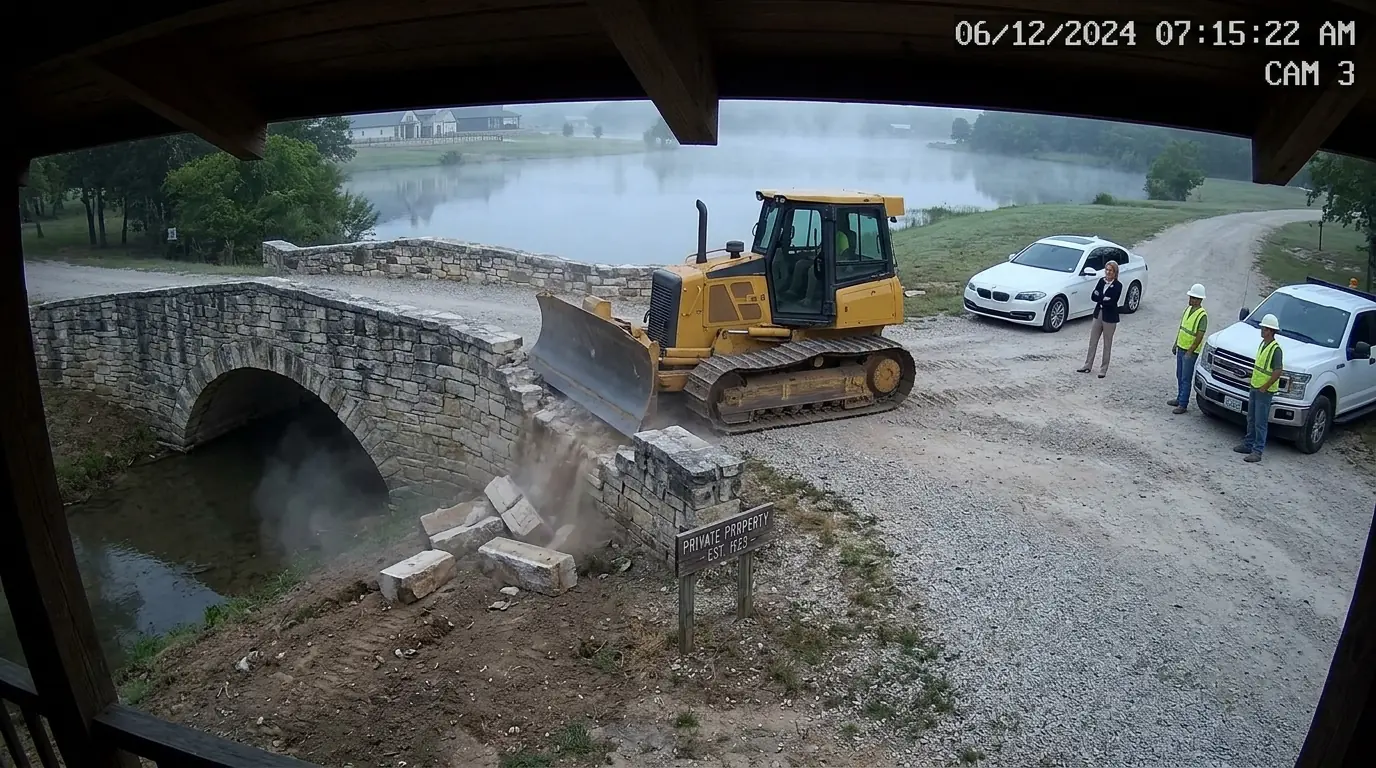
It's 6:00 a.m. on a Tuesday. I'm sipping coffee on my dock when I hear the rumble of diesel engines. Through the morning mist, I see a bulldozer rolling toward the stone bridge my great-grandfather built with his own hands in 1923—the same bridge that connected our community for a hundred years, the bridge that some power-hungry HOA president decided was an eyesore.
But here's what Linda Prescott and her fancy HOA board didn't know about water rights in Texas: my great-grandfather didn't just build that bridge, he controlled the dam. And I just inherited something more powerful than any HOA bylaw: the legal right to drain their entire lake.
My name is Jake Morrison. I'm a civil engineer, and three months ago, I inherited the most beautiful piece of lakefront property you've ever seen. My great-grandfather, Samuel Morrison, built our family cabin back in 1920, right after he got back from the Great War. But the real masterpiece was the bridge. Sam didn't just slap together some planks and call it good. This man hand-cut limestone blocks from the local quarry and built a proper stone arch bridge that connected our side of the lake to the main road. For a hundred years, that bridge served everyone: fishermen heading to their favorite spots, kids walking to swimming holes, neighbors helping neighbors. It was the heart of our little community.
When I inherited the place, my wife Sarah and I had dreams. We'd been saving every penny, planning to retire there in a few years. I'd fix up the cabin, maybe do some consulting work from home, spend my mornings fishing off that old wooden dock. The creak of those weathered planks under my boots was like a lullaby.
Then Linda Prescott happened.
Linda's the kind of woman who wears pearls to the grocery store and drives a spotless white BMW that's never seen a dirt road. She moved into the Whispering Pines luxury community two years ago. That's the fancy development that sprouted up on the other side of the lake like mushrooms after rain. Within six months, she'd maneuvered herself into the HOA presidency.
I should have seen trouble coming when I got that first certified letter. The envelope had that official weight to it—you know, the kind that makes your stomach drop before you even open it. Inside was Linda's sweet-as-pie letterhead declaring that my bridge violated community architectural standards and had to go. I laughed, actually laughed out loud. My bridge was built when her development was still cow pasture.
But Linda had done her homework, or thought she had. The letter cited HOA covenant number 47B, architectural review requirements, and threatened me with $500 a day in fines if I didn't remove the bridge within thirty days. That's when I started digging through boxes in my grandfather's attic: musty old papers that smelled like dust and time, but legal documents nonetheless. I found the original survey maps, the deed records, and most importantly, the grandfathering clause that specifically protected existing structures. My bridge was literally older than the HOA by eight decades.
Armed with my paperwork, I showed up to the next HOA meeting in the community center. You know that particular smell of institutional buildings: floor wax, stale coffee, and the faint scent of disappointment. That was my introduction to HOA politics.
I spread my documents across the folding table like I was playing a winning poker hand. "Gentlemen, ladies," I said, "I believe there's been a misunderstanding."
Linda barely glanced at my papers. Her response still makes my blood boil. "Times change, Mr. Morrison. Progress requires sacrifice." She said it with this condescending smile, like she was explaining basic math to a child.
The board vote was a foregone conclusion: five to two in favor of enforcement. Linda's allies, all recent arrivals with more money than sense, outnumbered the old-timers who actually remembered what community meant.
Walking back to my truck after that meeting, the gravel crunching under my feet, I realized something important: this wasn't about architectural standards or community vision; this was about power. Linda saw my humble bridge, my working-class cabin, my beat-up pickup truck, and decided I didn't fit her vision of an upscale neighborhood. She wanted me gone.