The day my HOA fined me $5,000 for weeds was the same day a monarch butterfly landed on the violation notice.
I remember that detail because 3 months later, that tiny orange and black insect would cost the HOA president her reputation.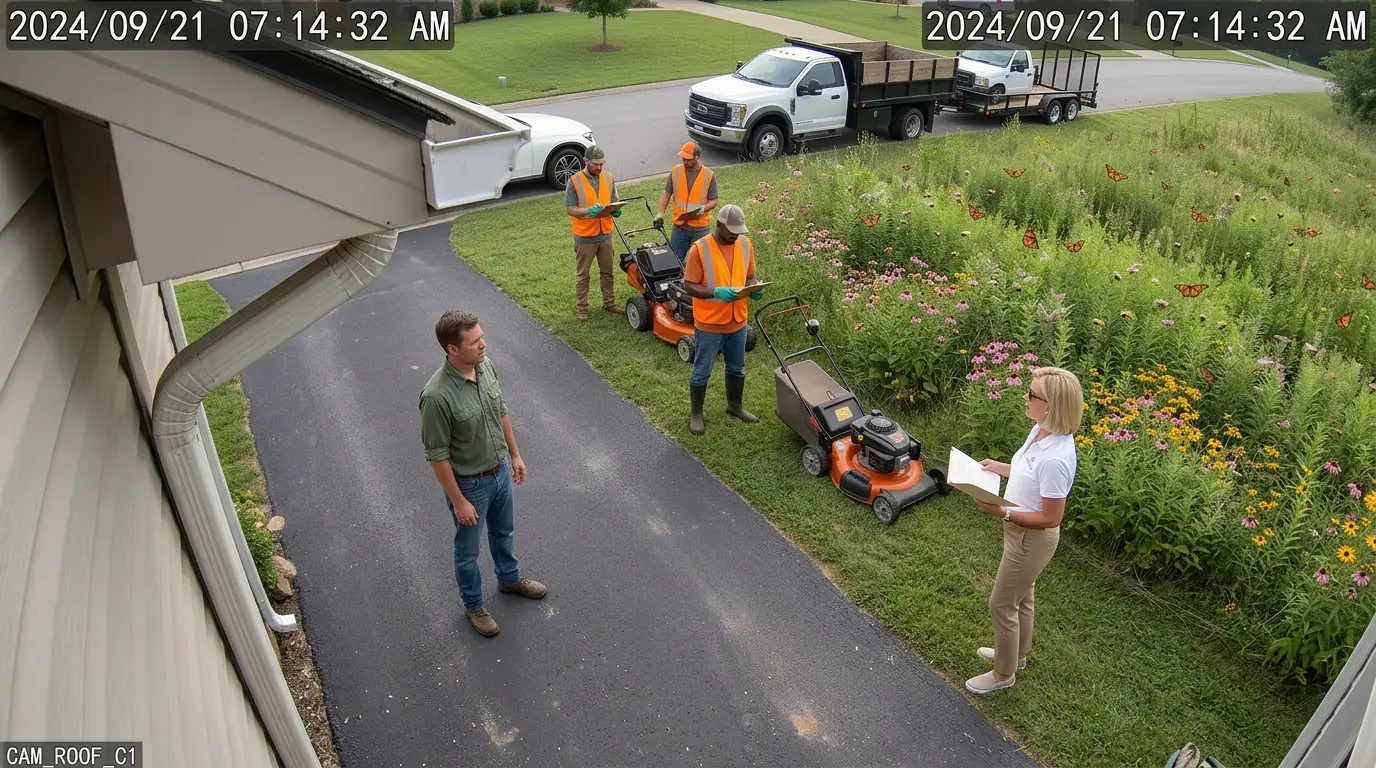
The paper crackled in my hand as I stood at the edge of my front field just after sunrise.
The smell of wildflowers drifted through the cool morning air.
Dew clung to knee-high stems, sparkling under the first light of a Tennessee summer morning.
Hundreds of butterflies floated above the field like pieces of living stained glass.
To me, it looked peaceful. To Linda Holloway, president of the Oak Ridge Estates HOA, it looked like a problem.
Her white Lexus SUV rolled slowly to a stop beside my driveway. Gravel crunched beneath the tires.
Before I could even unfold the notice completely, she stepped out wearing a perfectly pressed polo shirt and sunglasses that probably cost more than my monthly electric bill.
Her smile looked friendly from a distance.
Up close, it felt like a warning.
"You've got 30 days," she said, folding her arms. "This neighborhood has standards."
I looked down at the bright red lettering across the page. Property violation.
Fine, $5,000.
Reason, excessive weeds and landscape neglect. A monarch butterfly drifted down and settled directly on the corner of the notice.
Linda shook her head.
"See? That's exactly what I'm talking about."
I glanced across the field.
Purple coneflowers swayed beside black-eyed Susans.
Native milkweed stretched across the eastern corner near the fence line.
The field wasn't abandoned. It was thriving.
But Linda didn't see habitat. She saw grass that wasn't trimmed short enough to fit her vision of suburban perfection. "Those aren't weeds," I said calmly.
"They're native plants."
Her laugh was sharp enough to cut through the morning silence.
"Native plants don't increase property values, Ethan."
Then she turned and pointed toward the field like a general surveying enemy territory.
"That mess is embarrassing the entire community."
The smell of fresh-cut grass drifted over from neighboring yards.
Every lawn on the street looked exactly the same.
Perfectly trimmed.
Perfectly watered.
Perfectly lifeless.
Mine was the only property buzzing with bees, butterflies, and birds.
The only property that looked alive.
Linda climbed back into her SUV and lowered the window before driving away.
"30 days." She repeated.
"Or the HOA will take further action."
The engine faded into the distance.
I stood there alone with the notice in my hand.
The butterfly remained perched on the paper for several more seconds before lifting into the air and disappearing over the field.
At the time, I thought this was just another HOA dispute.
Another power-hungry president trying to control something she didn't understand.
What I didn't know was that Linda Holloway had already started a chain of events that would bring state biologists, federal investigators, and environmental experts straight into our neighborhood.
She thought she was declaring war on weeds.
She had no idea she was about to challenge something the federal government had been protecting for years.
The funny thing is that none of this land was supposed to belong to me.
20 years ago, most people would have driven right past it without a second glance.
Back then, it was just 5 acres of uneven ground on the edge of town, bordered by old oak trees and a shallow creek that dried out every August.
The first person who ever saw value in it was my grandfather, Walter Walker.
I can still remember the smell of motor oil and fresh soil every time he loaded me into his old Ford pickup and brought me out here on Saturday mornings.
While other kids spent weekends at baseball games, I spent mine walking through fields, listening to stories about birds, butterflies, and native plants.
Grandpa knew the name of every flower that grew naturally on this property.
He could identify birds by sound alone.
He treated the land like it was family.
I was 10 years old the first time I asked him why he never mowed the eastern corner near the fence line.
That section always looked different.
Taller.
Wilder.
Full of milkweed, goldenrod, and clusters of flowers that attracted butterflies by the hundreds.
He just smiled and adjusted his old work gloves.
Some things are more valuable when you leave them alone. He said.
At the time, I thought he was talking about plants.
Years later, I realized he was talking about people, too.
After college, I became an environmental engineer.
I spent nearly two decades working on conservation projects across the southeast.
Wetland restoration.
Water quality studies.
Habitat preservation.
The kind of work most people never notice until something disappears.
Then 3 years ago, Grandpa passed away at 87.
The house, the land, and everything attached to it became mine.
The first time I unlocked the front door after the funeral, the silence felt heavier than any construction site I had ever worked on.
His coffee mug still sat beside the sink.
His boots still rested near the back porch.
Even the faint smell of cedar and old books lingered in the air.
Selling the property never crossed my mind.
Instead, I moved in and started restoring it the way he would have wanted.
Most of the neighbors thought I was crazy.
Oak Ridge Estates was built around perfect appearances.
Every lawn trimmed to exactly the same height.
Every shrub shaped into identical green spheres.
Every mailbox polished.
Every flower bed designed by landscaping companies that charged more per month than some families spent on groceries.
My property stood out immediately.
Not because it was neglected.
Because it looked alive.
Spring brought bees.
Summer brought butterflies.
Songbirds nested along the tree line.
Rabbits appeared near the creek at sunrise.
The field changed colors with the seasons instead of staying the same artificial shade of green year-round.
I loved it.
Linda Holloway hated it.
Looking back, I think the conflict started long before that violation notice appeared.
Every HOA meeting included subtle comments about curb appeal.
Every community newsletter contained reminders about landscaping standards.
Every time Linda drove past my property, I caught her staring at the eastern field through the windshield.
She never looked curious.
She looked irritated.
Like the existence of something she could not control personally offended her.
The week before the notice arrived, I noticed her standing near the fence taking photographs with her phone.
Butterflies drifted around her while she snapped picture after picture.
At the time, I assumed she was collecting evidence for another complaint.
What I did not realize was that she had already decided that field needed to disappear.
And she was willing to push far harder than a simple warning letter to make that happen.
The next HOA board meeting took place on a Thursday evening inside the community clubhouse. A brick building that always smelled faintly of burnt coffee and furniture polish.
By the time I arrived, nearly every folding chair was occupied.
The soft hum of conversation filled the room.
People nodded politely when they saw me, but most quickly looked away.
Nobody wanted to get caught choosing sides.