They flooded my workshop, so I shut off the water to their country club.
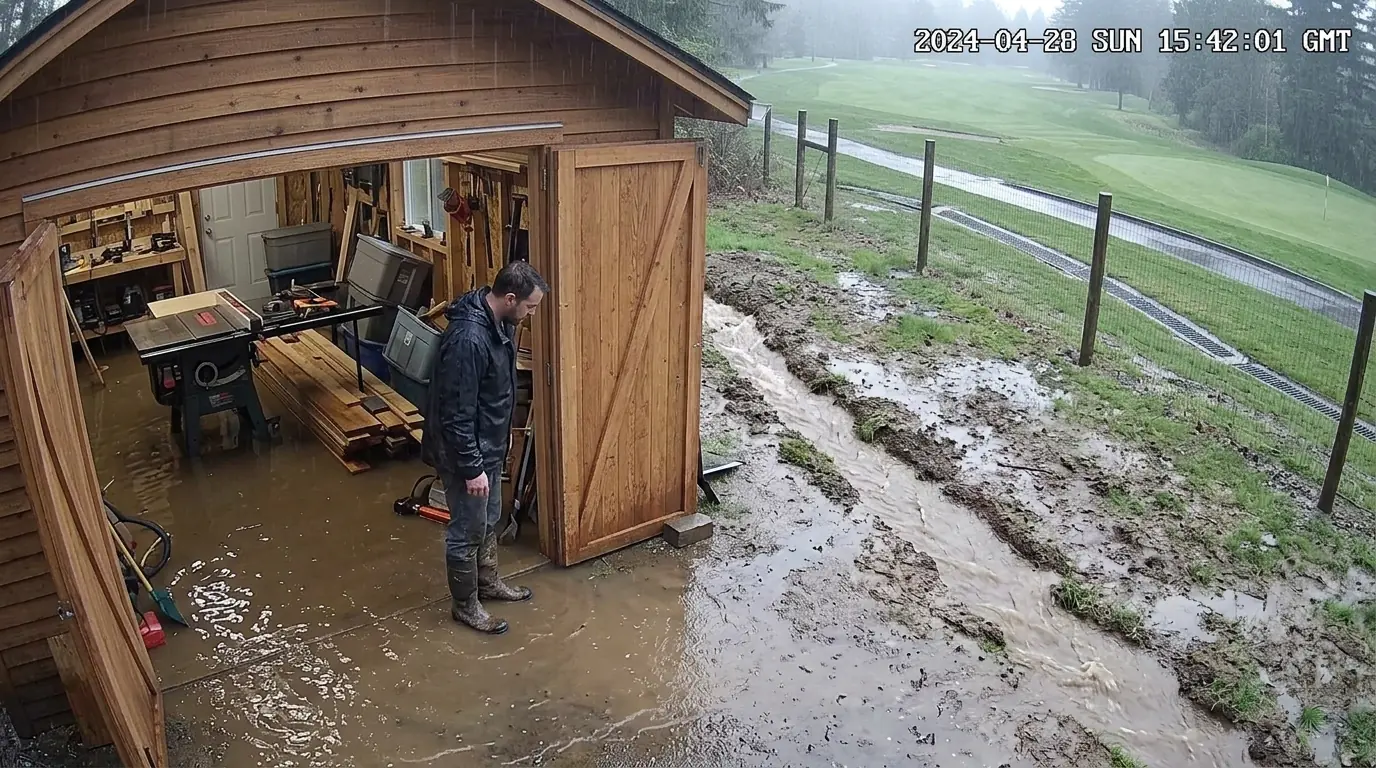 That sounds petty when you say it fast like that, but nothing about it felt petty when I was standing ankle-deep in brown water watching 10 years of my life rust in real time. And the worst part wasn't even the damage. It was the way they said it didn't matter.I live just outside a gated community called Briar Glen Estates, about 40 minutes north of Charlotte. Big stone entrance, manicured hedges, a golf course wrapped around the neighborhood like a green ribbon. I don't live inside the gates. My place has been in my family since the '70s, long before the developers showed up with blueprints and promises.My dad built the workshop himself, a simple cedar structure with a tin roof and wide double doors that opened to the pasture. That building is where I learned to square a board, sharpen a chisel, and fix what other people throw away.A few months back, I walked out there early one morning and caught the smell. Wet wood, sour and heavy. At first, I figured maybe I'd left a window cracked and we'd gotten one of those sideways summer storms. It happens. But when I opened the door, the bottom of it dragged against something. I pushed harder, stepped inside, and my boots sank.Water. Not a puddle. Not a little leak. Full-on standing water across the entire floor.I just stood there for a second listening to it, that quiet lapping sound against metal legs and storage bins. My table saw was half submerged, the cast iron top already blooming with orange. My hand planes were floating in a plastic tote that had tipped over. Lumber I'd been curing for a custom dining table was warped, swollen like it had given up.You ever have one of those moments where your brain refuses to catch up to what your eyes are seeing? That was me. I kept thinking, "This isn't real. This is a mistake. This is something small." But the longer I stood there, the more it settled in my chest: this wasn't small.It took me two days just to pump it out. My neighbor, Walt, came over with a sump pump and a six-pack. Didn't say much, just shook his head. When the floor finally dried enough to walk on without leaving prints, the damage was clear: thousands of dollars in tools, months of work, gone.At first, I blamed bad luck. Maybe a pipe had burst underground. Maybe the creek behind my property had overflowed. So, I started walking the perimeter, following the way the land sloped.That's when I noticed something new: a ditch. Fresh cut, the soil still loose and red. It ran from the stormwater culvert behind Briar Glen's 12th fairway straight down the incline and emptied, conveniently, into the low spot behind my shop. I crouched down and touched the dirt. Still soft. This wasn't erosion. This was intentional.Now, I've never been the conspiracy type. I build cabinets, not cases. But something about the angle of that trench, the way it lined up like an arrow aimed at my building, made my stomach turn.So, I made a few calls: county office first, then the water management department, then a guy I know who does grading work around town. What I pieced together over the next week made everything a lot less accidental.Briar Glen had been having drainage issues on the back nine. Heavy rains were pooling near the greens, slowing play, costing them tee times. So, the HOA board approved a "runoff optimization project." That's the phrase they used. Sounds clean, doesn't it? What it meant was they redirected excess stormwater toward the lowest adjacent property: mine.I called the HOA president, a man named Russell Davenport—retired banker, always in pressed polos, even on weekends. We'd spoken maybe twice before, both times polite enough.