She cut my padlock. Didn't knock, didn't call, didn't leave a note. Just showed up at my private cabin on my private land with a pair of bolt cutters, snapped the lock clean off, and walked inside.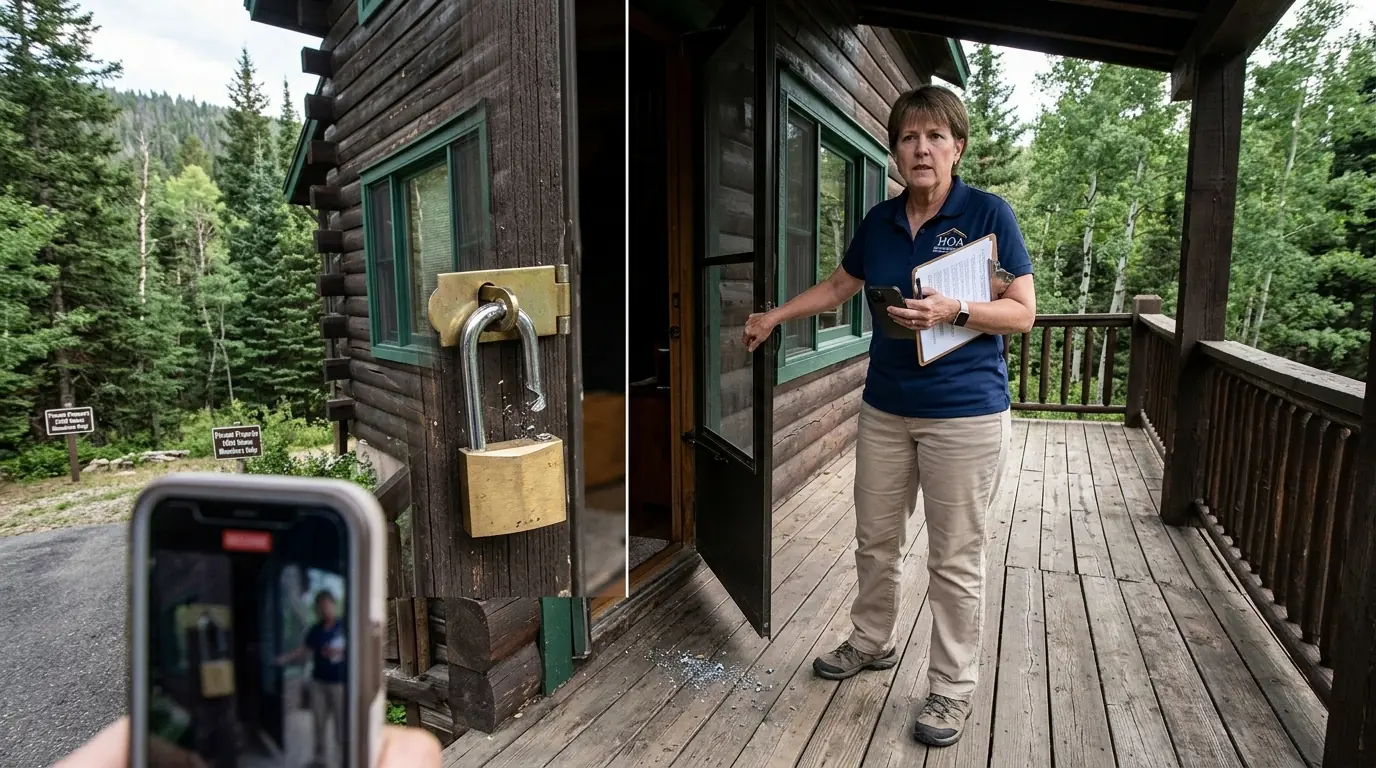
This woman had sent me 17 violation notices for a property she had zero legal authority over. She'd filed complaints with three county agencies—all dismissed. She'd hired a fake environmental consulting company run by her own son to harass me with fraudulent reports. And after all of that, she still thought she could just walk in.
What did she think she was going to find in there? A man who'd given up? Someone who'd finally break under the pressure and sign her paperwork and make it all go away?
She had no idea what was actually waiting for her.
Let me take you back to where this started. My name is Decker Halverson, 58 years old, retired pipefitter. I spent 31 years crawling through industrial facilities in the cold and the heat and the dark, threading pipe through spaces that weren't designed for human beings, so that one day I could buy a piece of land and be left alone on it.
That day came after 22 years of saving: 14 acres in the Flathead Valley foothills of Northwest Montana. Not a vacation property, not a weekend getaway—a homestead, a hand-built A-frame cabin, a woodshed I put up myself over one long August, and a spring-fed stock pond that sits at the south end of the property like it was placed there on purpose by someone who wanted me to have a good reason to sit still. The smell of pine resin in the morning, the crunch of frost under work boots before the sun clears the ridgeline, cold creek water running somewhere you can hear but not see—this was the place I'd promised myself for three decades.
Now, the land sits at the edge of a planned recreational community called Ridgecrest Pines. Mostly weekend lake houses owned by people from Missoula who drive up on Fridays and leave Sunday afternoon. I bought my parcel before the HOA incorporated. My property is adjacent to the development, not inside it. I never signed a single HOA document—not one. My deed is clean, my parcel map is clear, and my property taxes go to Flathead County, not to any community association.
This matters. Remember it.
Because approximately eight months before she cut that padlock, I received a certified letter in my mailbox. Cheap inkjet printing, still faintly warm from the printer. The paper had that particular smell of an office machine running low on toner—slightly burnt, slightly stale.
The return address said Ridgecrest Pines Community Association. Inside was a formal violation notice. It cited Ridgecrest Air Quality Covenant Section 4 (2) and informed me that my wood stove was emitting particulate matter in violation of community standards and that I had 30 days to remedy the situation or face further action.
My wood stove. In my cabin. On my land, which is not in Ridgecrest.
The notice was signed by the HOA board president, Vivian Pratt.
Now, I want to describe Vivian Pratt to you because understanding her is important to understanding everything that followed. Vivian is a retired HR director from a regional insurance company. She is the kind of person who irons her linen sets before walking her dog. She owns a golf cart with a custom "VP" emblem on the hood and drives it down the private road through Ridgecrest like she's leading a motorcade. She has been HOA board president for three consecutive terms, not because anyone is particularly enthusiastic about her leadership, but because nobody else wants the job badly enough to run against her. She uses the phrase "community standards" the way a pastor uses scripture: frequently, solemnly, and always in a tone that implies you should already know better.
I called her the day I received the notice. She told me the community had concerns.
I told her I wasn't in the HOA.
She said—and I'm going to quote this exactly because I wrote it down immediately after I hung up—"Whether or not you've signed, your land falls under our sphere of influence."
Sphere of influence.
I hung up the phone. I went outside. I stacked firewood for about 45 minutes until I felt like a human being again. Then I went back inside, found an empty manila folder, wrote "VIVIAN" on the tab in capital letters, and dropped the violation notice inside.
That folder was going to get very thick.
Two weeks after I ignored the violation notice, I walked out to check on the pond and found something that stopped me cold: orange survey flags, eight of them, driven into the ground in a diagonal line across the south corner of my property, cutting right through the edge of the tree line, heading toward the water.
No letter, no phone call, no surveyor's name stamped on the plastic stakes—just eight little neon orange flags standing in my land like they belonged there. That particular shade of orange looks wrong against Montana pine green, like someone dropped a highlighter in a forest.
I pulled one out. The plastic was warm from the afternoon sun and smelled faintly of diesel, the kind of smell that comes off a landscaping truck that runs all day. I stood there holding it for a moment. Then I pulled the other seven.
I photographed every hole they left in the ground with my phone—timestamp on, GPS coordinates recorded. Then I drove to the county assessor's office and requested a certified copy of my parcel map. The official recorded document showing every boundary line of my 14 acres cost me $11 and about an hour of my afternoon. Worth every penny.