Am I the Jerk for Building a Temporary 40-Foot Structure to Spite My HOA?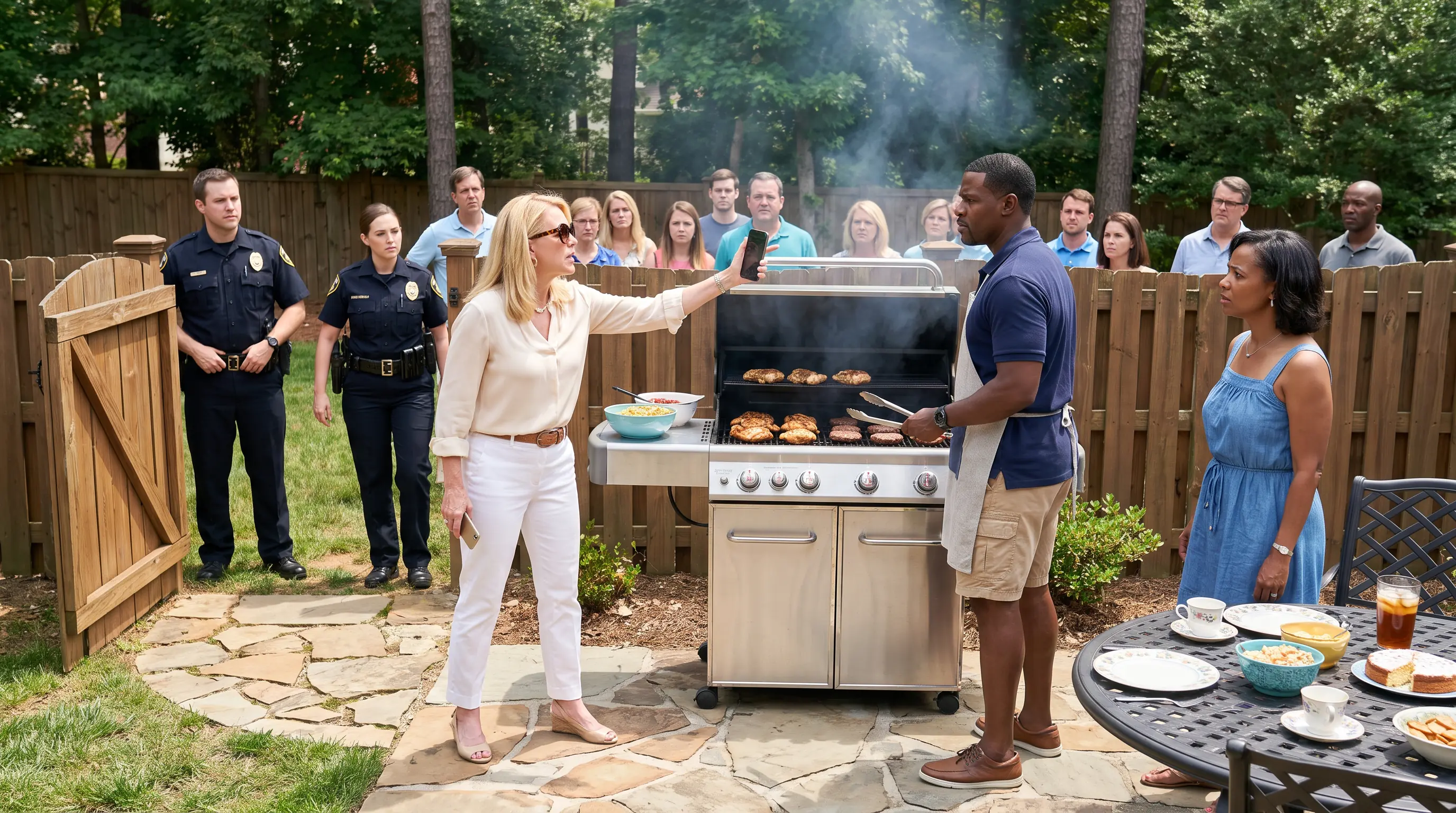
I am a 35-year-old man, and I have always had a strange hobby. I love reading contracts, bylaws, and legal agreements. My wife thinks I am unusual, but I find it fascinating how people try to write rules for every possible situation and how they inevitably leave loopholes behind.
That hobby recently became useful when my best friend, Scott, got into trouble with his homeowners association. He called me one evening, clearly upset, and said the HOA was threatening to fine him $500 a month because he kept his fishing boat behind his house. Scott had bought his dream home only six months earlier, and the HOA had already become a constant source of stress.
“Send me the HOA agreement,” I told him. “Let me take a look.”
That night, I went through the documents line by line. HOAs often have broad enforcement powers over anything visible from streets or common areas because their stated purpose is to protect community appearance and property values. Their authority becomes less clear when the disputed item cannot be seen from any public or shared area.
I spent the next week researching similar cases. I found several court decisions addressing that exact issue. One judge had written that HOA enforcement powers must be reasonably related to maintaining community aesthetics and property values. Another ruling stated that items not visible from common areas generally fell outside HOA authority unless the founding documents specifically included them.
Armed with that information, I called Scott. His boat was completely hidden behind the house and could not be seen from the street or any common area. The agreement did not clearly regulate hidden backyard items. It referred only to visible structures and vehicle storage in general terms.
“Document everything,” I told him. “Take photographs from every public angle showing that the boat cannot be seen. Send a formal letter citing these cases and ask the board to identify the exact section giving them authority over nonvisible items.”
Scott followed my advice, but the HOA dismissed him with a brief email. They claimed that all exterior modifications and vehicle storage required board approval. They also warned that continued noncompliance would lead to escalating fines.
“They are trying to intimidate you,” I told Scott. “They are hoping you will surrender before anyone tests whether their position is actually enforceable.”
After three months of arguments and mounting fines, Scott hired a real estate attorney. It cost him $2,000, but the attorney systematically dismantled the HOA’s position over several meetings. He explained the limits of the board’s authority and the potential liability it faced if it continued enforcing rules beyond the written agreement.
The HOA finally backed down. It removed every fine and acknowledged in writing that items invisible from common areas were outside its jurisdiction. Scott kept copies of the withdrawal letter, the photographs, the attorney's correspondence, and the original notices because neither of us trusted the board to forget the dispute. For the first time since moving into the house, he could look at his boat without seeing a stack of threatening envelopes beside it.
“Remember how they tried to punish you over something they could not even see?” I asked. “What if we gave them something they could see? Something completely legal, but absolutely hideous?”
Scott’s face lit up. I showed him my plan for what I called a temporary recreational structure. The HOA agreement allowed temporary structures to remain for up to 90 days. It required them to be removed after that period, but nothing prevented a homeowner from taking one down and rebuilding it later. The agreement also allowed flagpoles up to 25 feet tall for patriotic displays.
We spent the next month designing and building it. We reviewed every relevant section before buying a single piece of material. The structure had to be temporary, safe, and genuinely connected to recreation, so we built platforms that could hold outdoor equipment and documented the assembly process.
The main structure stood 40 feet tall and consisted of bright purple metal scaffolding purchased as surplus from a construction company. At the top, we installed a legal 25-foot flagpole, making the total height 65 feet. We painted the structure in alternating neon green and orange stripes, colors that were not restricted anywhere in the HOA documents. It was visible above rooftops, reflected sunlight in several alarming directions, and looked like a carnival ride designed by someone who had never seen a carnival.
The day we finished it, Scott’s next-door neighbor, Martha, came running from her house. She served on the HOA board and looked horrified.
“What in God’s name is that monstrosity?” she demanded.
“It is my new temporary recreational structure,” Scott replied innocently. “It is for flying flags and is fully compliant with Section 7.32 of the HOA agreement.”
“This is completely unacceptable,” she said. “I am calling an emergency board meeting.”
The meeting took place two days later. The room was packed with angry homeowners. The HOA president, a pompous man named Richard, glared at us as we entered.
“Mr. Thompson,” he said to Scott, “this structure clearly violates community standards. It must come down immediately.”
I spoke before Scott could answer. I explained that temporary structures were explicitly allowed for up to 90 days. The documents contained no general height restriction for temporary structures, and the flagpole complied with its separate 25-foot limit. There were also no restrictions covering the colors we had chosen.
“But it is an eyesore,” Richard sputtered.
“Aesthetic judgments that are not written into the agreement are not enforceable rules,” I replied. “Please identify the specific section we have violated.”
They could not. Several board members shuffled through their copies of the agreement, searching for language that simply was not there. Homeowners who had arrived angry began asking why the board had spent months claiming powers it could not identify in writing. We had checked everything carefully, including the temporary-structure deadline, the flagpole provision, and the absence of any color restrictions.
The structure remained standing for exactly 89 days. On the final afternoon, we dismantled it piece by piece while Richard watched from the street with obvious relief. The following morning, after the required break, we began rebuilding it in the same place. His expression when the first purple section rose above Scott's fence almost justified the entire project by itself.
We repeated that process four times over the course of a year. The structure could be seen from almost anywhere in the neighborhood. The flag made a distinctive flapping sound in the wind that seemed to drive Richard especially crazy. Best of all, according to the board’s own written rules, it was legal.
The HOA tried several ways to stop us. Board members photographed the structure from every possible angle, sent inspectors to ask whether it was properly secured, and circulated letters describing it as a threat to community harmony. Each time, we answered with the exact section of the agreement that allowed it and the photographs showing how it had been assembled.
The board passed new rules covering structure height and color, but those rules could not be applied retroactively to the existing dispute. It threatened a lawsuit, but its own attorney advised against proceeding because the original agreement was so poorly written. It even offered to waive various fees and restrictions if Scott would remove the structure permanently. Scott refused until the board addressed the underlying problem rather than merely asking him to stop embarrassing it.
After a year, the HOA called a community meeting and formally amended the governing agreement. The new amendment substantially limited the board’s authority over private backyard spaces and over items that could not be seen from common areas. That was exactly the protection Scott had wanted in the first place.
Only after the amendment passed did we permanently remove the structure. It had cost roughly $3,000 in materials and countless hours of assembly and disassembly. It was unquestionably petty, and we had deliberately made it as irritating as possible, but we had also followed every written rule while forcing the HOA to acknowledge the limits of its power.
---
HOA Neighbor Keeps Calling the Police Because of Our Garden Barbecues
My name is Steven, and my wife, Linda, and I live in a beautiful gated neighborhood with a homeowners association. We love having barbecues in our garden. We invested in a high-quality grilling setup, and we take pride in preparing food for friends and neighbors.
I usually handle the grilling, while Linda prepares side dishes, baked goods, and desserts. We both enjoy researching new recipes and trying them together. We work hard, and entertaining at home is one of the things that gives us the most happiness.
Sometimes we barbecue only for ourselves, but because our equipment is designed for larger meals, we usually invite a small group. Our gatherings were never wild parties. People ate, exchanged recipes, talked about work and family, and usually went home well before the quiet-hour rules began.
We had lived in the neighborhood for a long time without any problems. Before purchasing the grill, Linda and I had checked the HOA rules about distance from fences, permitted hours, smoke, and noise. We chose the placement of the equipment specifically to comply. Then a new family moved in, and one member of that family began treating every small inconvenience as a rule violation.
Her name was Karen. She was intensely focused on the HOA rules and constantly complained about things such as garbage bins being slightly out of position after storms. She seemed to be searching for problems even when no actual problem existed.
One Saturday afternoon, Linda and I hosted a barbecue for about a dozen people. We followed every HOA rule. Our grill was the required distance from the property line, the gathering took place during permitted hours, and the music and conversation remained at a reasonable volume.
Karen arrived while I was cooking. The tables were already covered with salads, bread, baked dishes, and desserts, and several neighbors were helping Linda carry plates from the kitchen. Karen did not greet anyone or introduce herself. She planted her hands on her hips and said, “Your barbecue is making too much smoke. I demand that you stop immediately.”
“I am sorry if the smoke is bothering you,” I said, “but everything is within the regulations. I will finish cooking as quickly as possible so it does not disturb you for long.”
“I want you to stop now,” she said. “If you do not, I am calling the police.”
Linda approached and tried to calm the situation. She invited Karen inside for cake, pie, and tea while the smoke decreased. Another neighbor, Sharon, encouraged her to join us and explained that Linda and I enjoyed welcoming new people.
Karen accused them of trying to bribe her with food. She became louder, complained again about the smoke, and called the police. Linda and I were stunned. We had tried to make her feel welcome, but she seemed interested only in creating a confrontation.
Two officers arrived shortly afterward. One of them, Officer White, lived in the neighborhood and recognized the address. Karen stepped forward and demanded that I be arrested because the barbecue produced too much smoke.
Officer White calmly explained that people were not normally arrested for that kind of complaint. His partner, Officer Bentley, asked to inspect the grill. I showed him the entire setup and explained the relevant HOA regulations.
After checking everything, Officer Bentley told Karen that the barbecue was compliant and could continue. Karen then claimed the smoke aggravated her allergies. Linda reminded the officers that we had offered Karen a place inside until the smoke died down, but Karen rejected the suggestion and complained about the smell, the laughter, and nearly everything else happening in the yard.
The officers warned her against making frivolous calls and walked her home. The interruption affected the mood of the gathering, but we decided not to let her false complaint end the afternoon. We still had good food and friends around us, and stopping would only reward her behavior.
Over the following weeks, Karen called the HOA about us more than a dozen times. Her complaints were not limited to barbecues. She objected to ordinary conversations in the garden, deliveries arriving at our house, the placement of household bins, and lights that turned on for only a few minutes.
After the first few complaints, I began documenting everything. I created a dated file containing copies of the notes she left on our door and in our mailbox, transcripts of her voicemail messages, photographs of our yard, and the names of every HOA representative who visited. I also saved security-camera recordings showing that many of the events she described had either never happened or had been completely harmless.
The board was required to investigate complaints, even when they seemed unreasonable. Karen complained about our outdoor light after it activated one evening while we were not home. The light was motion-sensitive, and my security camera showed that a stray cat had triggered it.
The stress changed how Linda and I lived. Every knock at the door made us wonder whether another official had arrived. Neighbors who once stopped for tea began keeping their distance, either because they believed some of Karen's accusations or because they feared becoming her next target.
We began eating at restaurants more often because staying away from the house felt easier than wondering what Karen might report next. We even became uncomfortable cooking inside our own kitchen. The house we had worked hard to make welcoming had started to feel like a place where every ordinary action required evidence and witnesses.
One evening at a restaurant, Linda sadly said she would much rather be eating my barbecue chicken with baked potatoes than the sandwich in front of her. I admitted that I missed her chocolate cake and the comfort of our own home. We realized we had allowed Karen to take control of our lives.
“We should decide when we want to stay home and when we want a night out,” Linda said. “We should not be leaving because we are afraid of what she will do.”
I promised her we would find a way to take back our home. When we returned, we organized all the evidence and filed a formal complaint with the HOA board. We demonstrated a clear pattern of harassment, repeated false accusations, and unnecessary calls to both the board and local authorities.
The HOA president apologized for what had been happening. Several board members admitted that Karen's constant reports had consumed hours of volunteer time and had made legitimate complaints harder to evaluate. They had already warned her informally, but our documented complaint allowed them to establish a pattern rather than treating each incident separately.
The board issued her a formal warning and a $300 fine. It also told her that continued harassment of us or any other homeowner could lead to larger fines and more serious consequences under the association's procedures. The decision was recorded in the meeting minutes, which meant Karen could no longer claim that the board secretly supported her behavior.
Linda and I immediately began planning another barbecue. We wanted to celebrate getting our lives back and reconnect with neighbors who had become cautious after repeatedly seeing the police and HOA representatives at our door.
Karen confronted us on the street and said we had humiliated her. I told her we had never wanted anything except a peaceful relationship. She had chosen to complain about us instead of getting to know us, even though we had not violated any rules.
When she tried to continue the argument, I told her the discussion was finished and returned home. With the board watching her conduct and the neighborhood aware of the decision, she finally backed down.
Several neighbors later apologized for doubting us. Some said they had assumed repeated visits from police and HOA representatives meant we must have done something wrong. Others admitted that they had avoided us only because Karen was so relentless and they did not want her turning her attention toward their homes.
Our next barbecue became one of the largest gatherings we had ever hosted. People brought salads, bread, baked dishes, pies, and cakes until the tables were full. Even Officers White and Bentley attended because they were members of the community too, and this time their arrival brought laughter rather than fear.
Our yard was full again. Linda and I could cook, entertain, and enjoy our home without wondering who might arrive with another false complaint. Whether we were preparing a meal for ourselves, a few friends, or the entire neighborhood, the choice belonged to us again.
---
Every Fourth of July, my family goes to a large public park where people are allowed to bring food, listen to music, and watch the fireworks. A memorial park for veterans is located nearby, which has always made the event feel especially meaningful to me.
One year was different because it was the first time I attended while serving on active duty. I wore my uniform because I had come directly from duty-related obligations and because the event had invited service members to participate. I learned only after arriving that active service members and their families had access to a separate reserved area. It was not luxurious, but it offered enough space to sit together without competing for a crowded patch of grass.
I am an active person, so I walked around the park and spoke with neighbors and other people I knew. Everything seemed normal until a visibly intoxicated woman approached me before sunset.
“Hey, you,” she called.
“Yes, ma’am?”
“When are they starting the fireworks? My children are getting bitten by mosquitoes, and they are bored.”
I explained that the fireworks normally began about half an hour after sunset. She became angry and demanded to speak with whoever was above me. She complained that I did not know how to run the event and accused me of wearing a costume.
She had apparently assumed that I worked for the event organizers, even though the actual staff members wore matching black shirts with the town name printed on them. I respectfully explained that I was not involved in organizing the celebration and pointed out the people she needed to speak with.
I returned to my family in the reserved section. About 15 minutes later, the woman came back with an actual event worker. She claimed I had refused to help her and accused the service members in the reserved area of wearing costumes and stealing space from other families.
The worker tried to explain that we were active service members and that the section had been reserved by the organizers as a gesture of respect. He also explained that I had no authority over the fireworks schedule and had not refused any duty. The woman ignored him. She continued calling the uniforms costumes and tried to push her children under the rope while climbing into the area herself.
I was new to the service and did not know how I was supposed to respond. Several other younger service members seemed equally uncertain. A few officers who had been elsewhere in the park noticed the disturbance and approached us.
The woman immediately began shouting accusations, claiming that we were mistreating her and her children. I was frightened that someone might believe her version of events and that I could face professional consequences even though I had done nothing wrong.
One of the officers assured me that I was not in trouble. He explained that intoxicated people sometimes targeted anyone in uniform because they knew service members had to remain controlled and professional in public.
The officers and event staff asked the woman to leave the reserved area and return to her family. For a few seconds, it seemed that the situation might end there. I remained still because I knew that reacting emotionally while in uniform could create a second problem on top of the first.
Instead of leaving, she rushed forward and struck me across the face while shouting another accusation. The blow happened in full view of the officers, event staff, service members, and families around us. There was no confusion about who had initiated it.
There were many witnesses, including event workers, officers, police personnel, and other service members. Because police and emergency crews were already stationed around the fireworks event, officers reached us almost immediately and placed her under arrest.
I wanted to tell her exactly what I thought of her behavior, but I remained controlled. My 12-year-old brother, who was a civilian and considerably less concerned with military professionalism, loudly scolded her for attacking someone who had done nothing to her. Several service members nearby tried not to smile while he continued his lecture.
The rest of the evening went more normally. I refused to let the incident destroy the entire event. A few days later, I gave a formal statement to the police and answered questions about every part of the confrontation. I learned that the woman had been heavily intoxicated and was also carrying a significant quantity of illegal substances. The amount was large enough that investigators were considering whether she had intended to distribute them at the event rather than merely possess them.
Her children had other relatives present at the park and were placed safely in their care. The woman faced charges connected to the assault and the substances found in her possession. The event itself had legally sold alcohol, so drinking a beer was not the issue. Her conduct, level of intoxication, and possession of illegal substances were the problems.
---
My aunt’s husband had always been difficult. My mother’s family is Guyanese with Scottish, German, and Indigenous ancestry, and most members of the family have darker complexions. My mother married my father, a white Irish man. I was born very pale, with blue eyes and blond hair, while my brothers inherited darker features.
My aunt married a Nigerian immigrant who completed a doctoral program, reportedly with extensive help from my aunt, and then spent decades refusing to work. He also carried strong prejudices about members of our family who looked different from him.
He spread false stories about my father making discriminatory remarks, even though witnesses confirmed that nothing of the kind had happened. He also refused to speak to me because of my skin tone.
When I was 16, he became enraged after I corrected something false he had said and tried to attack me. My father and uncles had to restrain him. Later, he threatened that if the family excluded him from dinners or held him accountable, he would take my cousins, leave my aunt, and return to Nigeria.
I began avoiding family holidays because I did not want my grandfather forced to choose between protecting me and maintaining contact with my cousins. My grandfather always supported me and made it clear that he would remove my aunt’s husband from the house if necessary, but I did not want to cause a situation that might cost him his grandchildren.
My grandfather died after a serious illness. I spent much of my time away from work at the hospital with him, and my father was there as well. My grandfather had been the closest thing my father had to a father of his own, and losing him changed the shape of every family gathering that followed.
During those hospital days, I thought often about the compromises my grandfather had made to keep access to all of his grandchildren. He had protected me whenever he could, but he had also endured my aunt's husband because open conflict might have driven my cousins away. I understood why he had done it, even though the arrangement had never been fair.
Among the many things my grandfather taught me was that I should never allow another person to ruin family gatherings or meaningful occasions. After his death, I decided I was finished surrendering holidays to one entitled man.
My aunt’s husband believed he was the head of the family, even though nearly everyone disliked or ignored him. He demanded respect while giving none. He had also told my aunt that because I did not show him sufficient deference, she and my cousins were no longer allowed to buy me Christmas presents. I had received nothing from them for years.
Beginning in October, I saved as much money as I could from every paycheck. I did not simply buy generic presents. I spent hours thinking about what each person actually liked, what they had mentioned needing, and what might make them feel remembered.
By Christmas, the tree in my grandfather's old house was filled with gifts. There was something carefully chosen for every person in the family except one. I wanted the difference to be unmistakable without creating a loud argument in the middle of the celebration.
On Christmas morning, I stood beside the tree and handed out the presents one by one. I passed my aunt’s husband several times while he watched the packages with growing expectation. Every other person received something thoughtful.
My aunt and cousins looked uncomfortable as they opened the gifts I had chosen for them while I received only one present from my mother’s brother. Their guilt was obvious, and I allowed them to sit with it.
At the end, one envelope remained beneath the tree. It was labeled, “For all your help looking after Grandfather.” My aunt's husband had done very little during the illness, but the wording was just plausible enough to make him believe the final and most valuable present might be his.
I carried the envelope toward him and placed it in his hands. He opened it immediately while everyone watched.
Inside were return Eurostar tickets to Paris for a long weekend. Then I looked at the tickets and said, “I made a mistake. Those are my additional gift for Dad.” My father’s name was printed clearly on them.
My aunt’s husband had spent the entire morning watching everyone else receive wonderful gifts. He received nothing from me, nothing from my brothers, and nothing from the uncles who had previously bought him things only because my grandfather wanted to preserve peace and maintain contact with the grandchildren.
A friend had also given me a novelty aristocratic title connected to a tiny piece of land. It had no serious legal importance, but my family found it hilarious. They spent the day pretending to bow to me while ignoring my aunt’s husband and his constant demands for respect.
He spent the rest of Christmas sulking and refusing to speak to anyone. For the first time, his silence improved the celebration rather than controlling it.
---
My boyfriend recently came home from the supermarket with a petty revenge story. Before he left, he asked whether I wanted anything. I had been craving croissants, so I asked him to pick some up.
At the supermarket, he reached the meat aisle and found a large family spread across the entire section he needed to access. Another shopper was already waiting. My boyfriend politely asked to pass, but the family ignored him and seemed to move even more slowly.
After waiting longer than necessary, he left to collect the other items on his list. When he returned, the family was still blocking the aisle. He waited again and allowed the shopper who had been there first to go ahead of him.
The croissants were the final item he needed. There were none left in the normal bread section, but he knew the store sometimes kept an additional rack near the front.
When he reached that area, the same family had again spread themselves across a large section of the aisle and prevented anyone from passing. Their trolley was positioned sideways, and several family members stood around it while showing no awareness of the people trying to get through. He walked around the long way rather than starting another argument.
Just as he reached the shelf from the opposite side, they picked up the final bag of croissants and placed it in their trolley. They had not been searching for them until he approached, which made the moment feel like one final act of needless obstruction after the delays in the meat aisle.
Frustrated by their repeated refusal to make room, he squeezed past them, lifted the croissants from the trolley as he walked by, and headed directly to the checkout. He paid for them himself.
Normally, taking something from another shopper’s trolley would violate basic supermarket etiquette. After watching the same family block multiple aisles, ignore polite requests, delay other shoppers, and then take the final item he had spent the trip trying to reach, he decided this was one exception he could live with.