Every spring, my backyard turned into a swamp: ankle-deep mud, mosquito clouds thick enough to choke on, my deck rotting from underneath, foundation cracking, and my homeowners insurance up $600 a year because of elevated moisture risk.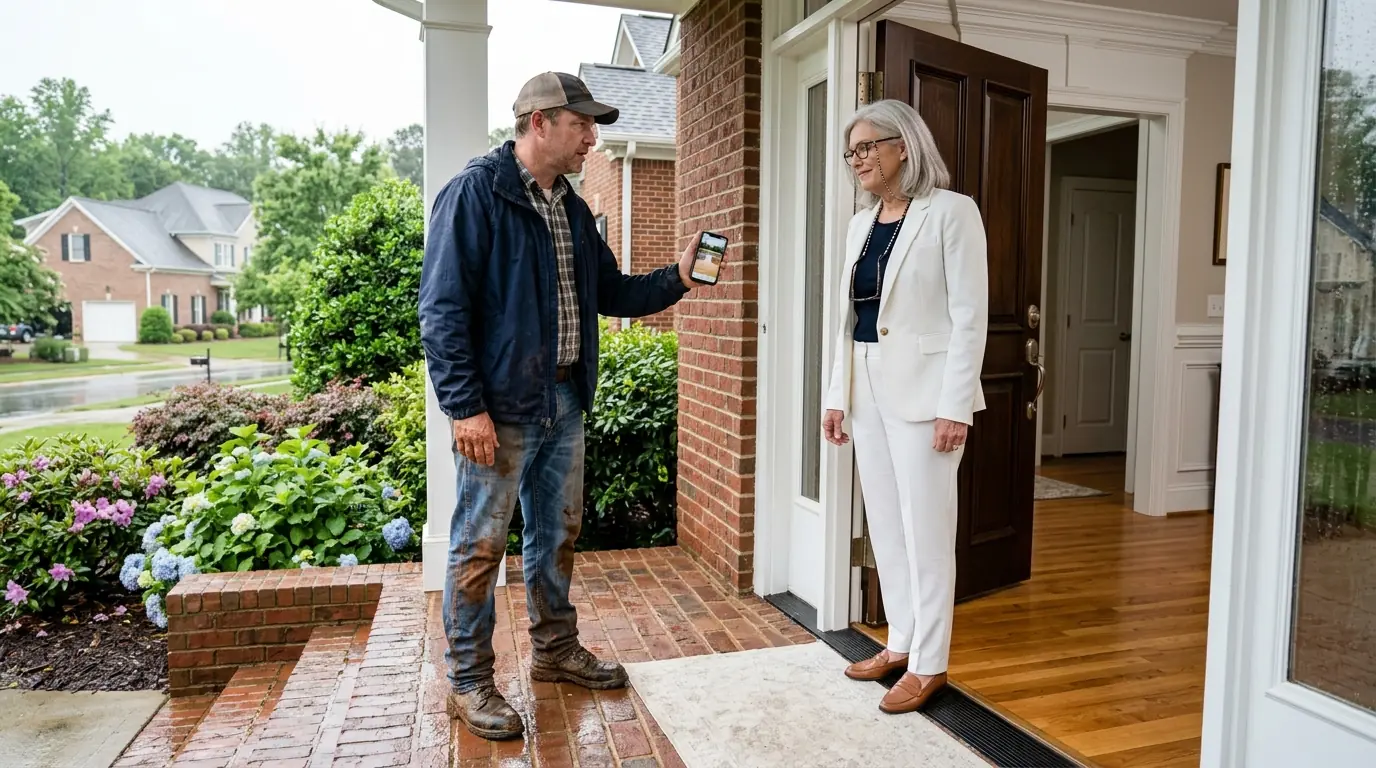
Money straight out of my pocket because of a pipe they aimed at my fence.
I marched over to Constance Drewry, HOA president—spotless white pantsuit, not a drop of mud on her. I showed her the flood destroying my yard.
She didn't even blink. "Stormwater flows downhill, Mr. Hollenbeck." A little smile. "That's just nature."
Door slammed.
Three years I filed complaints. Three years she responded with fines. My yard was drowning and Constance Drewry was sleeping just fine, until I found the one state drainage law that made everything she'd done completely illegal.
What I did next changed everything.
Let me back up about four years, because context matters here.
My name is Garrett Hollenbeck, and I'm a 49-year-old electrician from the Piedmont region of North Carolina. I'm not a guy who goes looking for fights. I coach Little League in the spring, I make a decent brisket, and for 16 years I drove a service van without a single complaint from a customer.
When my wife, Denise, and I bought our house in Millbrook Pines—a planned community of about 300 homes tucked into a rolling stretch of red clay and pine trees outside of Greensboro—we thought we were buying quiet: a good school district, a cul-de-sac, room for a vegetable garden, and maybe a dog. The house was a 1,900-square-foot colonial on a modest quarter-acre lot at the bottom of a gentle slope.
That slope detail is going to matter. Write it down.
The HOA at Millbrook Pines wasn't always a problem. For the first couple of years, it was the usual stuff: reminder letters about grass height, a passive-aggressive newsletter, a rule about lights coming down before February. Annoying, manageable.
The board changed in year three, and that's when Constance Drewry entered our lives.