The water came through the asphalt eleven days after the HOA opened its brand-new entrance road.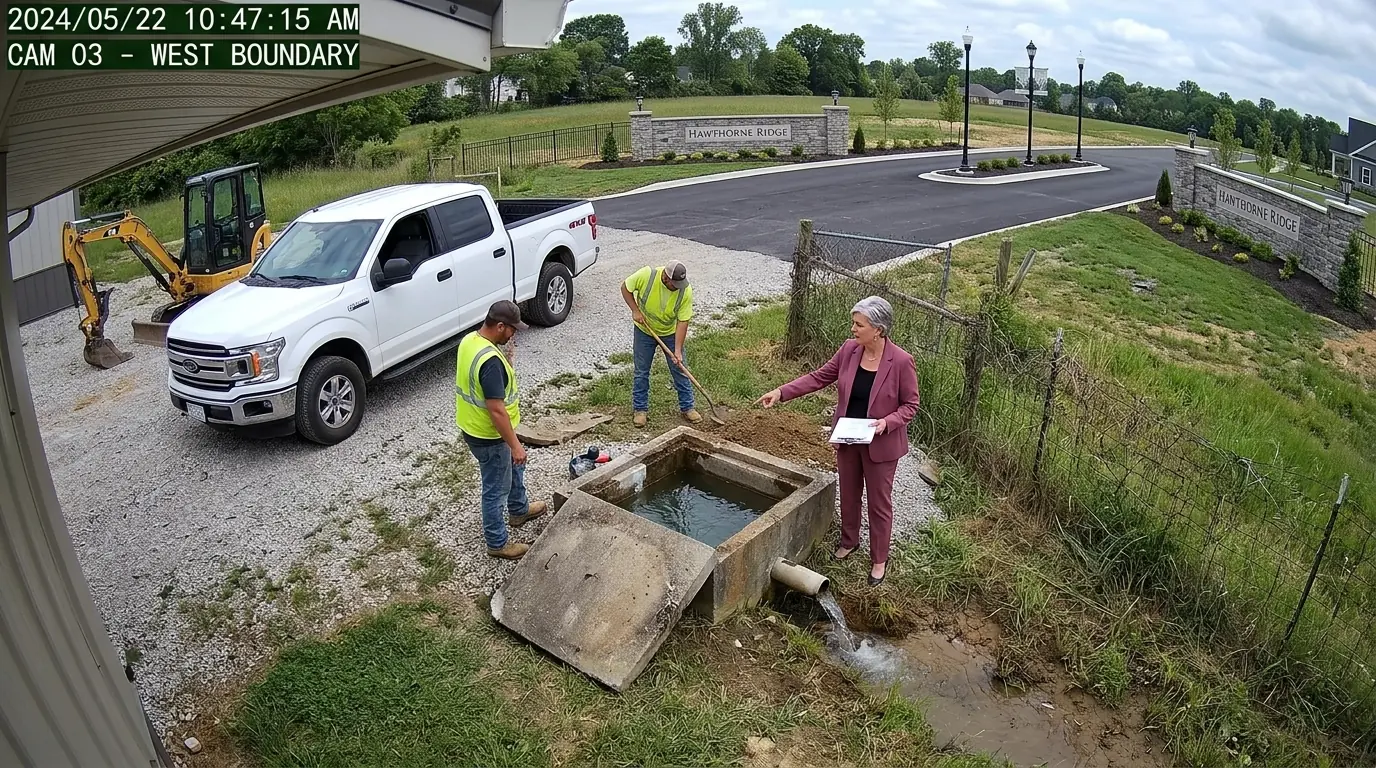
At first, it looked like somebody had left a sprinkler running. But then, a dark, wet patch spread across the right lane, and tiny bubbles appeared along the fresh pavement seam. By sunrise, cold groundwater was pushing up through cracks in a road that had barely seen two weeks of traffic. And by noon, one entire section of asphalt had started to lift.
Homeowners Association president Cynthia Rowe stood beside the curb in a dark pink suit, staring at water flowing around her heels, while the road contractor cut open the same pavement the association had just paid to install. She turned toward me and demanded to know what I had done.
But I had done absolutely nothing. She had.
Six days earlier, Cynthia had ordered a contractor to seal an old artesian well on the edge of my property because she called it an abandoned safety hazard. I had warned her that the well still flowed, shown her the overflow pipe, and explicitly told her the water had to go somewhere. She smugly replied that modern drainage would handle it.
And now, that very same water was moving beneath the HOA's new road.
Three days later, a county water resources inspector would uncover a well record older than the subdivision itself, and a geotechnical engineer would find saturated road base beneath the new pavement. The contractor who sealed the well would ultimately produce an email asking Cynthia one critical question she apparently decided was not worth answering: Do we have an approved well abandonment plan for this structure?
They did not.