The first sign that somebody was stealing from me came while I had shampoo in my eyes. One second, the shower was normal. The next, the pressure dropped to a weak trickle. I dried off, checked the gauge, and found it holding steady. If the pump was working and the tank was full, the water had to be going somewhere else.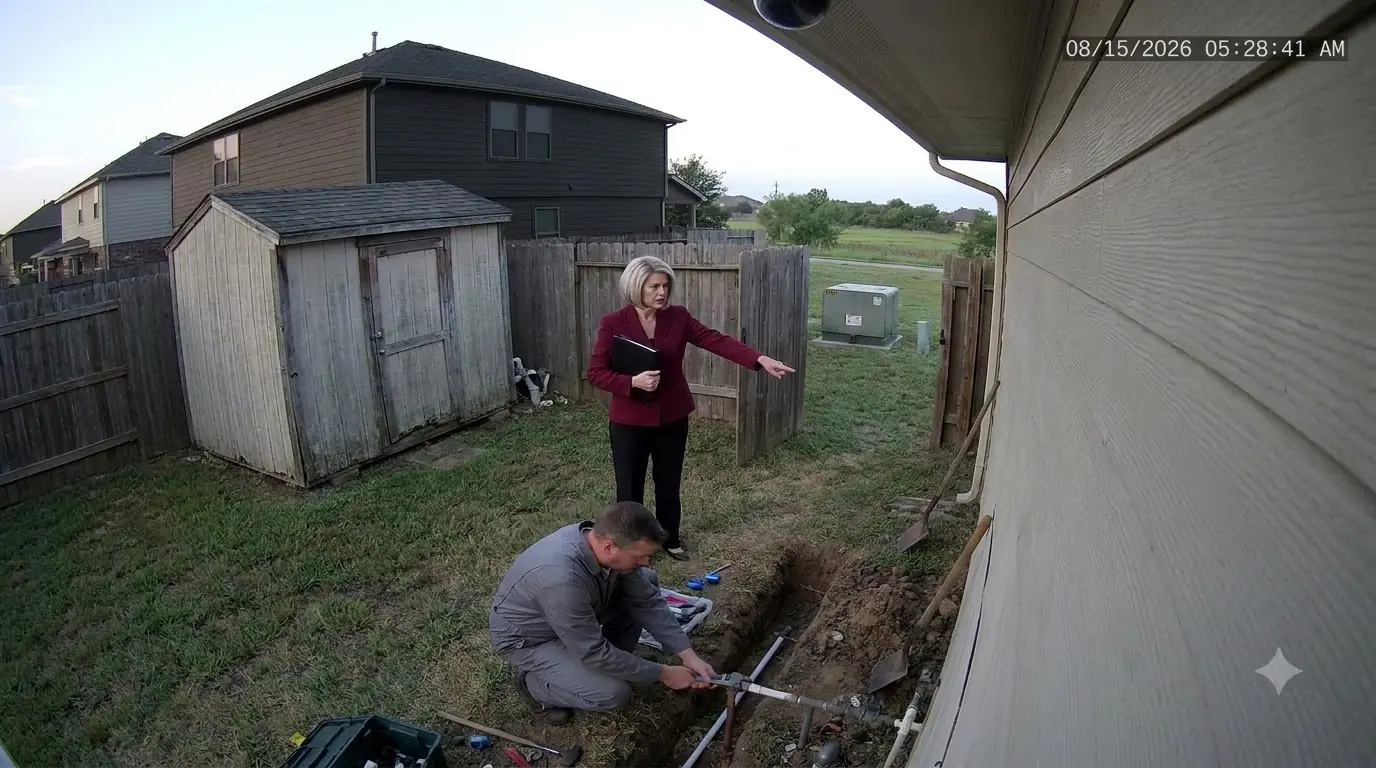
My name is Daniel Mercer, and I lived in Briarglen, a semi-rural neighborhood outside Knoxville. We had big yards and just enough space to pretend we were country people, right up until the HOA measured your mailbox. The Briarglen Association had been created to maintain the private road and mow the entrance lawn. Then Vivian Crowe became president.
Vivian could turn a bake sale into a military operation. She carried a leather binder and spoke to adults like seasonal employees. The first time we met, she pointed at the firewood beside my garage.
“That needs to be screened.”
“It’s firewood.”
She smiled. “Unscreened firewood.”
That was Vivian. She could make any noun sound criminal.
Five years earlier, I had paid to drill a private well after the county water line failed three times in one summer. Everyone called it a waste of money. Vivian laughed in my driveway.
“You do realize this isn’t the frontier, Mr. Mercer.”
But when drought restrictions came, my tap still ran. I paid for the drilling, the pump, the electricity, the testing, and every repair. I took quiet pride in it.
So when my pressure started dipping every morning at 5:30, I paid attention. Then I noticed the HOA greenbelt. Every yard was turning brown under watering restrictions, but the entrance lawn looked like a golf commercial—thick, bright, and wet—while the HOA emailed the rest of us about conservation.
For a full minute, I just stared. Somebody had hired a contractor, entered my property, cut into a line I owned, and then buried the evidence badly enough for a tired man with a flashlight to find it.
The next morning, I emailed the board.
“I found an unauthorized connection to my well. Please arrange removal within forty-eight hours.”
Vivian replied nine minutes later.
“The board has designated the well as a shared neighborhood resource under the community benefit provision. Your cooperation supports property values.”
I read that sentence three times. Then I laughed. Not because it was funny, but because sometimes disrespect is so complete that anger needs a second to catch up.
I sent her my deed, survey, and drilling invoice.
“There is no shared-resource agreement. The well is entirely on my property.”
Her response came back immediately.
“The board’s determination stands. You may raise your concerns at the next meeting.”
There it was—the message underneath the message. You don’t matter. We voted. Obey.
For years, I had been the easy neighbor. I paid fines I disagreed with, moved my trailer, repainted my shed, and told myself I was keeping the peace. But peace that only exists because one person keeps swallowing their anger isn’t peace. It’s submission.
I called a licensed plumber, documented the illegal branch, and had a lockable shutoff and flow meter installed on my side of the property line. At six that evening, I turned it off.
By sunrise, the HOA’s sprinklers were coughing air. Vivian arrived before breakfast with two board members behind her, both staring at the ground.
“You interfered with community infrastructure,” she said.
“I shut off my water.”
“It isn’t your water once it serves a common area.”
I held up the survey map. “The well, pump, and line are on my parcel.”
Her expression tightened. “You’re being selfish.”
That word landed harder than it should have. I had spent most of my life trying not to be selfish. I said yes because being useful made me feel harder to discard, and there was Vivian, stealing thousands of gallons and calling me selfish because I finally said no.
“Then pay for it,” I said.
“We’re not paying for a resource the neighborhood already has.”
“The neighborhood doesn’t have it. I do.”
She stepped closer. “Brown grass lowers everybody’s property value.”
“So theft is acceptable if the landscaping looks expensive?”
One board member coughed into his fist.
“Turn the valve back on,” she said, “or the HOA will begin enforcement.”
I took a sip of coffee. “Then bring a pen.”
Three days later, I received a five-hundred-dollar fine for obstructing essential services. That same afternoon, county inspector Ray Alvarez came out after I filed a utility-tampering complaint. He photographed the connection, checked the property markers, and shook his head.
“They did this without written permission?”
“I have an email where they admit it.”
“Save that email.”
Across the street, Vivian watched us beside her SUV. When Ray left, she marched over.
“You’ve embarrassed this entire community.”
“No, Vivian. I showed an inspector a pipe.”
“You could have handled this privately.”
“I tried. You told me the board had voted to take my water.”
She lowered her voice. “You need to understand how this neighborhood works.”
I looked her straight in the eye. “No, you need to understand how property works.”
That night, Vivian sent a neighborhood-wide email claiming my hostile actions could raise dues and destroy the greenbelt. By morning, two neighbors had asked why I was punishing everyone over a little water.
Mark Hensley shrugged. “You’ve got a well, Dan. It isn’t like you’re running out.”
I asked him for his truck keys.
He blinked. “What?”
“You’ve got a truck. You’re not using it right now.”
“That’s different.”
“Only because it’s yours.”
That conversation changed something in me. Vivian’s real power wasn’t the binder or the fines. It was her ability to make theft sound like service and resistance sound like cruelty.
So I stopped arguing emotionally and built a file. Every bill, photograph, email, invoice, report, and survey went into one folder. I sent copies to the county and the HOA’s insurer.
Then I learned Vivian had ordered a second connection farther down the line, bypassing my shutoff. That was when the fight stopped being absurd. Someone had entered my property again after a county inspection and cut into the same system.
I installed cameras around the pump house and posted legal notice signs. Two nights later, the footage caught Vivian near the control box at 1:17 in the morning, a flashlight under her chin and gardening gloves on her hands. She wasn’t checking flowers. She was opening the electrical panel.
Part of me wanted to pound on her door. The old version of me would have stood there shaking, begging her to admit what we both knew. Instead, I sent the video to the inspector and sheriff’s office, then printed one frame for the emergency HOA meeting.
Vivian had called that meeting to place a lien against my house. That was her mistake.
The clubhouse was packed. People lined the walls while Vivian arranged her papers beneath the fluorescent lights. She tapped the gavel.
“This meeting concerns one resident who has damaged community property, withheld essential resources, and harassed elected volunteers.”
Then she looked at me.
“Mr. Mercer, you may speak before the board votes.”
I carried one folder forward and set it down. The sound wasn’t loud, but the room went quiet.
“I’d like to begin with the county finding.”
I handed copies to the board.
“The HOA was cited for two unauthorized connections to a privately owned water system. The appeal was denied yesterday.”
A murmur spread through the room. Vivian struck the gavel.
“That matter is still under review.”
“No, it isn’t.”
I placed the denial letter beside her hand. Her face changed, just enough.
Next came the invoices, repair costs, and her emails claiming my well was a community asset even though no easement existed. One board member turned toward her.
“You told us Daniel agreed verbally.”
Vivian kept her eyes forward. “He had always presented himself as community-minded.”
“So being helpful became permanent consent?”
She leaned toward the microphone. “We acted for the greater good.”
There it was again—the favorite hiding place of people who never intend to sacrifice anything of their own.
I placed the security photograph on the table.
“This was recorded at 1:17 a.m. inside my posted utility area.”
The room went still. Vivian stared at the image of herself beside the open panel.
“That could be anybody.”
Mrs. Patterson, an eighty-year-old widow in the front row, spoke up.
“Anybody wearing your pearl earrings.”
Someone laughed. Then another person did.
Vivian slammed the gavel so hard the head snapped off.
That was the explosion. Homeowners began shouting questions. One demanded an audit. Another asked why dues had paid private contractors. Mark, the neighbor who had said it was just water, stood and asked whether the board had lied to everyone.
Vivian called for order, but nobody listened. For years, her authority had depended on people believing resistance was more exhausting than surrender. Now they had proof.
The vice president called an immediate closed board vote. Twenty minutes later, Vivian was removed pending investigation. The lien motion was canceled, and every fine connected to the well dispute was withdrawn.
An audit found she had paid her relative’s company for the illegal connections. She resigned, and the HOA reimbursed my repairs.
I won. At least, that’s what everyone told me.
The real turning point came weeks later, when a new resident named Carla left a plastic kiddie pool in her driveway. I caught myself reading the rule against temporary unsightly fixtures. For half a second, I understood how it happens. You take power from someone who abused it, then start believing your judgment is automatically better than theirs.
I closed the handbook. The pool stayed.
At the next annual meeting, I proposed stripping the HOA back to road maintenance and insurance. No lawn inspections, mailbox colors, or invented shared-resource rules. The motion passed by three votes.
Vivian sold her house that winter. The last time I saw her, she stood beside a moving truck while I checked the lock on my well house.
“You think you saved this neighborhood,” she said.
“No. I think I stopped you from owning it.”
She gave me a thin smile. “You’ll become exactly what you accused me of being.”
I wanted to tell her she was wrong. Instead, I said, “Maybe. That’s why people should be allowed to tell me no.”
She looked away first.
These days, the entrance grass isn’t perfect. Some summers it turns brown. Kids leave bikes near the sidewalk. Somebody painted a front door bright orange, and somehow property values survived.
My well still runs cold and clear. Every time the pump starts, I remember how close I came to believing the only way to beat control was to take control for myself.