The little red car began to die somewhere north of Rochester, Vermont, on the second Saturday of October 1987, at about the moment the radio started playing "Here I Go Again," which Vivienne Wainwright would later decide was the universe being cheap with its symbolism.
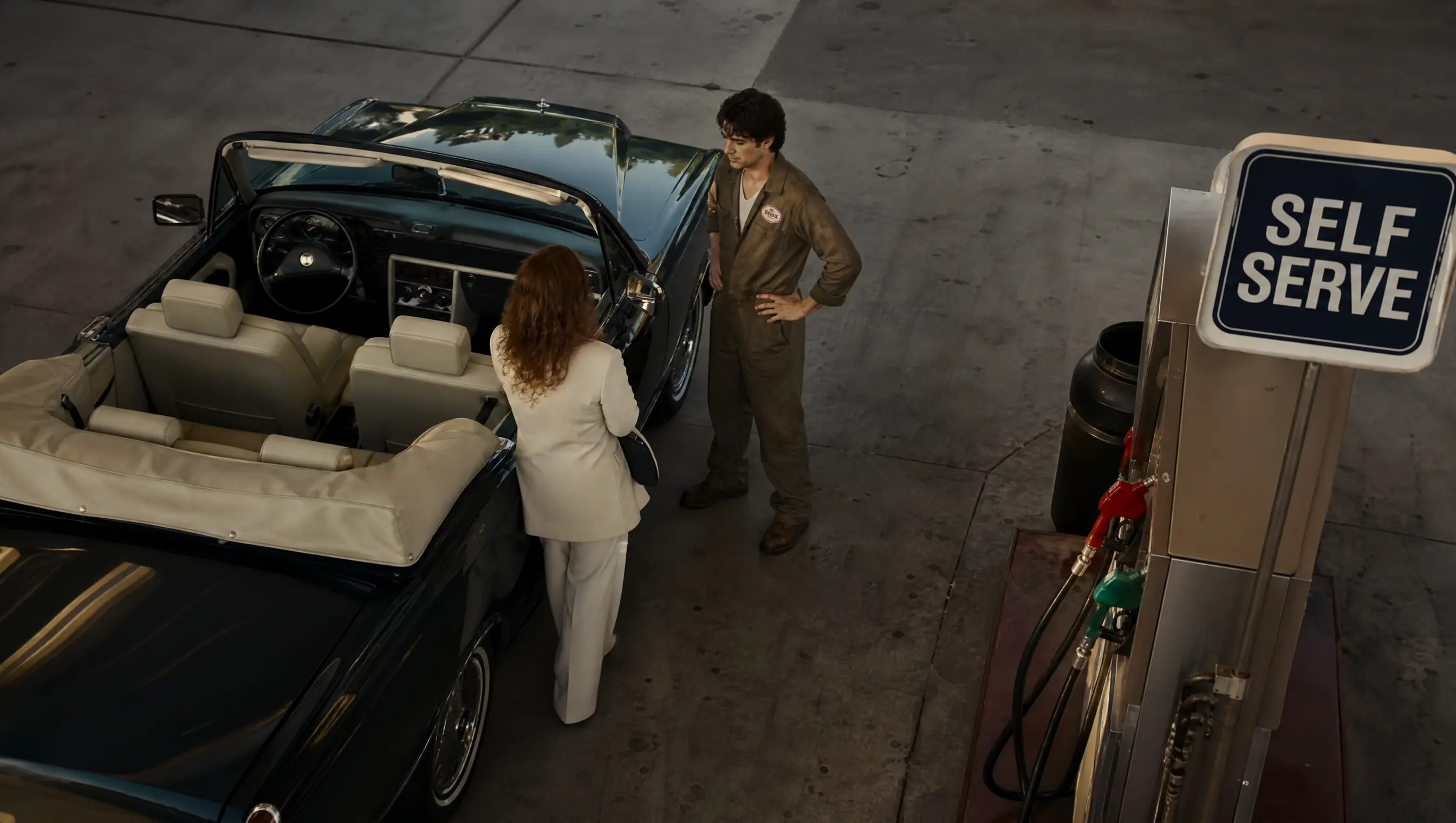
She did not notice at first. She was busy noticing everything else. The hills on either side of Route 100 had gone up in flames, maples so red they looked wet, birches like struck matches, and in the low places the morning mist was still lying in the fields as if somebody had forgotten to put it away. There were hand-lettered signs for cider and maple cream and FIREWOOD $40 A CORD, and a cow standing alone in a pasture looking at the road with the expression of a woman waiting for a bus. Vivienne had both hands on the wheel at ten and two, exactly as Mr. Adebayo had taught her in a Datsun with a brake on the passenger side in a parking lot in Jackson Heights, and she was doing forty-four miles an hour in a forty-five zone, and she was happier than she had been in perhaps eleven years.
Then a small red light came on in the dashboard, and the needle in the gauge to the left of it, which had been sitting politely in the middle all morning, began to lean to the right like a man who has heard his name called across a room.
"No," Vivienne said to it. "Absolutely not."
The needle did not care. A smell came up through the vents, sweet and hot, like syrup left on a stove. Then a thread of white steam slipped out from under the front edge of the hood and unspooled itself over the windshield, and David Coverdale went on announcing, at length, his intention to go it alone, and Vivienne Wainwright, thirty-six years old, simultaneous interpreter, French and English, of the United Nations Secretariat in New York, holder of a Class D operator's license issued by the State of New York nineteen days earlier and still in its temporary paper form, said out loud the thing Mr. Adebayo had told her to say.
"When the car speaks, you listen. When the car shouts, you stop."
She put on her signal, though there was nobody behind her for a mile. She eased off the road onto a wide gravel shoulder beside a field of cornstalks gone the color of old newspaper, pulled the hand brake, switched off the engine, switched on the hazard lights, and sat with her hands in her lap while the hood ticked and hissed and the steam rose and the cow, who had followed her progress with interest, lowed once, faintly, in what might have been sympathy.
The car was a 1978 Alfa Romeo Spider, Alfa red, with a black canvas top and tan leather seats that had cracked in a pattern like the map of a small European country. She had bought it six weeks ago from the widow of a periodontist in Larchmont, who had told her it had been her husband's midlife crisis and he had driven it only on Sundays, and who had wept a little when she handed over the keys and then said, briskly, "Well, it never did a thing for me." Vivienne had paid cash. She had not known, at the time, how to drive it. She had sat in it in the widow's garage and thought, I will learn, and then she had gone and learned, three evenings a week for six weeks, with Mr. Adebayo saying, "Clutch, Mrs. Wainwright. The clutch is a conversation, not an argument," while the planes came in low over Flushing Bay.
She had not told her ex-husband. She had told almost no one, except her sister in Philadelphia, who had said, "You? Driving? You won't even carry an umbrella in case you poke someone."
Now she got out of the car and looked at it.
It was very beautiful, and it was steaming like a teakettle, and she did not know where the latch for the hood was. She stood beside it in her camel coat and her good gray trousers and the cream silk scarf her mother had given her the Christmas before she died, and she put her hands in her pockets, and she was aware of feeling, for the first time on this whole adventure, extremely elegant and extremely stupid.
"All right," she said to the cow. "Where is the nearest telephone?"
The cow did not know. But a half mile back she had passed a general store with a porch full of pumpkins, and so she set off walking along the shoulder in her loafers with the leaves skittering around her ankles. The store was called Plourde's, and it had a pay telephone on the outside wall under a little peaked roof of its own, with a phone book on a chain and, thumbtacked to the board beside it, a sun-faded business card that said BEAULIEU'S GARAGE & TOWING — COLDWATER, VT — 24 HRS — WE COME TO YOU.