The boy came in on a Tuesday, the thirteenth of November, 1984, at twenty minutes to four in the afternoon, which is the deadest hour God ever made for a diner in a steel town without any steel.
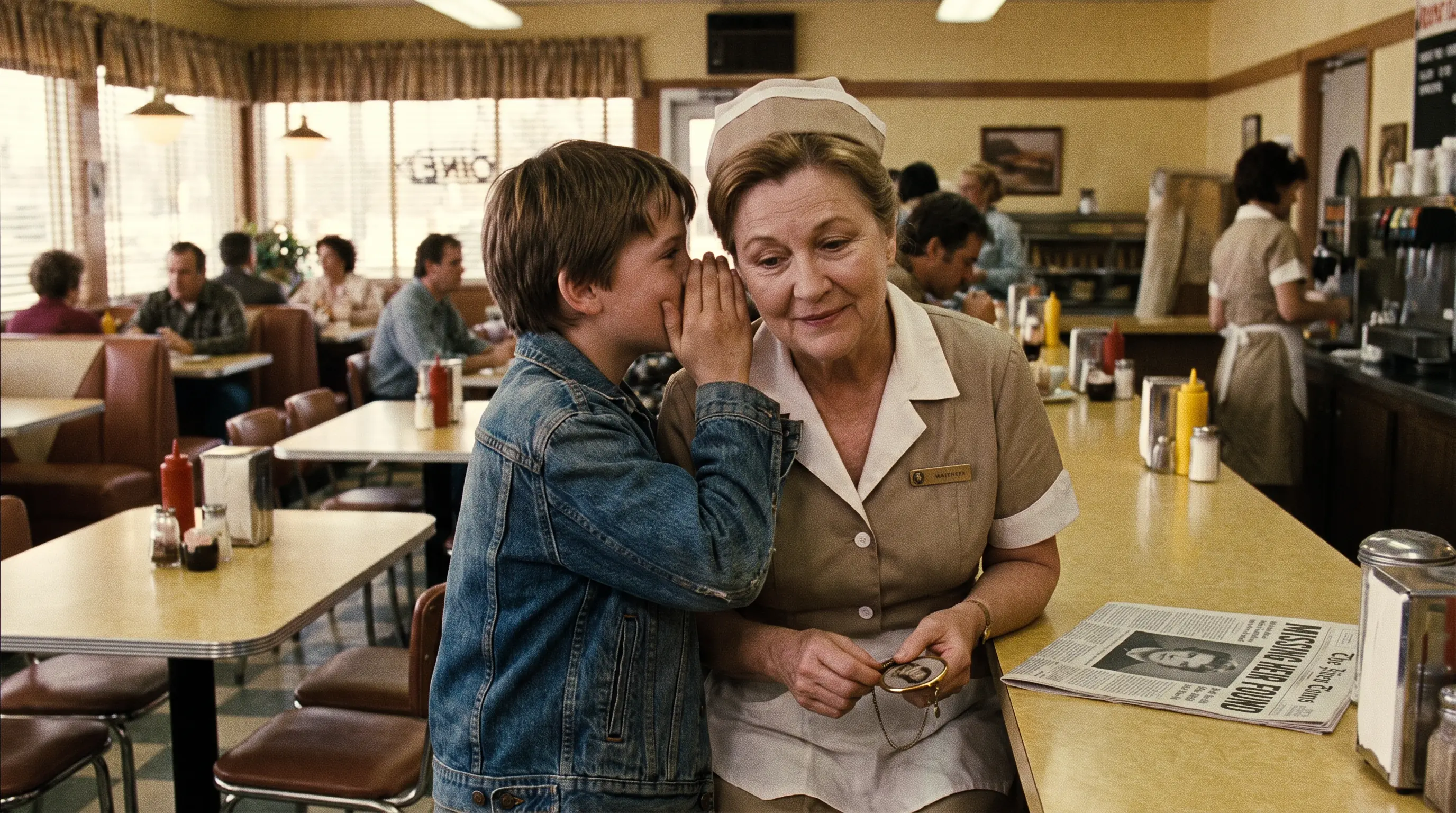
I remember the date because the Vindicator on the counter still had the election on the front page, a week old, Reagan grinning over forty-nine states, and Stosh Hrabik had drawn a mustache on him with the grease pencil we used for the specials board.
I remember the time because I had just looked at the clock over the pie case and done the arithmetic I did every afternoon, which was how many more hours until I could take my shoes off, and how much I had in my apron, and whether the second number was going to cover the first.
Helen's Grill sat on State Street in Struthers, Ohio, a block and a half up from the bridge, in a building that had been a hardware store before the war and still had the old tin ceiling, pressed in squares with a little fleur-de-lis in each one, painted cream so many times the flowers had gone soft like frosting.
There were eleven stools at the counter, red vinyl, three of them patched with silver duct tape, and six booths along the window, and a Seeburg jukebox by the door that ate quarters and only sometimes gave you a song for them.
From the front window you could see across the Mahoning to where the Campbell Works used to make smoke. In 1977, when I was thirty-one, the Sheet and Tube had announced on a Monday in September that five thousand men were done, and the rest of the valley had followed it down like dominoes over the next few years, Brier Hill, the Ohio Works, McDonald, until by 1984 the sky over the river was a clean, empty blue that nobody I knew had ever wanted.
Helen Duda had owned the grill since 1959. She was sixty-eight and wore her glasses on a beaded chain and did the books at the back booth with a pencil and a cigarette and a look on her face like the numbers had personally insulted her mother. In the good years she'd had four girls on the floor and two on the grill. Now it was Stosh at the flattop, me on days, and Marge Feeney on nights, and Helen running the register and the bank deposits and, increasingly, the arithmetic of whether there would be a Helen's Grill by spring.
So: twenty to four, Tuesday. Two old men from the Campbell Works, Lefty Sopko and a man we only ever called Brother, were nursing their third cups of coffee in the corner booth and arguing about whether Mondale had ever had a chance. Stosh was scraping the flattop with the brick. The jukebox was playing Chicago, "Hard Habit to Break," on quarters Marge had fed it the night before. I was marrying the ketchups, half bottle into half bottle, necks together like two drunks holding each other up, which is the kind of thing nobody will ever thank you for and everybody would notice if you stopped.
The bell over the door rang and I said, "Sit anywhere, hon," without looking, the way you do.
When I did look, he had sat at the counter, at the end, on the last stool, the one by the pie case that wobbled. He was nine or ten. He had on a brown corduroy jacket a size too small, the cuffs riding up over his wrists, and a blue knit hat with a pompom that had been yanked off at some point so there was just a little tuft of yarn on top like a cowlick. Brown hair, too long over the ears. A red bookbag, the canvas kind, with the strap mended with a safety pin. He set it on the stool next to him very carefully, as if there were eggs in it.