My name is Kendra, and this house was the first thing I ever built entirely for myself.
I bought it with years of saved paychecks, careful decisions, and a level of independence I fought hard to earn.
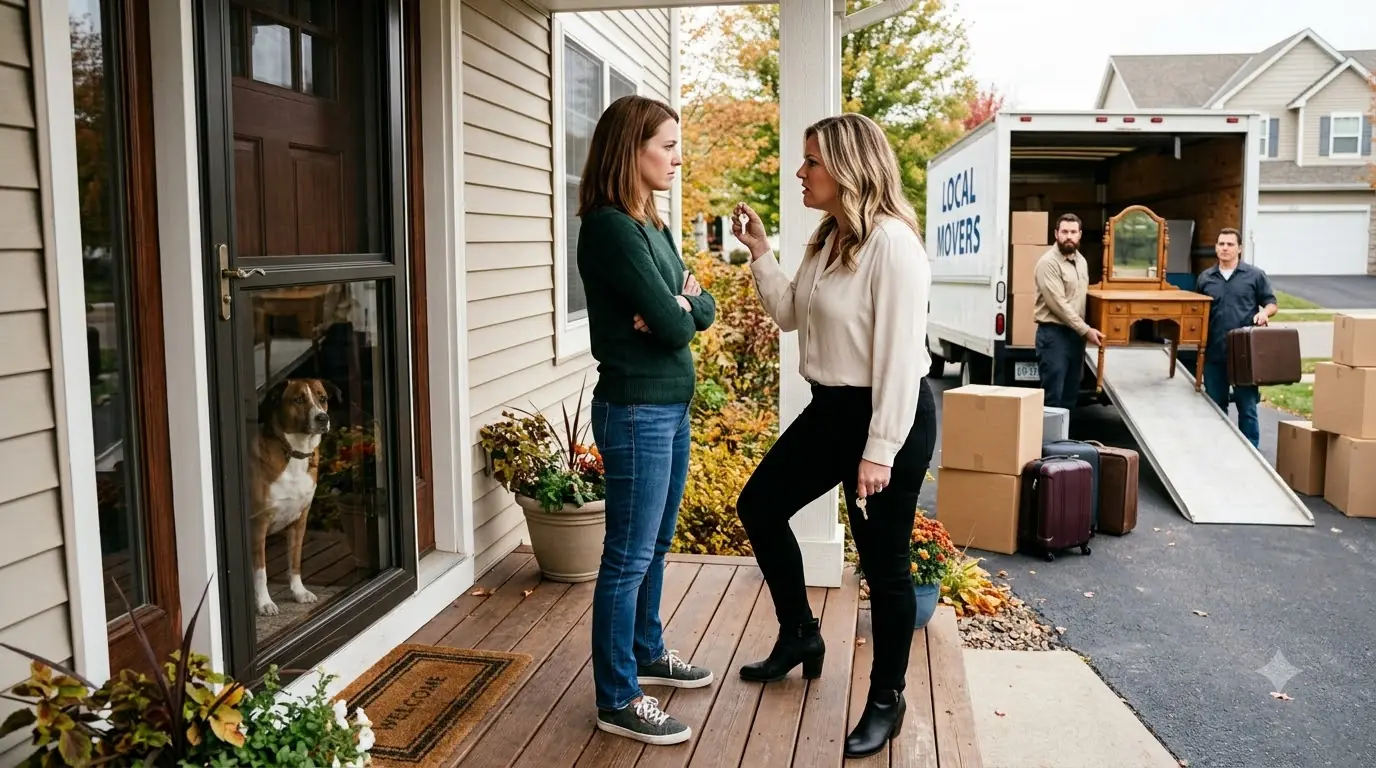
I had planned to tell my family eventually when I felt ready. To me, this home represented more than a place to live. It was proof that I could make something of my own without waiting for approval.
That morning, when I pulled into the driveway and saw my parents' car outside, I tried to convince myself they might simply be passing by. But the moment I stepped inside, any hopeful thought disappeared. They were standing in my living room with my older sister Lena.
My mother was quietly inspecting the kitchen cabinets, my father was evaluating the layout like he was already deciding what should be changed, and Lena stood in the center of the room as if she owned it.
She turned toward me, not with surprise, but with a calm certainty as though everything had already been arranged.
Her voice was steady when she spoke. "This place works for me. I will move in this weekend." There was no question in her tone, no pause to gauge my reaction, no effort to ask whether I agreed. It was a decision presented as a fact made without me about something that was mine.
I knew that if I argued right then, it would be treated as me being difficult rather than defending what belonged to me. So, I stayed quiet, watched, and remembered every word and expression. That night, I changed every lock in the house. And that is where everything truly began.
I grew up in a family of four with my mother, my father, and my older sister Lena. From the outside, we looked like a steady and ordinary family, the kind you might pass by at the grocery store and assume everything was fine.
The truth was quieter, less visible, and it settled into the small choices people make without thinking. From a young age, Lena was the one my mother worried about. My mother always said that Lena was sensitive and easily overwhelmed, that life felt heavier for her than it did for most people.
Whenever she struggled, the entire house adjusted to make space for her feelings. My mother would rearrange plans to help her speak to teachers on her behalf and smooth over the consequences of her mistakes.
When I asked why the rules seemed different for her, my mother always had an explanation that sounded reasonable on the surface. She would say that Lena simply needed more support, that I was strong enough to manage things on my own, and that it would be unfair to expect the same from both of us. I heard those words so many times that eventually I stopped questioning them.
My father did not speak much about these things. He would sit quietly at the dinner table while my mother explained why Lena could miss another responsibility or why it made sense for her to receive help that I did not. His silence was not loud or dramatic. It was the kind of silence that suggests agreement simply because it avoids conflict. I learned early that siding with my mother was the easiest path for him, and that my feelings would not be defended there.
So, I adapted. If I wanted something, I would figure out how to earn it myself. When I wanted spending money in high school, I found a part-time job at a small cafe instead of asking.
When I needed textbooks in college, I bought used ones online and resold them at the end of the semester. When I moved out, I furnished apartments slowly, one item at a time, always buying only what I could afford.
I never felt resentment for providing for myself. What hurt was the way it was expected, as if independence had been assigned to me rather than chosen. It shaped the way I saw myself. I learned to keep achievements quiet because excitement could be mistaken for boasting. I learned not to ask for help because the answer had already been decided before I ever opened my mouth.
Lena, meanwhile, built her life with the support she was used to. Apartment rent helped by my parents. Bills paid without discussion. Advice given before she requested it. If she changed her mind about a job, there was always patience for the transition.
My mother's phrase, the one I had heard throughout my childhood, followed her into adulthood, too. "Lena just needs more help navigating life." The words never changed, only the circumstances did. My decision to buy a house came from a quiet place inside me that had existed for years. It was not rebellion.